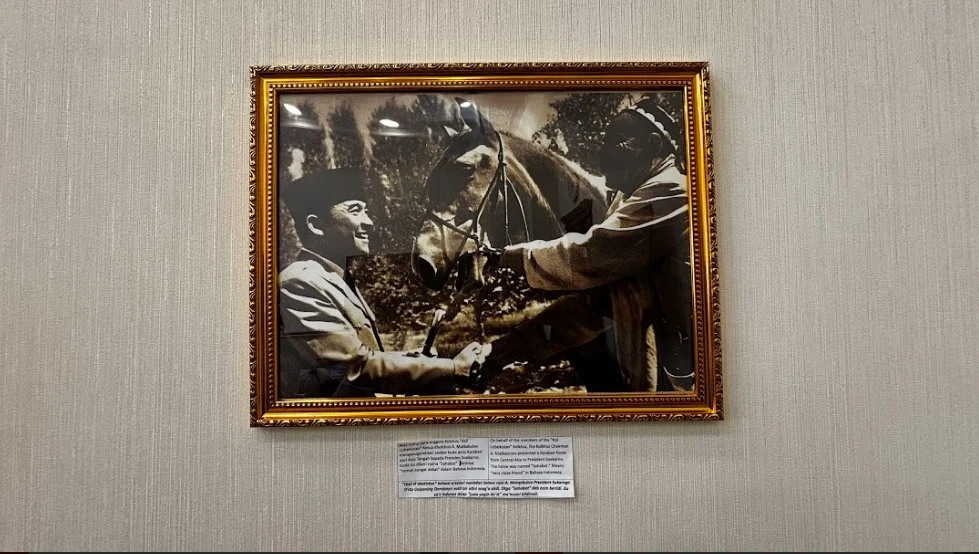
The inauguration of the Soekarno Hall within the Imam Al Bukhari complex in Samarkand, Uzbekistan, stands as a testament to the enduring diplomatic and spiritual bridge between Indonesia and Central Asia. Officially opened on September 4, 2026, the memorial space serves as a permanent tribute to the historic efforts of Indonesia’s first President, Sukarno, in preserving the legacy of the renowned Hadith scholar, Imam Al Bukhari. This development not only enriches the pilgrimage experience for Indonesian travelers but also underscores the profound historical narrative that binds the two nations across decades of geopolitical transformation.
The Historical Context: Sukarno and the Soviet Union
The connection between Sukarno and Samarkand traces back to the mid-1950s, a period defined by the height of the Cold War and the burgeoning Non-Aligned Movement. In 1956, during a state visit to the Soviet Union, which then encompassed present-day Uzbekistan, Sukarno expressed a strong personal desire to visit the resting place of Muhammad ibn Ismail al-Bukhari, the compiler of the Sahih al-Bukhari, the most authentic collection of Hadith in Sunni Islam.
At that time, the site of the Imam Al Bukhari mausoleum in Hartang village, near Samarkand, was in a state of severe disrepair. Under the policies of the Soviet era, religious sites were often neglected or repurposed for secular use. Historical accounts indicate that when the Soviet authorities—then led by Nikita Khrushchev—asked the Indonesian President what he wanted as a gift or a gesture of goodwill, Sukarno famously bypassed material requests and instead requested the restoration of Imam Al Bukhari’s tomb.
This request was not merely a personal act of piety but a sophisticated move in soft-power diplomacy. By advocating for the restoration of a site sacred to the Muslim world, Sukarno signaled his commitment to the global Islamic community, while simultaneously challenging the Soviet administration to acknowledge the cultural and spiritual heritage of the Central Asian republics.
The Chronology of a Restoration
The transformation of the Imam Al Bukhari complex from a forgotten site to a global landmark occurred in distinct phases:
- 1956: President Sukarno visits the neglected site in Samarkand and advocates for its preservation.
- Late 1950s – 1970s: Gradual recognition of the site’s historical value, influenced by the international attention brought by leaders like Sukarno.
- 1991: Uzbekistan gains independence following the dissolution of the Soviet Union. The new government prioritizes the restoration of national identity and Islamic heritage.
- 1998: A grand reconstruction project begins, leading to the establishment of a modern, sprawling complex including a mosque, a museum, and an international research center.
- 2026: The Imam Bukhari International Scientific Research Center (IBSRC) inaugurates the "Soekarno Hall" to institutionalize the memory of the Indonesian leader’s contribution.
Inside the Soekarno Hall: A Repository of History
The Soekarno Hall is situated within the IBSRC, an institution dedicated to the scholarly study of Hadith and Islamic philosophy. The hall serves as a curated archive, housing a vast array of historical artifacts. Visitors are presented with rare photographs of Sukarno’s original visit, which capture the solemnity of the moment as he knelt before the grave of the Imam.
Beyond photographs, the memorial includes digitized copies of correspondence between the Indonesian delegation and Soviet officials regarding the maintenance of the mausoleum. These documents provide researchers with a unique window into the behind-the-scenes negotiations of the 1950s. The exhibition also displays copies of Sukarno’s handwritten notes and memoirs, offering a glimpse into the statesman’s intellectual preoccupation with the synthesis of nationalism and Islamic tradition.
The curation of the hall is designed to be educational, bridging the gap between the historical figure of Sukarno and the modern-day religious tourist. By presenting these archives in a high-tech, accessible format, the IBSRC ensures that the narrative of Sukarno’s influence remains relevant to a younger generation of Indonesian pilgrims.
Diplomatic Implications and Bilateral Ties
The establishment of the Soekarno Hall carries significant weight in contemporary Indonesian-Uzbek relations. From a diplomatic perspective, the memorial acts as a "living monument" to the foundational years of the relationship between the two countries.
In the eyes of the Uzbek government, acknowledging Sukarno is a strategic way to foster closer ties with the world’s largest Muslim-majority nation. For Indonesia, the site serves as a point of national pride, illustrating the historical reach of its founding father’s influence on the global stage. Experts in international relations suggest that such cultural diplomacy projects are essential for strengthening bilateral trade, tourism, and academic exchange.
"The Soekarno Hall is not just a room of records; it is a symbol of shared values," notes a spokesperson for the IBSRC. "It highlights how a leader from Southeast Asia recognized the universality of Islamic scholarship, even in the heart of Central Asia, during a time of immense ideological divide."
Economic and Tourism Impact
The Imam Al Bukhari complex has seen a consistent increase in visitors from Indonesia over the past decade. The introduction of direct flight initiatives and visa-friendly policies between Tashkent and Jakarta has further catalyzed this trend. The inclusion of the Soekarno Hall in the tour itinerary provides an added layer of interest, transforming the site from a purely religious destination into a site of historical and cultural significance.
Tourism analysts suggest that the "Sukarno factor" significantly boosts the attractiveness of Uzbekistan as a preferred destination for Indonesian travelers. The emotional connection created by the narrative of the Indonesian President’s advocacy serves as a unique selling point that distinguishes Samarkand from other regional pilgrimage sites.
Analysis: A Legacy Beyond Borders
The legacy of Sukarno’s interaction with Uzbekistan is a case study in how individual diplomatic gestures can have a lasting impact on cross-cultural relations. By placing the focus on a shared religious icon, Sukarno transcended the rigid geopolitical boundaries of the Cold War. The Imam Al Bukhari complex, as it stands today—a magnificent, marble-clad monument—is the physical realization of that early advocacy.
The Soekarno Hall is more than a museum; it is a repository of a shared history that continues to evolve. As Indonesia and Uzbekistan look toward future collaborations in education and commerce, the memory of their historical bond serves as a foundation of trust. The documentation preserved within the hall confirms that the seeds of this friendship were sown in the sincerity of a statesman who, in 1956, saw the importance of honoring a scholar whose work has defined the faith of millions.
Conclusion: A Pilgrimage of Memory
For the modern Indonesian visitor, stepping into the Soekarno Hall is a moment of reflection. It is an opportunity to recognize that the history of Indonesia is not confined to the archipelago but is intertwined with the great intellectual and religious history of the Silk Road. As Uzbekistan continues to open its doors to the world, the story of Sukarno at the tomb of Imam Al Bukhari will remain a cornerstone of its narrative—a story of how, in the middle of a global ideological standoff, a bridge was built through the shared respect for the traditions of Islam.
The inauguration of the hall serves as a reminder that history is not static; it is preserved, curated, and remembered by those who value the connections that span across continents. As pilgrims walk the quiet courtyards of the Samarkand complex, they are now walking in the footsteps of a leader whose vision of global solidarity remains as relevant today as it was seventy years ago.