JAKARTA – The Partai Kebangkitan Bangsa (PKB) is set to hold a pivotal meeting next week with former Jakarta Governor Anies Baswedan to deliberate on his potential candidacy for the Jakarta 2024 Gubernatorial Election (Pilkada). This development underscores PKB’s assessment of Anies Baswedan’s consistently high electability, positioning him as a formidable contender for the capital’s top executive role. The discussions are anticipated to lay the groundwork for a potential alliance, signalling a significant move in the intricate political landscape of Indonesia’s capital city.
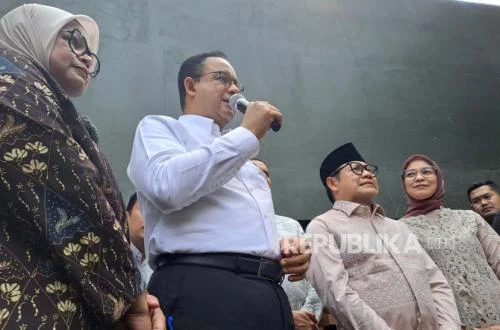
The announcement was made by Ahmad Iman Sukri, Treasurer of PKB’s Pilkada Desk, during a press conference held at the party’s central executive board (DPP) office in Central Jakarta on Wednesday, May 29, 2024. Sukri confirmed that the party’s Chairman, Muhaimin Iskandar, had specifically tasked the Pilkada Desk with initiating communication with Anies Baswedan. "Indeed, we have been assigned by Ketum (Muhaimin Iskandar) to communicate with Mr. Anies Baswedan. It is likely that next week, the Chairman of the Pilkada Desk (Abdul Halim Iskandar) will meet Mr. Anies Baswedan," Sukri stated, highlighting the formal mandate behind the impending dialogue.
This forthcoming meeting is a direct consequence of the strategic directives issued by Muhaimin Iskandar, widely known as Cak Imin. The relationship between Cak Imin and Anies Baswedan solidified significantly during the 2024 Presidential Election campaign, where Cak Imin served as Anies’s running mate for Vice President. Despite their ultimate defeat in the presidential contest, the alliance forged during the national election appears to be transitioning into a potential collaboration at the regional level, particularly for the highly coveted Jakarta governorship.
Anies Baswedan’s Enduring Appeal and Political Trajectory
Anies Baswedan’s political career has been marked by a rapid ascent and a sustained public profile. He served as the Governor of Jakarta from 2017 to 2022, a tenure that saw him implement various policy initiatives ranging from public transportation improvements to urban planning and social programs. His victory in the 2017 Jakarta gubernatorial election was a landmark event, defeating incumbent Basuki Tjahaja Purnama (Ahok) in a highly charged and closely watched contest. This victory catapulted him onto the national political stage, solidifying his image as a charismatic leader capable of mobilizing significant public support.
Prior to his governorship, Anies Baswedan held the position of Minister of Education and Culture from 2014 to 2016 under President Joko Widodo’s first cabinet. His academic background, having served as rector of Paramadina University, further contributes to his intellectual and articulate public persona. The 2024 presidential election, where he garnered substantial votes, particularly in urban areas and among certain demographics, further underscored his broad appeal across the archipelago, including his strong base in Jakarta.
Even after his presidential bid concluded, Anies’s political stock remains high, particularly in the capital where he previously held office. PKB’s assessment of his "high electability" is corroborated by various independent surveys and public opinion polls conducted post-presidential election, which consistently place him among the top contenders for the Jakarta gubernatorial seat. This sustained popularity makes him an attractive candidate for political parties seeking to secure the governorship of a region that serves as both the economic powerhouse and a crucial political barometer for the nation.
The Jakarta Gubernatorial Race: A High-Stakes Contest
The Jakarta Pilkada is not merely a regional election; it is often viewed as a proxy battleground for national political forces and a testing ground for future presidential hopefuls. The governor of Jakarta holds immense influence, overseeing a sprawling metropolis with a population exceeding 10 million, managing a substantial budget, and dealing with complex urban challenges such as traffic congestion, flood management, and social inequality. The strategic importance of Jakarta means that its leadership is keenly watched by both domestic and international observers.
The 2024 Pilkada cycle, occurring shortly after the intensely contested presidential election, is expected to be particularly dynamic. With the capital city transitioning its status to a "Special Region" (DKJ) after the relocation of the national capital to Nusantara, the upcoming election will also define the future trajectory of Jakarta’s governance and its role within the broader Indonesian administrative framework. This adds another layer of complexity and significance to the contest.
The general timeline for regional elections (Pilkada) in Indonesia typically involves several stages: party primaries and coalition building, candidate registration, campaigning, and finally, the election day. While specific dates for the Jakarta Pilkada 2024 are still being finalized by the General Election Commission (KPU), political parties are already in advanced stages of internal consolidation and external negotiations to identify and back strong candidates. The window for formal declarations and registrations will open in the coming months, intensifying the race.
PKB’s Strategic Overture and Coalition Dynamics
PKB’s decision to actively pursue discussions with Anies Baswedan for the Jakarta gubernatorial election is a well-calculated strategic move. For PKB, an alliance with Anies could offer several advantages:
- Leveraging Electability: Anies Baswedan’s proven track record in Jakarta and his national recognition provide a significant electoral advantage. PKB, by supporting him, can tap into his existing voter base and enhance its own electoral performance in the capital.
- Strengthening Party Presence: Securing the Jakarta governorship would greatly amplify PKB’s influence and visibility in a crucial political and economic hub. This could translate into greater leverage in national politics and future elections.
- Capitalizing on Past Alliance: The bond formed between Muhaimin Iskandar and Anies Baswedan during the presidential campaign offers a natural foundation for a renewed partnership. This continuity could foster a stronger, more coherent coalition, potentially attracting other parties.
- Positioning for Future: A successful campaign in Jakarta could bolster PKB’s image as a significant player in Indonesian politics, capable of forming winning coalitions and endorsing popular leaders.
Ahmad Iman Sukri emphasized that Anies’s high survey numbers make him an undeniable force. "So far, Mr. Anies’s survey numbers are still high. Perhaps next week we will meet, hopefully, DKI (Jakarta) will be fixed soon," he said, reflecting the party’s eagerness to solidify its stance and move forward with candidate selection.
Navigating Coalition Dynamics and Vice-Gubernatorial Selection
A critical aspect of the upcoming discussions will undoubtedly revolve around the selection of a running mate (cawagub) for Anies Baswedan. The vice-governor role is not merely ceremonial; it requires a candidate who can complement the governor’s strengths, appeal to different voter segments, and contribute effectively to governance. Coalition agreements often hinge on the distribution of these key positions.
Iman Sukri indicated that the discussion concerning a running mate would be a priority. "Regarding the vice (governor) and various things, it just needs to be communicated," he stated, suggesting an open negotiation process. One prominent name within PKB being floated as a potential running mate is Ida Fauziyah, a seasoned politician and current Minister of Manpower. Fauziyah, with her extensive experience in both legislative and executive branches, could offer a strong balance to Anies’s profile, potentially broadening the coalition’s appeal to women voters and those familiar with her policy work.
The selection of a vice-gubernatorial candidate involves complex political calculations. Parties within a potential coalition would typically vie for the position, seeking to maximize their own representation and influence. The chosen individual must not only have strong credentials but also be acceptable to all coalition partners, ensuring a stable and united front for the campaign. This negotiation process can often be protracted and delicate, requiring significant diplomatic skill from all involved parties.
Broader Implications for Indonesian Politics
The potential alliance between PKB and Anies Baswedan for the Jakarta Pilkada 2024 carries significant implications that extend beyond the capital city itself:
- Shaping Future Coalitions: The outcome of the Jakarta election and the success of any Anies-PKB coalition could influence the formation of alliances in other regional elections and potentially set the stage for future national political configurations.
- Anies’s Political Future: For Anies Baswedan, a successful return to the Jakarta governorship would reaffirm his political strength and keep him in a prominent leadership position, maintaining his relevance for future national political contests. Conversely, a defeat could impact his long-term political trajectory.
- PKB’s National Standing: A strong showing in Jakarta, particularly by backing a winning candidate like Anies, would enhance PKB’s national standing and its bargaining power within the broader political spectrum. It would solidify its image as a kingmaker and a significant force in Indonesian democracy.
- Dynamic Political Landscape: The Jakarta Pilkada is expected to be highly competitive, with other major parties likely to field their own strong candidates. This includes the ruling PDI-P, Gerindra, Golkar, and others, each with their own interests and strategies for the capital. The Anies-PKB talks are merely the opening salvo in what promises to be a fascinating and closely watched political contest.
In conclusion, PKB’s proactive engagement with Anies Baswedan signifies a strategic and forward-looking approach to the Jakarta 2024 Gubernatorial Election. Rooted in a past national alliance and driven by Anies’s strong public appeal, these discussions are poised to be a crucial determinant in shaping the political future of Indonesia’s capital and, by extension, influencing the broader national political narrative. The coming weeks will reveal the contours of this potential partnership and the broader coalition that aims to secure leadership of this vital metropolis.