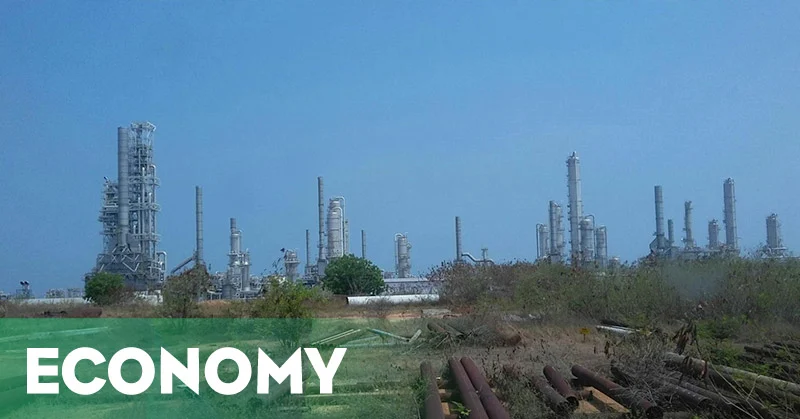
President Joko Widodo conducted a high-profile working visit to inspect the operational facilities of the Trans Pacific Petrochemical Indotama (TPPI) refinery located in Tuban, East Java. The inspection served as a critical milestone for Indonesia’s national energy sector, highlighting the successful revival of a facility that had previously faced significant financial and operational hurdles. The visit underscored the central government’s ongoing commitment to achieving energy independence, reducing reliance on foreign fuel imports, and strengthening domestic hydrocarbon processing capabilities under the management of state-owned energy giant PT Pertamina (Persero).
Accompanying the President on the delegation were several key government officials and industry leaders, including Minister of State-Owned Enterprises (BUMN) Rini Soemarno, Pertamina President Director Dwi Soetijpto, and Director General of Oil and Gas at the Ministry of Energy and Mineral Resources IGN Wiratmaja Puja. The high-level presence emphasized the strategic importance of the TPPI refinery to Indonesia’s macroeconomic stability and national energy security framework.
Strategic Background and Historical Context of the TPPI Facility
The Trans Pacific Petrochemical Indotama refinery in Tuban has a long and complex history deeply intertwined with Indonesia’s petrochemical and refining ambitions. Originally conceived to bolster domestic processing capacity and reduce the nation’s heavy reliance on imported petrochemical products and refined fuels, the facility faced numerous operational interruptions, financial restructuring challenges, and ownership disputes over the years.
Prior to its recent reintegration into the state energy ecosystem, the plant experienced prolonged periods of underutilization and dormancy. These disruptions placed a heavy burden on the national balance of payments, forcing Indonesia to import higher volumes of finished petroleum products to meet soaring domestic demand. Recognizing the strategic value of the asset, the government, through PT Pertamina (Persero), initiated a series of financial consolidations and operational takeovers to bring the facility back under national control.
The successful restart of the TPPI refinery was widely viewed by energy analysts and government officials as a monumental turnaround. By integrating the plant into Pertamina’s downstream supply chain, the state aimed to optimize domestic refining margins, secure feedstock supplies, and ensure a stable output of vital fuels for the Indonesian market.
Production Metrics and Massive Import Savings
During the inspection, Pertamina management presented detailed operational data outlining the immediate fiscal and logistical benefits of the refinery’s renewed activity. Wianda Pusponegoro, who served as Pertamina’s Vice President of Corporate Communication at the time, detailed the substantial quantitative impact of the plant’s reintegration.
According to Pertamina’s official assessments, the operationalization of the TPPI Tuban refinery enabled a remarkable reduction in the nation’s fuel import bill. Specifically, the facility demonstrated the capacity to slash imports of Premium-grade gasoline (RON 88) by approximately 20 percent. This reduction was achieved through a robust production output reaching up to 61,000 barrels per day.
To contextualize the financial magnitude of this output, industry economists applied baseline pricing models. Assuming a benchmark global crude and gasoline price of approximately USD 60 per barrel, the domestic production generated by the TPPI facility translated to staggering annual foreign exchange savings. The refinery was projected to save the Indonesian economy roughly USD 1.2 billion annually, equivalent to approximately Rp 16 trillion based on prevailing exchange rates at the time.
This fiscal relief was particularly crucial for Indonesia’s current account balance, which had long suffered from a structural deficit driven by fuel and energy imports. By substituting imported gasoline with locally refined products, the government preserved vital foreign reserves and shielded the national economy from the volatile swings of international oil markets.
Chronology of the Revival Effort
The journey toward the full operational capacity of the TPPI Tuban refinery involved a meticulously coordinated timeline of legal, financial, and technical interventions by the Indonesian government and Pertamina:

- Initial Conception and Construction: The facility was established to serve as an integrated petrochemical and refining complex, designed to process condensate and crude oil into high-value petrochemicals and finished fuels.
- Operational Stagnation and Financial Distress: Due to unfavorable market dynamics, corporate debt burdens, and supply chain disruptions, the plant experienced significant downtime, operating well below its design capacity or halting production entirely.
- State Intervention and Acquisition: Recognizing the strategic necessity of the plant, the Indonesian government facilitated steps for PT Pertamina to assume operational and financial control over TPPI, integrating it into the state-owned enterprise portfolio.
- Technical Overstocking and Restart Phase: Pertamina conducted extensive maintenance, safety checks, and feedstock securing operations to prepare the plant for a phased restart.
- Full Operational Resumption and Presidential Inspection: Following successful test runs and the stabilization of production yields reaching 61,000 barrels per day, President Joko Widodo visited the facility on November 11, 2015, to officially mark its return to the national energy grid.
Stakeholder Perspectives and Institutional Objectives
The leadership team present during the Presidential inspection emphasized that the revival of TPPI Tuban was more than just an engineering achievement; it was a cornerstone of structural economic reform.
Minister BUMN Rini Soemarno repeatedly highlighted the necessity of optimizing state-owned assets to serve the public interest. Under her purview, the Ministry of BUMN pushed for aggressive consolidation within the energy sector, ensuring that idle or underperforming infrastructure was swiftly rehabilitated to contribute to national productivity. The integration of TPPI into Pertamina’s asset portfolio was frequently cited by the Ministry as a prime example of successful synergy among state enterprises.
For Pertamina, the project represented a validation of its technical competence and downstream expansion strategy. Dwi Soetijpto, leading the corporation during this critical transition, maintained that controlling domestic refining assets was essential to insulating Indonesia from external supply shocks. By securing domestic processing nodes, Pertamina could better manage pricing stability, streamline distribution logistics, and guarantee fuel availability across the archipelago.
Furthermore, the involvement of the Directorate General of Oil and Gas ensured strict regulatory compliance and alignment with national energy policies. The technical oversight provided by the ministry guaranteed that environmental standards, safety protocols, and output quotas met rigorous state benchmarks.
Macroeconomic Implications and Long-Term Impact
The successful revitalization of the TPPI Tuban refinery carried profound implications for Indonesia’s macroeconomic landscape. Beyond the immediate multi-billion-dollar import savings, the facility’s operation acted as a catalyst for regional economic development in Tuban and the broader East Java province.
Boosting Local and Regional Economies
The reactivation of a heavy industrial complex of this scale triggered significant multiplier effects within the local economy. Ancillary services, logistics providers, transportation networks, and local small-and-medium enterprises (SMEs) experienced increased commercial activity. Job creation, both direct and indirect, provided a substantial boost to employment in the region, absorbing skilled technical labor and supporting service industries.
Enhancing National Energy Security
Energy security remains a paramount concern for an archipelago nation comprising thousands of islands and a population exceeding 250 million. Heavy reliance on imported refined products left Indonesia vulnerable to geopolitical tensions, maritime shipping disruptions, and global price spikes. By boosting domestic refining output to cover a significant fraction of gasoline demand, the TPPI facility significantly narrowed the vulnerability gap, providing a secure, predictable domestic supply buffer.
Foundation for Downstream Petrochemical Growth
In addition to producing refined fuels like Premium gasoline, the Trans Pacific Petrochemical Indotama facility was uniquely positioned to manufacture vital petrochemical feedstock. This capability was strategically vital for Indonesia’s manufacturing sector, supplying domestic industries with raw materials necessary for plastics, packaging, and synthetic material production. Reducing import dependency on upstream petrochemicals allowed downstream manufacturing industries to operate with more predictable cost structures, thereby enhancing their global competitiveness.
Conclusion
The presidential inspection of the TPPI Tuban refinery on November 11, 2015, stands as a defining moment in Indonesia’s modern energy policy. Through decisive government action, strategic institutional oversight by the Ministry of BUMN, and rigorous operational execution by PT Pertamina, a dormant industrial asset was successfully transformed into a powerful engine of economic savings and energy security.
With daily production yields reaching 61,000 barrels and generating annual savings of approximately USD 1.2 billion (Rp 16 trillion), the refinery fundamentally altered the nation’s import dynamics. The event reinforced the broader narrative of state-led resource optimization, proving that strategic investments in domestic infrastructure are indispensable for long-term national resilience and sustainable economic growth.