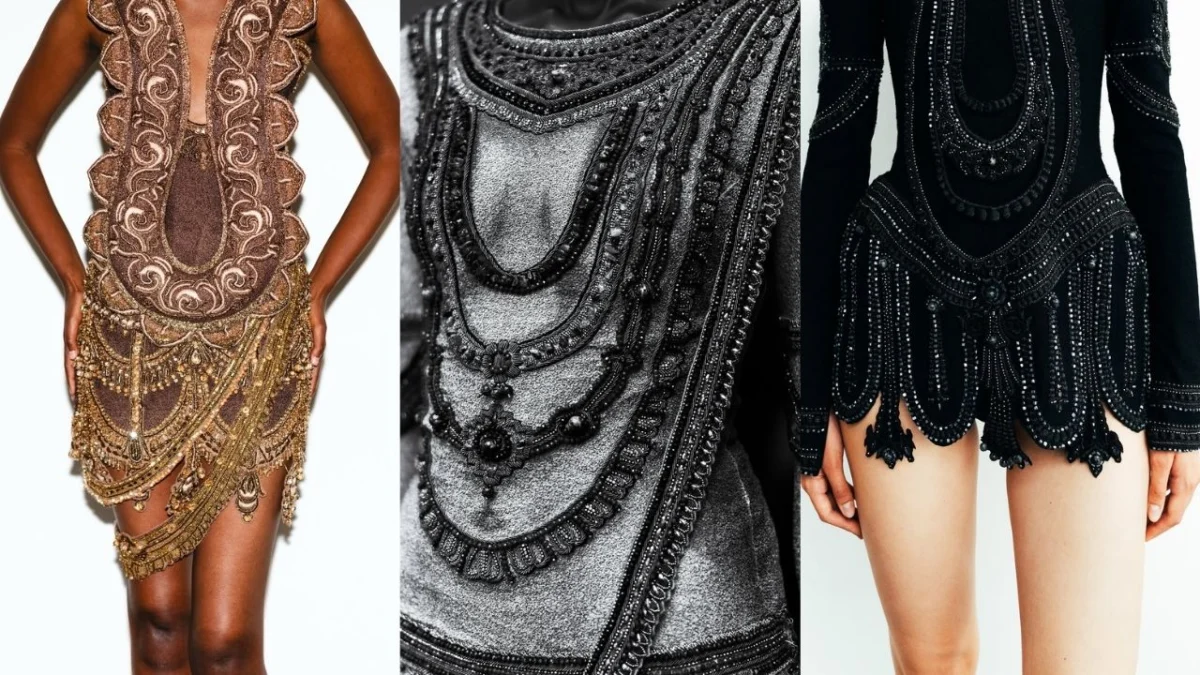
The prestigious runways of Paris Haute Couture Week once again became the stage for a profound intersection of ancient philosophy and avant-garde craftsmanship as Rahul Mishra unveiled his Fall/Winter 2026–2027 collection. Titled "Devi," the collection serves as a meticulous exploration of the primordial feminine energy that, in Indian Vedic philosophy, represents the source of all creation, protection, and transformation. By weaving together the ethereal concepts of "Shakti"—the cosmic power—with the tangible rigor of high fashion, Mishra has produced a body of work that transcends mere apparel, positioning itself as a monumental tribute to the resilience and multifaceted nature of women.
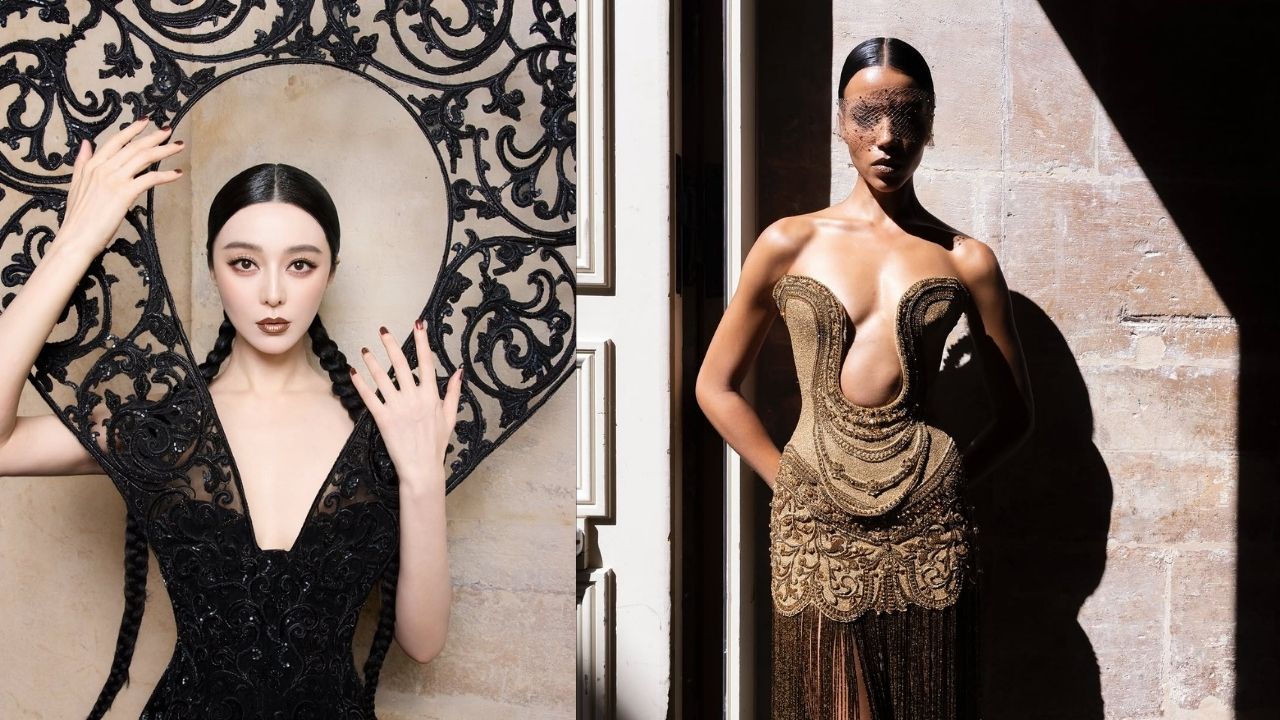
The presentation of "Devi" marks a significant milestone in Mishra’s career, further cementing his status as the premier Indian couturier on the global stage. This season, the designer moved beyond his celebrated botanical motifs to engage with more architectural and spiritual themes, utilizing a sophisticated palette and groundbreaking textile manipulations. The collection does not merely reference Indian culture through surface-level aesthetics but embeds the very soul of Indian artisanal heritage into the structural integrity of every garment.
The Philosophical Genesis: Defining Devi
In the context of this collection, "Devi" is not just a mythological figure but a conceptual framework. In Sanskrit, the word "Devi" translates to "Goddess," embodying the female aspect of the divine. Mishra’s interpretation focuses on the duality of this energy: it is at once nurturing and fierce, delicate and indestructible. This philosophical underpinning is reflected in the silhouettes, which range from soft, flowing organzas to rigid, structured forms that mimic the permanence of stone.
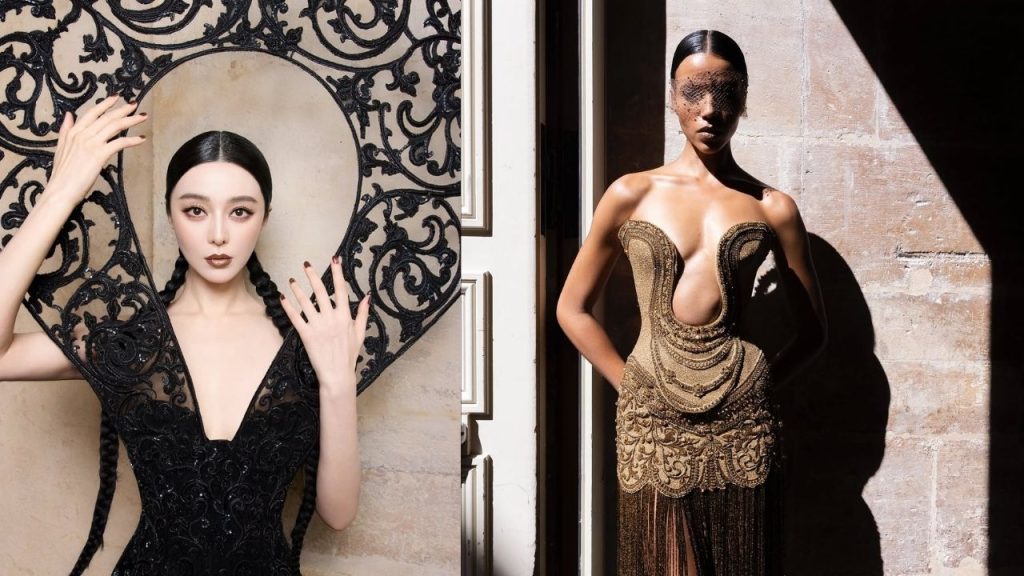
The collection was designed to reflect the stages of life and the various roles the feminine energy plays in the universe. As a creator, the Devi is represented through flourishing floral embroideries and organic shapes. As a protector, she is represented through metallic hardware, sharp tailoring, and "armored" textures. This narrative depth ensures that the collection resonates on a level that is both personal to the wearer and universal in its cultural significance.
Technical Innovation: The Illusion of Sculpted Stone
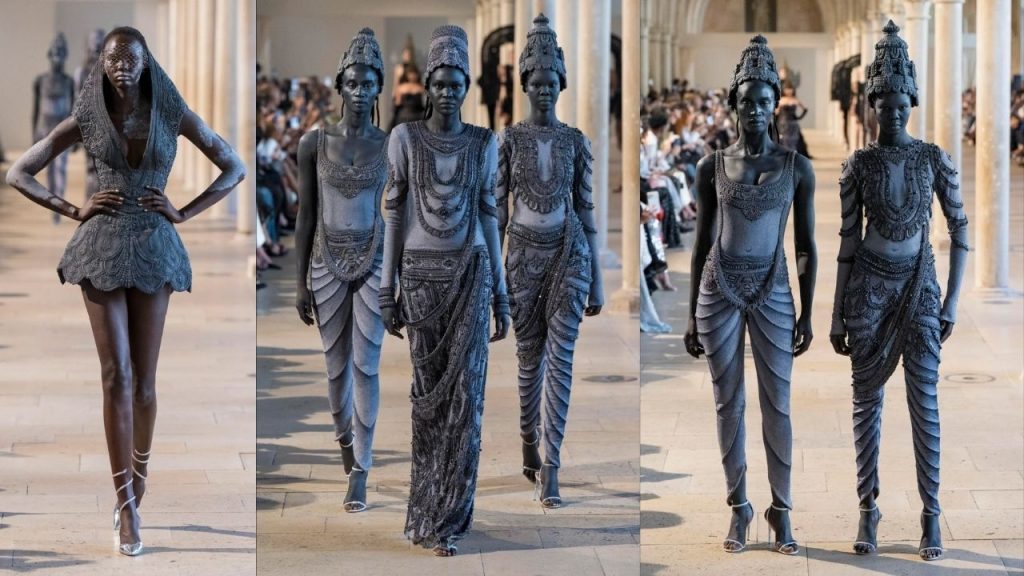
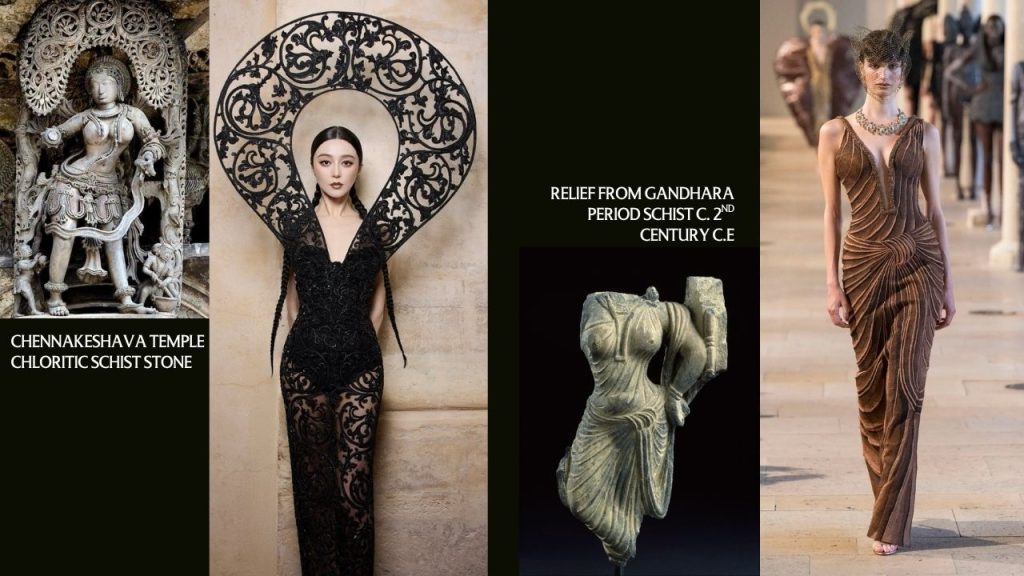
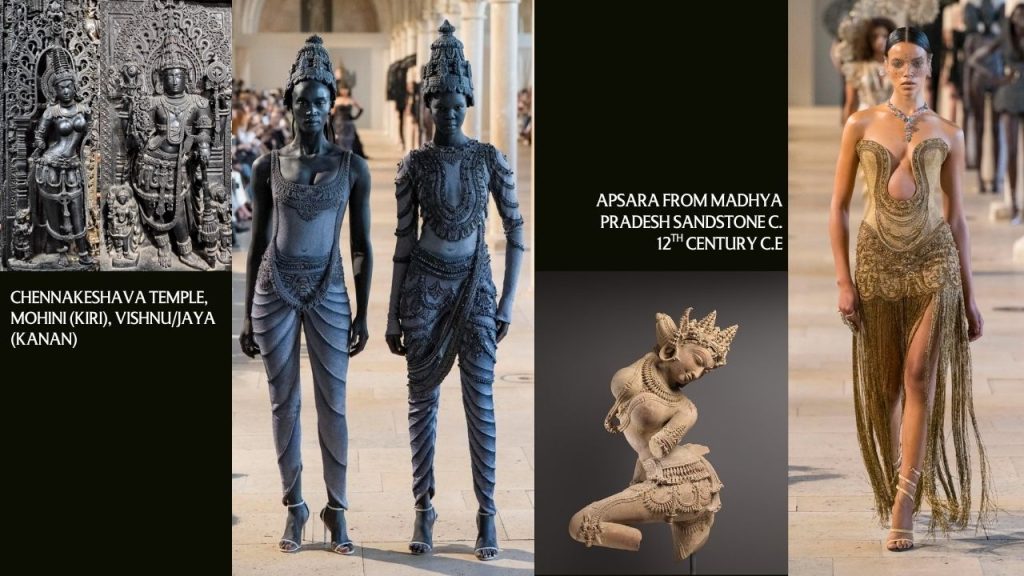
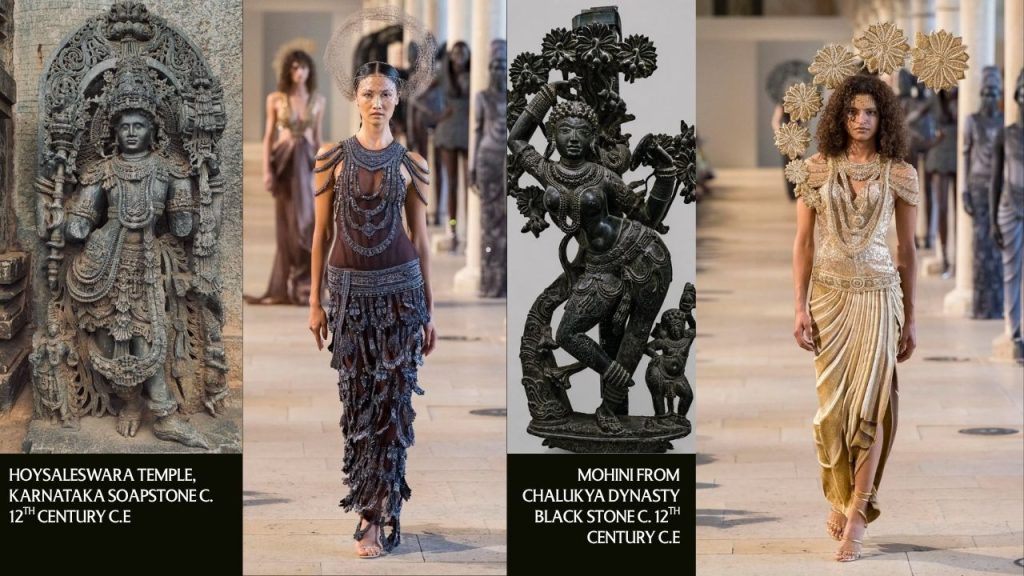
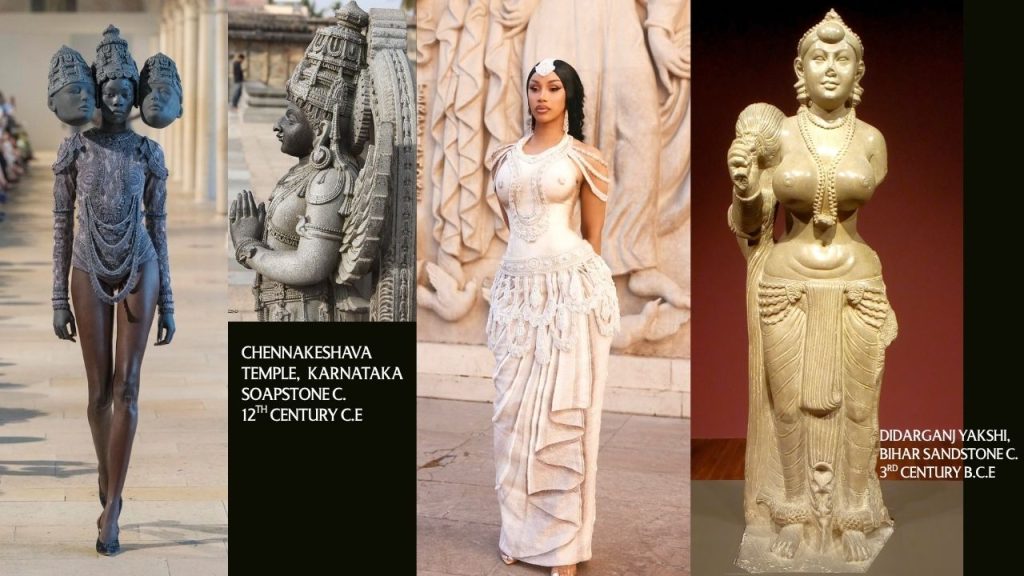
Perhaps the most talked-about element of the Fall/Winter 2026–2027 show was the series of garments that appeared to be carved from solid rock. This "sculpted stone" effect is a testament to the technical evolution occurring within the Rahul Mishra atelier. While traditional sculpture involves the subtractive process of removing material from a block of marble or granite, Mishra’s "couture sculpture" is an additive process.
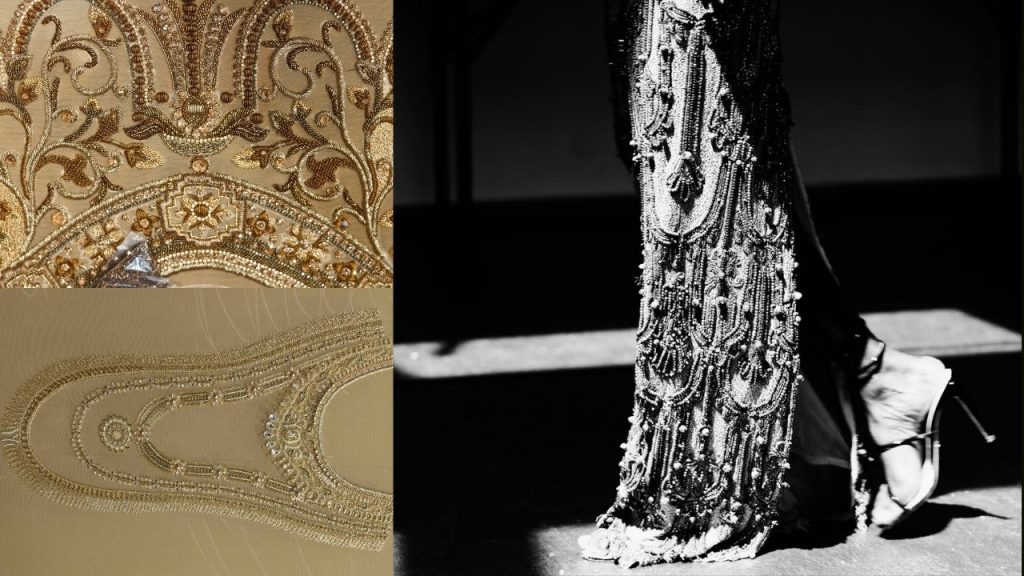
Utilizing a revolutionary single-thread embroidery technique, the atelier spent thousands of man-hours building up layers of thread to create three-dimensional relief patterns. These patterns mimic the ancient temple carvings found in places like Khajuraho or Ellora. The result is a visual paradox: the garments look heavy, cold, and ancient, yet they are crafted from supple, elastic fabrics that allow for fluid movement. This technique allows the wearer to carry the weight of history without the physical burden, merging the monumental feel of architecture with the lightness required for modern haute couture.
The single-thread technique requires an extraordinary level of precision. A single misplaced stitch can disrupt the entire relief, meaning only the most master artisans—many of whom have worked with Mishra for over a decade—are tasked with these specific pieces. By pushing the boundaries of what embroidery can achieve, Mishra is challenging the industry’s definition of "texture," moving from two-dimensional decoration to three-dimensional structural engineering.
A Masterclass in Traditional Indian Kriya
At the heart of the "Devi" collection lies a commitment to preserving and elevating traditional Indian kriya (craft). Mishra has long been an advocate for "slow fashion," a philosophy that prioritizes the welfare of the maker and the longevity of the garment over the speed of production. For the 2026–2027 season, he utilized three primary embroidery styles that have defined Indian luxury for centuries: Zardozi, Aari, and Naqshi.
- Zardozi: This ancient Persian-origin technique involves the use of metallic threads (traditionally gold and silver) to create elaborate patterns. In the "Devi" collection, Zardozi was used to outline the "stone" reliefs, adding a subtle glimmer that mimics the way sunlight hits wet rock.
- Aari: Performed with a specialized hooked needle, Aari embroidery allows for fine, concentric patterns. Mishra used this to create the intricate floral landscapes that have become his signature, though this season they were rendered in more muted, autumnal tones to fit the Fall/Winter theme.
- Naqshi: This technique involves the use of coiled metallic wires. It was employed in the collection to create volume and skeletal structures within the garments, providing a sense of "armor" that aligns with the theme of the protective Goddess.
By integrating these techniques into a contemporary Parisian context, Mishra is performing a vital service to the global fashion ecosystem. He is proving that traditional crafts are not relics of the past but are capable of leading the most modern conversations in design.
The Visual Narrative: Palette and Materiality
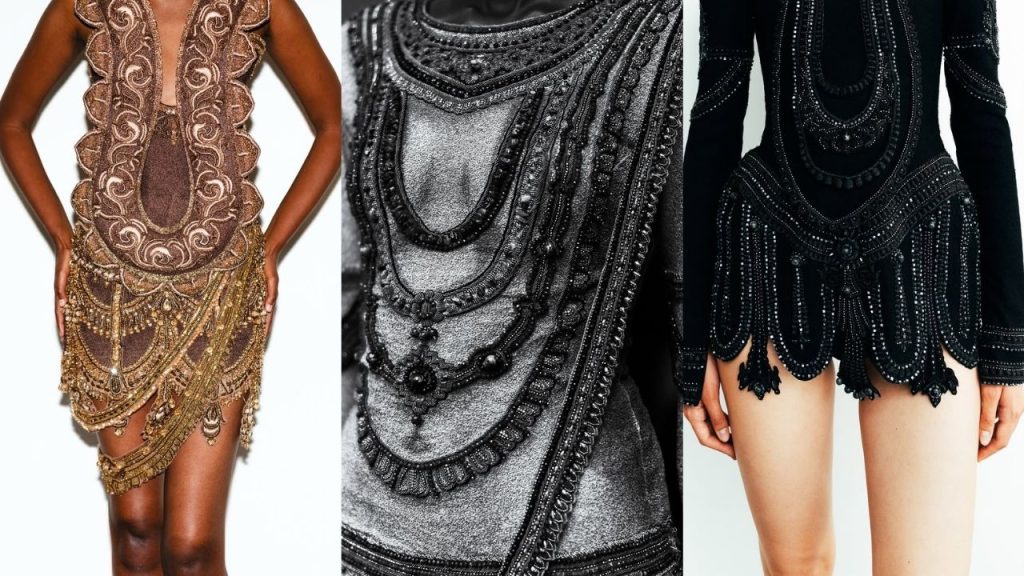
The color story of "Devi" is a departure from the vibrant, kaleidoscopic hues of Mishra’s previous spring collections. For Fall/Winter 2026–2027, the designer opted for a palette that evokes both the earth and the heavens. Deep emerald greens and rich ruby reds represent the life-giving force of nature, while ivory and stark black provide a canvas for the "stone" embroideries.
Gold remains a central protagonist throughout the collection. However, rather than a flashy, yellow gold, Mishra utilized antique brass and matte gold tones, suggesting a sense of weathered majesty. The use of crystals and metallic sequins was strategically applied to catch the light, creating a shimmering "halo" effect around the models as they walked, further emphasizing the divine theme.
The materials used were equally diverse. Silk crepes, fine tulles, and hand-woven organzas provided the base for the heavy embroideries. The juxtaposition of a sheer, weightless sleeve against a heavily embroidered bodice served as a metaphor for the Devi herself: a blend of the ethereal and the grounded.
Socio-Economic Impact and the "Reverse Migration" Model
Beyond the aesthetic triumphs, the "Devi" collection is a product of Rahul Mishra’s unique socio-economic business model. Mishra is a vocal proponent of "reverse migration," a system where he brings work to the artisans in their own villages rather than forcing them to migrate to overcrowded urban centers like Delhi or Mumbai.
The production of the "Devi" collection supported hundreds of families across rural India. By providing consistent, high-wage work to traditional craftsmen, Mishra is ensuring that these skills are passed down to the next generation. In an era where "sustainability" is often used as a marketing buzzword, Mishra’s approach offers a tangible example of social sustainability. The 1,200 to 3,000 hours required for each piece in this collection represent not just luxury, but a sustainable livelihood for the people who made them.
Industry Reception and Broader Implications
The reception of "Devi" among fashion critics and industry insiders has been overwhelmingly positive. Analysts have noted that Mishra is currently one of the few designers in the haute couture circuit who is successfully blending high-concept philosophy with wearable art. As the luxury market in India continues to expand—projected to reach new heights by late 2026—Mishra’s success in Paris serves as a beacon for the entire South Asian fashion industry.
The collection also reflects a broader trend in global fashion: the move toward "artisanal maximalism." After years of minimalism dominating the runways, there is a renewed hunger for garments that show the "hand of the maker." Mishra’s work, which is impossible to replicate via machine or AI, stands as a defense of human creativity and manual labor in an increasingly automated world.
Conclusion: The Enduring Power of the Devi
As the final look—a breathtaking gown featuring a full "carved" relief of a celestial landscape—closed the show, it was clear that Rahul Mishra had achieved more than just a successful fashion collection. He had created a cultural dialogue between the past and the future.
"Devi" Fall/Winter 2026–2027 is a reminder that fashion, at its highest level, is a form of storytelling. Through his mastery of embroidery and his deep respect for his heritage, Mishra has told a story of empowerment, resilience, and the sacredness of nature. Every stitch in this collection serves as a tribute to the women who inspire it and the artisans who breathe life into it. In the hallowed halls of Paris, the spirit of the Devi found a new form, proving that the ancient energy of the feminine is as relevant today as it was thousands of years ago.