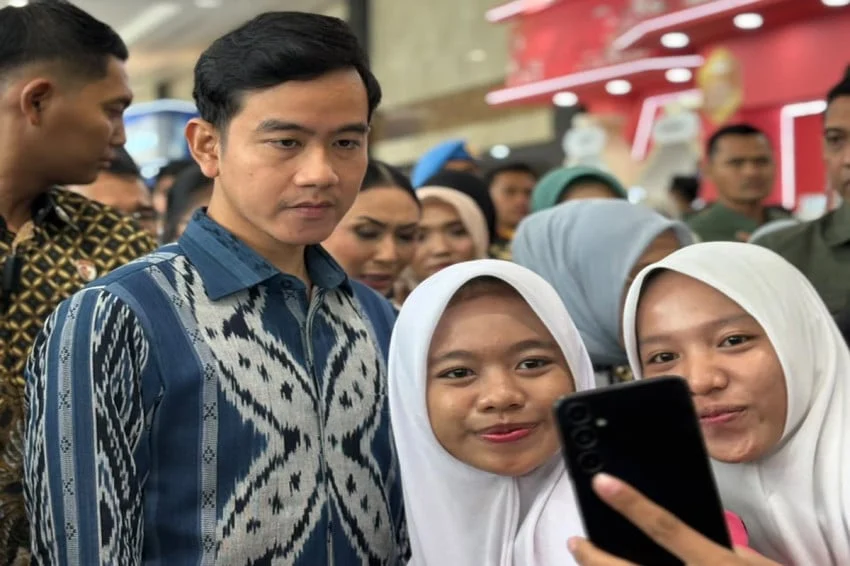
JAKARTA — Political tensions in Indonesia’s capital have escalated significantly following a landmark Supreme Court decision regarding the educational credentials of Vice President Gibran Rakabuming Raka. Syarifuddin Sudding, Chairman of the National Mandate Party (PAN) faction in the People’s Consultative Assembly (MPR RI), has publicly called upon the Vice President to demonstrate political statesmanship by stepping down from his office voluntarily. The appeal follows a formal judicial ruling that invalidated the high school equivalency certificate utilized by Gibran during his registration as a vice-presidential candidate in the 2024 general elections.
The controversy centers on Supreme Court Cassation Decision Number 742 K/TUN/2026, dated October 30, 2026. The high court granted the cassation petition filed by Subhan Palal, a concerned citizen and legal petitioner, which challenged the legal validity of the High School Education Equivalency Certificate belonging to the eldest son of former President Joko Widodo. According to the ruling, the administrative document is officially declared null and void, and the court has mandated that the document be surrendered and systematically destroyed by the party currently holding it. Because this certificate served as a mandatory administrative requirement during the 2024 presidential election nomination process, the judicial decision has cast a shadow of legal uncertainty over the legitimacy of Gibran’s candidacy and subsequent election.
Speaking to journalists in Jakarta, Sudding emphasized that the Supreme Court’s decision carries executory legal weight and cannot simply be ignored or left unexecuted. He argued that upholding the rule of law requires administrative and political alignment with judicial findings, particularly when matters concerning constitutional requirements for high public office are brought to light. "Vice President Gibran Rakabuming Raka should gracefully choose to resign in light of the Supreme Court’s decision," Sudding stated. Furthermore, the senior politician warned that if the Vice President declines to step down voluntarily, the House of Representatives (DPR RI) must be prepared to initiate formal political and constitutional measures to resolve the crisis.
The Chronology of the Educational Credential Dispute
The legal challenge against Gibran’s educational paperwork did not materialize overnight; rather, it represents the culmination of a protracted legal battle that began prior to the 2024 polls. Questions regarding the authenticity and equivalency of the Vice President’s secondary education background circulated during the heat of the presidential campaign, driven by civil society groups and political opponents who scrutinized his academic trajectory abroad and the corresponding domestic equivalency paperwork issued by the Ministry of Education, Culture, Research, and Technology.
Following the general elections and the inauguration of the Prabowo-Gibran administration, legal activists and concerned citizens intensified efforts to test the administrative validity of the documents through the State Administrative Court (PTUN) system. Subhan Palal spearheaded the legal challenge, arguing that the issuance procedure of the equivalency certificate violated prevailing administrative regulations and statutory requirements.
After winding its way through the lower administrative courts, the case ultimately reached the Supreme Court. The October 30, 2026 ruling effectively overturned previous lower court decisions that had favored the state’s issuance of the document, bringing a definitive judicial conclusion regarding the status of the certificate. The court’s verdict established that the administrative clearance provided to Gibran lacked proper legal grounding, thereby stripping away the foundational administrative proof required for his eligibility under the General Elections Commission (KPU) regulations.
Constitutional Mechanisms and the Role of the DPR
In the wake of the Supreme Court’s verdict, legal and political analysts have intensely debated the appropriate mechanisms to address the executive branch crisis. Sudding pointed specifically to Articles 7A and 7B of the 1945 Constitution (UUD 1945) as the definitive constitutional pathways should the executive leadership fail to resolve the matter independently.
Under the Indonesian constitutional framework, Articles 7A and 7B outline the precise impeachment and dismissal procedures for the President and/or Vice President. Grounds for dismissal include treason, corruption, bribery, other severe criminal offenses, or moral turpitude, as well as a failure to meet the constitutional requirements for holding office. Constitutional law experts note that a judicial finding invalidating a mandatory candidate registration document touches directly upon the question of whether the official fulfilled the legal qualifications to assume office.
If the Vice President refuses to submit a resignation letter, the DPR possesses the constitutional authority to initiate an inquiry. This process typically begins with the House exercising its Right to Express an Opinion (Hak Menyatakan Pendapat), a mechanism previously championed by prominent political observers such as Ray Rangkuti, who publicly urged parliamentarians to invoke this oversight tool immediately following the publication of the Supreme Court verdict.

Should the DPR decide to pursue this parliamentary route, it requires substantial political consolidation across party lines. The motion must pass through rigorous committee reviews, plenary debates, and ultimately secure a specified quorum and voting majority before the dossier can be transmitted to the Constitutional Court (MK) for legal review and final adjudication. Only after the Constitutional Court rules that the accusations are legally substantiated can the MPR convene to formally dismiss the official.
Broader Political Reactions and Civil Society Pressure
The Supreme Court’s decision and Sudding’s subsequent statement have sent shockwaves through the national political landscape, prompting varied responses from political parties, legal scholars, and civil society organizations. While PAN has taken a clear stance urging voluntary resignation or constitutional enforcement, other coalition partners within the government have urged caution, emphasizing the need for institutional stability and a thorough, sober review of the court’s exact legal implications.
Proponents of the ruling argue that the integrity of Indonesia’s democratic institutions relies heavily on strict adherence to electoral laws and administrative transparency. They contend that allowing a high-ranking official to remain in office despite possessing invalidated candidate credentials undermines public trust in the electoral process and sets a dangerous legal precedent. Civil society groups have mobilized digital campaigns and policy discussions, demanding that legislative bodies exercise their oversight duties without partisan hesitation.
Conversely, defenders of the administration and legal representatives for the Vice President have previously maintained that all documentation submitted during the 2024 election cycle complied fully with the regulations enforced by the General Elections Commission at the time. They view the judicial challenge as an extension of post-election political maneuvers designed to destabilize the democratically elected government. Legal teams are reportedly reviewing the full text of the Supreme Court’s cassation decision to determine whether extraordinary legal remedies, such as a judicial review (Peninjauan Kembali), remain viable options to contest the verdict.
Implications for the Executive Branch and National Stability
The ongoing controversy poses significant governance challenges for the administration of President Prabowo Subianto. As the executive branch seeks to implement its ambitious national development agenda, legislative distractions stemming from the Vice President’s credential dispute threaten to divert political capital and stall parliamentary cooperation.
Economic analysts and foreign observers are closely monitoring the situation, noting that political stability is a critical factor for investor confidence in Southeast Asia’s largest economy. While markets have largely maintained their composure in the immediate aftermath of the announcement, prolonged constitutional uncertainty or an aggressive parliamentary impeachment battle could introduce volatility into domestic financial markets.
Furthermore, the case highlights systemic vulnerabilities in the vetting procedures managed by election organizers. The controversy underscores the necessity for more rigorous, transparent, and legally foolproof verification protocols during the candidate registration phase of future local and national elections. Ensuring that educational and administrative prerequisites are incontrovertible before candidates appear on the ballot is viewed by legal experts as an essential reform to prevent similar institutional crises in the years ahead.
Conclusion and Outlook
As Indonesia navigates this unprecedented legal and political juncture, all eyes remain focused on the actions of Vice President Gibran Rakabuming Raka and the leadership of the House of Representatives. Whether the matter will be resolved swiftly through a voluntary resignation—thereby upholding the spirit of political statesmanship advocated by figures like Syarifuddin Sudding—or whether it will precipitate a complex constitutional showdown in the parliament and the Constitutional Court depends on the political calculations of the nation’s elite in the coming weeks.
The coming days will test the resilience of Indonesia’s democratic checks and balances. As political parties caucus to determine their official stances, the nation awaits a resolution that balances respect for judicial supremacy, constitutional integrity, and the overarching need for administrative continuity and national stability.