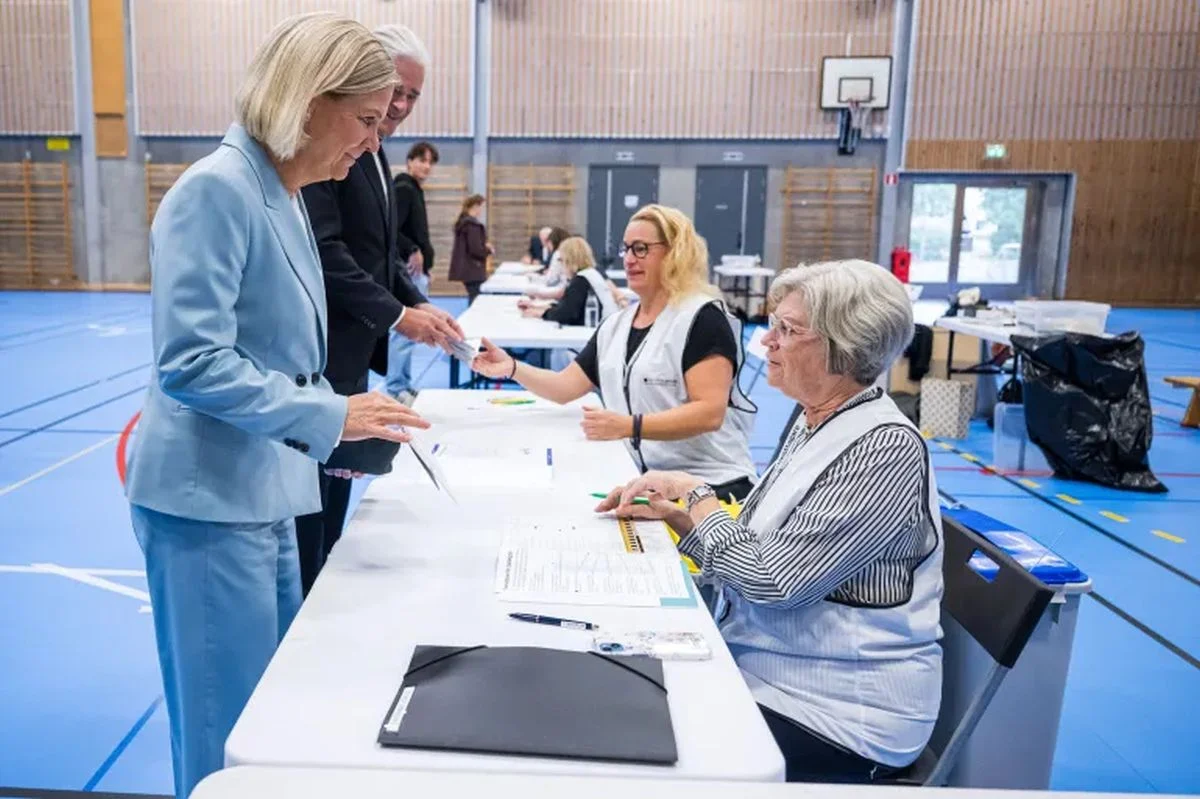
Sweden entered a pivotal electoral cycle on Sunday, September 13, 2026, as citizens across the Nordic nation cast their ballots in a general election defined by intense polarization and uncertainty. The outcome of this contest is poised to determine whether the incumbent center-left coalition, led by Prime Minister Magdalena Andersson, retains its grip on power or if a reinvigorated right-wing bloc, anchored by the Sweden Democrats, will ascend to government for the first time in modern history.
The polling stations opened their doors at 08:00 local time (06:00 GMT), marking the culmination of a campaign season that has touched upon deep-seated anxieties regarding the economy, immigration policy, and the country’s role within the European Union. By the time the polls closed, the electorate had faced a binary choice: a continuation of the social-democratic model or a sharp pivot toward conservative governance.
A Nation at a Political Crossroads
The electoral map in Sweden has shifted dramatically over the past decade. Traditionally known for its robust welfare state and consensus-driven politics, Sweden has seen the rise of populist movements that have challenged the established order. Prime Minister Magdalena Andersson, who made history in 2021 as the first woman to lead the Swedish government, arrived at a polling station in her home municipality of Nacka, south of Stockholm, to cast her vote alongside her husband.
For Andersson, the stakes are existential. Her campaign has focused on the preservation of the Swedish model—a blend of free-market capitalism and extensive public services. However, she faces a formidable opponent in Ulf Kristersson, leader of the Moderate Party. Kristersson has spent the final weeks of the campaign weaving together an alliance that includes the controversial Sweden Democrats. This coalition represents a significant departure from the historical practice of excluding far-right elements from the halls of executive power.
Historical Context and the Rise of the Right
To understand the current political climate, one must look at the trajectory of the Sweden Democrats. Founded in the late 1980s, the party spent years on the fringes of Swedish political life, often dismissed by mainstream parties as xenophobic and radical. However, through a process of professionalization and a strategic shift in their messaging—focusing heavily on the intersection of migration, law and order, and national identity—the party has successfully moved into the mainstream.
In previous elections, the "cordon sanitaire" imposed by both center-left and center-right parties effectively neutralized the Sweden Democrats’ ability to influence government policy. The 2026 election cycle has shattered that barrier. Ulf Kristersson’s decision to engage in formal cooperation with the Sweden Democrats has fundamentally altered the political calculus, forcing voters to decide whether they are comfortable with the far-right gaining a seat at the cabinet table.
Chronology of the 2026 Election Campaign
The road to this Sunday’s vote was paved with significant political turbulence:
- January 2026: The government faces intense scrutiny over rising energy costs and the lingering effects of global supply chain disruptions.
- April 2026: Prime Minister Andersson’s administration announces a series of fiscal packages aimed at curbing inflation, yet polls show the right-wing bloc gaining momentum as the cost of living dominates public discourse.
- June 2026: Formal debates solidify the divide between the two camps. The Sweden Democrats successfully frame the narrative around national security and crime, effectively peeling away voters from traditional center-right parties.
- August 2026: The final month of campaigning sees the narrowing of the gap in polling data. While the left-leaning bloc initially maintained a comfortable lead, the "enthusiasm gap" favors the right, with rallies for the opposition seeing record attendance.
- September 13, 2026: Election Day. Heavy voter turnout is reported across major urban centers, including Stockholm, Gothenburg, and Malmö, signaling high levels of civic engagement and public anxiety regarding the election’s outcome.
Key Issues Defining the Electorate
The debate among the Swedish public has been dominated by three primary pillars:
1. The Economy and Inflation: Like much of Europe, Sweden has been grappling with the aftermath of economic volatility. While the nation boasts a high GDP per capita, the average household has felt the pinch of stagnant wage growth and rising interest rates. The incumbent government’s ability to manage the transition to a post-fossil fuel economy while protecting social benefits has been a central point of contention.

2. Immigration and Social Integration: For years, the Sweden Democrats have made immigration the cornerstone of their platform. In 2026, this rhetoric has found a broader audience, with voters expressing concerns about the pace of integration and the perceived impact on Swedish social cohesion. The left-wing bloc has struggled to counter this narrative, often finding themselves on the defensive regarding past integration policies.
3. Public Safety and Crime: A surge in gang-related violence in major Swedish cities has been a gift to the political right. Kristersson’s alliance has campaigned on a "law and order" platform, promising stricter sentencing and increased funding for police forces. Andersson’s camp has countered with a focus on education and social intervention, but many voters appear to be favoring the promise of immediate, punitive action.
Official Statements and Political Rhetoric
As the results began to trickle in, the rhetoric from party leaders underscored the gravity of the moment. Magdalena Andersson, speaking to the media shortly after casting her vote, emphasized the magnitude of the choice. "Now it is up to the Swedish people to decide which direction our country should take," she remarked. "Should we have a government that is entirely dominated by the Sweden Democrats—something that has never happened in Sweden before? Or should we have a government led by me, which will steer Sweden in a new spirit of cooperation?"
On the other side of the aisle, Ulf Kristersson’s camp projected confidence. While the Moderate Party has historically maintained a distance from the more extreme elements of the right, the party leadership has argued that a change in leadership is necessary to break the "paralysis" of the current administration. The alliance argues that the traditional left-wing coalition has run out of ideas and that only a right-wing government can provide the necessary structural reforms to revitalize the Swedish economy.
Analytical Implications: What’s at Stake?
The implications of this election extend far beyond Sweden’s borders. As a member of the European Union, Sweden’s shift toward a right-wing government would likely embolden similar movements across the Nordic region and the broader EU. If the Sweden Democrats gain influence, it could lead to a more skeptical stance on European integration, particularly regarding budget transfers and migration quotas.
From an economic perspective, investors are watching the election closely. Sweden’s stability has historically made it a prime location for international capital. A shift in government could signal changes in tax policy, labor market regulations, and the management of state-owned enterprises. While the right-wing bloc has promised business-friendly reforms, the uncertainty surrounding the stability of a potential coalition government remains a risk factor.
Furthermore, the result will serve as a bellwether for the future of social democracy in Europe. Sweden has long been the gold standard for the "Nordic Model." Should the electorate turn decisively toward the right, it may signal that even the most established welfare states are susceptible to the global trend of political polarization and the erosion of centrist consensus.
The Path Forward
Regardless of the final tally, the next few days will be defined by intense negotiations. Given the fragmented nature of the Swedish parliament, it is highly likely that no single party will secure an absolute majority. This will necessitate the formation of a coalition government, a process that can be protracted and fraught with compromise.
The role of the smaller parties—such as the Center Party, the Liberals, and the Greens—will be crucial. These parties find themselves in the role of kingmakers, holding the balance of power in a parliament that has become increasingly defined by two large, diametrically opposed blocs. Whether a stable government can be formed quickly or if the country faces a period of legislative deadlock remains to be seen.
As the sun sets on the 2026 election day, Sweden stands at a moment of profound transformation. The voices of the electorate, expressed through the ballot box, have sent a clear message that the status quo is no longer sufficient. Whether that message leads to a new era of conservative governance or a recalibrated left-wing administration, the path forward will undoubtedly be shaped by the deep divisions and high hopes that characterized this historic campaign. The world watches as one of Europe’s most stable democracies navigates a transition that could redefine its political identity for a generation.