
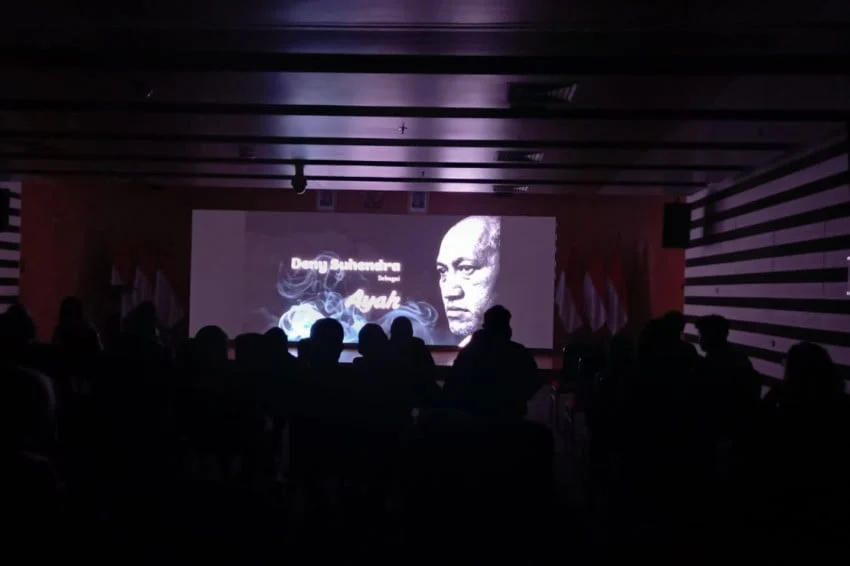
The Anti-Corruption Film Festival (ACFFEST) 2026 has officially commenced, reaffirming its status as a pivotal cultural platform for the Indonesian Corruption Eradication Commission (KPK). By utilizing the medium of cinema to disseminate values of integrity, honesty, and accountability, the festival has evolved from a niche awareness project into a comprehensive movement that bridges the gap between grassroots social realities and national anti-corruption discourse. Launched at the KPK’s Anti-Corruption Education Center in Jakarta on November 3, 2026, this year’s iteration emphasizes the importance of embedding ethical consciousness within the fabric of daily life rather than treating it as an abstract legal concept.
The Evolution of ACFFEST as a Cultural Catalyst
Since its inception, ACFFEST has served as the creative arm of the Directorate of Anti-Corruption Socialization and Campaigns at the KPK. The festival operates on the premise that formal legal education regarding corruption is often insufficient to trigger behavioral change. Instead, by translating the complexities of bureaucratic malfeasance, power abuse, and ethical dilemmas into compelling visual narratives, the festival reaches a broader, more diverse demographic.
The 2026 edition represents a significant scaling effort. With a reach spanning 12 provinces and 42 distinct screening locations, the "Movie Day" program has successfully engaged 6,356 participants. This expansion is not merely quantitative; it reflects a deliberate strategy to decentralize the anti-corruption conversation, moving it away from the capital city and into the heart of regional communities where local governance and public service delivery often intersect with the daily lives of citizens.
Institutional Vision and Strategic Objectives
KPK Chairperson Setyo Budiyanto, in his opening remarks, underscored the urgency of ensuring that these cinematic works transcend the festival circuit. "My hope is that these films do not stop at the festival stage," Budiyanto stated. The long-term goal of the commission is to facilitate the distribution of these works through national cinema chains and prominent streaming platforms. By integrating these films into mainstream media consumption, the KPK aims to spark public dialogue that persists long after the festival concludes.
The significance of this year’s festival lies in its dual approach: film exhibition and capacity building. The inclusion of the "Movie Camp" program is a critical component of the festival’s infrastructure. Earlier in the year, between July 21 and 24, 2026, five selected film projects underwent intensive online training, mentorship, and pitching sessions. This process, facilitated by industry experts, ensured that the final products maintained high artistic standards while remaining grounded in the thematic rigor of the anti-corruption mandate.
Diverse Thematic Landscapes and Narrative Innovation
ACFFEST 2026 features 10 curated program categories, each designed to tackle different facets of the integrity crisis. The themes—ranging from "Her Side of the Story" and "Little Voices" to "Darkly Funny" and "Beyond the Archipelago"—illustrate a shift away from the traditional, often dry, depictions of white-collar crime.
The inclusion of genres such as satire, family drama, and mystery is a strategic narrative choice. It allows filmmakers to explore the psychological and sociological roots of corruption. By portraying corruption not as an isolated criminal act but as a systemic issue that compromises family relationships, local village governance, and personal moral compasses, the films provide a relatable point of entry for the audience. The "Beyond the Archipelago" program, in particular, highlights how regional cultural nuances shape the perception of authority and public service, providing a mosaic of the Indonesian experience.
Case Study: The Anatomy of Corruption in "Selisih"
A prime example of the festival’s narrative effectiveness is the short film Selisih, produced by Banoto Imagine from West Kalimantan. Directed by Agus Muri Arviandi and produced by Deni Hartin, the film offers a granular look at the "normalization" of corruption within a village context.
The plot follows Rivan, a village treasurer, who is coerced into manipulating financial reports to ensure the village retains its budget allocation for the following year. The film avoids the archetypal villain trope, instead painting a portrait of a man caught in a web of personal tragedy—his decision to embezzle is fueled by the need to purchase a wheelchair for his mother. This emotional conflict serves as a microcosm for the larger issue of systemic corruption: the rationalization of unethical behavior for "noble" or "necessary" ends.
Selisih further demonstrates the generational transmission of corruption. By the film’s conclusion, Rivan has become the architect of the very system he once questioned, now demanding the same unethical compliance from his subordinates. This trajectory highlights the "broken windows" theory of public ethics: once small, localized violations are permitted to go unpunished, they create an environment where systemic, institutionalized corruption becomes the standard operational procedure.
Broadening the Scope: Economic and Social Implications
The implications of ACFFEST 2026 extend beyond the film industry. By fostering a culture that questions the legitimacy of "shortcuts" and "favors," the KPK is attempting to shift the socio-cultural landscape of Indonesia. Sociological research suggests that in societies where corruption is deeply embedded in the social fabric, top-down enforcement is rarely enough to eradicate the practice. Grassroots cultural interventions, such as those promoted by ACFFEST, are essential to building the long-term "integrity infrastructure" required for sustainable development.
Moreover, the festival’s focus on the "In the Public Interest" and "Small Problems Big Trouble" themes points toward an understanding of how petty corruption—the kind that impacts access to healthcare, education, and basic infrastructure—is the precursor to grand-scale embezzlement. By focusing on these localized impacts, the festival makes the fight against corruption a personal priority for citizens rather than an abstract responsibility of the state.
Chronology of the 2026 Festival Circuit
- July 21–24, 2026: The Movie Camp phase, involving intensive pitching, workshops, and mentorship for the five finalist projects.
- November 3, 2026: Official opening ceremony at the KPK’s Anti-Corruption Education Center in Jakarta, attended by commission leadership and key stakeholders.
- November 2026 (Ongoing): The Movie Day program, executing screenings across 12 provinces and 42 separate locations, aimed at high school students, community groups, and regional administrative offices.
- Future Projections: The KPK is currently exploring partnerships with national cinema chains and major digital streaming services to ensure that the 2026 catalog reaches a wider, non-festival audience throughout 2027.
Challenges and Future Prospects
Despite the success of ACFFEST 2026, the challenge of maintaining momentum remains. The transition from a government-led festival to a self-sustaining cultural movement requires continued investment in the creative sector. Critics of such programs often note that while awareness is high, structural change in the judicial and bureaucratic systems must keep pace with the cultural shift.
However, the efficacy of ACFFEST should not be judged solely by policy changes but by the volume of discourse it generates. By providing a platform for the voices of filmmakers from Kalimantan, Sumatra, and beyond, the KPK is ensuring that the anti-corruption message is articulated in the diverse languages and cultural contexts of the Indonesian people.
The inclusion of films that deal with complex themes—such as the manipulation of village budgets or the pressures on public servants—suggests that the Indonesian cinematic community is increasingly willing to engage with the uncomfortable realities of their nation’s governance. As the festival continues its journey through the 42 designated screening points, the data gathered from audience surveys and participation rates will likely provide the KPK with invaluable insights into how different regions perceive the anti-corruption movement.
Ultimately, ACFFEST 2026 stands as a testament to the power of the visual arts in promoting national values. Whether through the lens of a village treasurer’s dilemma or the broader strokes of institutional critique, the festival remains a vital mechanism for fostering an environment where integrity is not just an ideal, but a practiced reality. As the screenings conclude and the films prepare for wider distribution, the hope remains that this creative endeavor will serve as a catalyst for a more transparent, honest, and accountable future for Indonesia.
