
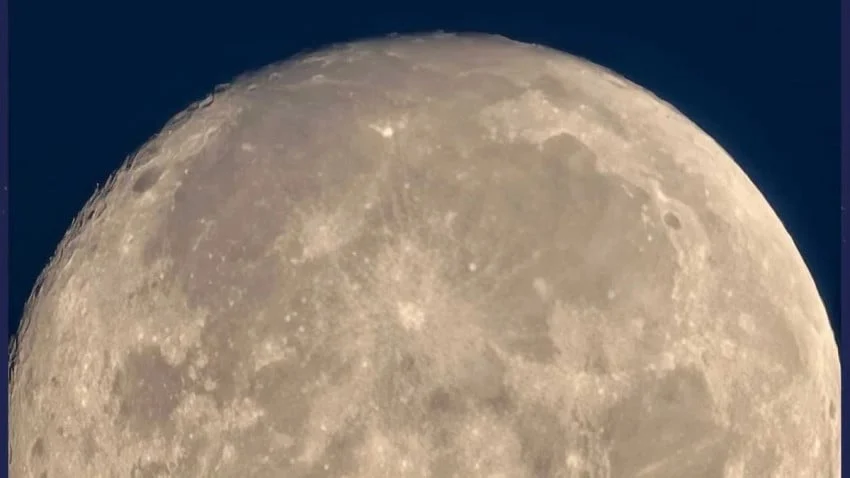
The landscape of mobile photography is currently undergoing a transformative shift as Honor, the global technology leader, prepares to unveil its latest flagship, the Honor Magic 9 Pro Max. Recent teasers released by the company have showcased unprecedented capabilities in long-range astrophotography, specifically capturing detailed imagery of the lunar surface. This development signals a departure from the industry’s heavy reliance on software-based computational photography, pivoting instead toward a hybrid model that prioritizes advanced optical hardware and modular accessory ecosystems. As the smartphone market faces saturation in processing power and display technology, optical prowess has emerged as the new frontier for flagship competition.
The Evolution of Mobile Optics and the Lunar Challenge
For over a decade, the primary metric for smartphone camera superiority was dominated by megapixel counts, followed by the introduction of dual-sensor setups, and finally, the era of sophisticated AI-driven computational photography. Manufacturers have long attempted to replicate the "moonshot" effect, often relying on heavy AI processing to sharpen textures that the physical lens could not naturally resolve. Honor’s recent marketing campaign, which directly challenges the current market leaders—including the anticipated iPhone 18 Pro—positions the Magic 9 Pro Max as a disruptive force that bridges the gap between pocket-sized convenience and professional-grade telephoto performance.
The ability to photograph the moon is widely considered the "gold standard" for testing a mobile device’s telephoto capabilities. It requires a precise combination of long focal lengths, high-quality glass, and extremely stable image processing to overcome atmospheric distortion and the physical limitations of small sensors. By introducing the Photography Master Kit, Honor is effectively turning its flagship device into a modular optical instrument, a move that harks back to the early days of high-end compact cameras while maintaining the connectivity of a modern smartphone.
Chronology of the Magic 9 Pro Max Reveal
The anticipation surrounding the Honor Magic 9 Pro Max began building in mid-2024 as leaks surfaced regarding a new, proprietary hardware interface located on the rear of the device. The timeline of the launch is structured to maximize market impact ahead of the Q4 holiday cycle:
- August 2024: Initial reports emerge regarding Honor’s collaboration with optical specialists to develop an external, swappable lens system.
- Early September 2024: Honor releases a series of "teaser" images capturing the autumn moon with stunning clarity, explicitly challenging competitors to match the detail and color accuracy.
- September 15, 2024: The "Photography Master Kit" is officially teased, confirming the inclusion of interchangeable telephoto lenses.
- September 28, 2024: The scheduled date for the official global launch event in Beijing, where the technical specifications of the camera array will be disclosed in full.
Anatomy of the Photography Master Kit
At the core of the Honor Magic 9 Pro Max’s appeal is the Photography Master Kit. Unlike previous attempts at smartphone lens attachments, which often relied on generic clip-on mechanics that compromised image quality, Honor has engineered a proprietary mounting system. This allows the kit to integrate directly with the Magic 9 Pro Max’s primary sensor, ensuring that the light path remains unobstructed and aligned with the high-resolution hardware.
The standout component of this kit is the "Honor Thumb" lens. This is a 200mm equivalent telephoto lens designed with a focus on portability without sacrificing the optical integrity required for long-distance shots. By utilizing advanced refractive glass elements, the lens achieves a significant zoom magnification factor, effectively acting as a "mini-telescope." This allows users to capture celestial bodies or distant architectural details that would appear as nothing more than blurred pixels on standard mobile cameras.
Industry analysts note that the introduction of a 200mm focal length in a modular format addresses the "physics problem"—the fact that a thin smartphone chassis cannot physically house the glass elements required for such extreme magnification. By offloading this requirement to a detachable accessory, Honor manages to keep the phone slim for daily use while providing a professional toolkit for enthusiasts.
Market Implications and Competitive Analysis
The strategy employed by Honor highlights a growing trend in the premium smartphone segment: "Hardware-First" differentiation. As software processing reaches a point of diminishing returns, manufacturers are looking for ways to provide tangible hardware advantages that consumers can see and feel.
From a competitive standpoint, the direct challenge to the iPhone 18 Pro is calculated. Apple has historically focused on the integration of its ecosystem and computational stability. By contrast, Honor is targeting the enthusiast market—users who are willing to carry a small kit of lenses in exchange for a camera experience that mimics the capabilities of a dedicated mirrorless or DSLR setup.
Data from market research firms suggests that the premium smartphone segment is currently the most resilient to global economic downturns. Consumers are increasingly willing to pay a premium for devices that serve as "all-in-one" tools. If Honor’s Master Kit performs as advertised, it could create a new sub-category of "pro-sumer" smartphones, forcing competitors to either innovate their own modular systems or significantly upgrade their fixed lens arrays.
Official Stance and Technical Expectations
While Honor has kept the finer technical specifications under wraps until the September 28 event, the company’s messaging has been consistent: "Who else can do that?" This provocative marketing stance is designed to underscore the company’s commitment to R&D in the field of optoelectronics.
Engineers within the industry, though not affiliated with the project, have noted that the success of such a system will depend on how the Magic 9 Pro Max’s software handles the light transition between the sensor and the external glass. If the software can effectively calibrate for the specific optical characteristics of the 200mm Honor Thumb lens, it will represent a significant achievement in sensor-lens communication.
Furthermore, the integration of AI in this context is likely to be shifted from "generating details" to "optimizing data transmission." Rather than using AI to hallucinate lunar craters, the system is expected to use AI for high-speed tracking and image stabilization, ensuring that the user can maintain a focus lock on a distant object despite the natural tremors of the human hand.
Broader Impact on the Photography Industry
The move by Honor could have ripple effects across the entire photography industry. For years, the rise of the smartphone has decimated the entry-level "point-and-shoot" camera market. However, by embracing a hybrid, modular model, Honor is effectively reclaiming the space that dedicated camera manufacturers have struggled to hold.
If the Honor Magic 9 Pro Max proves that a modular smartphone can achieve professional-grade telephoto results, it may discourage casual photographers from purchasing dedicated entry-level telephoto lenses. This could compel camera manufacturers like Sony, Canon, and Nikon to deepen their collaborations with mobile tech companies to ensure that their optical expertise remains relevant in a mobile-first world.
Conclusion: A New Era of Mobile Imaging
The upcoming launch of the Honor Magic 9 Pro Max on September 28 is more than just a smartphone release; it is a statement of intent. By prioritizing optical excellence and introducing the modular Photography Master Kit, Honor is challenging the industry to stop relying solely on algorithms and start looking back at the fundamental physics of light and glass.
As the launch date approaches, the technology community remains focused on the practical performance of the 200mm Honor Thumb lens. Whether this modular approach will be adopted as the industry standard remains to be seen, but one thing is certain: the competition for the title of the world’s best camera phone has moved out of the lab and into the stars. For the professional enthusiast and the casual user alike, the ability to capture the moon with a device that fits in one’s pocket is a milestone in the history of mobile technology, marking a bold step forward in the democratization of high-end photography.
