
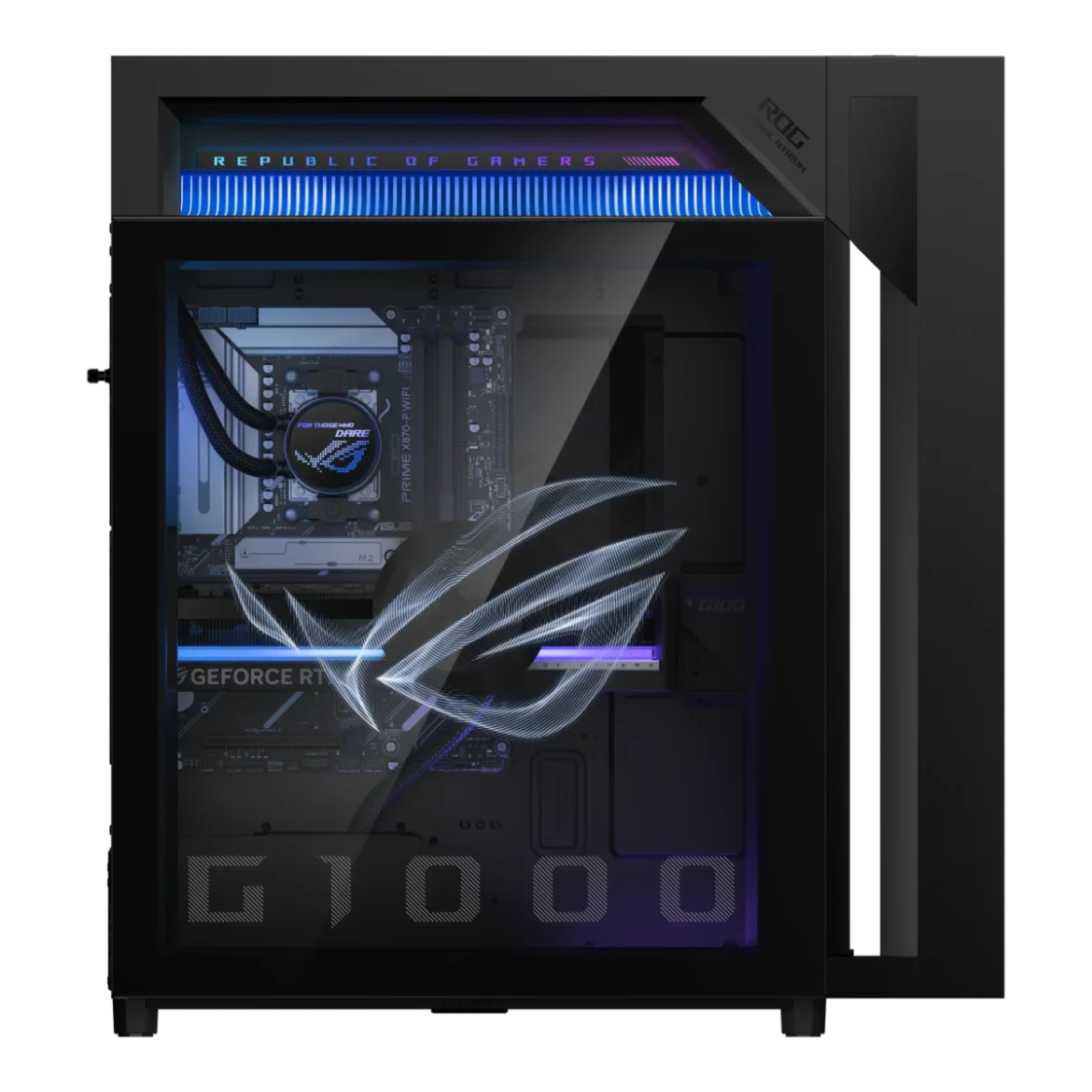
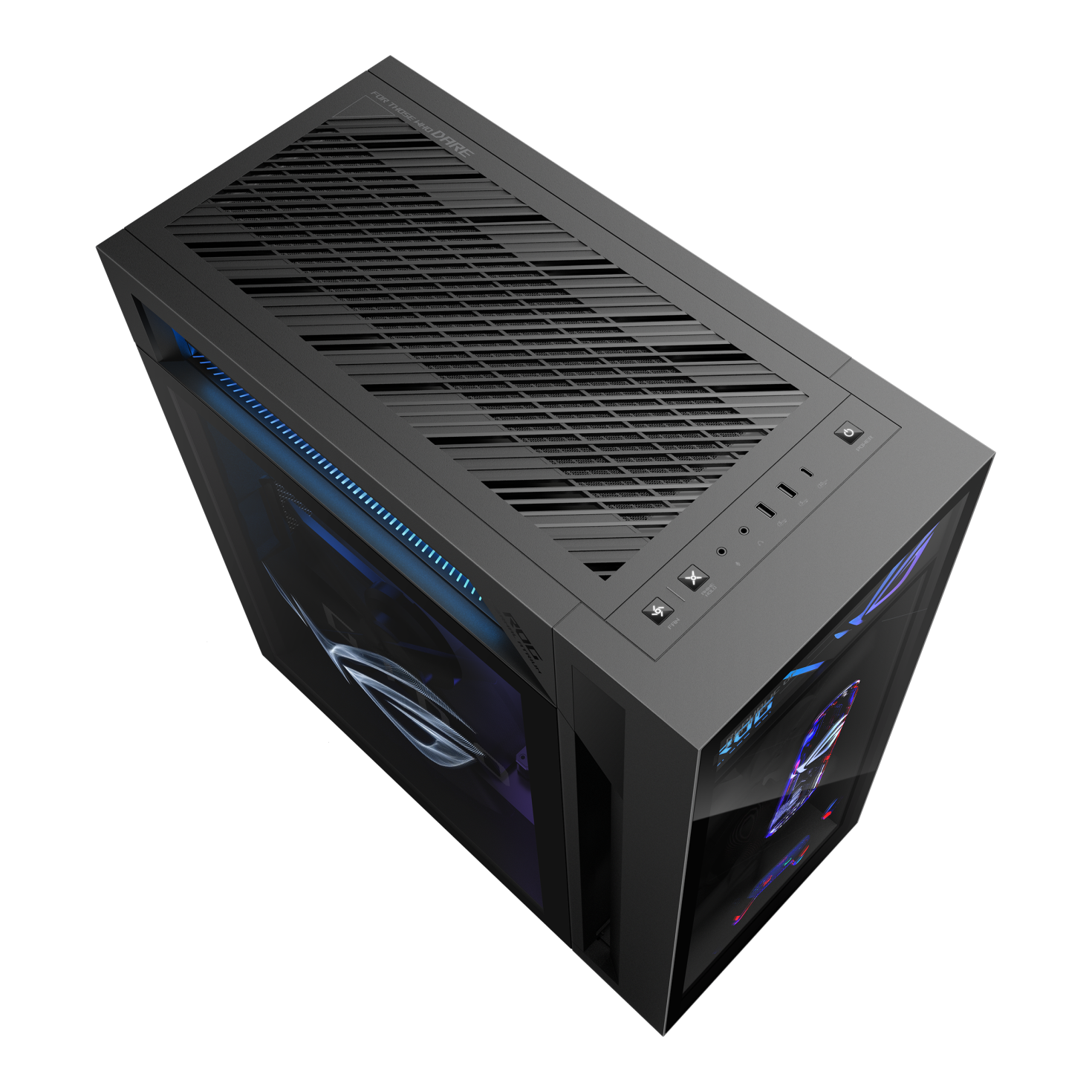
ASUS has officially commenced the global retail rollout of its much-anticipated flagship pre-built gaming desktop, the ROG G1000. Positioned firmly at the absolute pinnacle of consumer computing power, the ultra-tower system bridges the gap between extreme gaming hardware and professional workstation capabilities. Known traditionally for manufacturing individual enthusiast-grade components, peripherals, and high-performance graphics cards, the tech giant has poured its decades of engineering expertise into constructing a factory-assembled rig designed to obliterate modern AAA game titles at maximum graphical settings while maintaining optimal thermal efficiency.
The introduction of the ROG G1000 marks a significant milestone in the evolution of pre-built desktop systems. As hardware demands skyrocket with the integration of advanced ray tracing, complex physics engines, and high-refresh-rate 4K displays, gamers and content creators alike require machinery that can sustain peak performance without thermal throttling or systemic instability. ASUS addresses these rigorous demands by equipping the G1000 with cutting-edge processing architecture and an innovative thermal compartmentalization design known as ROG Thermal Atrium.
Engineering Excellence and Thermal Management
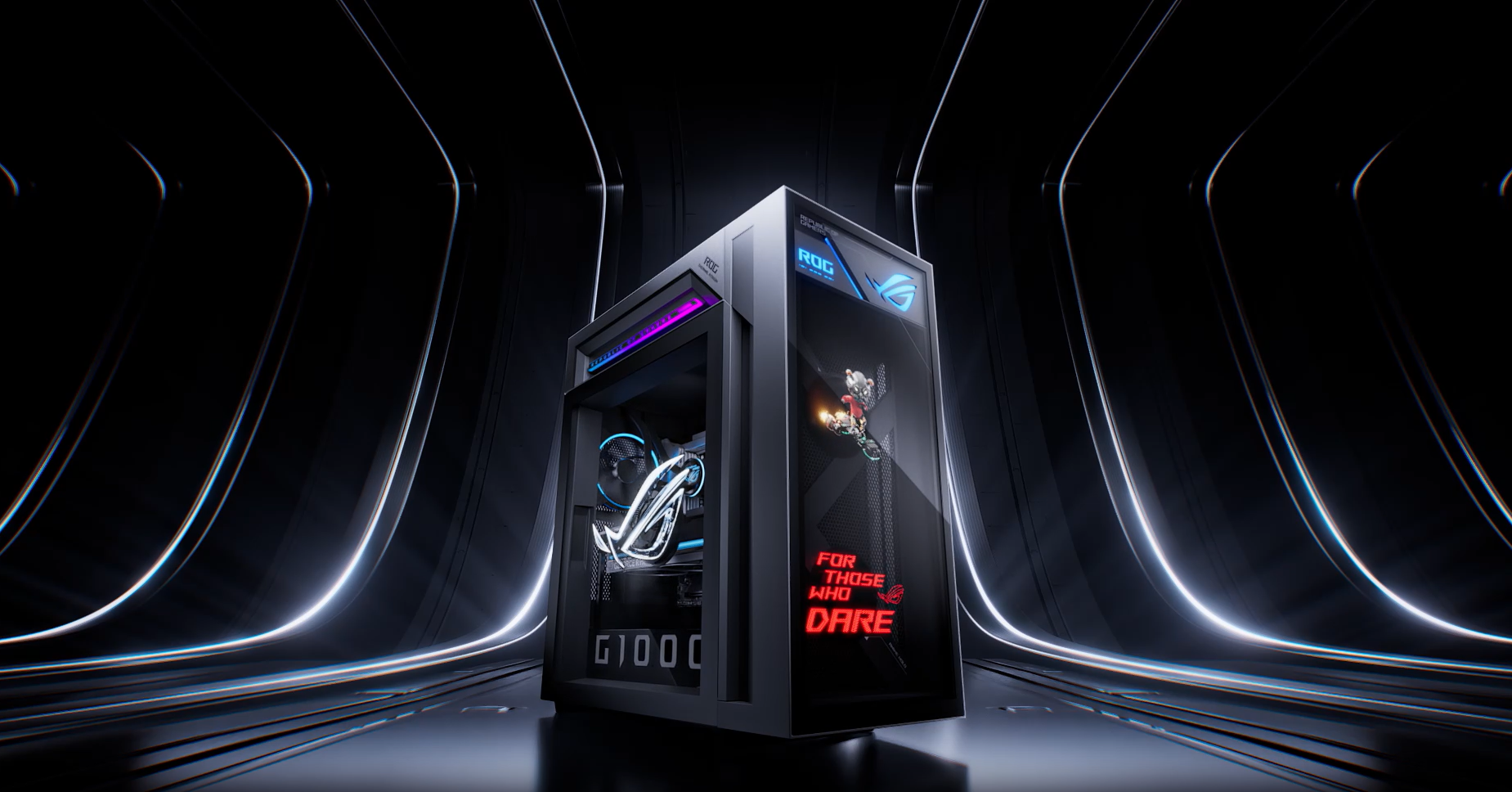
At the core of the ROG G1000’s architectural prowess is its sophisticated cooling infrastructure. High-performance computing hardware naturally generates immense amounts of heat, which historically creates bottlenecks in traditional tower chassis where warm air from the graphics card circulates over the central processing unit and power supply unit. ASUS resolved this engineering challenge by implementing the ROG Thermal Atrium, an innovative spatial design that physically separates the internal chassis into distinct cooling zones.
The system features a dedicated thermal chamber housing a massive 420mm All-In-One (AIO) liquid cooling radiator paired with three 140mm intake fans. By isolating this radiator from the main chassis, the CPU cooler draws in fresh ambient room air directly from the exterior, bypassing the residual heat typically expelled by high-draw GPUs and PSUs. According to internal metrics provided by ASUS, this isolated airflow architecture successfully reduces incoming air temperature for the CPU by up to 16 degrees Celsius compared to conventional desktop layouts.
Furthermore, the overall airflow distribution is meticulously managed across three independent zones. The graphics card receives a dedicated, unobstructed intake pathway from the front panel, while the power supply unit utilizes its own independent ventilation circuit drawing from the bottom of the enclosure. Designed comprehensively to dissipate a staggering thermal load of up to 1,000 watts, the system ensures that both the processor and the GPU can maintain sustained boost clocks over marathon gaming sessions or grueling multi-threaded render jobs without compromising hardware integrity or acoustic comfort.

Uncompromising Flagship Specifications
The ROG G1000 does not cut corners when it comes to raw processing capability. In its premier configuration, the ultra-tower houses the AMD Ryzen 9 9950X3D processor, boasting 16 cores and 32 threads. This powerhouse CPU is paired with the NVIDIA GeForce RTX 5080 graphics card, delivering next-generation graphical rendering, real-time ray tracing acceleration, and advanced AI-driven upscaling performance.
The entire system is anchored by a robust motherboard built upon the AMD X870 chipset. To accommodate memory-intensive applications, virtualization, and heavy multitasking, the desktop supports up to 128GB of high-speed DDR5 RAM across four available slots. Storage expansion is equally formidable, featuring four M.2 PCIe slots that allow users to scale their ultra-fast solid-state drive capacity to accommodate massive game libraries and voluminous project files.
Physically, the ROG G1000 is an imposing machine built without concessions for size or weight. The heavy-duty chassis boasts a total volume of approximately 104 liters, measuring 290 × 582.7 × 614.8 mm and tipping the scales at a substantial 40 kilograms. Powering this formidable hardware array is a 1,000-watt 80 Plus Gold-certified power supply unit. Connectivity options are equally comprehensive, highlighted by ultra-fast USB4 ports supporting speeds up to 40 Gbps, 2.5 Gigabit Ethernet, and robust next-generation wireless networking capabilities.
Visual Aesthetics and Holographic Integration
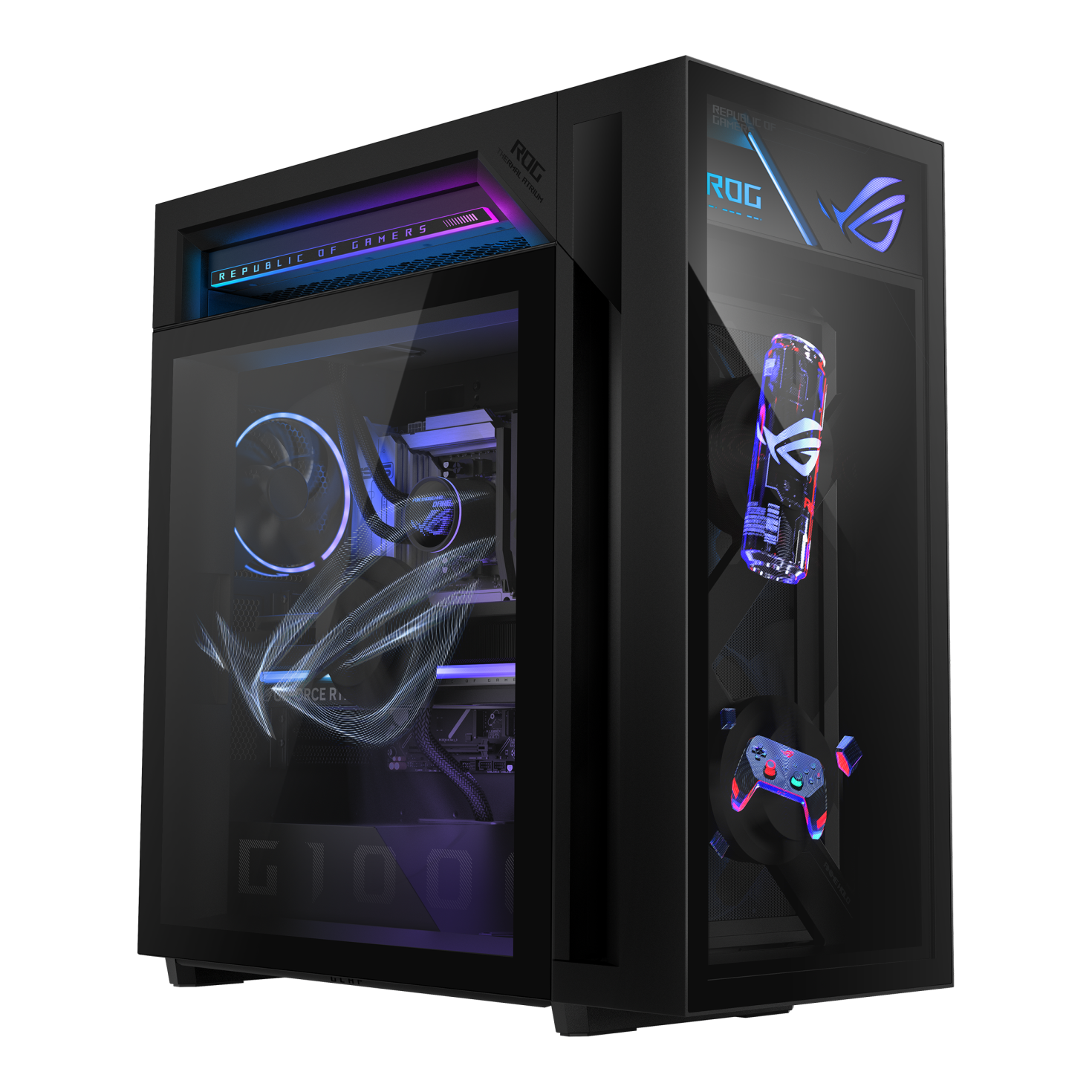
Beyond its raw computational output, the ROG G1000 showcases futuristic visual engineering through the integration of proprietary AniMe Holo technology. Moving beyond standard RGB lighting strips, the system incorporates a full-color holographic projection panel system. This includes a massive 380mm fan featuring 720 individual LEDs complemented by two 215mm front intake fans.
The lighting and projection ecosystem supports up to 16.77 million colors, enabling users to display custom text, real-time hardware telemetry data, or intricate dynamic animations synchronized via the ASUS Armoury Crate software suite. Despite the impressive visual scale and the inclusion of large-diameter cooling fans, ASUS engineered the system to operate at remarkably low acoustic levels, registering roughly 20.5 dBA while enclosed within the sound-dampened housing.
Chronology and Market Evolution
The journey of the ROG G1000 to retail shelves reflects ASUS’s methodical approach to rolling out its highest-tier hardware ecosystem. The groundwork for the desktop was initially laid during preliminary industry showcases, where ASUS first teased the concept under the moniker ROG G1000 Edition 20. Early prototypes demonstrated even more radical hardware pairings, including engineering samples utilizing top-tier options such as the Ryzen 9 9950X3D alongside the ultra-enthusiast NVIDIA GeForce RTX 5090.
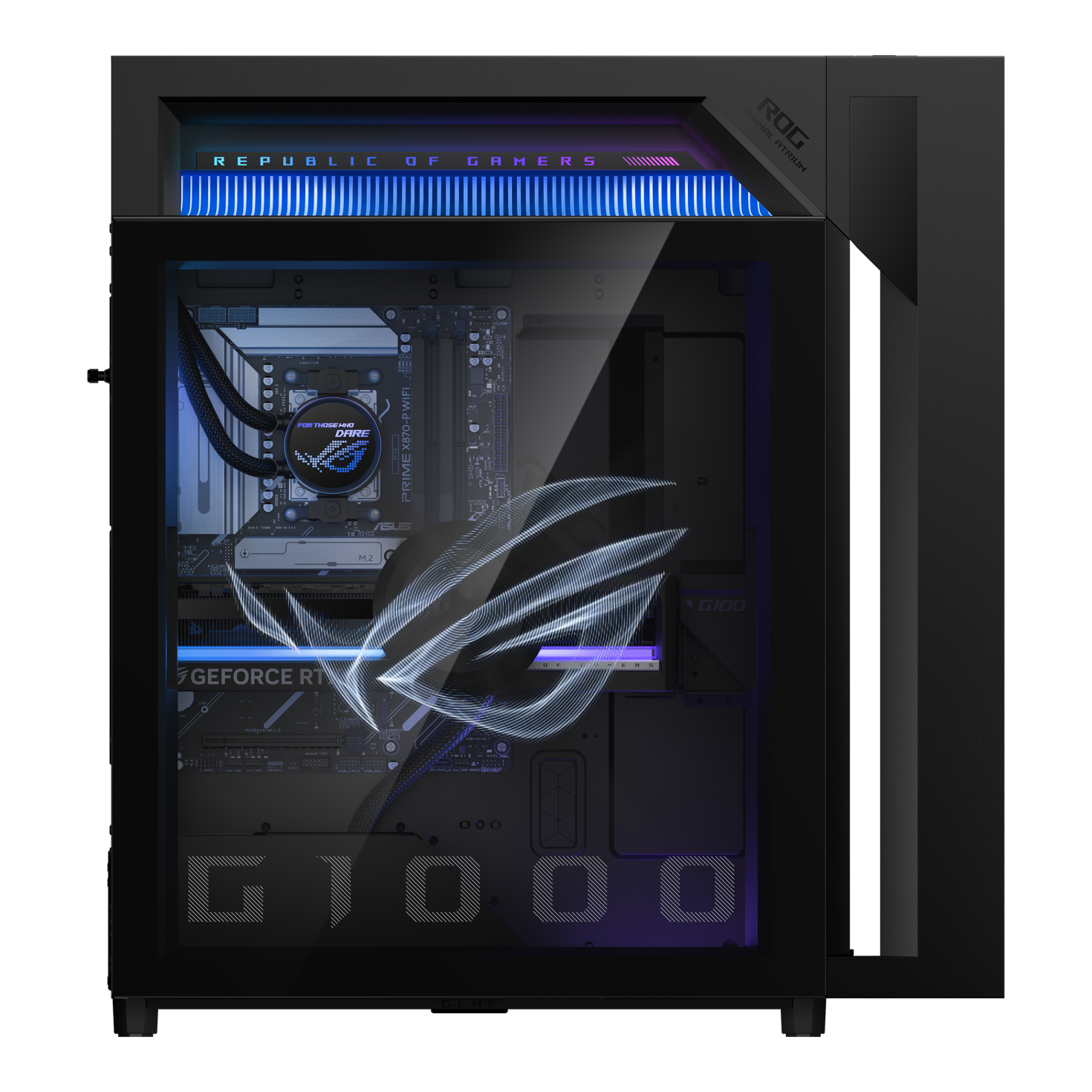
As manufacturing pipelines matured and component availability stabilized, ASUS finalized the commercial lineup to include flexible configurations tailored to distinct market segments. While the ultimate enthusiast tier commands the Ryzen 9 9950X3D and RTX 5080 combination, the company also confirmed the availability of alternative processor options, such as the gaming-centric AMD Ryzen 7 9800X3D, allowing consumers to select configurations that best align with their specific performance priorities and budgetary constraints.
Global Pricing and Commercial Availability
Commercial distribution of the ROG G1000 is currently underway across key international markets, though precise pricing and configuration availability fluctuate significantly depending on regional supply chains and local import policies.
In Southeast Asia, particularly within the Malaysian market, ASUS has positioned the high-end configuration featuring the Ryzen 9 9950X3D and RTX 5080 at a luxury price point of RM29,999. Meanwhile, retail listings across North America reflect a diversified rollout, with authorized distributors offering multiple iterations of the G1000 spanning both Ryzen 7 9800X3D and Ryzen 9 9950X3D processor variants paired with the RTX 5080. Localized launch dates and pricing structures for other global regions, including parts of Europe and Latin America, are expected to roll out in subsequent phases.
Industry Implications and Future Outlook
The commercial launch of the ASUS ROG G1000 underscores a broader industry shift toward highly specialized thermal architecture in pre-built desktop PCs. As power draws for both CPUs and GPUs continue to climb with every successive hardware generation, traditional PC enclosures have faced mounting criticism for thermal saturation. By prioritizing isolated cooling chambers and massive radiator capacities, ASUS has set a new benchmark for what consumers can expect from factory-assembled flagship systems.
For the broader market, the G1000 demonstrates that pre-built desktop solutions can successfully compete with, and in some cases surpass, custom-built rigs in thermal efficiency and aesthetic integration. However, given its substantial physical footprint, heavy weight, and ultra-premium pricing, the desktop remains targeted at an elite demographic of hardcore enthusiasts, professional content creators, and enterprise users who demand turnkey reliability and uncompromised performance right out of the box. As competitors observe the market reception of the G1000’s compartmentalized thermal design, the industry may see a wider adoption of isolated airflow systems in future high-end desktop engineering.
