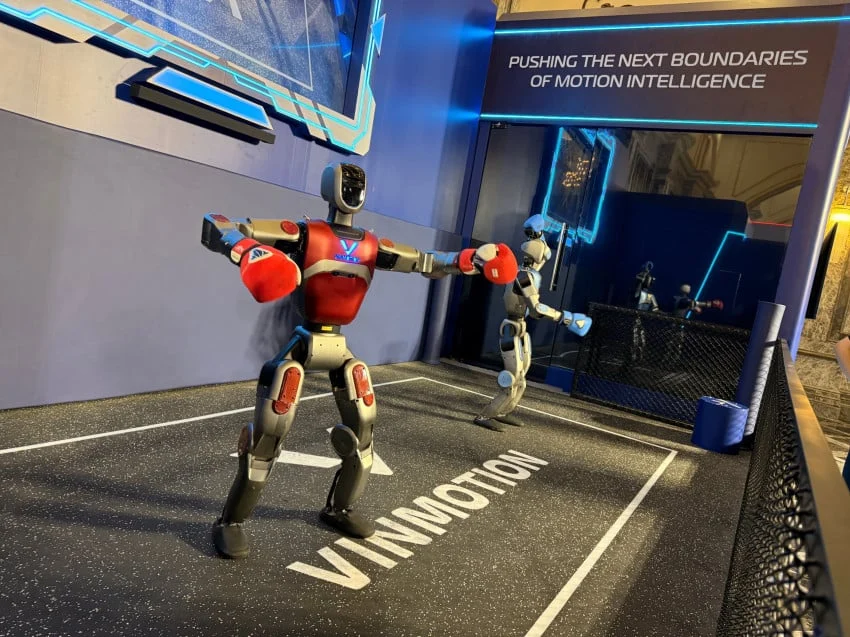
NHA TRANG — In a striking display of industrial ambition, two VinMotion humanoid robots recently faced off in a sparring demonstration, a spectacle that served as more than mere entertainment. For Vingroup, the conglomerate behind the display, the event signaled a definitive shift in strategy: moving beyond the exhibition floor and into the rigorous, high-stakes environment of mass-market manufacturing. By 2025, the group’s dedicated robotics arm, VinRobotics, has begun executing a series of turnkey contracts, effectively bridging the gap between theoretical research and practical factory-floor implementation.
The recent signing of two major turnkey contracts, valued at a combined VND 52 billion (approximately USD 2 million), underscores this transition. These agreements task VinRobotics with supplying advanced robotics and artificial intelligence infrastructure to the manufacturing facilities of VinFast, the group’s automotive arm. In industrial parlance, a "turnkey" arrangement implies a comprehensive solution—essentially providing the kitchen alongside the master chef. While a $2 million contract is modest in the context of global automotive capital expenditures, its significance lies in the validation of Vietnam’s home-grown technology. The fact that the developer and the consumer reside within the same corporate ecosystem provides a crucial testing ground for technology that aims to compete on the global stage.
A Strategic Pivot for Vietnam’s Manufacturing Sector
The emergence of VinRobotics must be viewed through the lens of Vietnam’s broader economic trajectory. In 2025, Vietnam’s total export volume reached a staggering USD 470.59 billion. However, a closer examination of these figures reveals a structural dependency: foreign-invested enterprises (FIEs) account for 77.3 percent of that total. For every USD 100,000 worth of goods exported from Vietnam, approximately USD 77,000 originates from companies headquartered outside the country.
For decades, Vietnam has been celebrated for its efficiency in assembly and manufacturing. Yet, the current administration and major domestic conglomerates are acutely aware that assembly is a low-margin endeavor. To climb the value chain, Vietnam must move from being the world’s assembly line to being a proprietor of the intellectual property that governs production. VinRobotics is, in effect, the vanguard of this transition. By developing proprietary humanoid and industrial robots, Vingroup is attempting to capture the "brain" of the manufacturing process—the software, the AI, and the automation logic—that currently resides largely in the hands of international technology providers.
Chronology of a Tech Surge
The genesis of this movement can be traced back to early 2025, marked by a rapid acceleration in research and development.
- January 2025: VinMotion is officially established as a specialized entity under the Vingroup umbrella, tasked with developing the next generation of humanoid robotics.
- April 2025: After a compressed three-month research cycle, the company introduces the Motion 1 humanoid robot. The speed of development surprised industry analysts, who typically expect years of prototyping before a functional humanoid model is unveiled.
- November 2025: The first formal turnkey supply contracts are finalized with VinFast, signaling the end of the pilot phase and the beginning of commercial deployment.
The speed of this timeline is consistent with Vingroup’s historical approach to rapid industrialization, which emphasizes aggressive scaling and "learning by doing." By utilizing VinFast’s existing manufacturing facilities as a live laboratory, VinMotion has been able to iterate on its hardware and software at a pace that independent robotics startups often struggle to match.
Global Context and Market Dynamics
The global appetite for automation is at an all-time high, providing a fertile backdrop for VinRobotics’ entry into the market. According to recent industry data, factories worldwide installed approximately 542,000 industrial robots in 2024. This figure represents more than double the installation rate recorded a decade ago.
Asia remains the epicenter of this demand, absorbing 74 percent of all new industrial robot installations globally. The confluence of a shrinking workforce in aging economies and the rising cost of labor in developing ones has made robotics an essential investment for global supply chain resilience. For Vietnam, which has traditionally relied on a large, low-cost labor pool, the adoption of robotics is not merely a competitive advantage—it is a long-term necessity to avoid the "middle-income trap."

Technical Implications: Beyond the Sparring Ring
While the image of robots sparring in a ring is designed to capture public attention, the underlying technology is designed for the mundane and the precise. Humanoid robots are increasingly viewed as the ultimate flexible automation solution. Unlike traditional industrial arms, which are bolted to the floor and programmed for a single, repetitive task, humanoid robots are designed to navigate environments built for humans.
The Motion 1 robot, for instance, is engineered to handle tasks ranging from logistics and material handling to assembly assistance. By integrating advanced AI, these machines can adapt to changes in the factory layout or shifts in production demands without the need for extensive re-tooling. This flexibility is the primary value proposition for VinFast, which operates in an industry where vehicle platforms are updated frequently to meet changing consumer preferences and regulatory standards.
Industry Reactions and Future Outlook
While official statements from Vingroup executives emphasize the internal success of these contracts, external analysts remain cautiously optimistic. The consensus among regional economists is that while VinRobotics has the financial backing and the captive market to succeed, the real challenge will be scaling these solutions to external clients.
"The internal success of VinRobotics is a proof-of-concept, not a business model," noted a manufacturing consultant based in Singapore. "The true test will come when these robots are deployed in facilities without the high-touch support that an internal Vingroup unit can provide. However, if they can successfully automate their own supply chain, they will hold a unique position in the Southeast Asian market as a provider of ‘Asian-native’ robotics solutions."
The implications of this move are significant. If Vingroup can successfully export the technology developed by VinMotion, it would signify a major milestone in Vietnam’s industrial maturity. It would prove that the country can move beyond mere assembly, creating a high-value intellectual property industry that can be sold to the very global manufacturing giants currently operating within its borders.
The Broader Impact on Vietnam’s Industrial Strategy
The entry of VinRobotics into the market is a symptom of a larger policy push. The Vietnamese government has been vocal about its desire to transition to "Industry 4.0," a move that requires massive investment in domestic R&D. By creating a domestic supply chain for robotics, Vingroup is effectively reducing the nation’s reliance on imported automation equipment, which currently drains significant foreign exchange reserves.
Furthermore, the concentration of robot installations in Asia suggests that Vietnam is ideally positioned to become a regional hub for robotics manufacturing. With the proximity to component suppliers in China and the technical workforce being cultivated within Vietnam’s burgeoning tech sector, the infrastructure for a robotics ecosystem is already taking shape.
Conclusion
The spectacle of sparring robots in Nha Trang is a metaphor for the broader industrial battle currently being waged in Vietnam. The country is moving from the passive assembly of foreign components to the active creation of the technologies that will define future manufacturing. While the USD 2 million turnkey contracts represent only a starting point, they serve as a critical bridge.
VinRobotics is not merely building machines; it is attempting to build an industrial philosophy—one where local companies dictate the pace of their own innovation rather than simply executing the blueprints of foreign stakeholders. As the global demand for automation continues to accelerate, the performance of these humanoid units on the factory floor will be watched closely, not just by Vingroup, but by the entire manufacturing sector in Southeast Asia. The transition from a "factory of the world" to an "innovator for the world" is a long and arduous path, but with the deployment of VinMotion, the first concrete steps have been taken.