
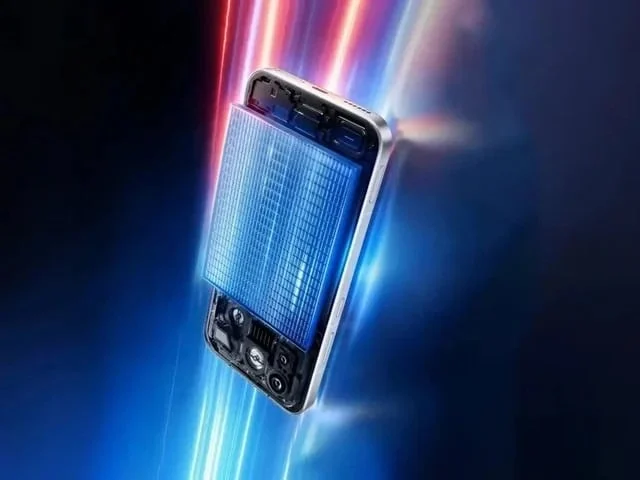
The mobile technology industry is on the cusp of a potential paradigm shift in energy storage, as Honor, a leading global smartphone manufacturer, is reportedly developing high-capacity battery technology capable of sustaining device operation for up to seven consecutive days on a single charge. Recent disclosures from the prominent industry leaker Digital Chat Station indicate that the company is actively researching battery modules ranging from 14,000 to 15,000 mAh. This initiative aims to address the persistent issue of battery anxiety among heavy users, outdoor professionals, and frequent travelers, moving beyond the standard daily charging cycle that has defined the smartphone experience for over a decade.
The Evolution of Battery Density at Honor
Honor’s pursuit of high-capacity energy solutions is not a sudden strategic pivot but the culmination of a multi-year engineering roadmap. The company has consistently pushed the boundaries of lithium-silicon battery technology, moving away from the industry standard of 4,500 to 5,000 mAh capacities found in most flagship handsets today.
The company’s trajectory in this space is evidenced by its recent product releases. Late last year, Honor introduced the Honor Win, which garnered significant attention for its 10,000 mAh battery. This was followed in June by the Honor X80 Pro Max, which scaled the capacity further to 11,000 mAh. Most recently, the release of the Win RT 2 and Win Turbo 2 solidified the company’s focus on power, with both devices featuring a 12,070 mAh battery. Notably, the Win RT 2 also integrated 90W wired fast-charging technology, proving that Honor is balancing massive capacity with the ability to replenish energy at a competitive rate.
The jump to 15,000 mAh represents an approximate 25% increase over its current top-tier offerings. If realized, this technology would effectively triple the average battery capacity of modern smartphones, fundamentally changing how consumers interact with their devices.
Engineering Challenges and Hardware Integration
Integrating a 15,000 mAh power cell into a consumer-grade smartphone involves significant technical hurdles that extend beyond mere chemistry. In the current market, most high-capacity batteries are limited by physical volume. As battery density increases, so does the physical footprint of the cell, which directly conflicts with the modern consumer demand for thin, ergonomic, and lightweight hardware.
Industry analysts suggest that for a 15,000 mAh battery to be viable, Honor must innovate in the field of battery cell architecture. Conventional lithium-ion batteries are reaching their energy density limits. To accommodate such a massive capacity without turning a smartphone into a cumbersome "brick," Honor would likely need to employ advanced silicon-carbon anode technology. Silicon-carbon anodes allow for a higher energy density per unit of volume compared to traditional graphite-based anodes, potentially allowing the battery to remain relatively thin while maintaining high capacity.
Thermal management remains another critical concern. Charging a 15,000 mAh battery requires sophisticated power management integrated circuits (PMICs) to prevent overheating. As energy density increases, the risk of thermal runaway during rapid charging cycles becomes more pronounced. Consequently, the development of these devices will necessitate advanced cooling solutions, such as vapor chamber systems or specialized heat dissipation materials, to ensure the structural integrity of the device and the safety of the user.
Market Implications and Target Demographics
The shift toward week-long battery life has profound implications for different market segments. While the average urban consumer might find a 15,000 mAh battery excessive for daily use, there is a substantial, underserved market for such technology.
Outdoor enthusiasts, such as hikers, geologists, and field researchers, often operate in environments where electrical grids are inaccessible for days at a time. Currently, these users must rely on external power banks, which add weight and complexity to their equipment. A smartphone capable of lasting an entire week would eliminate the need for secondary power sources, increasing efficiency and safety in remote operations.
Similarly, in regions with unstable power infrastructure, a device that only requires charging once a week would provide a significant advantage in terms of reliability and convenience. By prioritizing battery longevity, Honor is positioning itself to capture a niche but loyal demographic that prioritizes utility over the thinness of a device.
Strategic Positioning and Competitive Landscape
Honor’s strategy appears to be a calculated move to differentiate its brand in a crowded marketplace. As smartphone hardware reaches a point of "good enough" performance—where processors, cameras, and screens have achieved a level of quality that satisfies the majority of users—battery life has become the new frontier of competition.
Major competitors, such as Samsung, Apple, and Xiaomi, have largely focused on optimizing software efficiency and fast-charging speeds rather than drastic increases in raw battery capacity. By attempting to solve the energy bottleneck through sheer capacity, Honor is attempting to change the narrative of the "smartphone war."
If the 15,000 mAh project reaches mass production, it will force competitors to respond. Either they will have to accelerate their own research into battery density, or they will be forced to compete on other metrics, such as software ecosystem integration or artificial intelligence capabilities. This puts Honor in the position of an industry disruptor, potentially setting a new benchmark for what is considered a "standard" battery capacity.
Future Outlook and Technical Constraints
While the prospect of a week-long battery is appealing, the transition to production will be governed by stringent safety regulations. Regulatory bodies such as the International Electrotechnical Commission (IEC) and various regional safety boards have rigorous standards for lithium-based batteries. Ensuring that a 15,000 mAh cell remains stable under varying pressure, temperature, and usage conditions is a prerequisite for mass-market adoption.
Furthermore, there is the question of charging time. Even with 90W or 120W fast-charging protocols, filling a 15,000 mAh cell from 0% to 100% will take significantly longer than a standard 5,000 mAh battery. Engineering a solution that charges such a large battery in a reasonable timeframe—perhaps overnight or during a short break—will be just as critical as the capacity itself.
Industry observers also note that the software implementation will play a vital role. Operating systems will need to be optimized to handle the power management of such a large reservoir of energy. Deep-level background process management, aggressive screen refresh rate scaling, and efficient modem usage will be necessary to ensure that the device does not simply "waste" the extra energy, but rather extends its operational lifespan effectively.
Conclusion: A New Era for Mobile Energy
The report from Digital Chat Station serves as a window into the future of mobile energy technology. While the challenges of size, weight, and thermal management remain, Honor’s systematic approach to increasing battery capacity suggests that a seven-day smartphone is no longer a matter of "if," but "when."
As the technology matures, it is likely that we will see a segmentation in the market. We may see standard models designed for the general public, and "Pro" or "Ultra" variants—similar to the rumored 15,000 mAh devices—designed specifically for users who demand extreme endurance. This development represents a maturing of the smartphone industry, moving away from the iterative, incremental improvements of the past and toward solving the most fundamental pain point for the modern mobile user: the need to stay connected without being tethered to a wall outlet.
As of now, Honor has not released an official timeline for the release of a 15,000 mAh smartphone. However, given the pace of their recent releases and their public focus on battery-first innovation, industry analysts expect that the company will continue to test the boundaries of physics, likely bringing a prototype or a limited-release commercial device to market within the next 18 to 24 months. The outcome of this project will likely define the next generation of portable computing, setting a new standard for reliability in an increasingly mobile-dependent world.
