
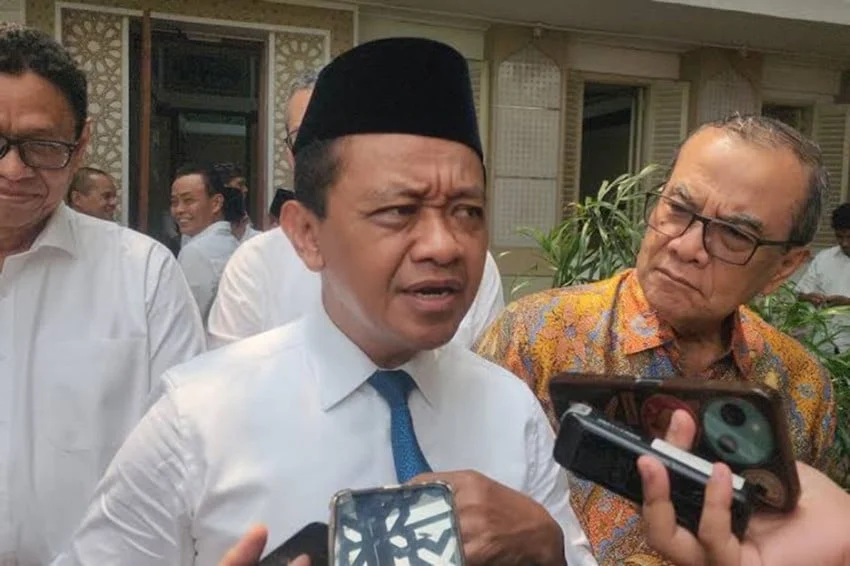
The Indonesian government has signaled a definitive shift toward stricter enforcement within the natural resources sector, following a direct and uncompromising mandate from President Prabowo Subianto. Minister of Energy and Mineral Resources (ESDM) Bahlil Lahadalia has publicly committed to executing presidential directives aimed at halting illegal mining practices and illicit commodity smuggling that continuously drain state coffers. This hardline stance comes at a critical juncture for Indonesia’s resource governance, balancing the urgent need for environmental sustainability, regulatory compliance, and the protection of national macroeconomic stability against widespread, unmonitored exploitation.
The momentum behind this enforcement wave gathered significant pace during a recent Plenary Cabinet Session held at the Merdeka Palace in Jakarta. During the high-level meeting, President Prabowo delivered a sharp critique of ongoing systemic leakages within the nation’s supply chains, explicitly targeting the rampant smuggling of vital commodities. The presidential admonition cast a wide net, encompassing strategic minerals such as tin, gold, and coal, alongside heavily regulated commodities including subsidized fuel and agricultural fertilizers.
President Prabowo’s rhetoric during the cabinet session underscored the gravity of the situation, characterizing resource theft not merely as a legal infraction, but as an existential threat to the Republic. Illustrating the severe economic damage caused by these illicit activities, the President delivered a stark metaphor, stating that smuggling is akin to stabbing the nation in its own body. He emphasized that such actions actively dismantle the domestic economy, and by extension, threaten the very survival and prosperity of the Indonesian people.
Responding swiftly to the presidential mandate, Minister Bahlil articulated an unequivocal compliance strategy during a press briefing. Reaffirming the chain of command and his role within the executive branch, Bahlil made it clear that administrative hesitation would not be tolerated under his tenure at the Ministry of ESDM. He stated that the President serves as the ultimate authority, while cabinet members act as executors of state policy. Consequently, any mining operation found to be operating outside the legal framework or actively depriving the state of legitimate revenues faces immediate closure, with the minister expressing zero hesitation in executing punitive administrative and legal measures.
The urgency of this coordinated crackdown is further amplified by severe localized crises tied to illegal extraction, particularly in remote and ecologically sensitive regions. A prime example highlighted by the administration is the ongoing illicit gold mining operations in the Sangihe Islands regency, located in North Sulawesi province. Over the preceding six months alone, unregulated and unauthorized gold extraction in Sangihe has generated an estimated state loss of approximately IDR 200 billion. This staggering figure underscores how localized lawlessness directly undermines national wealth distribution and highlights the profound difficulties federal authorities face in policing sprawling archipelagic territories.
Chronology of the Policy Shift and Escalating Enforcement
The trajectory leading to the current zero-tolerance policy on illegal mining and resource smuggling has been shaped by escalating pressures from economic monitors, environmental watchdogs, and regional stakeholders over several years.
The preliminary phase of this policy evolution began with heightened inter-agency intelligence sharing between the Ministry of ESDM, the Indonesian National Police, and the Attorney General’s Office. Throughout preceding legislative sessions, lawmakers repeatedly raised concerns regarding the proliferation of unregulated small-scale mining operations—often referred to locally as Pertambangan Tanpa Izin (PETI)—which operate outside environmental impact assessments and fiscal contribution frameworks.
The turning point occurred during the transition of executive leadership, as the new administration placed structural reform of natural resource management at the forefront of its first-hundred-days agenda. By mid-October 2026, intelligence reports detailing industrial-scale smuggling routes for tin and gold galvanized the executive branch. This culminated in the Plenary Cabinet Session on Wednesday, October 21, 2026, where President Prabowo formally transitioned from generalized oversight to specific operational commands targeting commodity leakage.
Following the presidential address, Minister Bahlil’s public declaration on Friday, October 23, 2026, marked the formal operationalization of the directive. Rather than allowing regional authorities to manage localized infractions independently, the Ministry of ESDM assumed a centralized oversight role, signaling that local permits would face federal audits to ensure absolute compliance with national conservation and taxation laws.
Comprehensive Supporting Data on Mineral Leakage and Illegal Mining
To fully comprehend the rationale behind the Ministry of ESDM’s aggressive enforcement strategy, one must examine the broader statistical landscape of Indonesia’s illegal mining sector. According to internal data compiled by the Ministry of ESDM and independent environmental coalitions such as the Mining Advocacy Network (Jatam), illegal mining operations account for billions of dollars in lost potential state revenues annually.
In the mining sector specifically, illicit operations typically manifest in three distinct forms: unauthorized extraction within forestry concessions, the use of uncertified processing chemicals that cause severe environmental degradation, and the under-reporting of production volumes to evade royalty payments and corporate income taxes.
Commodity-specific data reveals that tin smuggling—predominantly originating from the Bangka-Belitung archipelago—has historically cost the state vast sums through unrecorded exports routed to neighboring regional trade hubs. Similarly, unmonitored gold mining operations, such as those plaguing the Sangihe Islands, not only bypass the state-mandated sales to domestic refineries controlled by state-owned enterprises or authorized bullion banks, but they also introduce toxic heavy metals like mercury into local marine and agricultural ecosystems.
The financial toll of IDR 200 billion recorded in the Sangihe Islands over a mere six-month window serves as a micro-level indicator of a macro-level crisis. When extrapolated across hundreds of similar illicit mining hotspots scattered throughout Sumatra, Kalimantan, Sulawesi, and Maluku, the cumulative fiscal hemorrhage severely compromises the national budget’s capacity to fund public infrastructure, education, and healthcare initiatives.
Official Responses and Inter-Agency Alignment
The sweeping mandate delivered by President Prabowo and echoed by Minister Bahlil has triggered a cascade of responsive measures across various government bodies and security apparatuses.
Law enforcement agencies, including the Indonesian National Police’s Criminal Investigation Agency (Bareskrim), have begun mobilizing specialized task forces dedicated exclusively to resource crimes. Police Public Relations divisions have indicated that cooperation with the Ministry of ESDM will be intensified, allowing ministry inspectors to request immediate police escorts and tactical support when executing shutdown orders on heavily fortified or remote illegal mining sites.
Concurrently, the Ministry of Finance has ramped up monitoring protocols within the Directorate General of Customs and Excise. By tightening export verification procedures at major ports and utilizing advanced satellite monitoring for maritime shipping lanes, customs authorities aim to choke off the outflow of illegally mined raw minerals masked as other, non-regulated cargo categories.
Industry associations, such as the Indonesian Mining Association (IMA), have largely welcomed the crackdown, albeit with cautious optimism regarding implementation transparency. Legitimate mining corporations, which operate under strict regulatory burdens, high corporate tax rates, and stringent environmental reclamation obligations, have long argued that illegal operators maintain an unfair market advantage by externalizing environmental costs and evading fiscal duties. A level playing field, industry leaders contend, is essential for maintaining investor confidence in Indonesia’s mining sector.
Broader Economic Impact and Strategic Implications
The long-term implications of the government’s renewed offensive against illegal mining extend far beyond immediate revenue recovery, touching upon international trade relations, environmental sustainability, and the fundamental credibility of state authority.
From an economic perspective, curbing the illicit trade of strategic commodities directly supports the nation’s downstreaming (hilirisasi) agenda. Indonesia has heavily invested in domestic processing facilities—particularly for nickel, copper, and bauxite—with the ultimate objective of capturing higher value-add along the global supply chain. When raw materials are siphoned off through smuggling networks or unrecorded domestic extraction, the feedstock available for domestic smelters is artificially constrained, threatening the operational viability of multi-billion-dollar industrial complexes.
Environmentally, unchecked mining practices in biodiversity-hotspot regions like the Sangihe Islands pose catastrophic risks to marine life, coastal communities, and agricultural productivity. By enforcing compliance, the Ministry of ESDM aims to curb deforestation, soil erosion, and water table contamination, thereby aligning national development goals with global environmental, social, and governance (ESG) standards. This alignment is increasingly critical as international commodity markets demand verified ethical sourcing and traceability for minerals originating from Indonesia.
In conclusion, the decisive intervention signaled by President Prabowo Subianto and operationalized by Minister Bahlil Lahadalia represents a watershed moment for Indonesian resource governance. By treating resource smuggling and unauthorized extraction as direct threats to national sovereignty and economic survival, the administration has raised the stakes for non-compliant actors. As federal inspectors and security forces prepare to execute widespread operational shutdowns, the coming months will test the state’s administrative reach and institutional resolve in permanently dismantling entrenched illicit supply chains.
