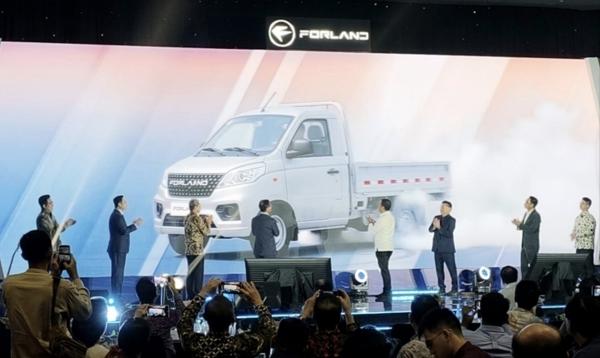
The Indonesian automotive landscape is undergoing a significant transformation as Forland, a major Chinese manufacturer of commercial vehicles, officially entered the market through a strategic partnership with PT Tangguh Utama Sejahtera (TUS). This entry marks a pivotal moment for the nation’s logistics and transportation sector, as the company introduced two flagship electric vehicle (EV) models, the ET5 and EL5e. The launch, held in Jakarta on October 3, 2026, signals a concerted effort to align with Indonesia’s national agenda of transitioning toward sustainable energy and reducing carbon emissions in heavy-duty and light-commercial transport.
A Global Giant Eyes the Indonesian Archipelago
Forland, a powerhouse in the Chinese automotive manufacturing industry, brings with it a pedigree of large-scale production. With a cumulative production volume exceeding 7 million units and a robust supply chain network spanning more than 50 countries, the company is positioning itself as a serious contender in the Southeast Asian market. Forland’s entry into Indonesia is not merely a product launch but a long-term strategic expansion. The company aims to leverage its international manufacturing standards and experience in EV technology to cater to the growing demand for sustainable logistics in one of Asia’s most dynamic economies.
The choice of PT Tangguh Utama Sejahtera (TUS) as the primary distributor is a calculated move to navigate the complexities of the Indonesian market. By partnering with a local entity that possesses deep knowledge of regional distribution networks and regulatory environments, Forland aims to ensure that its specialized commercial vehicles are effectively integrated into local supply chains.
The Technological Edge: ET5 and EL5e
The launch of the ET5 and EL5e represents Forland’s commitment to electrifying the Indonesian commercial fleet. These vehicles are designed to address the specific requirements of urban and inter-city logistics, focusing on high torque, efficiency, and reduced operational costs—key factors for businesses looking to modernize their transport fleets.
The shift toward electric commercial vehicles is timely. Indonesia has been aggressively promoting its EV ecosystem, leveraging its vast nickel reserves—a critical component in battery manufacturing—to become a global hub for battery production. Forland’s arrival serves as a downstream beneficiary of this broader national strategy, providing the end-product necessary to prove the viability of electric transport for small-to-medium enterprises and large-scale logistics providers alike.
Strategic Vision and Local Commitment
During the inaugural event, CEO of Forland International, Dong YongSheng, emphasized that the decision to enter Indonesia was driven by the country’s strong economic fundamentals. "Indonesia has one of the most dynamic markets in Southeast Asia. Our global experience over the last decade provides the foundation, but our collaboration with TUS is the key to executing our vision of sustainable, efficient, and electrified logistics," said YongSheng.
The partnership is built on the philosophy of "local integration." Unlike traditional import models that focus purely on the transaction of goods, PT Tangguh Utama Sejahtera has pledged to build an ecosystem. President Director of PT TUS, JinHong Lin Darwin, articulated this vision clearly during his address, stating, "We do not intend to simply sell vehicles. Our goal is to grow with Indonesia. We are committed to establishing a presence that is deeply rooted in this country, contributing to its infrastructure and technological advancement."
This "rooting" strategy implies a future roadmap that may include local assembly, dedicated maintenance facilities, and specialized training for local technicians, which would further lower the barrier for Indonesian businesses to adopt EV technology.
The Broader Economic Context
The arrival of Forland occurs against a backdrop of increasing electrification in the commercial sector. Historically, commercial vehicles in Indonesia have relied heavily on diesel engines. However, rising fuel costs and government-led environmental initiatives are forcing a paradigm shift. According to market analysis, the demand for "green" logistics is expected to rise as major retail and e-commerce companies set internal targets for carbon neutrality.

Furthermore, the Indonesian government has implemented various incentives, including tax breaks and infrastructure development for charging stations, to encourage the adoption of electric commercial vehicles. Forland’s entry coincides with these policy shifts, suggesting that the company is well-positioned to capitalize on a market that is ready to move beyond fossil fuels.
Implications for the Logistics Industry
The introduction of the ET5 and EL5e has several potential implications for the local logistics sector:
- Cost Efficiency: Electric vehicles generally have lower maintenance costs due to fewer moving parts compared to internal combustion engines. This could prove revolutionary for logistics companies managing large fleets.
- Regulatory Compliance: As urban centers in Indonesia begin to discuss or implement "low-emission zones," businesses using electric fleets will be better positioned to operate without restriction.
- Supply Chain Modernization: By introducing modern, data-capable electric platforms, Forland is enabling logistics firms to better track their environmental impact, which is increasingly required by corporate ESG (Environmental, Social, and Governance) mandates.
Addressing the Challenges of Infrastructure
While the optimism surrounding the launch is high, the success of Forland in Indonesia will ultimately depend on the development of supporting infrastructure. The transition to electric transport requires a robust network of fast-charging stations, particularly along major trucking routes and in industrial hubs. Both Forland and TUS have acknowledged that a successful rollout requires a collaborative effort with both the private and public sectors to ensure that charging anxiety does not hinder the adoption of their vehicles.
The partnership’s strategy includes a focus on comprehensive after-sales service. In a market where vehicle downtime can result in significant financial loss for businesses, the establishment of reliable service centers is as critical as the performance of the vehicles themselves. TUS’s commitment to "growing and rooting" in Indonesia suggests that they are prepared to invest in the technical training of local staff, ensuring that the vehicles remain operational for their full lifecycle.
A Competitive Landscape
Forland enters a market that is becoming increasingly crowded. Other Chinese, Japanese, and domestic manufacturers are also making forays into the electric commercial space. However, Forland’s scale—boasting over 7 million units in cumulative production—gives it a distinct advantage in terms of production cost and economies of scale. This could allow them to offer competitive pricing that is critical for mass adoption in a price-sensitive market like Indonesia.

The rivalry among these manufacturers will likely benefit the consumer. Enhanced competition generally leads to faster innovation, better service offerings, and a broader variety of options for logistics providers. Forland’s entry forces existing market players to accelerate their own electric vehicle rollouts, effectively acting as a catalyst for the overall electrification of the national transportation sector.
Looking Ahead: Beyond 2026
The collaboration between Forland and TUS is a long-term play. By the end of the next decade, the Indonesian government aims to have a significant portion of its public and commercial transport electrified. Forland’s timing suggests they are positioning themselves to be a foundational part of this shift.
Future developments will likely involve the expansion of their vehicle portfolio. While the ET5 and EL5e are the starting points, the demand for heavier-duty electric trucks and specialized commercial vehicles is expected to follow. If the partnership succeeds in building a reliable, cost-effective, and well-supported network, Forland could become a household name in the Indonesian logistics sector.
The entry of Forland is more than just a business deal; it is a manifestation of Indonesia’s integration into the global shift toward green energy. As the nation moves to leverage its natural resources and economic potential, companies that bring both technology and a commitment to local growth will likely thrive. For now, the automotive industry will be watching closely to see how quickly the ET5 and EL5e can transform the streets of Indonesia and how well the partnership between Forland and TUS can navigate the complexities of a rapidly evolving market.
The success of this venture will be measured not just in sales figures, but in the measurable reduction of carbon emissions in Indonesia’s urban centers and the improvement of logistics efficiency across the archipelago. As Forland settles into the Indonesian market, the message is clear: the future of transport in Indonesia is electric, and the race to lead that transition has officially begun.