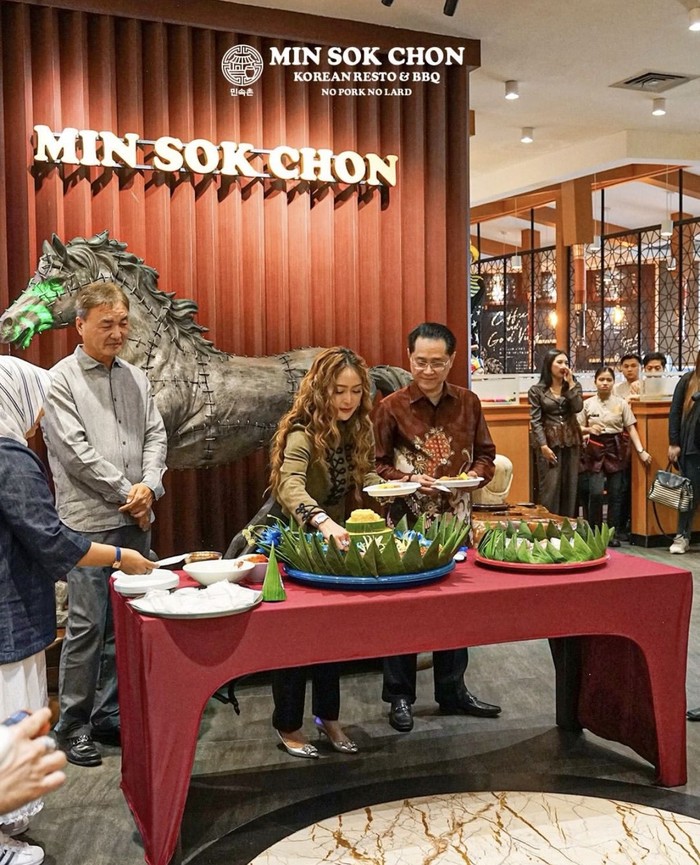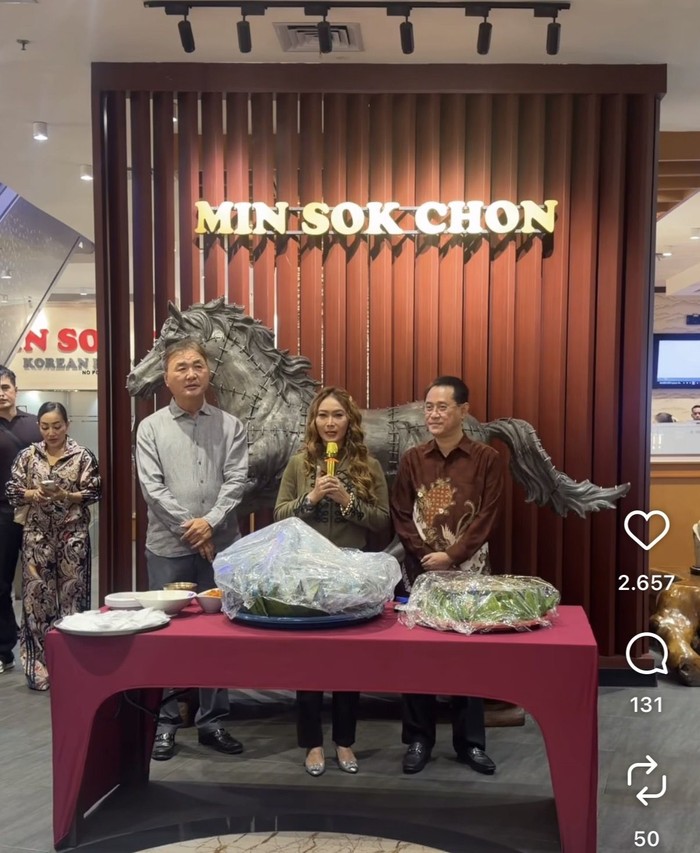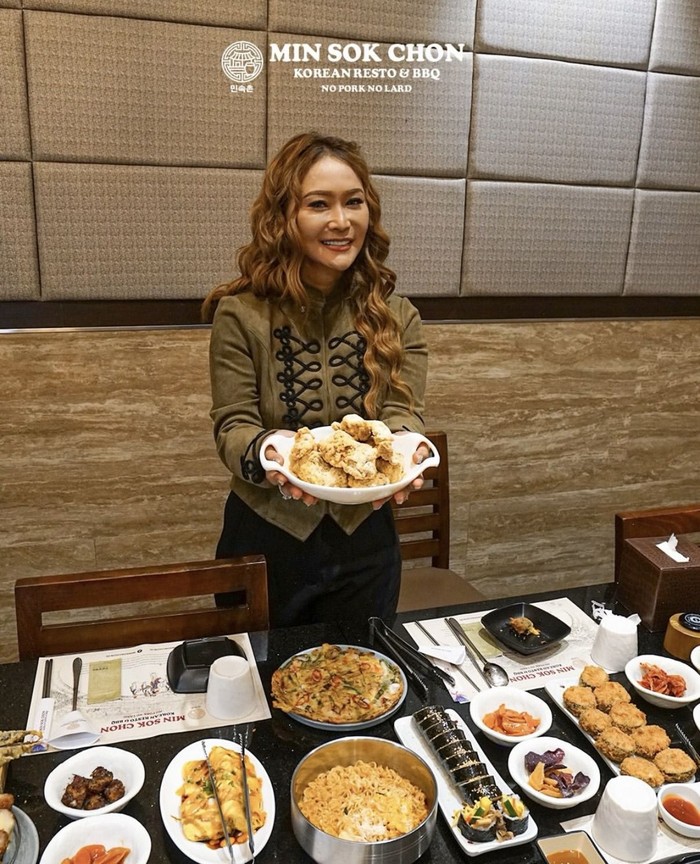
The landscape of Indonesia’s entertainment and culinary industry is witnessing a significant evolution as prominent dangdut singer and business mogul Inul Daratista unveils her latest venture, Min Sok Chon. This new establishment marks a strategic diversification for the entertainer, who has successfully bridged the gap between the music industry and the service sector for over two decades. By integrating authentic Korean cuisine with the signature Inul Vizta karaoke experience, the venture aims to tap into the burgeoning popularity of K-culture in Indonesia while leveraging the singer’s established brand equity in the karaoke market.
The launch of Min Sok Chon represents a calculated move to capitalize on two distinct consumer trends: the enduring popularity of Korean gastronomy and the social habit of karaoke, which remains a staple of urban entertainment in Indonesia. By merging these two concepts under one roof, Inul Daratista is creating a "third space" that appeals to both families and young professionals looking for a comprehensive dining and entertainment experience.
Strategic Vision and Business Model
The concept behind Min Sok Chon is grounded in the "edutainment" and "eat-and-play" business models that have proven successful in Southeast Asian markets. While many restaurants focus exclusively on culinary output, Inul’s model prioritizes the "experience economy." By incorporating her own brand, Inul Vizta—one of the largest karaoke chains in the country—into the restaurant’s infrastructure, she effectively lowers the cost of customer acquisition by cross-promoting her existing business assets.
The decision to lean into a classic, rather than modern, Korean aesthetic is a nuanced choice. While many establishments in Jakarta opt for high-tech, neon-lit, or minimalist modern designs, Min Sok Chon’s rustic and traditional approach aims to offer a nostalgic and immersive environment. This "old-world" Korean charm provides a distinct visual differentiation in a market saturated with sleek, modern K-BBQ joints.

Culinary Authenticity and Halal Compliance
A critical component of any international culinary venture in Indonesia is the adaptation to local dietary requirements. In the Indonesian market, where the majority of the population follows Islamic dietary laws, the "Halal" designation is not merely a preference but a market necessity. Min Sok Chon has positioned itself as a provider of authentic Korean cuisine that strictly adheres to Halal standards, ensuring a broad appeal across diverse demographics.
To maintain the integrity of the flavors, the restaurant has taken the significant step of employing chefs brought directly from South Korea. This decision underscores a commitment to culinary authenticity. In a market where "Korean-style" food is often localized to the point of losing its original character, the presence of Korean chefs ensures that the flavor profile remains faithful to the peninsula’s culinary traditions. This approach addresses the increasing sophistication of Indonesian diners who are better traveled and more knowledgeable about international cuisines than ever before.
Contextualizing Inul Daratista’s Entrepreneurial Journey
To understand the significance of this expansion, one must look at the trajectory of Inul Daratista as an entrepreneur. Her transition from a national music icon to a business leader began in the mid-2000s. The launch of Inul Vizta was a pivotal moment in the domestic entertainment industry, professionalizing the karaoke experience and setting high standards for service and safety in a sector that was previously fragmented.
Over the years, Inul has navigated the complexities of the Indonesian regulatory environment and the volatility of the retail sector. Her business portfolio has faced various challenges, including the global pandemic that forced the closure of entertainment venues, and more recently, issues involving identity theft and digital fraud. Despite these hurdles, her ability to pivot and launch new concepts indicates a high level of resilience and an astute understanding of market shifts. The move into the restaurant business is, in many ways, a natural extension of her hospitality experience, as both karaoke and dining rely on high-volume foot traffic and customer retention strategies.
Market Analysis: The K-Wave in Indonesia
The Indonesian market for Korean products, media, and food has seen exponential growth over the last decade, driven largely by the proliferation of streaming platforms and social media. According to recent trade reports, the demand for Korean food products in Indonesia has surged, with a significant increase in the number of Korean-themed restaurants in Jakarta alone.

However, the market is also becoming increasingly competitive. Large-scale franchises and boutique establishments are vying for a share of the consumer wallet. By offering a "hybrid" experience—where the meal is accompanied by the ability to sing—Min Sok Chon addresses the "time-spent" metric. In the restaurant industry, increasing the duration of a customer’s stay often correlates with higher average spending per table, provided the venue can manage the balance between dining and entertainment facilities effectively.
Operational Challenges and Future Prospects
While the concept is promising, the implementation of a hybrid model carries inherent operational challenges. Managing a high-turnover restaurant kitchen while simultaneously maintaining the acoustics and sound-system requirements of a professional-grade karaoke facility requires a complex management structure. The integration of these two service streams will necessitate a highly trained staff capable of multitasking across hospitality and entertainment sectors.
Furthermore, the restaurant must maintain a consistent quality-to-price ratio to compete with established competitors. With the rising cost of imported ingredients, maintaining a "Halal" and "Authentic" standard while keeping prices accessible for the mass market will be a key performance indicator in the coming quarters.
Official Statements and Industry Reactions
Reflecting on the vision for her new venture, Inul Daratista emphasized the seamless integration of her two passions. "Makan sambil karaoke. Tetap, karaokenya Inul Vizta. Jadi sambil makan, pengunjung bisa nyanyi-nyanyi di sini," she noted during a recent media briefing. Her statement highlights the simplicity of the proposition: the value lies in the consolidation of two distinct entertainment activities.
Industry observers suggest that if the concept succeeds, it could serve as a blueprint for future expansion. Should Min Sok Chon prove viable in Jakarta, the scalability of the model—replicating the restaurant-karaoke hybrid in other major Indonesian cities—becomes a logical next step. Analysts indicate that investors and stakeholders in the hospitality industry are watching the rollout closely, as it represents a shift toward more integrated, experience-led consumer spaces in the post-pandemic era.

Broader Implications for the Hospitality Sector
The launch of this venture is emblematic of a broader trend where celebrities are moving beyond simple product endorsements to become active stakeholders and operators in the businesses they represent. This "celebrity-operator" model allows for more direct control over quality and brand messaging, which is essential in a digital age where social media reviews can dictate the success or failure of a brand in real-time.
Moreover, the focus on authentic, internationally sourced culinary talent within the local halal framework suggests a maturation of the Indonesian middle class. Consumers are no longer satisfied with mere imitations; there is a tangible demand for a genuine cultural experience, provided it respects local sensitivities.
Conclusion: A New Chapter
As Min Sok Chon begins its operations, the focus will undoubtedly remain on service excellence and the ability to manage the logistics of a dual-purpose venue. Inul Daratista has once again proven her ability to anticipate consumer interests and adapt her business strategy accordingly. Whether the combination of Korean culinary arts and the karaoke culture will set a new trend in the Indonesian service industry remains to be seen, but the initial reception suggests that the market is ready for a more dynamic and interactive dining experience.
The success of this project will likely depend on the synergy between the authentic culinary offerings and the technical performance of the karaoke facilities. By betting on a blend of tradition and entertainment, Inul Daratista continues to solidify her position not just as a singer, but as a formidable force in the Indonesian business landscape. The coming months will be crucial as the establishment gathers feedback and refines its operations, potentially setting a new standard for how entertainment and dining can coexist in a modern urban environment.