
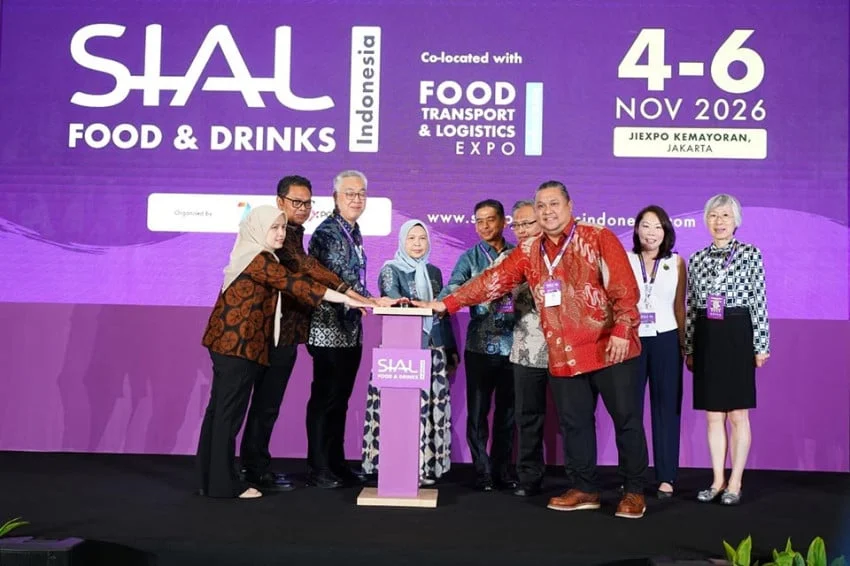
The bustling halls of the Jakarta International Expo (JIExpo) Kemayoran became the epicenter of the global culinary trade this week as SIAL Food & Drinks Indonesia 2026 officially opened its doors. Running from November 4 to November 6, 2026, the exhibition has established itself as a critical nexus for the food and beverage (F&B) industry, drawing together over 500 prominent brands from 16 different nations and territories. This high-profile business-to-business (B2B) event is designed to serve as a comprehensive platform for producers, distributors, retailers, and professional buyers to forge strategic partnerships and explore the evolving landscape of international food commerce.
The Scale and Significance of the 2026 Exhibition
Spanning across Hall B and Hall C at the JIExpo facility, the 2026 edition of SIAL Food & Drinks Indonesia represents a significant expansion in scope compared to previous years. The event focuses on the entire value chain of the food industry, ranging from raw agricultural commodities and processing technology to packaging solutions and final consumer goods. By hosting exhibitors from 16 distinct countries, the organizers have effectively created a melting pot of culinary innovation and supply chain expertise.
For many participants, the event is not merely a showcase of products but a vital mechanism for market penetration. In an era where global food security and supply chain resilience are paramount, the networking opportunities provided by SIAL are seen as essential for businesses looking to diversify their sourcing and broaden their market reach.
Chronology of Indonesia’s F&B Export Trajectory
To understand the importance of SIAL Food & Drinks Indonesia 2026, one must look at the recent trajectory of the country’s export performance. Indonesia’s journey toward becoming a global F&B powerhouse has been characterized by consistent policy support and a transition toward higher value-added processed goods.
In the period between January and August 2026, the national food processing industry demonstrated remarkable resilience, recording export values of USD 4.49 billion. This figure represents a 13.47% increase compared to the same period in the previous year. This growth is a direct result of several years of investment in food safety standards, Halal certification initiatives, and the modernization of production facilities. The SIAL exhibition serves as the latest milestone in this timeline, acting as the stage where these export figures are translated into tangible, long-term contracts.
Official Perspectives and Strategic Objectives
The Indonesian government has placed a heavy emphasis on the role of trade exhibitions in economic recovery and growth. Fajarini Puntodewi, the Director General of National Export Development at the Ministry of Trade, underscored the government’s commitment to facilitating these international connections. During her opening address, she noted that the ministry views SIAL as a primary vehicle for elevating the competitiveness of Indonesian goods on the world stage.
"The growth we have observed in our processed food exports is not accidental; it is the result of enhanced quality control and aggressive marketing strategies," Puntodewi stated. She emphasized that the goal for this year’s exhibition is to facilitate the transition from transactional sales to deep, long-term business alliances that provide sustainable benefits for local producers.
From the perspective of the SIAL Network, the focus is on bridging the gap between local capability and global demand. Henri Tan, Managing Director of SIAL Network for ASEAN and India, highlighted the unique position of Indonesia. According to Tan, Indonesia’s dual status—as a massive domestic consumer market and an emerging manufacturing hub—makes it an indispensable player in the ASEAN region.
"While the potential is vast, we recognize that the barrier to entry for international trade remains steep, particularly for our Micro, Small, and Medium Enterprises (MSMEs)," Tan explained. "Our role at SIAL is to provide the infrastructure, the connections, and the visibility that these smaller businesses need to compete with global incumbents."
Analyzing the Impact on MSMEs and the Domestic Ecosystem
One of the most critical aspects of SIAL Food & Drinks Indonesia 2026 is its emphasis on the inclusion of local MSMEs. In the Indonesian economy, MSMEs account for a significant portion of employment and GDP contribution. However, they frequently struggle with the logistical and regulatory complexities of exporting to international markets.
By integrating these smaller entities into a global exhibition, the event provides them with direct access to international buyers who are often scouting for authentic, locally-sourced, and specialized products. This exposure is vital for the professionalization of the sector. Furthermore, the presence of international technology providers at the event allows Indonesian businesses to witness the latest trends in food technology, from sustainable packaging materials to automated processing lines, which can significantly improve their operational efficiency.
Broader Market Implications
The implications of the 2026 exhibition extend well beyond the three-day event. For the international participants, the exhibition offers a gateway into the Indonesian market, which is characterized by a rapidly growing middle class and shifting consumer preferences toward healthy, organic, and convenience-oriented foods.
For domestic manufacturers, the presence of foreign competitors acts as a catalyst for innovation. The competition forces local players to refine their branding, improve their product quality, and adopt international standard certifications, such as ISO and HACCP, which are often prerequisite requirements for entry into markets like the European Union, the United States, and Japan.
Moreover, the event facilitates discussions on regulatory frameworks. As nations tighten their food safety and environmental regulations, the dialogue between government representatives and private stakeholders at SIAL provides a space to align standards, ensuring that Indonesian exports are not hindered by non-tariff trade barriers in the future.
Challenges and Future Outlook
Despite the optimistic data, challenges persist. Logistics and shipping costs remain high, and the global economic climate continues to face fluctuations in raw material prices. Furthermore, the volatility in the agricultural sector due to climate patterns necessitates a more robust approach to supply chain management.
Industry analysts suggest that the success of the 2026 exhibition will be measured not just by the volume of deals signed during the event, but by the follow-up activities in the subsequent quarters. The ability of the Ministry of Trade and the SIAL Network to track the conversion of these business meetings into export volumes will be key to evaluating the true return on investment for the participating companies.
Looking ahead, the organizers aim to increase the number of participating nations even further in 2027, with a particular focus on attracting more buyers from emerging markets in Africa and the Middle East, where the demand for Indonesian processed food and beverages is steadily rising.
Conclusion: A Strategic Pivot
SIAL Food & Drinks Indonesia 2026 stands as a testament to the country’s ambition to move up the value chain in the global F&B hierarchy. By fostering an environment that encourages the exchange of knowledge, technology, and commercial interests, the event effectively transforms Jakarta into a temporary global headquarters for the food industry.
As the exhibition progresses through its final days, the sentiment among exhibitors and attendees is one of cautious optimism. The convergence of government policy, institutional support, and private sector energy suggests that Indonesia is well-positioned to leverage its agricultural wealth into a more sophisticated, export-oriented industrial model. Whether through the entry of a small local artisan food brand into a new export market or the establishment of a large-scale manufacturing joint venture, the outcomes of this week’s gathering will likely resonate throughout the Indonesian economy well into the coming years.
With the global food and beverage industry expected to face increasing pressure regarding sustainability and traceability, events like SIAL provide the essential platform to address these challenges collectively. Through cooperation and consistent trade dialogue, Indonesia continues to signal to the world that it is not only open for business but is actively shaping the future of global food commerce.
