The cycling community in Indonesia is experiencing a remarkable resurgence, underscored by a staggering 51% surge in recorded activities on Garmin Connect Indonesia between January and September 2026. Official platform data reveals that total cycling sessions reached an impressive 899,224 during this nine-month period, marking a significant escalation from the 595,609 activities logged during the corresponding timeframe the previous year. This robust growth trajectory has prompted global wearable and navigation giant Garmin to strategically expand its ecosystem of cycling solutions in the archipelago. To cater to the evolving demands of both road enthusiasts and indoor training devotees, Garmin has officially unveiled two flagship products: the premium Edge 1060 cycling computer and the cutting-edge Tacx NÄra smart indoor trainer.
The Macro View: Analyzing Indonesia’s 2026 Cycling Boom
The 51% year-on-year increase in Garmin Connect activities highlights a profound shift in urban mobility, recreation, and health consciousness across Indonesia. Following the initial pandemic-era cycling boom, experts anticipated a potential plateau in the sport’s popularity. Instead, cycling has successfully transitioned from a transient lifestyle trend into a deeply embedded athletic discipline and commuter culture across major metropolitan hubs such as Jakarta, Bandung, Surabaya, and Bali.
This sustained enthusiasm presents unique infrastructural and environmental challenges. Indonesian cyclists frequently contend with erratic weather patterns, ranging from intense tropical downpours during the monsoon season to fluctuating air quality indices in urban centers. Recognizing these hurdles, Garmin’s decision to introduce a comprehensive suite of hardware—balancing outdoor precision navigation with immersive indoor training solutions—arrives at a pivotal moment for the domestic market.

Garmin Edge 1060: Redefining Road Navigation and Rider Safety
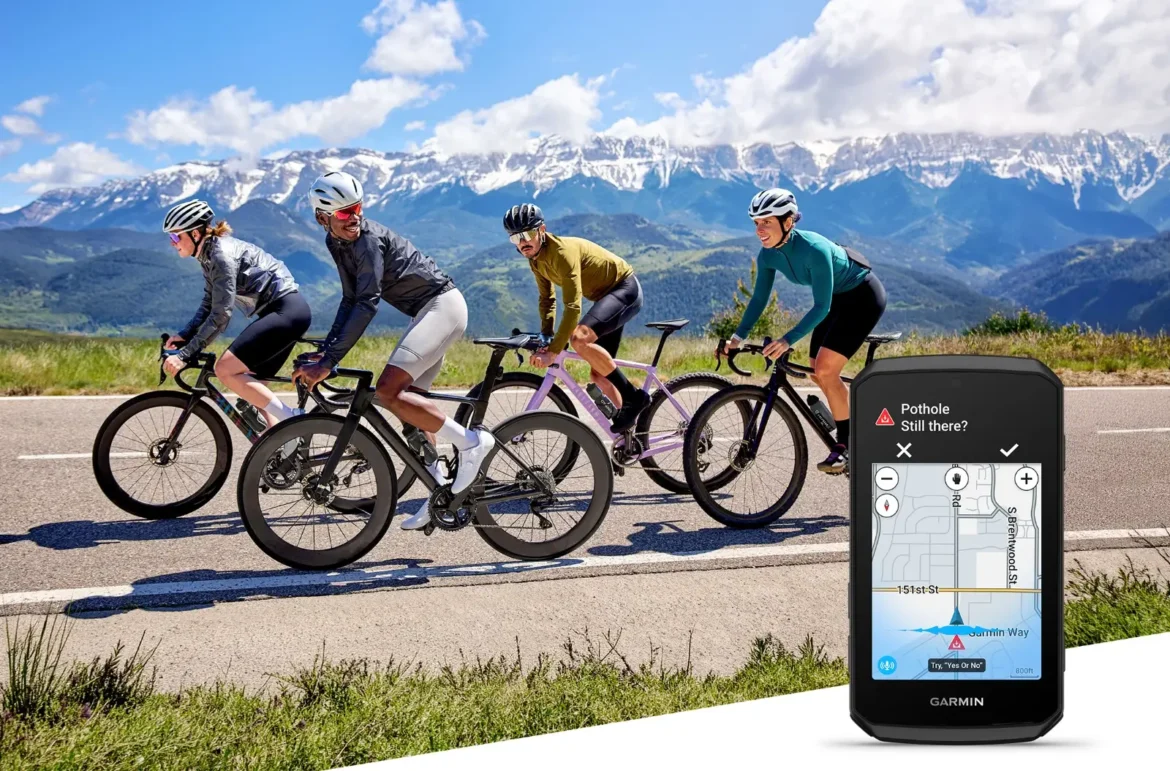
At the forefront of Garmin’s outdoor hardware release is the Edge 1060, a premium cycling computer designed for road cyclists who demand absolute precision, connectivity, and safety. Moving far beyond traditional GPS metrics, the Edge 1060 introduces breakthrough features tailored to modern riding dynamics.
One of the most notable upgrades integrated into the Edge 1060 is the inclusion of built-in microphones and speakers. This hands-free capability allows riders to maintain absolute control of their handlebars while interacting with the device. By simply issuing the voice prompt "Okay, Garmin," users can instantly query performance statistics, recalculate routes on the fly, or exchange voice messages through the Garmin Messenger ecosystem. This innovation directly addresses rider safety concerns, minimizing distractions caused by manual interface navigation at high speeds.
Furthermore, Garmin has addressed the practical difficulties of operating touchscreens under adverse weather conditions. The Edge 1060 cleverly combines a highly responsive capacitive touch interface with robust physical buttons. When torrential rain or heavy sweat compromises touchscreen sensitivity, riders can seamlessly rely on tactile physical controls to manage their device.
Navigation capabilities have similarly been elevated. The Edge 1060 offers sophisticated route planning algorithms that adapt to specific bicycle types and elevation preferences. Cyclists receive real-time updates regarding estimated journey times, total distance, traffic congestion, and crowd-sourced road hazard reports. The newly integrated Free Flow Routing feature further enhances the riding experience by actively plotting courses designed to minimize traffic friction and infrastructural bottlenecks.

Group riding dynamics receive a major boost through the enhanced GroupRide functionality. Participants can share live locations with their peloton, exchange real-time text messages, receive automated incident alerts, and participate in friendly en-route challenges. For holistic health tracking, the device seamlessly integrates with Garmin smartwatches and the CIRQA Smart Band, offering deep insights into recovery status and physiological readiness.
Durability remains a hallmark of Garmin’s engineering. The Edge 1060 boasts a battery life of up to 20 hours under intense, high-performance usage scenarios, which can be extended to an impressive 60 hours when operating in battery-saver mode. Garmin has confirmed that the Edge 1060 will officially hit shelves in Indonesia on December 9, 2026.
Tacx NÄra: Bringing the Open Road Indoors
Complementing the outdoor Edge 1060 is the Tacx NÄra, a smart indoor trainer engineered for cyclists seeking uncompromising training quality regardless of external weather conditions or air quality concerns.
The Tacx NÄra establishes a new benchmark for indoor training realism by delivering power and cadence measurement accuracy within an elite 1% margin of error. Designed to handle explosive efforts, the unit supports sprint resistances up to 2,200 watts and can accurately simulate uphill gradients of up to 20%.

To eliminate the tedious mechanical adjustments traditionally associated with virtual cycling platforms, the Tacx NÄra supports virtual shifting capabilities, allowing seamless gear transitions on applications like Zwift without requiring physical cassette modifications. Additionally, integrated Motion Pod technology permits subtle physical movement—allowing the trainer to shift forward, backward, and laterally—thereby replicating the natural swaying motion of a bicycle on open asphalt.
For elite athletes and serious enthusiasts looking to push their indoor simulation to the absolute limit, the Tacx NÄra can be paired with the Tacx Alpine accessory. This expansion elevates the device’s gradient simulation to a punishing 25% incline and a 10% descent. The Tacx NÄra is scheduled for an official commercial release in Indonesia in January 2027.
Global Strategy and Local Market Positioning
While Garmin’s global hardware rollout also includes models such as the Edge Explore 3 and Edge Explore 3 Plus—specifically targeted at touring and bike-packing enthusiasts—the company has clarified that these specific regional models will not receive official distribution in Indonesia. Instead, Garmin Indonesia remains firmly committed to servicing the local performance market through its established, high-demand portfolio, which includes the Edge 540, Edge 840, and the newly inducted Edge 1060.
This targeted product allocation reflects a nuanced understanding of the Indonesian consumer base, which increasingly leans toward high-performance road cycling, competitive group riding, and structured indoor training regimens.

Industry Implications and Future Outlook
The introduction of the Edge 1060 and Tacx NÄra underscores a broader industry pivot toward data-driven, safety-centric, and all-weather athletic ecosystems. As cycling participation in Indonesia climbs past previous milestones—evidenced by the near 900,000 recorded sessions in the first three quarters of 2026 alone—the demand for professional-grade telemetry is expected to expand in parallel.
Market analysts observe that brands offering deeply integrated hardware-software ecosystems are best positioned to capture market share among maturing consumer bases. By combining voice-activated convenience and advanced group safety features on the road with hyper-realistic indoor simulation technology, Garmin is effectively insulating its user base against seasonal training disruptions.
As the official December release of the Edge 1060 approaches, followed by the arrival of the Tacx NÄra in early 2027, Indonesia’s thriving cycling community stands poised to enter a new era of technological integration and athletic achievement.