
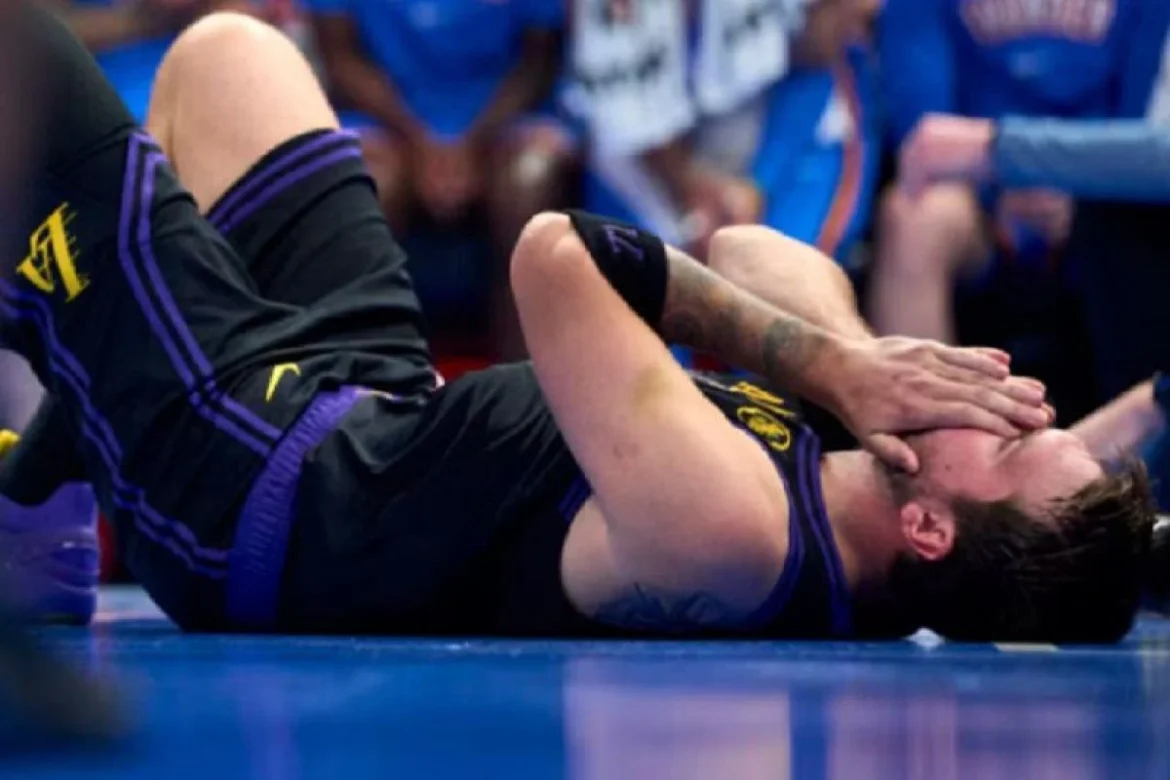
The Los Angeles Lakers enter the 2026/2027 NBA season facing one of the most defining transitions in the modern history of the franchise. For the first time since the 2018/2019 campaign, the purple and gold will take the floor without LeBron James. The iconic forward, who served as the emotional and statistical anchor of the team for eight transformative seasons, has officially relocated to the Eastern Conference to continue his storied career with the Philadelphia 76ers. This monumental departure marks the definitive close of a championship chapter in Los Angeles, opening the door to an uncertain yet intriguing new horizon centered around youth, versatility, and European brilliance.
As the NBA calendar prepares to tip off the 2026/2027 regular season on Tuesday, October 20, 2026, in the United States—corresponding to Wednesday, October 21, in Indonesia—the spotlight falls heavily on Crypto.com Arena. The Lakers will debut their newly constructed roster just one day after opening night, hosting the Golden State Warriors on Wednesday, October 21, at 7:00 p.m. Pacific Daylight Time (PDT), which translates to Thursday, October 22, at 9:00 a.m. WIB. This marquee matchup against Golden State will serve as the immediate litmus test for a squad tasked with reinventing its identity overnight.
The Post-LeBron Landscape: Shifting the Franchise Center of Gravity
Losing a player of LeBron James’ magnitude naturally creates a vacuum in both tactical production and locker room leadership. However, the front office has spent recent years positioning the franchise so that it would not be permanently paralyzed by his eventual departure. Luka Doncic now stands unequivocally as the epicenter of the Lakers’ long-term project. Alongside him, emerging guard Austin Reaves has been handed the keys to take on a vastly expanded role in offensive orchestration and secondary playmaking.
The fundamental question facing head coach JJ Redick and general manager Rob Pelinka is whether this dynamic duo can sustain elite contention in a relentlessly competitive Western Conference. The transition requires a systemic shift: moving away from a high-usage veteran superstar and pivoting toward a faster, more fluid style tailored to Doncic’s surgical court vision and high-IQ pacing.
Reflecting on the previous campaign, the Lakers finished the 2025/2026 regular season with a commendable 53-29 record, securing the fourth seed in a brutally tough Western Conference. Their postseason journey saw them dispatch the Houston Rockets 4-2 in a hard-fought opening-round series, only to run into a buzzsaw in the conference semifinals, where the Oklahoma City Thunder swept them 4-0. That postseason exit laid bare the roster’s structural limitations: an over-reliance on primary creators, defensive vulnerabilities, and a lack of interior depth when elite opponents tightened the screws. Statistically, the Lakers averaged 116.3 points per game while surrendering 114.6 points, highlighting a desperate need for defensive stabilization ahead of the new season.
Luka Doncic: The Unquestioned Catalyst
With James in Philadelphia, the burden of leadership falls squarely on the shoulders of Luka Doncic. The Slovenian superstar enters the 2026/2027 season fresh off a stellar campaign in which he propelled the Lakers to 53 victories, captured his second career NBA scoring title, and earned a coveted spot on the All-NBA First Team.
Doncic’s ability to manipulate defensive coverages, dictate the tempo of a game, and deliver pinpoint passes out of the pick-and-roll makes him the ideal centerpiece for modern basketball. Yet, holding the keys to the Lakers franchise brings heightened scrutiny. Opposing defenses will undoubtedly deploy exotic schemes and double-teams, no longer afforded the luxury of splitting their attention between Doncic and James. Furthermore, maintaining peak physical conditioning and durability over an 82-game schedule will be paramount; any extended absence by Doncic would severely jeopardize the team’s offensive architecture.
Austin Reaves Embraces Star Responsibility
Complementing Doncic in the backcourt is Austin Reaves, who enters his prime years poised for another statistical leap. Reaves enjoyed a breakout 2025/2026 season, averaging a career-high 23.3 points per contest while exhibiting a growing mastery of attacking closeouts, drawing fouls, and hitting clutch shots.
The synergy between Doncic and Reaves has already flashed immense potential. When sharing the floor last season, the duo combined for an astonishing 56.8 points per game, anchoring the Lakers to a 30-11 record in those specific matchups. With James out of the picture, Reaves is expected to shoulder a larger share of the ball-handling duties, particularly when Doncic rests. The challenge for Reaves will be sustaining this high level of productivity when scouting reports demand he receive primary defensive attention.
Roster Overhaul: Youth, Defense, and Depth
Recognizing the need to modernize the roster around Doncic and Reaves, the Lakers front office executed a series of calculated moves during the offseason. The most notable addition is young center Walker Kessler, whose arrival aims to address the team’s glaring interior defensive deficiencies. Kessler’s elite shot-blocking, rim protection, and rebounding prowess will provide a vital safety net for perimeter defenders.
In addition to Kessler, the Lakers bolstered their frontcourt depth by acquiring Sandro Mamukelashvili, while adding perimeter firepower and athleticism via Collin Sexton, Quentin Grimes, and Jaden Hardy. Grimes brings critical 3-and-D capability to the wing, Sexton offers relentless downhill scoring pressure, and Hardy provides instant offense off the bench. Defensively, the acquisition of Matisse Thybulle attempts to offset the energy lost from departures like Marcus Smart, offering elite perimeter containment.
These arrivals offset the departures of players such as Deandre Ayton, Rui Hachimura, and Jaxson Hayes. While the roster is now undeniably younger and more athletic, integrating numerous new faces into JJ Redick’s tactical system presents an immediate challenge in establishing chemistry and defensive continuity.
JJ Redick’s Tactical Chessboard and Defensive Imperatives
As head coach, JJ Redick faces the defining test of his young coaching career. Transitioning the offense away from isolation-heavy sets toward a motion-based system anchored by Doncic’s passing genius requires meticulous planning. Redick must design sets that keep role players engaged, ensuring that floor-spacers like Grimes and shooters on the wings remain active when defenses collapse on Doncic.
Defensively, the Lakers have significant ground to make up. Finishing 19th in defensive rating (points allowed per 100 possessions) during the previous season proved fatal in the playoffs against Oklahoma City. The integration of Kessler inside and Thybulle on the perimeter is designed to rectify this issue, but team defense requires synchronized rotations and vocal communication—elements that must be forged during training camp and the opening weeks of the regular season.
The Reconfigured Western Conference Landscape
Navigating the Western Conference will be a formidable gauntlet. The Oklahoma City Thunder return largely intact after a dominant 64-win regular season, boasting an elite defense anchored by Shai Gilgeous-Alexander. Meanwhile, the San Antonio Spurs, fresh off an appearance in the 2026 NBA Finals, continue their ascent behind the generational brilliance of Victor Wembanyama. Traditional powerhouses like the Denver Nuggets, led by Nikola Jokic, and the Minnesota Timberwolves—bolstered by the addition of LaMelo Ball alongside Anthony Edwards—ensure that the margin for error in the West is virtually nonexistent.
For the Lakers, securing a top-six seed to avoid the unpredictable perils of the Play-In Tournament is the primary regular-season objective.
A Date with Destiny: The Return of the King
While the early portion of the schedule will test the Lakers’ new identity, one specific date has been circled on calendars across the basketball world: December 25, 2026. On Christmas Day, the Philadelphia 76ers will visit Crypto.com Arena, marking LeBron James’ first game back in Los Angeles since his departure. This emotional showdown will not only serve as a celebration of a legendary era but will also provide a fascinating head-to-head spectacle measuring the current iteration of the Lakers against their former talisman.
Outlook for the 2026/2027 Campaign
The Los Angeles Lakers are entering uncharted waters. The departure of LeBron James closes a glorious chapter, but it has not diminished the franchise’s championship ambitions. Armed with Luka Doncic as the undisputed maestro, an ascending Austin Reaves, and a re-engineered supporting cast geared toward modern pacing and defensive resistance, the purple and gold possess all the necessary ingredients to remain major players in the Western Conference.
Whether this new-look roster can evolve quickly enough to challenge the conference’s elite will unfold over the grueling 82-game schedule. For Los Angeles, the goal is clear: prove that the end of the LeBron James era is not a step backward, but rather the exhilarating dawn of a new competitive era.
