
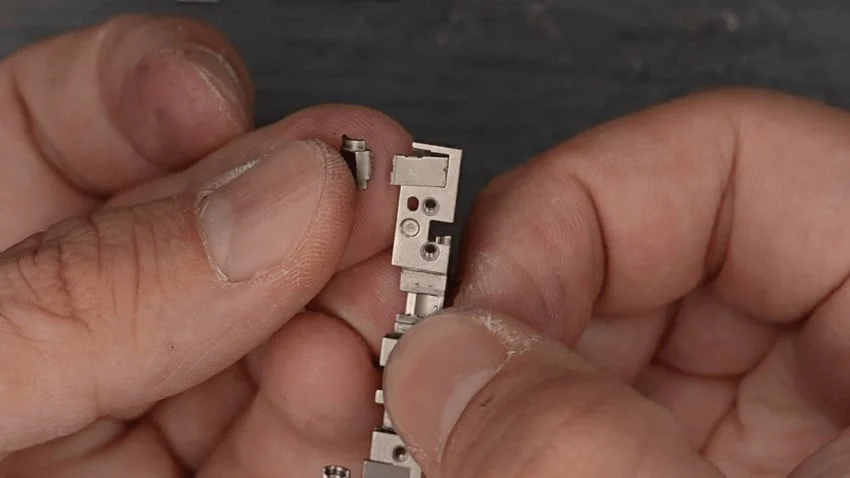
The launch of the iPhone Duo, Apple’s highly anticipated foray into the foldable smartphone market, has been met with significant technical scrutiny following a surge in consumer reports detailing catastrophic display failures at the device’s central crease. As users and independent durability testers continue to document instances where the internal OLED panel develops fractures or mechanical dead zones, the supply chain is beginning to feel the pressure. Fine M-Tec, the firm responsible for manufacturing the device’s internal hinge mechanisms and critical metal support plates, has officially issued a statement distancing itself from the defects. This development marks a pivotal moment in the discourse surrounding the device’s durability, as the company threatens legal action against those attributing the hardware failures to their manufacturing processes.
Chronology of the iPhone Duo Display Crisis
The instability surrounding the iPhone Duo began shortly after the device reached the hands of early adopters and technology reviewers. While foldable technology has existed in the broader market for several years, the specific failure pattern observed in the iPhone Duo has alarmed industry analysts. Unlike previous generations of foldable phones, which often suffered from screen bubbling or adhesive failures, the iPhone Duo issues appear to be structural.
Reports began surfacing on community forums and social media platforms in mid-October. Users noted that after a limited number of folding cycles, a distinct "clicking" sound would emerge from the hinge area. Shortly thereafter, a visible hairline fracture would appear on the OLED display directly over the fold line. By October 20, the volume of these reports had prompted prominent tech YouTubers, such as the creator behind the CuriousHagi channel, to conduct teardown analyses. These videos provided visual evidence of broken hinge components and warped support plates, which were seemingly unable to withstand the repetitive mechanical stress of the folding action.
On October 26, the situation escalated when industry publication The Elec reported that Fine M-Tec had formally addressed the allegations. The statement served as a defensive posture, aiming to insulate the manufacturer from the growing PR crisis currently facing Apple’s flagship foldable.
Technical Anatomy of the Failure
To understand why these fractures are occurring, one must examine the role of the components supplied by Fine M-Tec. The hinge mechanism is not merely a kinetic joint; it is a sophisticated assembly of gears, tension springs, and high-tensile metal plates. The internal metal support plates serve as the "backbone" for the flexible OLED display, designed to distribute the compressive and tensile forces generated when the device is transitioned between its folded and open states.
Technical analysis suggests that if these plates exhibit even microscopic deviations in tolerance, they can create "pressure points" against the underside of the display. Over time, the repeated cycle of folding and unfolding causes the display substrate to fatigue, eventually leading to the catastrophic fractures documented by users. If the hinge mechanism fails to lock or unlock with perfect synchronization, the display is forced to stretch or compress beyond its design specifications, resulting in the localized cracking observed along the center crease.
Fine M-Tec’s Official Stance and Legal Warnings
In their official communication, Fine M-Tec was categorical in its rejection of the claims regarding poor build quality. "The recent quality issues reported on some products do not originate from defects in the components supplied by our company," the statement read. The manufacturer underscored that its production line operates under stringent ISO-certified quality control protocols, implying that if the devices are failing, the root cause lies elsewhere—perhaps in the integration process, the software-driven hinge control, or the handling of the components post-delivery.
Furthermore, the company signaled its intent to protect its reputation against what it terms "unverified and baseless claims." By threatening legal action, Fine M-Tec has effectively moved to suppress the growing narrative that their components are the weak link in the iPhone Duo’s architecture. This move is significant, as it indicates a potential rift between Apple’s hardware engineers and their tier-one component suppliers regarding where the fault for the design failure truly lies.
Broader Context: The Challenges of Foldable Engineering
The iPhone Duo represents a massive engineering undertaking. Unlike traditional slab-style smartphones, which have reached a plateau of hardware maturity, foldables remain in a state of high-stakes experimental engineering. The "crease" is the industry’s greatest challenge. Manufacturers must balance the need for a rigid, protective housing with the requirement for a flexible display that can withstand hundreds of thousands of folds.
Data from the broader foldable market shows that early iterations of competing devices—such as the early Galaxy Fold or the original Motorola Razr—faced similar, if not more severe, teething problems. However, the expectations placed upon Apple are significantly higher. Given the company’s marketing of the iPhone Duo as a "premium, durable, and refined" consumer product, the tolerance for mechanical failure is virtually non-existent among its customer base.
The implications of these failures are twofold. First, there is the financial and logistical burden on Apple to handle a potential product recall or a massive surge in warranty claims. Second, there is the impact on consumer confidence. If the iPhone Duo is perceived as a fragile "beta" product, it could stall the adoption of foldable technology in the enterprise and premium consumer segments, where reliability is the primary purchase driver.
Apple’s Response and Customer Support Strategy
While Apple has not yet issued a global public statement regarding the widespread nature of these failures, reports from various regions indicate that the company has begun providing support to those affected. Customers who have brought their damaged units into authorized service centers are reportedly receiving screen replacements or unit exchanges, often under the standard warranty or AppleCare+ programs.
However, the lack of an official "acknowledgment" of a design flaw is standard operating procedure for Cupertino. By treating these incidents as individual customer service cases rather than a systemic recall, Apple avoids the immediate stock market volatility associated with a formal admission of a product defect. Nonetheless, as the number of documented cases continues to climb, the pressure for a more comprehensive technical explanation—and perhaps a future "stealth" revision of the hinge design—will continue to mount.
Analysis of Future Implications
The standoff between Fine M-Tec and the growing chorus of dissatisfied users highlights the complexities of modern smartphone supply chains. In a globalized market, a single device may contain components from dozens of different suppliers, each with their own specialized manufacturing processes. When a failure occurs, the "blame game" is inevitable.
For the industry, the iPhone Duo situation serves as a stark reminder of the limits of current material science. The quest to hide the crease and ensure long-term structural integrity requires advancements not only in display technology but in metallurgy and kinetic engineering. If the hinge and the support plates are indeed functioning within their specified tolerances, as Fine M-Tec claims, then the problem may lie in the synergy between the software—which controls the hinge’s tension and locking mechanism—and the physical hardware.
Looking ahead, we can expect the following developments:
- Enhanced Durability Testing: Future iterations of the iPhone Duo will likely undergo more rigorous stress-testing protocols, possibly incorporating new composite materials that offer greater flexibility without sacrificing structural rigidity.
- Component Redesign: It is highly probable that, in subsequent production batches, the hinge mechanism will undergo a silent revision. This would likely involve stronger alloys or a refined gear ratio to ensure smoother operation and better stress distribution.
- Legal and Contractual Realignments: The tension between Apple and its suppliers will likely lead to more stringent quality-assurance contracts, shifting more liability onto manufacturers for failures that occur within a certain number of folding cycles.
- Consumer Vigilance: The incident has already sensitized the market. Future buyers of foldable devices are now more likely to consult community forums and independent teardown experts before investing in first-generation foldable hardware.
Conclusion
The iPhone Duo remains a technological marvel, representing the bleeding edge of mobile hardware design. Yet, the current crisis serves as a sobering reminder that innovation often comes at the cost of stability. As Apple continues to navigate the technical challenges of the foldable form factor, the cooperation between the company and its primary suppliers, such as Fine M-Tec, will be critical.
Whether the fractures are the result of manufacturing variances, design oversights, or the inherent limitations of current foldable technology, the path forward requires transparency. For now, the legal threats and denials provide little comfort to the users whose premium devices have succumbed to the stresses of the hinge. The coming months will be decisive; Apple must decide whether to continue treating these as isolated incidents or to confront the underlying structural issues that threaten to undermine the brand’s reputation for reliability. As the industry watches, the iPhone Duo stands as a testament to both the ambition of modern engineering and the fragility of its current limits.
