
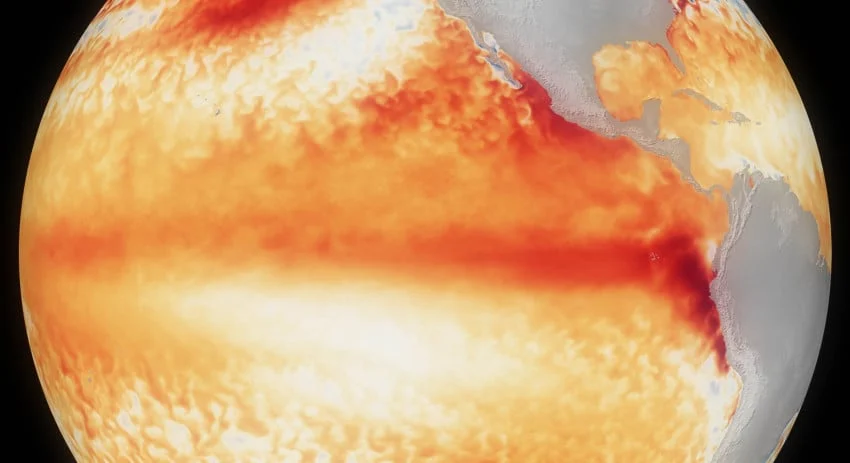
The United Nations, through the World Meteorological Organization (WMO), has issued an urgent advisory signaling that the ongoing El Niño phenomenon is projected to intensify significantly, reaching its zenith in December 2026. Scientific models and climatological data indicate that this specific event possesses the structural integrity and oceanic thermal profile to rank among the most powerful occurrences since consistent record-keeping began in 1950. As the phenomenon matures, global meteorological agencies are bracing for a period of climatic volatility characterized by extreme temperature anomalies and disrupted precipitation cycles that threaten to exacerbate the already pressing challenges posed by anthropogenic climate change.
The Mechanics of an El Niño Event
El Niño, a component of the El Niño-Southern Oscillation (ENSO) cycle, is defined by the sustained warming of sea-surface temperatures in the central and eastern tropical Pacific Ocean. This thermal anomaly acts as a massive heat engine, transferring energy from the ocean to the atmosphere and fundamentally altering global jet streams and wind patterns.
Under normal conditions, trade winds blow from east to west along the equator, pushing warm surface water toward Asia and Australia, while cold, nutrient-rich water upwells along the coast of South America. During an El Niño, these trade winds weaken or, in extreme cases, reverse direction. This lack of resistance allows the warm pool of water to migrate eastward toward the coasts of Peru and Ecuador. The subsequent redistribution of heat triggers a cascade of atmospheric responses, including shifts in storm tracks, changes in humidity levels, and significant deviations from historical precipitation averages in regions spanning from Southeast Asia to the Americas.
Chronology and Scientific Projections
The current cycle began showing signs of strengthening in early 2026, consistent with the typical two-to-seven-year recurrence interval observed by climatologists. According to the WMO’s latest Global Seasonal Climate Update, the system has demonstrated a steady trajectory toward a "strong" or "very strong" intensity rating.
- Early 2026 Phase: Initial sea-surface temperature anomalies were detected in the Niño 3.4 region, indicating the onset of the warming phase.
- Mid-2026 Acceleration: By the third quarter, the atmospheric coupling—the point at which the ocean and atmosphere begin to act in unison—became evident, leading to the current state of intensification.
- The December Peak: Meteorological models converge on December 2026 as the month of maximum intensity. At this stage, the thermal energy stored in the Pacific is expected to reach its maximum displacement, exerting the greatest influence on global climate patterns.
- Post-Peak Decay: Historically, such events begin a gradual cooling phase following the peak, typically dissipating within nine to 12 months after the onset, though the "tail effects" often persist well into the following year.
Comparative Analysis: A Historic Context
To understand the severity of the 2026 event, it is necessary to contextualize it against the benchmarks of the past. The 1997-1998 and 2015-2016 El Niño events are widely regarded as the most potent in modern history. These events were associated with catastrophic weather anomalies, including record-breaking global temperatures, severe droughts in Australia and Indonesia, and massive flooding in parts of South America and East Africa.
The 2026 event is currently being analyzed for its potential to surpass these historical thresholds. Climate scientists note that the baseline temperature of the Earth’s oceans is now significantly higher than it was in the late 20th century due to long-term global warming. Consequently, even a moderate El Niño can now produce impacts that feel "stronger" due to the increased thermal energy already present in the climate system. This creates a compounding effect: the natural variability of El Niño is being amplified by the steady rise in global mean temperatures.
Official Responses and Preparedness
The WMO, alongside regional meteorological offices such as the National Oceanic and Atmospheric Administration (NOAA) and the Bureau of Meteorology in Australia, has intensified its monitoring efforts. In its latest communication, the WMO emphasized that the impact of El Niño is not limited to the Pacific basin but is truly a global phenomenon.
"We are witnessing a complex interaction between a natural climate cycle and a human-induced warming trend," noted a spokesperson for the WMO. "Governments must prioritize early warning systems, particularly in regions prone to food insecurity, as the disruption of rainfall patterns could severely affect agricultural yields in the coming season."
International relief organizations and humanitarian agencies have begun scaling up contingency plans. The focus is primarily on disaster risk reduction in regions where El Niño traditionally triggers either extreme drought or catastrophic flooding. In countries dependent on rain-fed agriculture, the projected shift in precipitation patterns poses a significant risk to food security, prompting calls for more robust water management and crop resilience strategies.
Broader Implications for Global Climate Stability
The implications of a strong El Niño extend far beyond local weather forecasts. The phenomenon serves as a stress test for the global economy and infrastructure.
1. Agricultural Volatility:
The change in precipitation patterns often results in decreased yields for key commodities. Droughts in Southeast Asia and parts of Brazil can lead to sharp spikes in global food prices. Conversely, excessive rainfall in other regions can destroy infrastructure and hinder the transport of goods, creating supply chain bottlenecks.
2. Public Health Risks:
Extreme heat, a hallmark of strong El Niño events, poses direct risks to human health, particularly in urban environments where the "heat island" effect exacerbates temperature spikes. Furthermore, the altered weather patterns can influence the geographic distribution of vector-borne diseases, as changing rainfall and temperature levels create new breeding grounds for mosquitoes and other carriers of illness.
3. Economic and Energy Infrastructure:
Hydroelectric power generation is particularly sensitive to these fluctuations. Regions that rely on consistent rainfall to fill reservoirs for energy production may face power shortages if the expected precipitation fails to materialize. Simultaneously, the increased demand for cooling due to record-high temperatures places unprecedented strain on power grids.
4. Marine Ecosystems:
The influx of warm water into areas that usually experience cold-water upwelling causes significant disruption to marine food chains. The reduction in nutrient availability can lead to a collapse in fish populations, affecting both commercial fishing industries and the food supply for coastal communities.
The Intersection with Anthropogenic Climate Change
Perhaps the most critical aspect of the 2026 El Niño is the degree to which it overlaps with long-term climate trends. Scientists are observing that the current cycle is not occurring in a vacuum. The background warming of the planet, driven by greenhouse gas emissions, acts as a multiplier.
When El Niño releases heat into the atmosphere, it typically drives up global average temperatures. With 2026 already tracking toward being one of the hottest years on record, the peaking of this phenomenon in December suggests that the cumulative effect on the global climate could be profound. This is not merely about a few degrees of temperature change; it is about the increased frequency and intensity of extreme weather events—heatwaves, wildfires, and tropical cyclones—that become more likely when the atmosphere is supercharged by both a natural oscillation and human-induced warming.
Conclusion: Preparing for an Anomalous Period
As December 2026 approaches, the global community is entering a period of significant uncertainty. While the predictive power of modern climate models has improved substantially, the sheer scale of the ocean-atmosphere interaction involved in a major El Niño means that local impacts can be unpredictable.
The emphasis from the United Nations and the WMO remains clear: the focus must be on climate adaptation and resilience. Governments, private sectors, and local communities are encouraged to utilize the remaining months of the year to bolster their defenses against potential climate-related shocks. This includes securing water supplies, optimizing energy distribution, and ensuring that emergency response systems are ready for the potential uptick in extreme weather events.
The 2026 El Niño serves as a stark reminder of the planet’s interconnectedness. As the Pacific Ocean undergoes this dramatic shift, the reverberations will be felt globally, necessitating a coordinated and informed response to navigate the challenges that the coming months will undoubtedly bring. Through the integration of scientific data into policy-making, the global community aims to mitigate the adverse impacts and protect the most vulnerable populations from the climatic volatility that defines this historically significant event.
