
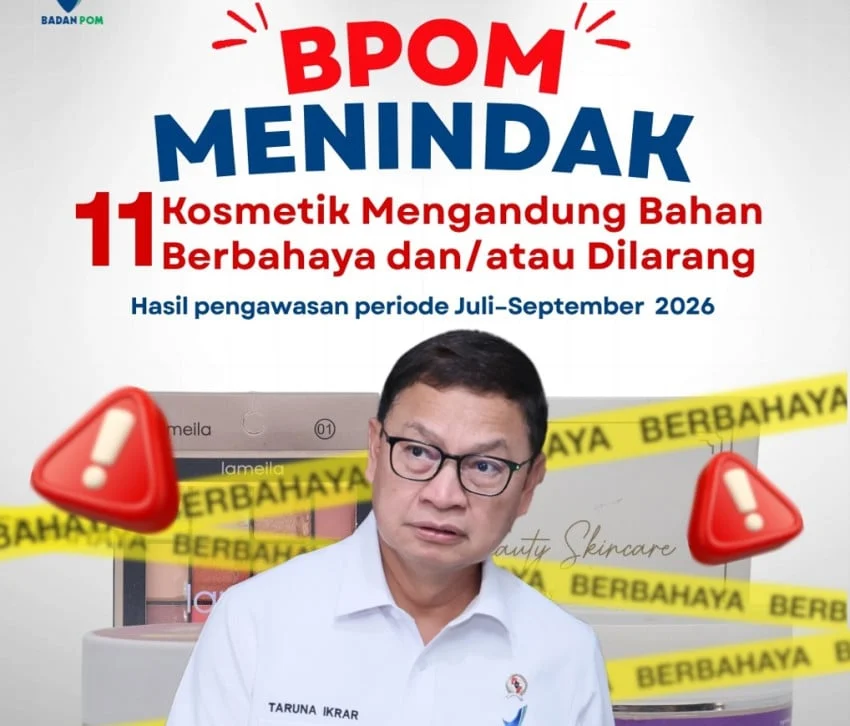
The Indonesian Food and Drug Authority, known locally as Badan Pengawas Obat dan Makanan (BPOM), has officially announced the discovery of 11 cosmetic products containing hazardous substances that pose significant health risks to consumers. This revelation follows a comprehensive series of routine surveillance operations conducted between July and September 2026, targeting both physical retail outlets and digital marketplaces across the archipelago. The crackdown underscores the ongoing challenge of regulating the rapidly expanding beauty and skincare industry, which remains a primary target for illicit distributors looking to capitalize on high consumer demand.
The Scope of the Regulatory Crackdown
In an official statement released on Wednesday, November 11, 2026, the Head of BPOM, Taruna Ikrar, provided a detailed breakdown of the seized items. The 11 identified products were categorized based on their distribution and manufacturing origins. According to the report, four of the products were imported cosmetics lacking the mandatory notification numbers, which serve as the legal permit for sale in Indonesia. Additionally, two products were identified as locally manufactured cosmetics that failed to secure proper documentation. The remaining five products were classified as cosmetics produced under contract, often involving third-party manufacturing facilities that bypassed safety protocols.
This multi-pronged surveillance effort was executed by BPOM’s regional technical units (UPT) spread across the country. The agency employed a mix of physical inspections and digital monitoring, reflecting the modern shift toward e-commerce as a primary channel for the sale of non-compliant goods. By targeting both the supply chain—including manufacturing and importation points—and the retail landscape, BPOM aims to dismantle the infrastructure that supports the proliferation of hazardous beauty products.
Chemical Hazards and Public Health Implications
The laboratory analysis conducted by BPOM revealed a cocktail of dangerous ingredients within these 11 products. The substances identified include mercury, retinoic acid, mometasone furoate, and the industrial dyes Red K3 and Red K10. Each of these chemicals carries well-documented risks that go far beyond superficial skin irritation.
Mercury, a heavy metal often illegally added to skin-whitening creams for its ability to inhibit melanin production, remains a primary concern for public health officials. Chronic exposure to mercury through topical application can lead to irreversible damage, including kidney dysfunction and neurological disorders. Furthermore, it is associated with the development of dark spots on the skin, which ironically leads many users to apply more of the product, thereby increasing their toxic exposure.
Retinoic acid, while used in legitimate dermatological treatments under strict medical supervision, is highly dangerous when used in unregulated cosmetic concentrations. It can cause severe skin dryness, burning sensations, and inflammation. Most alarmingly, BPOM highlighted that retinoic acid is teratogenic, meaning it can cause structural defects or functional impairment in the organs of a fetus if used by pregnant women.
Mometasone furoate, a potent corticosteroid, presents its own set of dangers. Long-term use without medical guidance can lead to skin atrophy—a thinning of the skin layers—and systemic issues such as the suppression of the hypothalamic-pituitary-adrenal (HPA) axis, which regulates vital bodily functions.
Finally, the inclusion of industrial dyes like Red K3 and Red K10 is particularly egregious. These dyes are meant for industrial applications, not human skin. Studies have linked Red K3 to mutagenic and carcinogenic properties, while Red K10 is known to interfere with liver function and significantly elevate cancer risks. The presence of these substances indicates a complete disregard for consumer safety by the manufacturers involved.
Chronology of Surveillance and Enforcement
The findings released in November 2026 are the culmination of a three-month intensive monitoring period. The timeline of this operation reflects BPOM’s transition toward a more proactive, intelligence-led enforcement strategy:
- July 2026: BPOM initiates a nationwide audit of retail facilities and e-commerce platforms to identify patterns in the distribution of non-notified cosmetic products.
- August 2026: Laboratory testing is conducted on samples gathered during the initial phase. Data begins to emerge linking specific product batches to unauthorized manufacturing sites.
- September 2026: Targeted raids are conducted on production facilities suspected of manufacturing cosmetics under contract without proper safety licensing or chemical oversight.
- October 2026: Analytical review of all collected data is finalized, and a list of the 11 non-compliant products is compiled.
- November 11, 2026: Public announcement of the findings, accompanied by a directive to immediately cease the production, importation, and distribution of the identified goods.
Official Response and Regulatory Strategy
In response to these findings, BPOM has initiated a series of severe enforcement measures. Beyond the public warning, the agency has revoked the distribution permits for the products in question. Furthermore, the agency has ordered the immediate recall of all existing stock from retail shelves. For the manufacturing facilities identified in the contract production category, BPOM has imposed a temporary shutdown while further legal investigations are conducted.
"The safety of the public is our paramount concern," stated Taruna Ikrar. "We are working closely with law enforcement agencies to track the origin of these illicit products. Any business entity found to be facilitating the trade of cosmetics containing banned substances will face strict administrative and criminal sanctions."
The agency is also engaging in public awareness campaigns, urging consumers to verify the authenticity of cosmetic products through the official BPOM website or the BPOM mobile application. Consumers are encouraged to check the notification number printed on product packaging against the agency’s database, which provides real-time status updates on all registered beauty products.
Broader Economic and Public Health Impact
The persistence of the illicit cosmetic trade in Indonesia has significant economic and health implications. Economically, it creates an uneven playing field for legitimate, tax-paying businesses that adhere to rigorous safety standards and clinical testing requirements. The prevalence of cheaper, illegal alternatives can distort market prices and undermine consumer trust in the domestic beauty industry.
From a public health perspective, the burden on the national healthcare system is substantial. Patients suffering from complications due to mercury poisoning or steroid-induced skin damage often require long-term dermatological and internal medical care. The rise of "do-it-yourself" skincare trends, often popularized on social media platforms without medical validation, has exacerbated this issue.
Industry analysts suggest that while BPOM’s recent actions are a step in the right direction, the sheer volume of digital transactions makes it difficult to completely eradicate the market for unregulated cosmetics. The "gray market" of beauty products thrives on the lack of transparency in online advertising and the ease with which sellers can open and close digital storefronts.
Future Outlook and Recommendations
Looking ahead, BPOM is expected to increase collaboration with the Ministry of Communication and Information Technology to block websites and social media accounts that promote or sell illegal beauty products. There is also an increased push for a more robust "traceability" system, where raw ingredients used in the manufacturing of cosmetics can be traced back to their source, preventing industrial-grade chemicals from entering the consumer beauty supply chain.
For consumers, the advice from health experts remains consistent: if a beauty product promises miraculous results—such as instant skin whitening or overnight acne clearance—it is highly likely to contain unauthorized substances. Furthermore, products that lack clear, verifiable labeling or are sold significantly below market prices should be treated with extreme caution.
As the Indonesian market for cosmetics continues to grow, the role of regulatory vigilance becomes increasingly critical. BPOM’s latest action serves as a stark reminder that the beauty industry is not immune to the dangers of illicit manufacturing and that the health of the public must always take precedence over the convenience of unregulated commerce. The agency’s commitment to transparency in reporting these findings is a vital component of protecting the public, yet the responsibility also rests on consumers to be discerning and well-informed in their purchasing decisions.
By maintaining a rigorous surveillance schedule and fostering public cooperation, the authorities hope to curtail the influence of illegal manufacturers. However, the battle against hazardous beauty products is a continuous process that requires a combination of strict enforcement, technological oversight, and an educated public capable of identifying the risks inherent in unregulated cosmetics. As of the latest update, the investigation into the origins of the raw materials used in these products remains ongoing, with potential criminal charges pending for those responsible for the production and distribution of these hazardous substances.
