
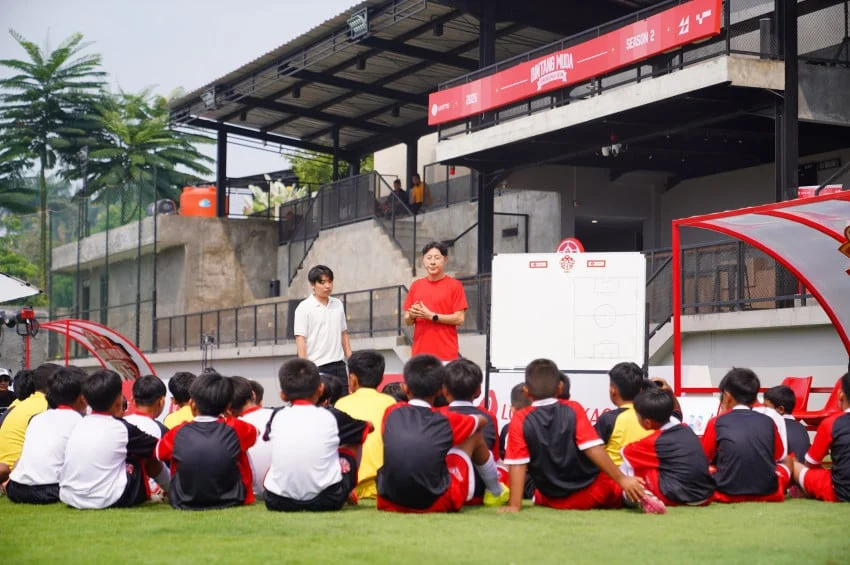
In a significant contribution to the grassroots development of Indonesian football, Shin Tae-yong, the former head coach of the Indonesian National Team, has dedicated his expertise to the Lotte Bintang Muda Generasi Masa Depan 2026 program. Despite his ongoing professional commitments, the tactician joined forces with legendary Persija Jakarta icons Ismed Sofyan and Atep Rizal to mentor 40 selected young talents in a high-intensity coaching clinic held in the outskirts of Jakarta. This initiative represents a strategic effort to formalize talent identification processes and provide a professional framework for youth players to transition from amateur status to competitive academy environments.
The Evolution of the Lotte Bintang Muda Program
The Lotte Bintang Muda Generasi Masa Depan 2026 is currently in its second edition, a milestone that underscores the growing interest in corporate-sponsored sports development programs in Indonesia. The initiative was conceptualized to bridge the gap between recreational youth football and professional scouting networks. By providing a structured environment where children can receive direct instruction from figures of national prominence, the program aims to cultivate both technical proficiency and tactical awareness from a young age.
The program’s structure is designed to mimic the intensity of a professional training camp. For the 2026 cycle, the organizers implemented a multi-stage selection process that began in schools across the Greater Jakarta (Jabodetabek) area. This localized approach allows for a broader reach, ensuring that talent is identified not just in elite academies, but also in community-based football programs that might otherwise go unnoticed by major clubs.
A Chronology of the Talent Identification Process
The journey for the 40 participants was rigorous, spanning several weeks of intense physical and technical assessment. The chronology of the selection process highlights the professional rigor applied to the project:
- Phase I: Grassroots Scouting: Ismed Sofyan and Atep Rizal conducted site visits to various schools, evaluating basic technical fundamentals such as passing accuracy, dribbling composure, and shooting mechanics.
- Phase II: The Bogor Assessment: Out of the initial pool, 70 candidates were invited to the Soccerfield facility in Bogor for a secondary round of testing. This phase shifted the focus from general play to specific metrics, including agility drills using hurdles and cones, sprint speed, and high-pressure precision shooting.
- Phase III: Final Selection and Team Formation: Following the assessment in Bogor, the field was narrowed down to 40 players. These finalists were categorized into four distinct squads: Team Macan, Team Harimau, Team Elang, and Team Rajawali, each consisting of 10 players. This grouping serves to foster team cohesion and allows the coaching staff to evaluate players in simulated match conditions.
Strategic Insights from Shin Tae-yong
Shin Tae-yong’s involvement in the program carries weight, particularly given his tenure with the Indonesian National Team from 2020 to 2025. During his time at the helm of the Garuda squad, Shin was known for his emphasis on physical conditioning and high-pressing tactical systems. His presence as a "Special Guest Coach" provided the participants with a rare glimpse into the expectations of elite-level football.
"I am genuinely appreciative of these initiatives," Shin stated during the event. "Providing young players with the opportunity to develop their skills at a formative age, while under the tutelage of experienced coaches, is essential for the future of Indonesian football. It is about building a foundation that will eventually support the professional leagues and the national team."
His commentary reflects a broader philosophy that the national team’s success is inextricably linked to the quality of the youth pipeline. By mentoring these 40 individuals, Shin is not merely teaching football; he is reinforcing the discipline and work ethic required to navigate the complexities of a professional sports career in Southeast Asia.
The Role of Local Legends: Ismed Sofyan and Atep Rizal
The inclusion of Ismed Sofyan and Atep Rizal serves a dual purpose. First, as former players for Persija Jakarta, they carry significant cultural capital. Their transition from the pitch to the coaching bench provides a relatable narrative for the children, demonstrating that a successful career in the Indonesian Liga 1 is a tangible goal.
Ismed, known for his defensive intelligence and longevity in the game, brings a wealth of tactical knowledge regarding positional play. Atep, a versatile midfielder, provides insights into transition play and offensive creativity. Together, they form a coaching unit that balances defensive discipline with attacking flair, ensuring that the 40 participants receive a well-rounded education in the sport.
Data-Driven Development in Indonesian Youth Football
The current state of Indonesian football development has seen a shift toward more analytical approaches. Programs like Lotte Bintang Muda are increasingly utilizing quantitative metrics to assess player progress. The testing parameters used in the Bogor selection—specifically the agility hurdles, cone-based dribbling, and precision shooting tests—are consistent with international standards for youth development.
Supporting data from the Indonesian Football Association (PSSI) and private youth academies indicates that early exposure to standardized testing increases the likelihood of a player successfully transitioning into the U-17 or U-20 professional ranks. By quantifying performance, coaches can track growth over time, identifying not just the most talented players, but those with the highest "trainability" and potential for development.
Implications for the Indonesian Football Ecosystem
The success of such programs has significant implications for the broader landscape of Indonesian sports. As the country seeks to improve its standing in the FIFA rankings and competitive stature in the ASEAN region, the reliance on top-down development must be complemented by strong, community-based foundations.
- Professionalizing the Youth Pathway: By integrating former professionals into the scouting and coaching process, the program elevates the standard of youth football, signaling to the wider public that the path to professional status requires more than just natural ability.
- Corporate Social Responsibility (CSR) in Sports: The involvement of corporations in funding these programs is crucial. With limited state funding available for every youth program, the private sector’s investment in grassroots sports acts as a vital catalyst for infrastructure development.
- Psychological Impact: The experience of being scouted, selected, and trained by national icons provides young players with the confidence and psychological fortitude necessary for professional sports.
Challenges and Future Prospects
While programs like the Lotte Bintang Muda initiative are clearly beneficial, they face the ongoing challenge of scalability. With millions of children aspiring to play football across the archipelago, the limitation of such programs lies in the number of participants they can accommodate. The transition from a local initiative to a national standard remains a hurdle for Indonesian football administrators.
However, the ripple effect of these events is undeniable. The 40 selected players will return to their respective local clubs and schools carrying the training methodologies they learned from Shin, Ismed, and Atep. This knowledge transfer is essential for raising the baseline level of football in the country.
Conclusion
The collaborative effort between Shin Tae-yong, Ismed Sofyan, and Atep Rizal within the Lotte Bintang Muda framework serves as a model for how veteran expertise can be leveraged to benefit the next generation. By combining technical assessment, rigorous physical training, and mentorship, the program provides a blueprint for the sustainable development of football talent in Indonesia.
As the 40 participants continue their training, the focus remains on the long-term impact: the creation of a generation of players who are not only technically proficient but also tactically prepared for the demands of the modern game. For the Indonesian football community, this initiative is a reminder that the path to future glory begins with the investment made in the youth of today. With continued support and the involvement of high-caliber mentors, the prospects for the next generation of Indonesian football talent appear increasingly bright.
