
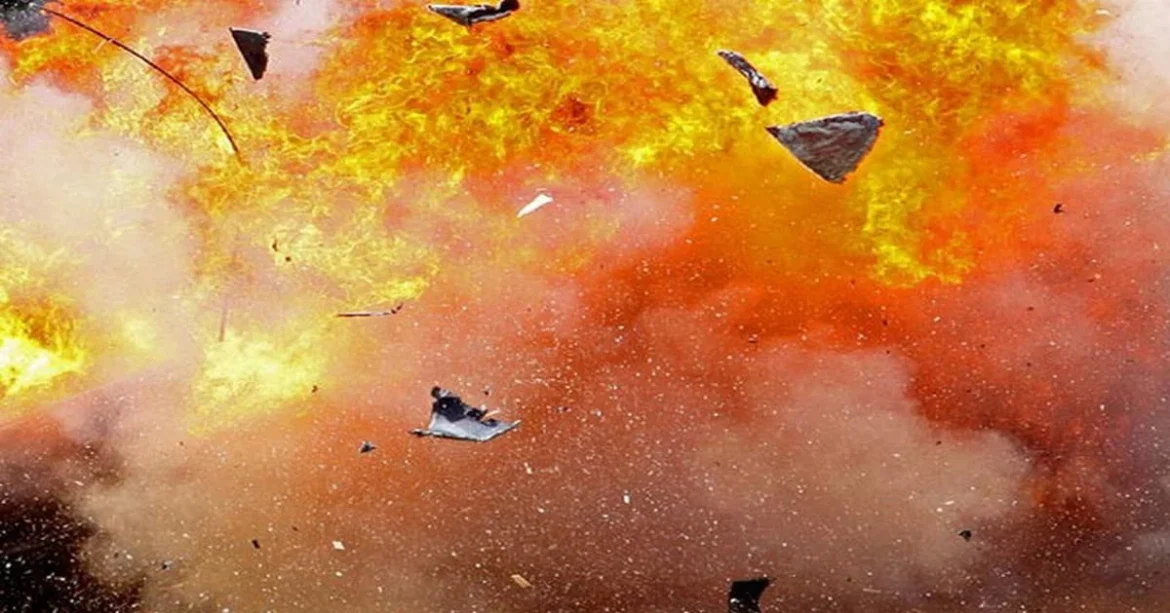
A catastrophic drone strike on a military base in northern Colombia has left three soldiers dead and at least 16 others injured, marking a significant escalation in the ongoing security crisis plaguing the nation’s rural provinces. The assault, which occurred in the municipality of Santa Rosa del Sur, located at the foothills of the San Lucas mountain range, serves as a grim reminder of the deteriorating security landscape in areas long contested by non-state armed groups. According to the Colombian Armed Forces, the attack took place on Saturday, November 7, 2026, catching military personnel off-guard and prompting an immediate national security review.
While official investigations are currently underway to identify the specific perpetrators, the incident highlights the tactical evolution of insurgent warfare in Colombia. The use of aerial drones as offensive weapons has transitioned from a rare tactic to a persistent threat, forcing the Colombian military to rapidly adapt its defensive posture in remote outposts.
Chronology of the Assault
The sequence of events began on the afternoon of November 7, 2026. Military sources reported that the base in Santa Rosa del Sur—a strategic location known for its proximity to both illegal gold mining operations and illicit drug trafficking corridors—was targeted by at least three explosive-laden drones. Eyewitness accounts, corroborated by footage circulating on social media, showed dense plumes of smoke billowing from the installation following a series of loud, distinct detonations.
The video footage captured the immediate aftermath of the strike, showing soldiers scrambling for cover behind sandbag fortifications as the base sustained direct hits. The suddenness and precision of the attack suggest a degree of operational sophistication that has become increasingly common among the various militant factions operating within the Bolívar department. By the time emergency response teams were able to stabilize the situation, the casualty toll had reached 19, with three confirmed fatalities and 16 wounded, some of whom remain in critical condition.
The Geography of Conflict in San Lucas
The choice of Santa Rosa del Sur as a target is not incidental. The San Lucas mountain range has historically served as a critical nexus for illegal armed groups due to its vast mineral wealth and rugged, inaccessible terrain that complicates government surveillance and ground intervention.
For decades, this region has been a battleground for a conglomerate of criminal syndicates and insurgent groups. The "Clan del Golfo" (Gaitanist Self-Defense Forces of Colombia), the National Liberation Army (ELN), and various "dissident" factions—remnants of the former Revolutionary Armed Forces of Colombia (FARC) that rejected the 2016 peace accord—all maintain a significant presence in the area.
These groups compete for control over the informal gold mining economy, which serves as a lucrative alternative to cocaine production for laundering money and financing their operations. By striking a military base, these groups aim to disrupt the state’s efforts to regulate the region, effectively signaling that the government’s authority remains fragile in the rural interior.
Escalating Security Challenges
The use of drones represents a worrying trend in the Colombian conflict. Over the past two years, there has been a documented increase in the utilization of commercial, off-the-shelf unmanned aerial vehicles (UAVs) modified to carry improvised explosive devices (IEDs).

Security analysts note that drones provide these groups with an "asymmetric advantage." They allow militants to bypass traditional military perimeters, monitor troop movements with impunity, and deliver ordnance directly onto sensitive installations without risking their own personnel in direct firefights. This evolution in tactics has placed the Colombian Ministry of Defense under intense pressure to invest in electronic warfare capabilities, specifically drone-jamming technology and enhanced air-defense systems for isolated bases.
Official Responses and Political Repercussions
The response from the highest levels of the Colombian government was swift. President Abelardo de la Espriella, addressing the nation via his social media channels, expressed outrage at the brutality of the attack. "Those who are behind this heinous act will have nowhere to hide," he declared, signaling a hardening of the government’s stance toward the groups responsible for the violence.
The incident has reignited a fierce political debate regarding the government’s "Total Peace" initiative, which seeks to engage in dialogue with various armed groups to reach a negotiated settlement. Critics of the current administration argue that the policy of appeasement and ceasefires has only emboldened these factions, allowing them to regroup, rearm, and refine their tactical capabilities. Opposition leaders in the Colombian Congress have demanded a comprehensive review of the security strategy, calling for a more aggressive military presence in the San Lucas region to prevent further incursions.
Broader Implications for Regional Stability
The tragedy in Santa Rosa del Sur carries profound implications for the safety of local communities. When military bases are targeted, the civilian population often becomes collateral damage or is subjected to increased intimidation by armed groups vying for territorial dominance.
The economic fallout is also significant. The region’s reliance on gold mining, often plagued by informal and illegal practices, faces further instability as security forces intensify operations. Investors in the extractive sector, already cautious due to the volatile security climate, may further retract their operations, exacerbating poverty and unemployment in rural areas. This, in turn, creates a feedback loop: increased economic desperation makes the local population more susceptible to recruitment by criminal groups, who often position themselves as the "alternative authority" in the absence of a robust state presence.
The Path Forward: Military and Strategic Analysis
As the Colombian military begins its forensic analysis of the drone wreckage, experts suggest that the government must address three critical areas to prevent a recurrence:
- Technological Upgrades: The deployment of localized anti-drone systems—including frequency jammers and detection radar—is essential for protecting vulnerable military outposts.
- Intelligence Gathering: Improved human and signals intelligence (SIGINT) is required to identify the supply chains that allow these groups to acquire and modify drone technology.
- Regional Cooperation: Given that many of these groups maintain logistical ties across porous borders, increased cooperation with neighboring nations is necessary to dismantle the networks that support the proliferation of specialized equipment.
Furthermore, the humanitarian dimension cannot be overlooked. The families of the three soldiers killed in the attack are now the face of a conflict that seems increasingly difficult to resolve through conventional military means alone. The government’s challenge will be to balance its commitment to national security with the humanitarian imperative to protect the civilian population in one of the country’s most dangerous regions.
In conclusion, the attack on the Santa Rosa del Sur base is a stark illustration of how the nature of the Colombian conflict is shifting. As insurgent groups integrate modern technology into their arsenal, the state’s traditional response mechanisms are being pushed to their limits. The coming weeks will be critical as the administration of President de la Espriella weighs its next moves—whether to double down on the military response or to recalibrate its approach to the peace negotiations that are currently under significant public scrutiny. For the soldiers stationed in the foothills of the San Lucas mountains, however, the reality is far more immediate: they remain on the front lines of an evolving war that shows no sign of abating.
