
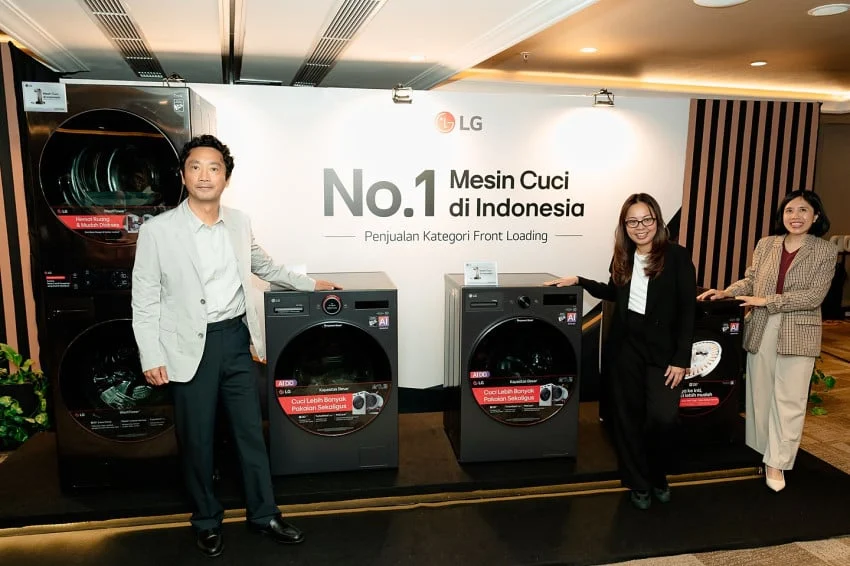
The landscape of modern home appliances in Indonesia has undergone a significant transformation, characterized by a shift toward larger capacities and the integration of sophisticated artificial intelligence. In a move that underscores its dominant position in the premium home appliance sector, PT LG Electronics Indonesia has officially reaffirmed its leadership in the front-loading washing machine market for the fiscal year 2026. This announcement, supported by data from the global market research and data analytics firm NIQ-GfK, marks a pivotal moment for the company as it commemorates its 36th anniversary of operations in the Indonesian archipelago.
A Legacy of Innovation and Market Dominance
The confirmation of LG’s market leadership was disclosed during a press conference held in Jakarta on Tuesday, October 27, 2026. This milestone is not merely a quantitative achievement in terms of sales volume but represents a strategic victory for the brand in the highly competitive household electronics segment. Since entering the Indonesian market in 1990, LG has systematically expanded its footprint, transitioning from a basic consumer electronics provider to a comprehensive smart home solution architect.
According to the data provided by NIQ-GfK, LG’s performance in the front-loading segment throughout 2026 has been bolstered by a consumer shift toward energy efficiency and high-capacity appliances. As urbanization in Indonesia continues to influence living spaces and lifestyle demands, the necessity for high-performance laundry systems that can handle bulk cleaning in fewer cycles has become a primary driver for market growth.
Ha Sang-chul, President of LG Electronics Indonesia, addressed the significance of this milestone during the anniversary celebration. "This achievement serves as both a source of pride and a reflection of the profound trust that Indonesian consumers have placed in us," Ha stated. "For 36 years, our commitment has been to integrate technology that not only solves daily problems but anticipates the future needs of the modern household."
The Technological Edge: AI DD and AI Wash
At the heart of LG’s current product portfolio is the integration of proprietary artificial intelligence technologies. The flagship model spearheading this strategy is the LG WashTower WT2520NHBA, an all-in-one laundry solution that features a massive 25-kilogram washing capacity paired with a 20-kilogram drying capacity.
The technical prowess of these machines lies in the AI Direct Drive (AI DD) and AI Wash systems. Unlike traditional washing machines that rely on fixed cycles, AI DD utilizes deep learning algorithms to analyze the weight and softness of the fabric being washed. By identifying these characteristics, the machine automatically optimizes the drum motion, water temperature, and cycle duration to provide the most effective cleaning while minimizing fabric wear and tear.
Furthermore, the AI Wash technology acts as an automated assistant, detecting soil levels and adjusting detergent dispensing accordingly. This precision ensures that resources—water, electricity, and detergent—are used with optimal efficiency, directly addressing the growing consumer concern regarding sustainability and rising operational costs in the home.
Strategic Portfolio Expansion
The 2026 product lineup represents a deliberate segmentation strategy. While the WashTower serves the luxury and high-capacity market, LG has simultaneously addressed the broader consumer base with models such as the LG TX2522ST5G, a top-loading machine boasting a 22-kilogram capacity. This expansion demonstrates LG’s objective to dominate across various price points and form factors, ensuring that the benefits of smart technology are not limited to a single product category.
Kim Nack Sun, Product Director of Living HS at LG Electronics Indonesia, emphasized the user-centric design philosophy behind these products. "Our development process is guided by a singular goal: to alleviate the burden of domestic labor," Kim explained. "By harmonizing massive capacity with intelligent automation, we are providing families with the gift of time. In an era where efficiency is synonymous with quality of life, these machines act as central hubs for home management."

The connectivity aspect is managed through the LG ThinQ ecosystem. By enabling users to control and monitor their laundry cycles via smartphone, LG has effectively bridged the gap between physical household chores and digital convenience. This remote capability allows for real-time diagnostics and energy consumption monitoring, features that are increasingly prioritized by tech-savvy, urban Indonesian consumers.
Chronology of LG’s Market Growth in Indonesia
- 1990: LG Electronics establishes its presence in Indonesia, initiating a long-term strategy for local market integration.
- 2010s: The company transitions focus toward energy-efficient appliances, introducing early iterations of inverter technology to the local market.
- 2020-2024: Rapid adoption of AI-enabled home appliances. LG begins heavily marketing its ThinQ platform to capitalize on the growth of the Internet of Things (IoT) in Indonesian households.
- 2025: LG reports sustained growth in its premium home appliance segment, setting the stage for its 2026 market leadership confirmation.
- October 27, 2026: LG officially announces its leadership in the front-loading washing machine market, backed by NIQ-GfK research, during its 36th-anniversary event in Jakarta.
Economic Implications and Industry Trends
The success of LG in the laundry appliance sector reflects broader macroeconomic trends within Indonesia. As the middle-class demographic expands, there is a measurable uptick in the purchase of "premium" appliances. Consumers are increasingly willing to pay a price premium for appliances that offer longevity, lower electricity consumption, and advanced feature sets.
From an industry perspective, LG’s focus on the 25kg capacity segment is strategic. High-capacity machines are traditionally favored by large families and small-to-medium enterprise (SME) laundry businesses. By blurring the lines between domestic and semi-commercial usage, LG has effectively captured a wider total addressable market.
Moreover, the emphasis on artificial intelligence signals a shift in the competitive landscape. Competitors are now compelled to move beyond price-based competition and toward a race for "intelligence." Companies that fail to integrate smart capabilities are finding it increasingly difficult to compete in the high-end tier of the market, where consumer loyalty is predicated on the seamless integration of technology into daily life.
Environmental Impact and Sustainability
A critical, albeit often overlooked, aspect of LG’s push for high-capacity machines is the environmental implication. A 25-kilogram capacity allows for fewer wash cycles, which significantly reduces the aggregate water and energy footprint of a household. By automating the dosing of detergents and the duration of cycles, the AI-driven machines prevent the common issue of over-washing, which is a major contributor to fabric degradation and environmental waste.
As Indonesia continues to pursue green energy initiatives and sustainable living goals, the role of energy-efficient appliances becomes vital. LG’s investment in Inverter Direct Drive technology—which reduces noise and vibration while improving energy efficiency—aligns with these national priorities.
Future Outlook: Toward a Smarter Home
Looking ahead, LG Electronics Indonesia faces the challenge of maintaining this market leadership amidst intensifying competition from other global manufacturers and emerging local brands. However, the company’s strong brand equity and its proactive investment in the smart home ecosystem provide a significant buffer.
The path forward likely involves further refinement of the LG ThinQ platform, with potential integrations into broader smart city and smart home infrastructure. As the Indonesian consumer base becomes more sophisticated, the demand for appliances that can communicate with one another—creating a cohesive, automated living environment—will only grow.
In conclusion, LG’s 2026 performance is a testament to the efficacy of blending high-capacity hardware with advanced software solutions. By successfully pivoting to meet the demands of the modern Indonesian family, LG has not only secured its market position but has also redefined the standard for what a household appliance should represent: a fusion of convenience, sustainability, and technological intelligence. As the company looks toward its next decade of operations, the synergy between AI and home living remains its most formidable asset.
