
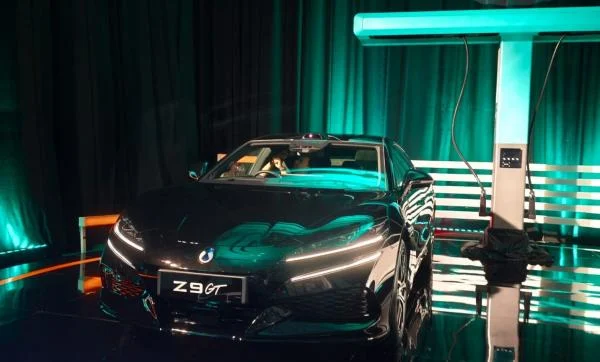
The shift toward electric vehicle (EV) technology represents a critical juncture for the Indonesian automotive sector, providing a rare opportunity to bypass the entrenched dominance of traditional internal combustion engine (ICE) manufacturing and secure a competitive foothold in the global supply chain. This strategic outlook was emphasized by Moeldoko, Chairman of the Indonesian Electric Vehicle Industry Association (PERIKLINDO), during the Perilindo Electric Vehicle Conference (PEVC) 2026 held in Jakarta on October 28, 2026. As the nation pivots toward sustainable transportation, the mandate for policymakers and industry leaders is clear: Indonesia must transition from a consumer-focused market for foreign-made vehicles to an innovative producer of indigenous technology.
The global automotive industry is undergoing its most significant transformation in a century. For decades, established manufacturers in Japan, Germany, and the United States set the technological standards and production barriers for ICE vehicles. For emerging economies like Indonesia, attempting to compete in the legacy sector was a daunting, if not impossible, task. However, the move to battery electric vehicles (BEVs) has effectively leveled the playing field, allowing newer entrants to invest in a technology stack that is still evolving.
The Strategic Imperative for Indonesia
During the PEVC 2026 press conference, Moeldoko articulated a sobering reality regarding the country’s industrial past. He noted that Indonesia’s inability to catch up with global automotive giants in the ICE era was a result of the rapid and long-standing development cycles of those established firms. The shift to EVs, however, functions as a technological reset button.
"EV is a momentum for a leap in the Indonesian vehicle industry," Moeldoko stated. "We cannot catch up with the conventional car industry—the movement is already too fast. But, essentially, this EV sector provides a genuine momentum for all of us."
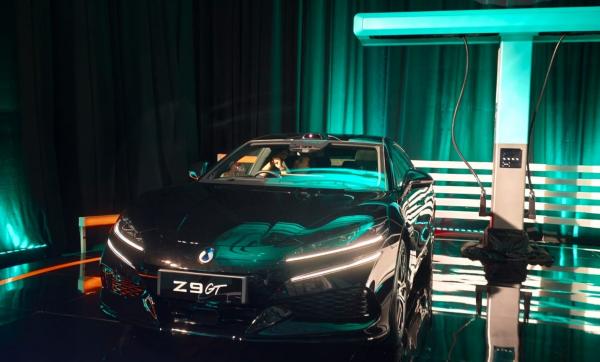
The core concern for the Indonesian government is the risk of "industrial colonization," where the nation’s massive population and growing middle class make it an attractive target for foreign automotive brands to dump excess production. If the local industry does not proactively develop domestic engineering capabilities, intellectual property, and component supply chains, the transition to green energy will merely serve to enrich foreign corporations while leaving Indonesia as a perpetual importer.
Chronology of Indonesia’s EV Ambitions
Indonesia’s journey into the EV sector has been deliberate and policy-driven, spanning several years of regulatory preparation:
- 2019: The issuance of Presidential Regulation (Perpres) No. 55 of 2019, which established the legal framework for the Battery-Based Electric Motor Vehicle Program. This marked the government’s official commitment to accelerating the adoption of EVs.
- 2020-2022: The government focused on upstream integration, leveraging the nation’s status as the world’s largest nickel reserve holder. This period saw the initiation of several large-scale battery manufacturing plants, including partnerships with global entities like LG Energy Solution and Contemporary Amperex Technology Co. Limited (CATL).
- 2023-2025: Implementation of fiscal incentives, including Value Added Tax (VAT) reductions for EVs meeting local content requirements (TKDN) and subsidies for electric motorcycle conversions.
- October 2026: The PEVC 2026 conference serves as a platform to evaluate the progress of these policies and pivot toward higher value-added manufacturing, moving beyond simple assembly.
The Role of Domestic Content and Technological Sovereignty
A key pillar of Moeldoko’s message is the necessity of increasing the Domestic Component Level (TKDN). The Indonesian government has mandated that vehicles sold in the country must contain a significant percentage of locally sourced materials and labor. This policy is not merely protective; it is designed to foster a domestic ecosystem of Tier 2 and Tier 3 suppliers.
By forcing international manufacturers to build factories in Indonesia, the government intends to facilitate a technology transfer. The goal is to move from "Complete Knock Down" (CKD) kits—where parts are imported and merely bolted together—to full-scale manufacturing, where the battery packs, electric motors, and vehicle chassis are designed and fabricated domestically.
Data from the Ministry of Industry indicates that the demand for EVs in Indonesia is growing at a compound annual growth rate (CAGR) that outpaces traditional vehicle sales. However, the challenge remains in the infrastructure sector. Public charging networks, despite recent expansions, still lag behind the requirements of a mass-market adoption phase. Analysts suggest that for the domestic industry to thrive, the government must balance the protection of local industry with the need for competitive pricing to incentivize consumers to switch from ICE vehicles.

Implications for the Global Supply Chain
Indonesia’s focus on the EV sector is not happening in a vacuum. As the world moves toward decarbonization, global supply chains are being restructured to prioritize mineral security. Indonesia, holding nearly a quarter of the world’s nickel reserves, is at the center of this shift.
The move toward vertical integration—from mining and refining to battery cathode production and, finally, vehicle manufacturing—is a high-stakes strategy. By controlling the battery supply chain, Indonesia positions itself as an essential node in the global EV market. The implications are significant: if Indonesia succeeds in becoming a hub for battery technology, it will be difficult for global automakers to ignore the country as a primary manufacturing base.
However, critics and economists warn of the "middle-income trap." If Indonesia continues to export raw materials or low-value battery components, it will remain tethered to global commodity price fluctuations. The goal, as highlighted by PERIKLINDO, must be the creation of high-value, proprietary technology that can be exported under Indonesian brand names.
Official Stance and Future Outlook
The government’s stance, reflected in the sentiments shared by Moeldoko, emphasizes that passive consumption is not an option. "I do not want Indonesia, which is so vast and has an extraordinary population, to be merely a spectator or a target market for industries coming from abroad," Moeldoko added.
Looking forward, the next phase of the Indonesian EV roadmap involves:

- Investment in R&D: Allocating more capital toward engineering universities and technical training centers to build a workforce capable of advanced automotive design.
- Infrastructure Scaling: Rapid deployment of charging stations, particularly in high-density urban areas like Jakarta, Surabaya, and Medan, to reduce "range anxiety."
- Policy Harmonization: Ensuring that tax incentives and regulatory hurdles are streamlined to encourage startups and local SMEs to enter the EV component space.
The PEVC 2026 serves as a barometer for these efforts. With stakeholders from government, academia, and the private sector participating, the conference underscores that the transition to EVs is as much a political and economic priority as it is an environmental one.
Analysis of the Industrial Landscape
The challenge for Indonesia is that the global EV market is becoming increasingly crowded. Competition from China—which currently leads the world in battery manufacturing and affordable EV production—is immense. For Indonesia to carve out its niche, it must leverage its specific advantages, such as its strategic geography and its vast mineral wealth, while simultaneously creating a favorable regulatory climate that attracts long-term investment.
The success of this endeavor will depend on the government’s ability to maintain policy consistency. Investors in the automotive sector typically look at 10 to 20-year horizons; therefore, regulatory stability regarding EV subsidies and environmental standards is paramount.
As Indonesia enters the latter half of the decade, the narrative surrounding its automotive industry is shifting. The transition is no longer framed as a challenge of catching up, but as an opportunity to define a new chapter in industrial history. If the roadmap outlined by industry leaders and policymakers is executed with precision, Indonesia could transition from a regional market participant into a pivotal engine of the global electric mobility revolution. The stakes are high, but the potential for economic diversification and industrial advancement provides a compelling incentive for continued, aggressive progress in the electric vehicle sector.
