
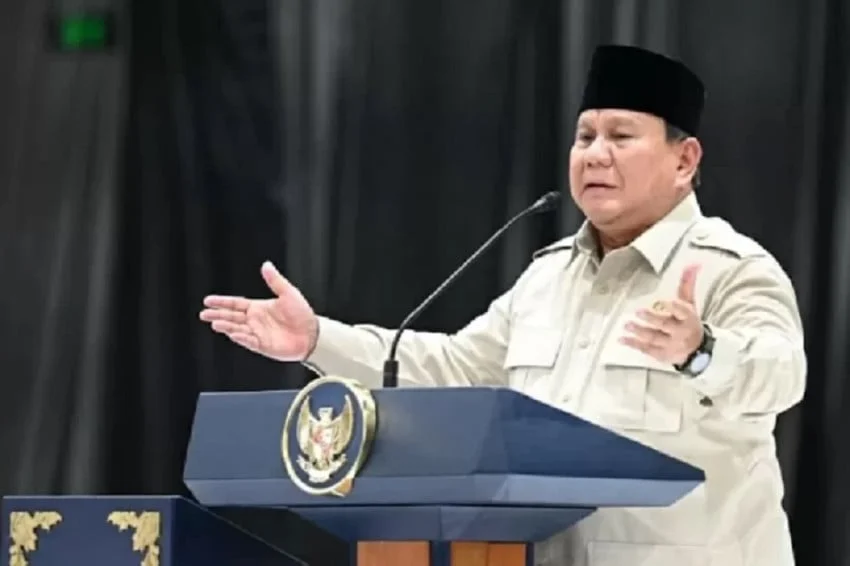
JAKARTA — In a striking blend of modern technology, political commentary, and spiritual reflection, Indonesian President Prabowo Subianto shared a personal anecdote during his address at the 15th-anniversary celebration of the NasDem Party in Jakarta. Addressing a gathered crowd of political elites, party members, and national figures, the president recounted how his curiosity about a fundamental Islamic concept—shiratal mustaqim, famously recited daily by millions of Muslims in Surah Al-Fatihah—prompted him to turn to artificial intelligence, specifically ChatGPT, aided by his personal secretary.
The lighthearted yet poignant anecdote served as a transition into a far more serious national discourse. President Prabowo used the high-profile platform to address what he termed a dangerous and destructive political narrative: the deliberate propagation of the "dark Indonesia" (Indonesia gelap) narrative by certain factions seeking to undermine the nation’s progress, stability, and democratic institutions.
The Genesis of the AI Anecdote: Bridging Faith and Technology
Speaking before the leadership and cadres of the NasDem Party on Wednesday, November 11, 2026, President Prabowo detailed the moments leading up to his impromptu technological inquiry. The term shiratal mustaqim, translated broadly from Arabic as "the straight path," holds profound theological significance in Islam, appearing in the opening chapter of the Quran. Driven by a deep-seated curiosity regarding the nuanced interpretations and contextual depths of the phrase, the head of state did not immediately consult a traditional cleric or theological text; instead, he instructed his personal secretary (Sekretaris Pribadi or Sespri) to open ChatGPT on a digital device to query the AI model.
The revelation drew murmurs and smiles from the audience, highlighting a modern administrative style that seamlessly integrates cutting-edge digital tools into daily governance and personal intellectual pursuits. However, the lighthearted tone of the anecdote was swiftly superseded by a stern critique of contemporary political polarization and the weaponization of false narratives within Indonesia’s sociopolitical landscape.
Condemning the "Dark Indonesia" Narrative and Civil Unrest
Transitioning from theological introspection to matters of state security, President Prabowo launched a blistering critique against political actors and groups who intentionally foster despair and unrest among the populace. The president expressed profound astonishment and indignation at the lengths to which some domestic detractors would go to achieve political ambitions, even at the direct expense of public infrastructure and national harmony.
"What I want to convey is that I am shocked myself. Why? For what ambition would you want to destroy your own country?" Prabowo stated firmly during his keynote address.
He drew a sharp distinction between legitimate political rivalry, democratic dissent, and malicious sabotage. Constructive criticism, policy opposition, and personal attacks directed at his administration—such as labeling him unfavorably—were framed by the president as standard, acceptable facets of a vibrant democracy. However, he drew a hard line when political rhetoric transforms into incitement and physical destruction.
"If you broadcast it, you say Prabowo is bad, Prabowo is bad, Prabowo is evil, Prabowo is evil, okay! That is called rivalry… But when you say ‘dark Indonesia,’ when you say ‘Indonesia is in chaos,’ and you create riots! You burn government offices built by the people’s money! In my opinion, that is evil," he emphasized.

The president’s remarks directly referenced recent incidents of civil disobedience and vandalism targeting government facilities. According to the administration, these structures—funded entirely by taxpayers’ money to serve local communities and streamline public administration—have increasingly become targets for politically motivated arson and destruction during periods of heightened social tension.
Background Context: The Evolution of Political Polarization in Indonesia
To fully understand the gravity of President Prabowo’s statements at the NasDem anniversary, it is necessary to examine the broader sociopolitical trajectory of the world’s third-largest democracy. Indonesia has experienced significant political transformation following the 2024 general elections, which saw Prabowo Subianto assume the presidency alongside Vice Minister and a broad-based "Red and White Cabinet" coalition.
Despite the formation of a massive parliamentary coalition designed to ensure legislative stability and national unity, ideological divisions and underground opposition campaigns have persisted. Social media platforms and digital networks have frequently served as battlegrounds for proxy information wars, where sensationalized tags such as "Indonesia Gelap" (Dark Indonesia) are circulated to amplify public anxiety regarding economic inflation, democratic regression, and social welfare.
Political analysts note that the administration has grown increasingly sensitive to narratives that project systemic failure or state collapse. By labeling these pessimistic portrayals as malicious rather than organic expressions of public discontent, the government seeks to delegitimize violent protests and fringe movements that leverage economic hardships to incite anti-government sentiment.
Chronology of the Event and Subsequent Reactions
The sequence of events surrounding the president’s address highlights a carefully orchestrated political strategy aimed at consolidating support among major coalition allies:
- Morning, November 11, 2026: Preparations conclude for the grand celebration of the 15th anniversary of the NasDem Party, a key founding member of the governmental coalition, held at a major venue in Jakarta.
- Midday, November 11, 2026: President Prabowo arrives at the venue to deliver a keynote address, receiving a warm welcome from NasDem Chairman Surya Paloh and party executives.
- Speech Phase I (The Anecdote): Prabowo engages the audience by sharing a relatable human moment—his digital exploration of shiratal mustaqim via ChatGPT, underscoring the importance of lifelong learning and spiritual grounding.
- Speech Phase II (The Core Warning): The rhetoric shifts from spiritual reflection to national security, as the president explicitly identifies and condemns perpetrators of civil unrest and those propagating the "dark Indonesia" narrative.
- Aftermath: Political analysts, lawmakers, and civil society organizations immediately begin dissecting the speech, debating the boundaries between legitimate freedom of expression and malicious state sabotage.
Implications for Governance and Democratic Discourse
The integration of artificial intelligence into the presidential anecdote, juxtaposed with a stern warning against domestic sabotage, underscores the complex duality of modern Indonesian governance under Prabowo. On one hand, the administration embraces technological modernization, leveraging tools like AI for intellectual inquiry and administrative efficiency. On the other hand, the state remains deeply vigilant against the destabilizing forces of digital disinformation and physical civil unrest.
Legal and political experts have offered mixed reactions to the president’s speech. Supporters argue that a strong executive stance is essential to protect public assets and maintain investor confidence, particularly as Indonesia positions itself as a rising economic power in Southeast Asia. Vandalizing government offices, they argue, transcends peaceful assembly and constitutes a direct attack on the constitutional order.
Conversely, human rights advocates and opposition figures have expressed caution regarding the government’s expanding definitions of "malicious" political dissent. There are ongoing debates within civil society regarding where the boundary lies between harsh criticism of economic policies—which critics argue reflect genuine public grievances—and deliberate incitement to violence. Ensuring that legitimate dissent is not stifled under the guise of combating state-sabotaging narratives remains a central challenge for Indonesia’s maturing democracy.
As President Prabowo continues to navigate the complexities of leading a diverse coalition and managing national expectations, his impromptu reflections on faith, technology, and patriotism serve as a reminder of the unique communication style that defines his presidency—one that moves fluidly between high-tech modernity and traditional moral imperatives.
