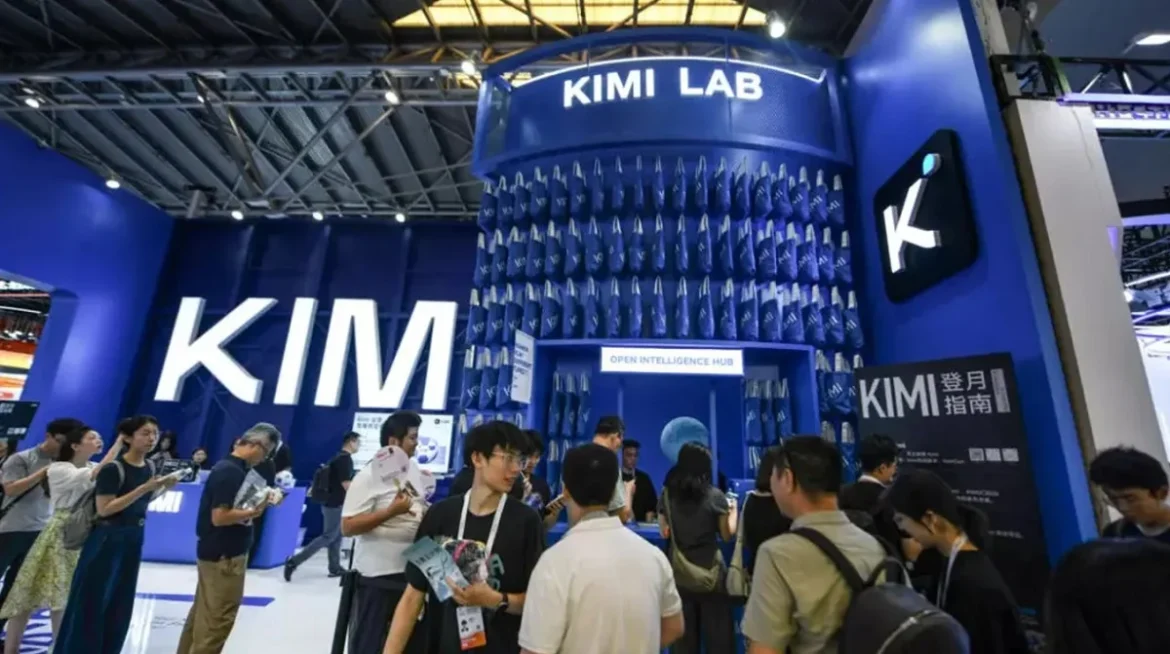
The global landscape of artificial intelligence development is undergoing a tectonic shift as cost-efficiency increasingly eclipses raw computational power as the primary competitive metric. For years, the industry was defined by a race toward "frontier models"—systems designed to exhibit the highest possible levels of intelligence, often regardless of the financial overhead required to train and run them. However, a recent surge in the accessibility and performance of open-weighted models originating from China has fundamentally disrupted this trajectory. As these high-performance, low-cost alternatives gain traction among global enterprises, Western AI giants including OpenAI, Anthropic, and xAI are being forced into an aggressive, industry-wide price-slashing strategy to preserve their market dominance.
The emergence of these Chinese models represents a significant maturation of the open-source and open-weight ecosystem. By offering performance levels that rival proprietary models at a fraction of the cost, Chinese developers have effectively challenged the hegemony of Silicon Valley’s largest players. This competition has shifted the narrative from "who has the smartest model" to "who provides the most sustainable business model," forcing companies that once enjoyed premium pricing power to defend their customer bases against a tide of democratization.
A Chronology of the Cost-Efficiency Pivot
The competitive environment shifted dramatically throughout late 2023 and 2024. As enterprises began integrating large language models (LLMs) into their core workflows, the reality of high inference costs—the financial price paid every time a model processes a request—became a critical bottleneck.
In early 2024, initial reports from the Asian market indicated that companies were beginning to pivot away from top-tier, high-cost models in favor of custom-tuned, open-weight solutions. By the summer of 2024, the trend had accelerated. Enterprises realized that for specific tasks—such as customer support automation, code documentation, or data synthesis—the marginal gain in intelligence provided by a massive, expensive model was often negligible compared to the significant increase in operational expenses.
On September 23, 2024, this pressure reached a breaking point. OpenAI, in a move widely viewed as a direct response to competitive headwinds, introduced two new iterations of its flagship architecture: GPT-6 Sol and GPT-6 Luna. These models were specifically designed to cater to the enterprise market’s demand for affordability. By offering pricing as low as $0.10 per million tokens for input—a reduction of nearly 99% compared to their high-end counterparts—OpenAI signaled that the era of "expensive AI" was nearing its end. On that same day, Anthropic followed suit, unveiling Claude Opus 5.5, which provided performance parity with its predecessors at a 40% discount, further cementing the industry’s transition toward price-sensitive product roadmaps.
The Economic Mechanics of the Price War
To understand why these price cuts are occurring, one must analyze the economics of token consumption. In enterprise settings, models are not just used for occasional queries; they are embedded into software stacks that process millions of transactions daily. At the original pricing structures, where input tokens could cost upwards of $10 per million, even a moderately sized corporation could incur monthly AI bills reaching into the hundreds of thousands of dollars.
The entry of Chinese models into the global market provided a "floor" for these prices. These models, often leveraging efficient training methodologies and optimized inference architectures, allowed businesses to maintain internal AI capabilities without the prohibitive costs of proprietary API access. The resulting impact on the market was twofold:
- Revenue Retention: By lowering prices, OpenAI and Anthropic are attempting to prevent "churn," or the loss of enterprise clients to self-hosted or local open-weight solutions.
- Standardization: As prices for high-quality intelligence drop, AI becomes a commodity. Companies are now less likely to pay a "brand premium" for a specific model provider when a more cost-effective alternative offers 90% of the same capability.
Industry Implications and Corporate Strategy
The shift toward cost-optimization has forced companies to re-evaluate their AI infrastructure. Many large-scale organizations are now adopting a "multi-model" approach. Rather than relying on a single, expensive "God-model" for every function, companies are using high-end models for complex reasoning tasks and deploying cheaper, specialized open-weight models for high-volume, routine operations.
According to industry analysts, this strategy allows for better resource allocation. A legal department, for example, might still utilize the most sophisticated model available for analyzing complex contracts, while a customer support portal might utilize a lighter, faster, and cheaper model that has been fine-tuned on the company’s specific documentation.
This structural change in the market has also sparked a debate regarding the sustainability of AI companies that rely solely on model-as-a-service (MaaS) revenue. If the cost of tokens continues to plummet toward zero, the competitive advantage will no longer reside in the model itself, but in the proprietary data, the user interface, and the integration capabilities that a company offers.
Official Responses and Market Positioning
While executives from major Western AI firms have largely framed these price cuts as a reflection of "technological advancement" and "improved efficiency," the timing of these announcements strongly suggests a reactive posture.
In public statements following the release of the cheaper models, leadership teams emphasized the "democratization of intelligence." However, industry insiders suggest that the real motivation is the protection of long-term revenue streams. If an enterprise migrates its internal workflows to an open-source model hosted on a private cloud, they are effectively severed from the proprietary ecosystems of companies like OpenAI. By lowering prices, these firms are working to ensure that the cost-benefit analysis of switching remains unfavorable for the customer.
Furthermore, the competition has sparked a race for specialized hardware optimization. As the cost of software inference drops, the industry is looking toward custom silicon—such as TPUs and specialized AI accelerators—to further reduce the energy and hardware costs associated with these models. This technological race is now intrinsically linked to the price of the token; the more efficient the hardware, the lower the price the software provider can afford to charge.
Broader Impact: The Global AI Ecosystem
The ripple effects of this price war extend beyond just the balance sheets of tech giants. For the broader global economy, the reduction in AI costs is a positive development. It accelerates the adoption of artificial intelligence in developing economies and among Small and Medium Enterprises (SMEs) that were previously priced out of the market.
As the barriers to entry decrease, we are likely to see a surge in AI-driven innovation across sectors as diverse as agriculture, education, and local government. The availability of high-performance, affordable models allows developers in resource-constrained environments to build applications that solve local problems, rather than being forced to rely on expensive, centralized, and often culturally biased Western solutions.
However, this transition is not without risks. The rapid commoditization of AI models may lead to a decrease in the resources available for long-term safety research. When profit margins are compressed, companies may prioritize quick-to-market features and operational cost-cutting over rigorous safety testing and ethical oversight. Regulatory bodies in both the United States and the European Union are closely monitoring these trends, wary that a race to the bottom in pricing could inadvertently lead to a race to the bottom in safety standards.
Conclusion: The Future of AI Pricing
The current state of the artificial intelligence market is a classic example of disruptive innovation. The entrance of efficient, low-cost competitors has forced the incumbents to adapt or face obsolescence. As we look toward the remainder of the decade, the industry is expected to continue its trajectory toward lower costs and higher accessibility.
The "price war" is likely to persist as long as open-weight models continue to close the performance gap with proprietary frontier models. For the end user, this is a transformative era. The cost of generating, analyzing, and synthesizing information via artificial intelligence is plummeting, which will undoubtedly lead to a new wave of industrial productivity. Whether this leads to a stable, mature market or a period of volatility depends on how effectively companies can balance the dual pressures of intense price competition and the immense costs associated with maintaining safe, reliable, and cutting-edge artificial intelligence systems.
As of the current quarter, the market remains in a state of flux. While the short-term benefits to consumers are clear, the long-term impacts on the competitive landscape of the technology sector remain to be seen. What is certain, however, is that the era of AI as a prohibitively expensive luxury is rapidly coming to a close, replaced by a new reality where intelligence is increasingly treated as a ubiquitous, low-cost utility.