
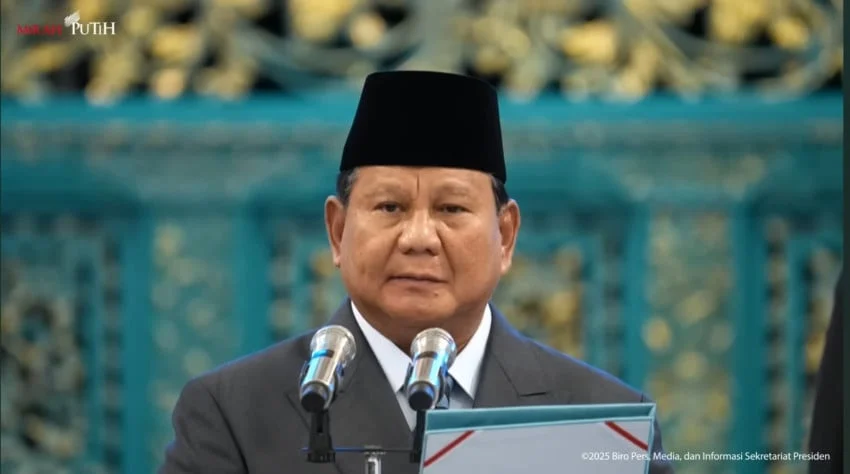
President Prabowo Subianto has officially signed into law the landmark Law Number 27 of 2026 concerning Employment Protection, marking a monumental shift in Indonesia’s labor landscape. The comprehensive legislative document, which spans 23 chapters and comprises 313 articles, aims to overhaul and modernize worker welfare standards, address long-standing labor concerns, and balance the complex dynamics between the nation’s workforce and industrial sectors.
According to official documentation verified through the Ministry of State Secretariat’s Legal Documentation and Information Network portal, the legislation was formally signed and enacted by President Prabowo Subianto on October 28, 2026. The new law has been officially recorded in the State Gazette of the Republic of Indonesia for the year 2026 as Number 179. This signature serves as the culmination of extensive deliberations, fierce labor advocacy, and strategic legislative efforts designed to redefine the legal boundaries of employment, rights, and obligations in the modern Indonesian economy.
Legislative Background and Evolution of Indonesian Labor Law
The journey toward the enactment of Law Number 27 of 2026 has been characterized by profound legislative transformations and continuous debates among policymakers, business associations, and labor unions. For over two decades, the foundational framework of Indonesian labor relations was primarily governed by Law Number 13 of 2003 concerning Manpower. While Law Number 13 of 2003 provided comprehensive provisions regarding wages, working hours, termination, and social security, rapid globalization, shifting economic models, and the rise of the digital gig economy exposed critical vulnerabilities in traditional labor protections.
In an effort to attract foreign direct investment and stimulate job creation, the Indonesian government previously enacted Law Number 6 of 2023, which served as the legislative enactment of Government Regulation in Lieu of Law (Perppu) Number 2 of 2022 concerning Job Creation, widely known as the Omnibus Law on Job Creation. However, the Omnibus Law faced intense scrutiny and widespread resistance from various labor organizations. Critics argued that the structural changes introduced by the Job Creation Law disproportionately favored corporate flexibility—particularly regarding outsourcing, severance pay formulas, and fixed-term employment contracts—at the expense of long-term job security and worker welfare.
Persistent demonstrations, rigorous academic reviews, and sustained pressure from labor coalitions eventually compelled the legislature and the executive branch to recalibrate their approach. This culminated in the drafting and eventual passage of the dedicated Employment Protection Law, designed specifically to rectify perceived imbalances in the existing legal architecture and to establish a robust protective shield for the Indonesian workforce against the backdrop of an evolving economic ecosystem.
Transition Framework and Legal Revocation Mechanics
To ensure legal certainty and prevent regulatory vacuums during the transition period, the newly minted Law Number 27 of 2026 outlines explicit directives regarding existing legal instruments. Article 310 of the Employment Protection Law establishes that all existing statutory regulations that serve as implementing rules for both Law Number 13 of 2003 concerning Manpower and the relevant labor provisions embedded within Law Number 6 of 2023 concerning Job Creation shall remain legally valid. However, this validity is strictly contingent upon the condition that these legacy regulations do not contradict any new provisions stipulated within the newly enacted Law Number 27 of 2026.
Conversely, the legislative sweep of the new law introduces definitive structural removals. Article 311 explicitly mandates that upon the enactment of the Employment Protection Law, Law Number 13 of 2003 concerning Manpower is formally revoked and declared null and void. Furthermore, specific provisions under the Job Creation Law—namely Chapter IV, Part One, Article 80 letter a, and Part Two, Article 81 within the Appendix of Law Number 6 of 2023—are similarly rescinded and rendered non-applicable.
Legal experts and regulatory analysts point out that this phased transition model is critical for maintaining industrial stability. By keeping non-conflicting implementing regulations temporarily active, businesses and employers are granted a necessary operational buffer, while the government drafts comprehensive new derivative regulations explicitly tailored to the framework of the 2026 law. Under standard legislative mandates and expectations accompanying structural reforms of this magnitude, the administration has set a strict timeline, dictating that all primary implementing regulations must be fully formulated and finalized within a maximum timeframe of one year from the date of promulgation.
Chronology of Advocacy and Pressure from Labor Unions
The finalization and signing of the Employment Protection Law did not occur in a vacuum; rather, it was accelerated by a relentless wave of labor mobilization that dominated the national socio-political sphere throughout late 2025 and 2026. Labor unions, confederations, and grassroots worker committees consistently staged rallies across major industrial hubs, staging demonstrations outside government offices and parliamentary buildings to demand immediate legislative intervention.
A pivotal turning point in the advocacy timeline occurred when key representatives of national labor communication forums and worker syndicates held high-level consultative meetings with government officials, including heads of labor advisory bodies and presidential staff. During these intensive dialogues, labor leaders delivered clear ultimatums and detailed dossiers highlighting the precarious conditions faced by millions of workers, particularly regarding fair compensation, outsourcing transparency, health and safety standards, and protection against arbitrary termination.
The unions argued that while economic growth and national competitiveness were vital, the human capital driving Indonesia’s economy deserved absolute legal safeguards against exploitation. The intense public pressure exerted by these coalitions created a sense of urgency within the executive branch. By affixing his signature to the bill on October 28, 2026—coinciding symbolically with periods of heightened national solidarity—President Prabowo Subianto responded directly to these appeals, sealing a legislative commitment that labor advocates hope will restore dignity and security to the Indonesian workforce.
Implications for Businesses, Workers, and the National Economy
The implementation of Law Number 27 of 2026 carries profound implications for all stakeholders within Indonesia’s economic ecosystem. For workers, the comprehensive 313-article framework is expected to usher in a renewed era of enhanced security. Key areas anticipated to experience rigorous restructuring include clearer definitions of precarious work arrangements, stricter enforcement of occupational health and safety protocols, improved dispute resolution mechanisms, and more equitable formulas for social protection and severance compensation.
For the corporate sector and business associations, the new law presents both compliance challenges and strategic adjustments. Employers will be required to meticulously audit their existing operational structures, human resource policies, and contractual agreements to ensure full alignment with the 23 chapters of the new statute. While some business groups have historically expressed concerns that overly rigid protective labor laws might dampen investment enthusiasm or increase operational overheads, proponents of the law argue that enhanced worker protection fosters greater labor productivity, reduces industrial unrest, and cultivates a stable, predictable business environment over the long term.
Economists and labor market analysts emphasize that the success of Law Number 27 of 2026 will heavily depend on the quality, fairness, and clarity of the forthcoming implementing regulations. Because the statute mandates that all secondary regulations must be established within a maximum period of one year, the Ministry of Manpower, in collaboration with business stakeholders and labor representatives, faces an intensive drafting schedule. The transparency and inclusivity of this upcoming rulemaking phase will be vital in ensuring that the noble intentions inscribed within the 313 articles translate effectively into practical, enforceable, and equitable protections on the ground.
As Indonesia navigates this significant regulatory transition, the international community and domestic markets alike will closely monitor how the government balances the dual imperatives of fostering a competitive, investment-friendly economy and upholding the fundamental rights and welfare of the nation’s millions of workers.
