
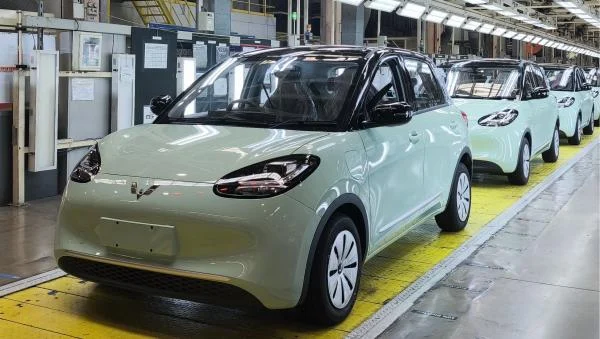
The Indonesian government is intensifying its focus on the transition toward sustainable energy, with the Ministry of Higher Education, Science, and Technology emphasizing that the nation’s electric vehicle (EV) ambitions must be rooted in rigorous academic research and sustainable industrial development. Deputy Minister Stella Christie recently underscored this strategic shift, asserting that universities are the bedrock upon which a robust, globally competitive EV industry must be built. Speaking in Jakarta on Wednesday, October 28, 2026, the Deputy Minister argued that Indonesia must move beyond being a mere consumer of foreign EV technology, advocating instead for a home-grown innovation ecosystem that mirrors the long-term industrial maturity seen in global leaders like China.
The Strategic Necessity of Academic-Industrial Synergy
For Indonesia, the push toward EVs is not merely a matter of environmental policy but a vital component of its broader industrialization strategy. As the world transitions away from internal combustion engines, Indonesia—a nation rich in nickel reserves, a critical component for EV batteries—is uniquely positioned to dominate the supply chain. However, Stella Christie warns that resource wealth is insufficient without the intellectual capital to process, refine, and innovate.
According to the Deputy Minister, the traditional role of universities in Indonesia—often confined to theoretical research—must be fundamentally reimagined. She contends that higher education institutions should not simply cater to the immediate, reactive needs of the current manufacturing sector. Instead, they must function as hubs of "frontier innovation," creating technologies that define new market segments and set international benchmarks. This transition requires a departure from the "instant" mindset; industrial success, particularly in complex high-tech sectors, is rarely a product of short-term policy cycles but rather the result of sustained, decades-long institutional investment.
Lessons from the Chinese Experience
To illustrate the importance of patience and long-term planning, Stella Christie drew upon her personal academic history. Recounting her time as a Harvard University student, she described a semester spent studying in China, a period during which the country’s streets were largely devoid of the electric infrastructure that defines its cities today.
"I was in China many years ago as a student. At that time, while I was affiliated with Harvard, I spent a semester studying in the country. Back then, you did not see electric bicycles, electric motorcycles, or electric cars on the road," Stella recalled.
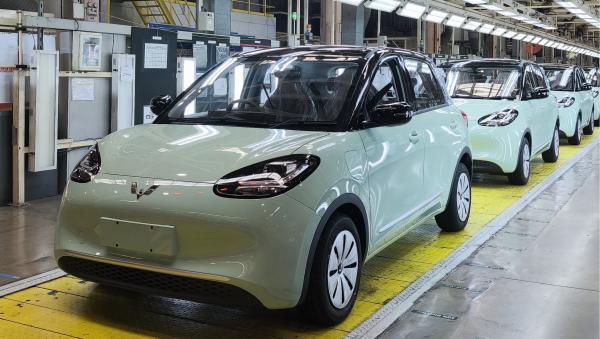
The transformation of the Chinese EV market from virtually non-existent to the largest in the world did not occur overnight. It was the result of a meticulously structured process involving state-backed subsidies, intense competition, and, crucially, massive investment in university-industry research partnerships. By analyzing this trajectory, Stella Christie hopes to impart a lesson to Indonesian stakeholders: the infrastructure for an EV-driven economy requires a foundational period of foundational research that may not yield immediate profits but is essential for long-term survival in the global market.
The Economic and Technological Context
The global EV market has experienced exponential growth, with the International Energy Agency (IEA) projecting that electric car sales will continue to rise as governments implement stricter emissions standards. For Indonesia, the stakes are exceptionally high. With a target to become a major hub for battery production, the government has already implemented policies such as the downstreaming of nickel and tax incentives for EV manufacturers.
However, challenges remain. Critics of current industrial policies point to the "middle-income trap" and the reliance on foreign technology transfers. If Indonesia remains a provider of raw materials rather than a creator of proprietary technology, the economic benefits will be limited. This is where the Ministry of Higher Education, Science, and Technology plans to intervene. By aligning university curricula with the demands of the green energy sector, the government aims to produce a generation of engineers and researchers capable of bridging the gap between basic laboratory findings and commercial-scale production.
Data-Driven Development: The Path Forward
Supporting the Deputy Minister’s call for research-driven innovation, recent market data indicates that while EV adoption in Indonesia is rising, it remains concentrated in the urban upper-middle class. To achieve mass-market penetration, innovation must focus on cost-efficiency and localized production.
- Research Focus: Developing cost-effective solid-state batteries and improving battery thermal management systems suited for tropical climates.
- Infrastructure Integration: Researching the integration of smart grids and decentralized charging stations that can handle Indonesia’s specific geographical challenges.
- Human Capital: Expanding scholarship programs for advanced studies in material science and power electronics.
Industry experts have largely welcomed the Deputy Minister’s perspective. In response to her comments, various academic associations have noted that while the intent is clear, the implementation requires a significant increase in the national research and development (R&D) budget. Currently, Indonesia’s R&D spending as a percentage of GDP lags behind other G20 nations. Closing this gap is essential if the country is to achieve the level of industrial sophistication seen in China’s EV sector.
Implications for the Academic Sector
The push for innovation will likely lead to a restructuring of how Indonesian universities interact with the private sector. The government is expected to introduce new frameworks that encourage "collaborative innovation," where private firms provide the capital and practical experience, while universities provide the research and development muscle.

This shift is not without its hurdles. Academics have historically pointed to bureaucratic bottlenecks that impede rapid prototyping and industrial testing within university environments. For the vision presented by Stella Christie to manifest, there must be a streamlining of intellectual property laws and a more agile regulatory environment that allows university-derived startups to operate with greater flexibility.
A Long-Term Vision for Industrial Sovereignty
The address by the Deputy Minister serves as a sobering reminder that industrial sovereignty is a marathon, not a sprint. The EV sector is currently one of the most competitive arenas in global technology, with established players from Europe, North America, and East Asia all vying for dominance.
By grounding its strategy in the experiences of successful nations while acknowledging the unique requirements of the Indonesian landscape, the government is signaling a move toward a more mature industrial policy. The success of this endeavor will depend on whether the country can sustain its commitment to scientific inquiry and industrial innovation even during periods of economic volatility.
In conclusion, the directive provided by Stella Christie sets a clear agenda for the coming decade. The transformation of Indonesia into an electric vehicle powerhouse will not be achieved through policy declarations alone. It will require a persistent, disciplined, and well-funded commitment to research and development within the nation’s universities. As Indonesia watches its neighbors and global competitors accelerate their transition to green energy, the message from the Ministry is clear: the road to industrial leadership is paved with the knowledge produced in the laboratory, and the time to build that foundation is now. The transition will undoubtedly involve challenges, but by learning from the long-term industrial strategies of nations like China, Indonesia aims to secure a position of strength in the global electric vehicle market, ensuring that the technology of the future is not just used by Indonesians, but created by them as well.
