The National Sports Day, widely recognized as Hari Olahraga Nasional (Haornas), is celebrated annually across Indonesia on September 9th. This significant national commemoration traces its roots back to the inauguration of the very first National Sports Games (Pekan Olahraga Nasional or PON) held in Solo, Central Java, in 1948. Officially formalized decades later through a presidential decree, Haornas has evolved far beyond a historical anniversary. Today, it serves as a vital momentum to reflect upon the arduous journey of Indonesian athletics, honor the resilience of early nation-builders, and actively encourage citizens to embrace physical fitness as an integral component of daily life. As Indonesia continues to develop its sporting infrastructure and aspirations on the global stage, Haornas remains a powerful reminder of how athletics can forge national identity, improve public health, and stimulate economic activity.
The Historical Genesis: Defiance and Pride in 1948 Solo
The historical foundation of Hari Olahraga Nasional is inextricably linked to the birth of the Pekan Olahraga Nasional. The inaugural PON took place from September 9 to September 12, 1948, hosted in the cultural heartland of Solo, Central Java. This monumental sporting gathering occurred during one of the most precarious and challenging periods in modern Indonesian history. Having proclaimed independence on August 14, 1945, the nascent Republic of Indonesia was still locked in a fierce diplomatic and physical struggle to defend its sovereignty against colonial forces attempting to re-establish control.
Despite the blockade, economic turmoil, and ongoing military conflicts, Indonesian leaders and sports pioneers recognized that physical culture and athletic competition were potent instruments to demonstrate national existence, unity, and resilience. The decision to organize PON 1948 was born out of both ambition and political necessity. Prior to the games, Indonesian sports administrators sought to participate in the XIV Olympic Games held in London in 1948. However, because international governing bodies and foreign powers had not yet widely recognized Indonesia’s newly declared independence, the contingent faced insurmountable administrative roadblocks, including non-recognition of the Indonesian passport, flag, and national anthem by the International Olympic Committee (IOC) and host authorities.
Refusing to be sidelined on the international stage, visionary Indonesian sports figures—including figures from the Sports Association of the Republic of Indonesia (Persatuan Olahraga Republik Indonesia – PORI)—pivoted inward. They decided to stage a grand domestic competition that would unite athletes from various regions across the archipelago. The opening day of this historic event, September 9, 1948, ultimately laid the psychological and historical cornerstone for what would later be institutionalized as National Sports Day. It was a clear declaration to the world that an independent Indonesia possessed the administrative capability, social cohesion, and sporting spirit to govern its own athletic endeavors.
Institutionalization and Legal Formalization: The 1983 Milestone
While the spirit of Haornas was forged in the fires of the 1948 revolution, the official establishment of the commemorative day took place thirty-five years later. On September 9, 1983, then-President Soeharto officially proclaimed Hari Olahraga Nasional during a grand ceremony marking the revitalization and rededication of the historic Sriwedari Stadium in Surakarta, Central Java—the very venue that had hosted the pioneering PON games in 1948.
The pencanangan (proclamation) in 1983 was designed to serve a dual purpose: to pay homage to the pioneers of Indonesian sports and to inject new energy into the government’s push for mass participation in physical education. During the late 1970s and 1980s, the Indonesian government recognized that a rapidly growing population required a structured approach to public health, youth development, and athletic excellence.
To give the proclamation permanent legal standing, the administration issued Presidential Decree (Keputusan Presiden – Keppres) Number 67 of 1985 concerning National Sports Day. This legal framework formally cemented September 9 as a national day of commemoration, mandating that government bodies, educational institutions, and civic organizations use the date to promote systemic athletic development, nurture grassroots talent, and cultivate a culture of physical fitness across all segments of society.
Chronology of Key Milestones in Indonesian Sports History
To understand the trajectory of Indonesian sports and the evolution of Haornas, it is helpful to examine the chronological progression of key milestones that have shaped the nation’s athletic landscape:
- August 17, 1945: Indonesia proclaims its independence, setting the stage for the creation of independent national institutions, including sports federations.
- 1948: Indonesia attempts to participate in the London XIV Olympic Games but faces administrative rejection due to a lack of broad international recognition.
- September 9–12, 1948: The inaugural Pekan Olahraga Nasional (PON I) is successfully held in Solo, Central Java, serving as a domestic substitute for the Olympics and proving national self-reliance.
- September 9, 1983: President Soeharto formally proclaims Hari Olahraga Nasional during the inauguration of the revitalized Sriwedari Stadium in Surakarta.
- 1985: Presidential Decree (Keppres) No. 67/1985 is enacted, legally establishing September 9 as the official National Sports Day.
- Decade-by-Decade Expansion: PON expands across the archipelago, moving from Java to Sumatra, Sulawesi, Papua, and Nusa Tenggara, fostering regional integration and infrastructure development.
- September 9, 2026: Indonesia marks the 43rd anniversary of Haornas since its official 1983 proclamation, reflecting upon decades of Olympic medals, Asian Games successes, and evolving sports science initiatives.
The Broader Meaning: Health, Character Building, and National Identity
In contemporary discourse, the Ministry of Youth and Sports (Kemenpora) emphasizes that Hari Olahraga Nasional transcends mere historical remembrance. It serves as an urgent call to action for the public to incorporate physical activity into their daily routines. Modern lifestyles, characterized by urbanization, desk jobs, and digital consumption, have led to rising rates of sedentary habits and associated non-communicable diseases. Against this backdrop, Haornas acts as an annual public health campaign to reverse these trends.
According to official guidelines and statements from sports authorities, sports and physical education are fundamental to character building. Beyond the pursuit of elite medals and international podium finishes, community-level sports instill core values such as discipline, resilience, teamwork, and fair play among the youth. When children and adolescents engage in sports, they learn how to manage victory and defeat gracefully, building emotional resilience that translates into academic and professional success.
Furthermore, sports serve as an unparalleled unifier in a diverse archipelago comprising thousands of islands, hundreds of ethnic groups, and multiple religions. During major multi-sport events like PON or international tournaments, regional and cultural divisions fade as citizens unite behind national athletes. In this sense, Haornas reinforces the national motto of Bhinneka Tunggal Ika (Unity in Diversity) by highlighting shared passions and collective triumphs.
Economic Implications and Modern Developments in Indonesian Athletics
In recent years, the perspective on sports administration in Indonesia has undergone a strategic shift. Sports are no longer viewed merely as an arena for recreational enjoyment or national prestige; they are increasingly recognized as a powerful economic engine. Stakeholders across government and private sectors emphasize that the development of a robust sports ecosystem generates multi-layered financial benefits, ranging from job creation and manufacturing to sports tourism and infrastructure investment.
Government leaders, including the Minister of Youth and Sports, have frequently noted that the modern sports industry intersects directly with economic productivity. Mega-events such as the Pekan Olahraga Nasional—with upcoming editions planned for regions like East Sumba (targeted for sport tourism in 2028) and specialized tournaments like the upcoming Beach PON in Ancol—demonstrate how athletic competitions stimulate local economies. Host cities experience surges in hospitality, culinary, transportation, and retail sectors, while long-term infrastructure upgrades leave enduring legacies for local communities.
However, maximizing these economic and competitive benefits requires sustained financial commitment and institutional modernization. Recent discussions within the Ministry of Youth and Sports highlight the necessity of substantial capital injection—with budget projections reaching trillions of rupiah—to construct world-class training centers, regional academies, and sports science hubs. Investing in cutting-edge training facilities, sports medicine, data analytics, and coaching certification is deemed essential if Indonesian athletes are to consistently dominate regional stages such as the SEA Games and Asian Games, while securing higher podium finishes at the Olympic Games.
Observing Haornas: Building a Culture of Movement
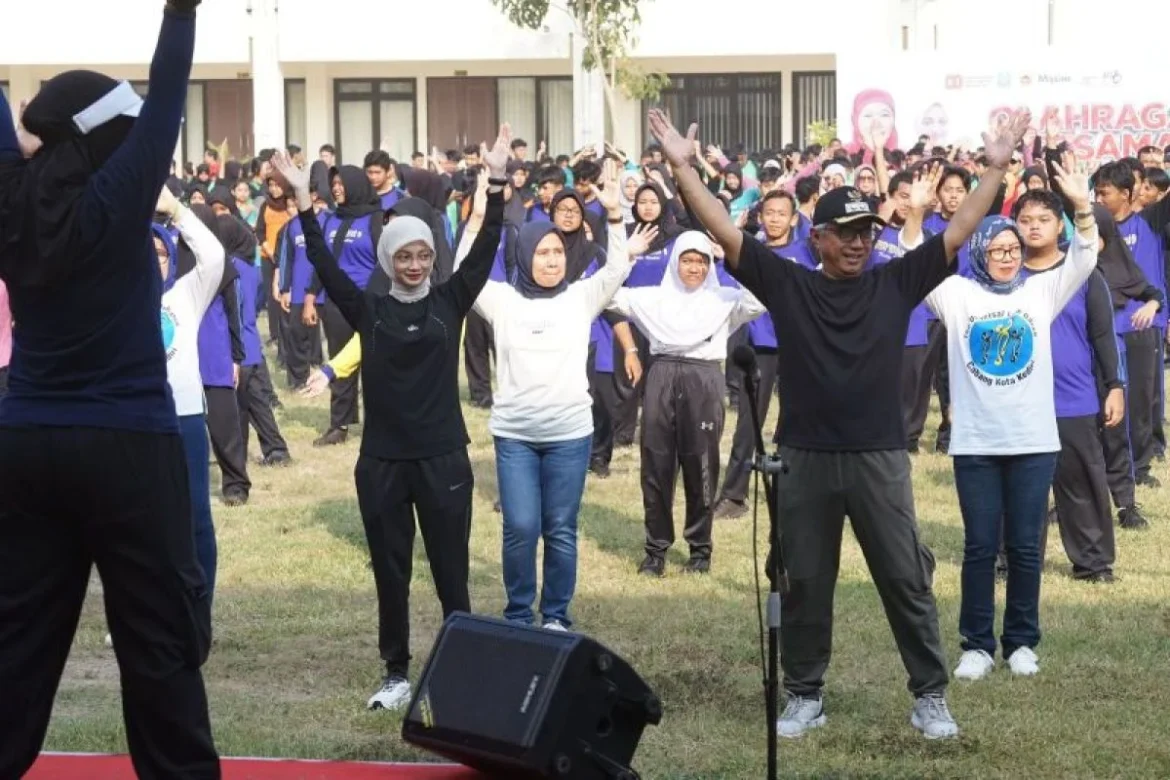
As the nation observes the 43rd anniversary of Hari Olahraga Nasional, the focus remains firmly on grassroots participation and sustainable development. Communities, schools, corporate entities, and families are encouraged to mark the occasion through active engagement. Whether through organizing community morning gymnastics, participating in local running events, supporting local athletes, or simply introducing children to outdoor physical games, the objective is to weave fitness into the cultural fabric of society.
The legacy of the 1948 Solo games proves that when faced with limitations, ingenuity and collective will can build thriving institutions. The annual observance of Haornas acts as a timely reminder that the strength of a nation is mirrored in the vitality, health, and discipline of its people. By honoring the historical sacrifices of Indonesia’s early sports pioneers and addressing modern infrastructural and economic demands, the country continues to march toward a healthier, more unified, and globally competitive future.