The acceleration of Indonesia’s digital transformation has become a cornerstone of the nation’s economic development strategy, prompting key players in the telecommunications sector to recalibrate their international and domestic engagement strategies. PT Telekomunikasi Indonesia International (Telin), a subsidiary of PT Telkom Indonesia (Persero) Tbk, recently took center stage at Bali Tech Week (BTW) 2026 to emphasize the critical intersection of technological sovereignty, regulatory frameworks, and sustainable digital investment. As Indonesia navigates the complexities of the global digital landscape, Telin’s participation serves as a strategic marker for how the country intends to balance the influx of foreign capital with the imperative of protecting national interests and local technological capabilities.
The Strategic Significance of Bali Tech Week 2026
Bali Tech Week 2026 has emerged as a premier regional forum, convening policymakers, technology leaders, and investors to address the shifting dynamics of Southeast Asia’s digital economy. The event serves as a platform for Indonesia to showcase its readiness to host large-scale infrastructure projects while asserting its position as a sovereign digital power. For Telin, the event was not merely a networking opportunity but a venue to articulate its vision for an integrated ecosystem that supports both local startups and global enterprises.
The discussions held during the event underscored a pivotal moment for Indonesia. With the country’s digital economy projected to reach significant valuation milestones by 2030, the pressure to secure high-quality digital infrastructure—ranging from subsea cable networks to advanced data center capacities—has never been higher. Telin’s role in this ecosystem is paramount, as the company manages the international connectivity backbone that links Indonesia to the rest of the world.
Building Indonesia’s Sovereign Technology
During the panel session titled “Building Indonesia’s Sovereign Technology,” Chief of Product at Telin, Azmal Yahya, provided deep insights into the necessity of domestic technological self-reliance. In the current global climate, where supply chains are increasingly volatile and cyber-security threats are becoming more sophisticated, relying solely on imported technology is no longer a viable long-term strategy for a nation of Indonesia’s size.
Azmal argued that the path toward digital sovereignty is built upon the dual pillars of local innovation and human capital development. "The strengthening of national technological capabilities is an essential foundation for Indonesia’s digital independence and long-term competitiveness," Azmal stated. He emphasized that as the technological landscape evolves at an exponential rate, Indonesia must transition from a consumer of global digital services to an active participant in global innovation. This requires significant investment in Research and Development (R&D) and the fostering of a domestic ecosystem that can support homegrown solutions for cloud computing, Artificial Intelligence (AI), and cybersecurity.
This push for sovereignty is not aimed at isolationism but rather at establishing a "balanced integration" where Indonesia can collaborate with international partners from a position of strength and technical parity. By fostering a local technology base, Indonesia aims to ensure that its digital infrastructure remains resilient and that the economic value generated by data remains within its borders.
Balancing Investment and National Interest
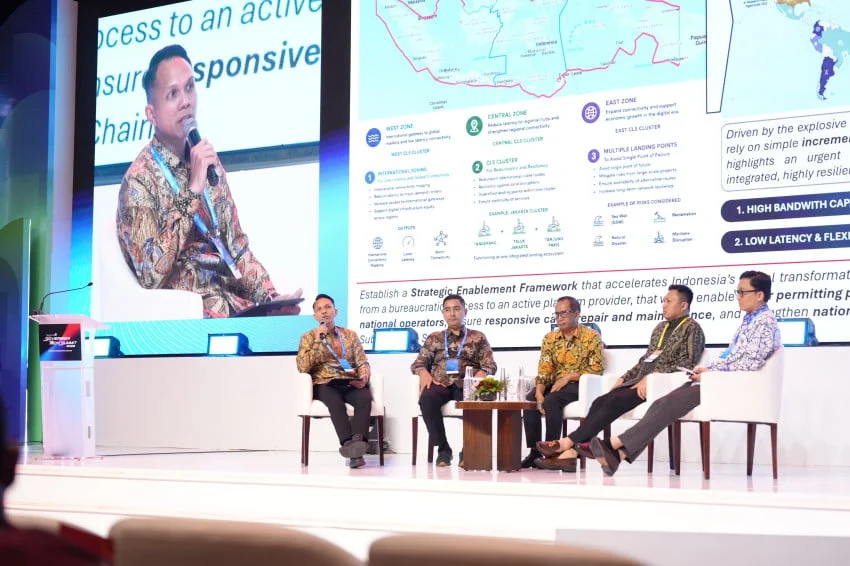
The discourse on sovereignty was complemented by a critical session on the economics of digital expansion. Roger Pardede, VP of Governance & Regulatory at Telin and Head of Inter-Agency Relations for the Association of Southeast Asian Nations (ASEAN) and local stakeholders (ASKALSI), participated in the discussion titled “Equilibrium on Investment and Sovereign for Digital Economy Ecosystem.”
The central challenge addressed in this session was the "investment paradox": while Indonesia requires massive foreign direct investment (FDI) to scale its digital infrastructure, such investments must be managed in a way that does not compromise the nation’s regulatory control or long-term digital policy goals. Roger Pardede highlighted that effective governance is the key to maintaining this delicate equilibrium.

"Tata kelola (governance) and a robust regulatory framework are the primary drivers for creating an environment that encourages innovation while providing clear security for industry players," Roger noted. For Telin, this means advocating for policies that streamline business processes without sacrificing data privacy or security standards. By creating a predictable regulatory environment, the government can attract stable, long-term capital rather than speculative short-term investments, thereby ensuring that digital development is sustainable.
The Macroeconomic Context: Indonesia’s Digital Trajectory
To understand the weight of these discussions, one must look at the broader economic context of Indonesia in 2026. The national economy has seen a shift toward services, with the digital sector contributing a larger percentage of the Gross Domestic Product (GDP) than in previous decades. Data from the Ministry of Communication and Digital affairs suggests that the demand for high-speed, reliable, and secure connectivity has spiked due to the mass digitization of MSMEs (Micro, Small, and Medium Enterprises).
Telin, by extending its reach and influence at international forums like Bali Tech Week, is signaling to global investors that Indonesia is open for business, provided that the business aligns with the country’s digital roadmap. This roadmap includes:
- Infrastructure Expansion: The ongoing development of subsea cable systems to ensure low-latency connectivity between the Indonesian archipelago and major global internet hubs.
- Data Residency and Security: The implementation of stringent data sovereignty laws that require businesses to maintain critical data centers within Indonesian territory.
- Regulatory Harmonization: Working with inter-agency bodies to simplify the licensing process for digital infrastructure providers, thereby reducing the "cost of doing business" while maintaining oversight.
Implications for the Digital Ecosystem
The collaborative approach championed by Telin at the event carries several implications for the future of Indonesia’s digital landscape:
- Standardization of Quality: By leading the conversation on technological capabilities, Telin is setting a benchmark for what constitutes "sovereign technology," pushing other industry players to meet higher standards of local content and innovation.
- Strengthening of Inter-Agency Cooperation: The involvement of figures like Roger Pardede, who bridges the gap between private enterprise and inter-agency relations, suggests a more unified approach to policymaking. This coordination is crucial for avoiding the bottlenecks that have previously hampered infrastructure deployment.
- Attracting Strategic Partnerships: The emphasis on "equilibrium" is designed to comfort foreign investors who may be wary of protectionist policies. By framing sovereignty as a component of stability, Telin is effectively positioning Indonesia as a lower-risk, high-reward destination for digital infrastructure investment.
A Timeline of Digital Integration (2024–2026)
The momentum seen at Bali Tech Week 2026 is the culmination of a two-year intensive effort by the Indonesian government and state-owned enterprises. In 2024, the focus was primarily on expanding 5G coverage and basic digital literacy. By 2025, the focus shifted toward data center capacity and the legal framework for AI adoption.
Now, in 2026, the focus has pivoted toward "Sovereign Digital Resilience." This shift signifies that the foundational infrastructure is largely in place, and the current priority is to maximize the national benefit of that infrastructure through refined governance and deeper local technological integration. The participation of Telin in this year’s Bali Tech Week is a strategic response to this new phase of the national digital agenda.
Conclusion
The participation of Telin in Bali Tech Week 2026 serves as a clear indication that Indonesia is moving toward a more mature phase of its digital economic development. By balancing the need for global investment with a firm commitment to building local technological sovereignty, the nation is laying the groundwork for a digital economy that is both inclusive and resilient.
As the global landscape continues to fragment, the ability of companies like Telin to navigate the complexities of regulation, innovation, and international cooperation will determine the speed and success of Indonesia’s digital growth. Through its focus on national capability and regulatory equilibrium, Telin is not only representing its own corporate interests but is also acting as a primary architect of Indonesia’s digital future, ensuring that the country remains a competitive, secure, and thriving hub within the global digital ecosystem.