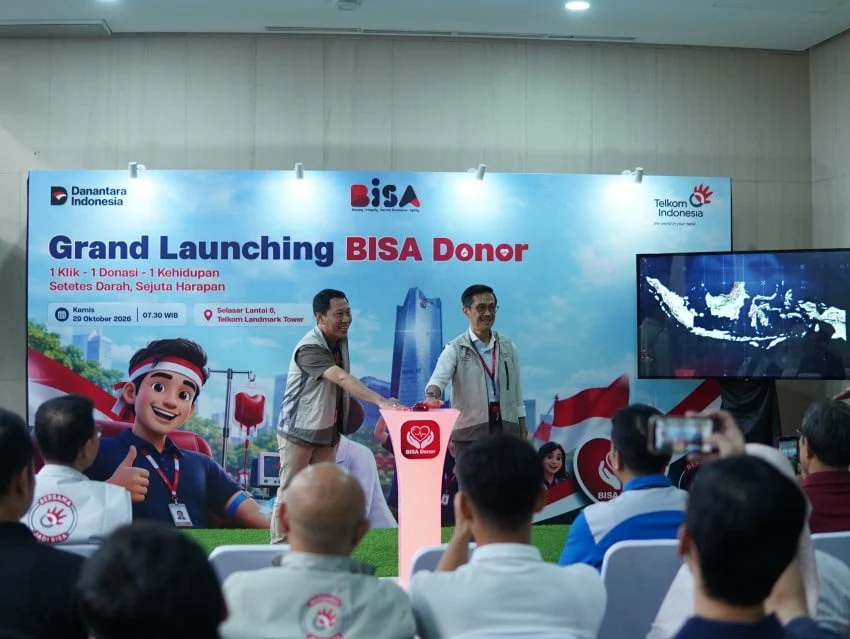
PT Telkom Indonesia (Persero) Tbk (Telkom) has officially unveiled BISA DONOR, a sophisticated digital ecosystem designed to streamline blood donation processes, coordinate humanitarian outreach, and centralize donor data across its vast corporate network. The platform, launched concurrently on Thursday, October 29, across five major Indonesian cities—Jakarta, Surabaya, Medan, Makassar, and Balikpapan—marks a strategic pivot in how state-owned enterprises leverage digital transformation to address critical public health challenges. By integrating technology with corporate social responsibility (CSR), Telkom aims to foster a sustainable culture of altruism while directly addressing the perennial national blood supply deficit.
The grand launch ceremony was marked by a high-profile gathering of corporate leadership and health stakeholders. Notable attendees included Telkom’s Director of Human Capital Management, Willy Saelan; the Head of Partnership and Cooperation at the Indonesian Red Cross (PMI), Isac Kharis Tahtawira, S.H.; and Telkom’s Senior General Manager of Social Responsibility, Hery Susanto. This collaborative initiative signifies a deepening partnership between the telecommunications giant and the national humanitarian agency, aiming to institutionalize blood donation as a standard, accessible, and rewarded activity for thousands of employees.
The Urgency of Blood Supply in Indonesia
To understand the necessity of the BISA DONOR platform, one must examine the current state of national blood reserves. According to data provided by the Central Blood Donor Unit (UDDP) of the Indonesian Red Cross (PMI) for 2025, the national demand for blood is estimated at 5.6 million units per year. This figure is calculated based on the World Health Organization (WHO) recommendation, which suggests that a country requires a blood supply equivalent to at least 2% of its total population to meet emergency and routine medical needs.
While the data from 2024 showed a total collection of approximately 5.5 million units—representing a 98% fulfillment rate of the ideal target—the marginal gap remains a point of concern for health authorities. In practice, this deficit translates to localized shortages, particularly during festive seasons, public holidays, or unexpected national emergencies. The fluctuation in supply versus the constant, life-critical demand for blood highlights the vulnerability of the current collection system. Relying solely on walk-in donors or reactive campaigns often leads to inefficiencies. Telkom’s BISA DONOR platform addresses this by moving from an ad-hoc model to a proactive, data-driven approach that ensures a consistent and predictable supply chain.
Features and Strategic Functionality of BISA DONOR
The BISA DONOR application is not merely a digital directory; it is a comprehensive management system engineered to optimize the end-to-end donor experience. At its core, the platform serves three primary functions: data integration, process facilitation, and humanitarian coordination.
Centralized Donor Management
The platform maintains a secure, real-time database of employee donor histories. By digitizing medical records and donation frequency, the system can send automated reminders to eligible donors, ensuring they donate at optimal intervals without compromising their health. This feature eliminates the administrative burden of manual record-keeping, which has historically hindered large-scale corporate health initiatives.
Coordination and Emergency Response
Beyond routine collection, the platform provides a mechanism to connect employees in urgent need of specific blood types with verified, willing donors within the TelkomGroup ecosystem. This peer-to-peer connection model significantly reduces the "time-to-find" duration during medical emergencies. By leveraging its internal network, Telkom can bypass traditional logistical hurdles, providing a safety net for its staff and their families during critical health crises.
Gamification and Employee Engagement
Recognizing that sustained humanitarian efforts require motivation, BISA DONOR incorporates a robust incentive structure. Employees earn digital points for every successful donation. These points can be redeemed for a variety of rewards, transforming the act of donation into a recognized and celebrated corporate behavior. This gamification strategy is designed to increase participation rates among younger employees and those who may have previously been hesitant to participate.
Chronology and Implementation Strategy
The development of BISA DONOR followed a rigorous timeline, starting from the conceptualization of integrating CSR into digital infrastructure to the final deployment.
- Q1-Q2 2024: Initial assessment of blood donation gaps and technical requirements for a centralized platform.
- Q3 2024: Pilot testing of the BISA DONOR interface with a select group of employees to refine user experience and data privacy protocols.
- October 29, 2024: Official Grand Launch in Jakarta, Surabaya, Medan, Makassar, and Balikpapan. This multi-city rollout was deliberate, ensuring that the platform’s utility is immediately available to the largest regional hubs of the company.
- Q4 2024 and Beyond: Phase two of the rollout focuses on regional expansion and the integration of advanced features, such as predictive analytics to forecast demand spikes in specific provinces.
Official Perspectives on Digital Humanitarianism
During the launch, Willy Saelan emphasized that the platform is a quintessential example of how Telkom’s digital expertise can serve a purpose beyond commercial gain. "BISA DONOR is a manifestation of our commitment to utilizing digital technology to amplify our social impact," Saelan stated. "We are moving away from manual coordination toward a seamless, digitized process that makes it easier for our employees to contribute to the nation’s health."
Isac Kharis Tahtawira of the PMI lauded the initiative, noting that corporate partnerships are vital to achieving the 5.6 million unit goal. "The Indonesian Red Cross relies heavily on the willingness of the public to donate. When a major organization like Telkom takes the initiative to manage its own donor pool through a digital system, it relieves pressure on our regional units and creates a culture of regular, voluntary donation which is much safer and more reliable than replacement donation."
Broader Implications for the Corporate Sector
The launch of BISA DONOR carries significant implications for the broader Indonesian corporate landscape. It serves as a blueprint for how large organizations can contribute to public health infrastructure.
Data-Driven CSR
Traditional CSR is often criticized for being disconnected from real-time needs. By utilizing a data-driven platform, Telkom has aligned its social initiatives with actual medical data provided by the PMI. This ensures that resources—in this case, human capital—are directed where they are most needed.
Strengthening Social Capital
The internal peer-to-peer support system inherent in the app strengthens social ties within the workforce. When employees participate in life-saving activities for their colleagues, it enhances corporate morale and loyalty. It moves the concept of "Human Capital" from a purely economic term to one that recognizes the health and well-being of the individual as a core component of organizational success.
Scalability and Future Prospects
The technology behind BISA DONOR is inherently scalable. While currently limited to the TelkomGroup, the architecture could potentially be adapted for inter-company or industry-wide collaborations. If other major corporations were to adopt similar systems, Indonesia could see a decentralized, hyper-connected network of donors that would make the national blood supply significantly more resilient to regional disruptions.
Addressing Privacy and Ethical Considerations
As with any platform dealing with medical data, security is paramount. Telkom has underscored that the platform adheres to strict data protection regulations. The integration of donor health history requires high-level encryption and limited access protocols to ensure that sensitive medical information is handled with the utmost confidentiality. This commitment to security is essential for maintaining the trust of the employees who are expected to share their medical data.
Conclusion: A Model for Sustainable Health Partnerships
The introduction of BISA DONOR is a proactive step toward closing the gap in Indonesia’s national blood supply. By removing the frictions associated with donating—such as the lack of information, the inconvenience of scheduling, and the lack of recognition—Telkom is setting a new standard for corporate involvement in public health.
As the platform matures, its success will be measured not just by the number of downloads or the volume of blood collected, but by its ability to instill a permanent culture of humanitarianism within the workplace. The integration of technology and altruism proves that even the most technical of corporations can play a vital role in the fundamental biological needs of the nation. Through BISA DONOR, Telkom Indonesia is demonstrating that digital transformation is not only about business efficiency; it is about saving lives and fostering a more connected, caring society. The challenge now lies in maintaining engagement and ensuring that the momentum generated during the launch continues to translate into life-saving donations long into the future.