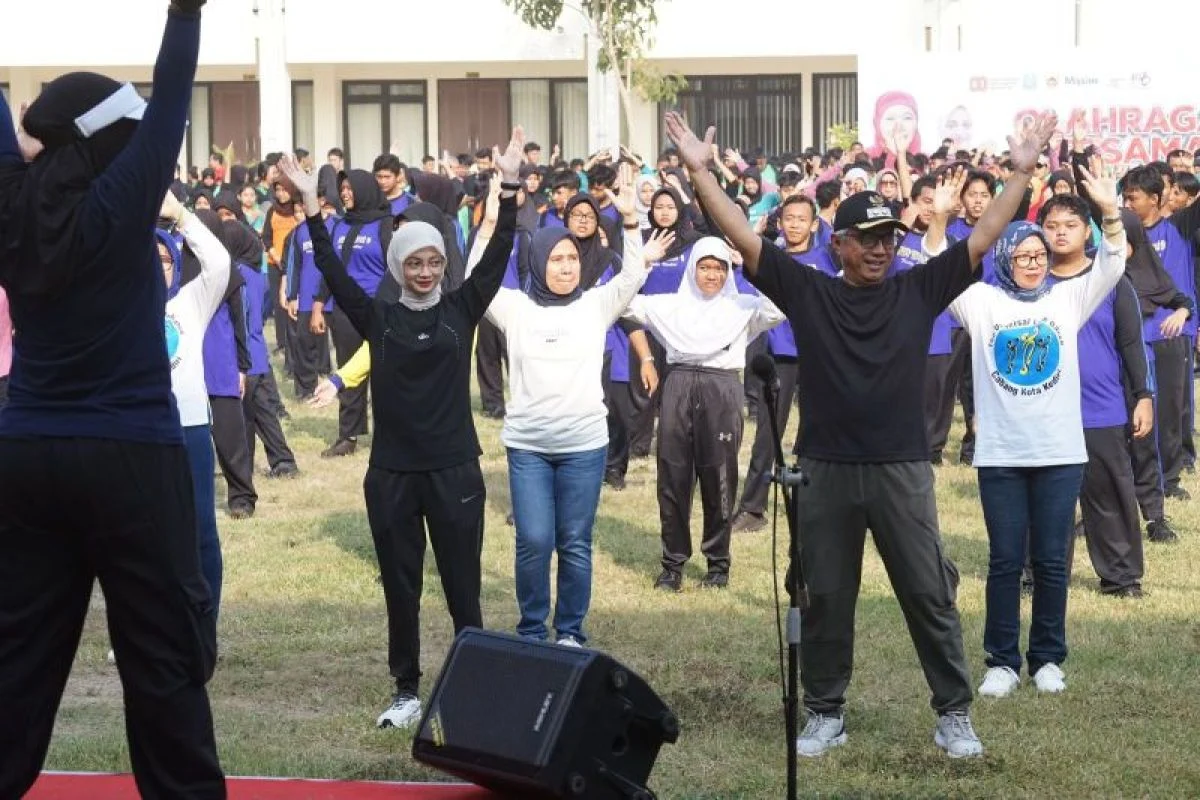
National Sports Day, universally recognized across the archipelago as Hari Olahraga Nasional (Haornas), stands as one of the most significant commemorations in the socio-cultural and athletic landscape of Indonesia. Observed annually on September 9, this monumental day traces its origins back to a time of immense political uncertainty and national awakening: the inaugural National Sports Games (Pekan Olahraga Nasional – PON) held in Solo, Central Java, in 1948. Beyond being a mere historical milestone, Haornas has evolved into a vital cultural touchstone, serving as a nationwide reminder of the transformative power of physical fitness, national resilience, and the relentless pursuit of athletic excellence. As Indonesia marks the 43rd anniversary of the official proclamation of Haornas in 2026, the occasion prompts a comprehensive reflection on how grassroots physical fitness, elite athletic infrastructure, and sports tourism intersect to drive both public health and economic prosperity.
The Historical Genesis: The 1948 Solo PON as an Act of Defiance and Diplomacy
To fully comprehend the significance of September 9, one must examine the geopolitical and social reality of Indonesia in 1948. Having declared independence on August 17, 1945, the young republic was still locked in a fierce struggle to secure international recognition and sovereignty amid military blockades and diplomatic maneuvers by colonial powers. During this critical juncture, Indonesian athletic leaders and national figures harbored an ambitious dream: to participate in the XIV Olympic Games scheduled to be held in London, United Kingdom.
However, participation in the global sporting arena required formal membership in international sports federations and recognition by the International Olympic Committee (IOC)—prerequisites that a newly born republic fighting for its survival could not easily fulfill through conventional administrative channels. Denied direct participation due to political unrecognized status, Indonesian leadership faced a crossroads. Rather than retreating into isolation, the nation executed a bold alternative that would permanently alter its domestic sporting landscape.
Under the initiative of pioneering sports figures, the Sports Association of the Republic of Indonesia (Persatuan Olahraga Republik Indonesia – PORI) convened a major national sports conference in Surakarta (Solo) in early 1948. The consensus was clear: if Indonesian athletes could not yet compete under the Red and White flag at the Olympic Games in London, they would showcase their capabilities, unity, and sovereign identity on home soil. Thus, the first-ever Pekan Olahraga Nasional (PON I) was organized, running from September 9 to September 12, 1948.
The staging of PON I in Solo was far more than a domestic athletic competition; it was a profound political statement. It demonstrated to the international community that despite external pressures and internal security challenges, the Indonesian state possessed the administrative capacity, infrastructure, and cultural cohesion to organize a multi-sport national event. Thousands of athletes from various regions across Java and beyond gathered at the historic Sriwedari Stadium to compete in athletics, swimming, football, and other disciplines. The opening day of this historic event—September 9—was permanently etched into the national consciousness as the foundational date for the birth of Indonesian organized sports.
Formal Institutionalization: The Proclamation of Haornas in 1983
While the spirit of September 9, 1948, lived on in the hearts of athletes and sports enthusiasts, it took decades for the date to be officially codified into the national calendar. The formal establishment of Hari Olahraga Nasional as a recognized national observance did not occur until September 9, 1983.
During a grand ceremony in Surakarta, then-President Soeharto officially proclaimed Hari Olahraga Nasional while inaugurating the extensive restoration and modernization of the legendary Sriwedari Stadium—the very cradle of Indonesian multi-sport competition. This proclamation marked a strategic shift in state policy, moving sports from an informal societal activity to a structured instrument of nation-building, character development, and physical fitness enhancement.
The 1983 declaration received concrete legal permanence two years later through Presidential Decree (Keputusan Presiden – Keppres) Nomor 67 Tahun 1985 concerning National Sports Day. This legal framework formally designated September 9 of each year as Haornas, mandating state institutions, educational facilities, and civil society organizations to promote physical activity, athletic training, and competitive sports development. The decree underscored the government’s commitment to fostering a sustainable sporting culture, ensuring that the legacy of the 1948 pioneers would be transmitted across successive generations.
Evolving Objectives: Beyond Medals to Public Health and Economic Growth
In contemporary times, the Ministry of Youth and Sports (Kemenpora) has continually redefined the scope and objectives of Haornas to align with modern socio-economic realities. While early post-independence sports policies focused primarily on asserting national existence and winning international prestige, modern frameworks emphasize a holistic approach that integrates physical fitness, public health, character building, and economic development.
Recent policy directives from the Ministry of Youth and Sports highlight that the celebration of Haornas must serve as a catalyst for transforming sports into a daily lifestyle choice for the general populace. Statistics and public health studies consistently demonstrate that regular physical activity reduces the prevalence of non-communicable diseases, lowers national healthcare expenditures, and enhances overall productivity. Consequently, modern Haornas campaigns heavily target sedentary lifestyles, encouraging schools, corporate offices, and community centers to incorporate active movement and structured exercise into daily routines.
Furthermore, sports have transcended the traditional boundaries of physical recreation to become a major driver of the national economy. In recent policy forums, sports leadership has emphasized the symbiotic relationship between athletic development, health economics, and regional tourism. The modern sports ecosystem in Indonesia generates substantial economic activity through sports equipment manufacturing, event management, broadcasting rights, hospitality, and sports tourism.
The Integration of Sports Tourism and Infrastructure Expansion
A prime illustration of the intersection between sports, economy, and regional development is the strategic promotion of sports tourism across various Indonesian provinces. Major multi-sport events are no longer confined to major metropolitan centers like Jakarta or Surabaya; instead, they are deliberately distributed to stimulate local economies in emerging regions.
For instance, the strategic planning surrounding upcoming national fixtures—such as the designation of Sumba Timur in East Nusa Tenggara as an upcoming showcase for sport tourism ahead of future PON cycles—demonstrates how athletic events can elevate remote regions onto the national and international map. By leveraging unique geographical landscapes, coastal areas, and indigenous cultural elements, events like the scheduled coastal PON in Ancol or regional multi-sport festivals create sustainable economic ripples for local micro, small, and medium enterprises (MSMEs), hoteliers, and local service providers.
However, realizing this ambitious vision requires substantial capital investment in modern facilities, training academies, and athlete development pathways. Recent budgetary discussions within the Ministry of Youth and Sports have underscored the necessity of securing robust financial allocations—running into trillions of rupiah—to construct state-of-the-art training centers, regional sports academies, and science-backed conditioning facilities. These investments are deemed critical if Indonesian athletes are to consistently break records, excel at continental and global multi-sport events like the Asian Games and the Olympics, and maintain competitive readiness on the international stage.
The 2026 Observance: Marking 43 Years of National Sports Dedication
As the nation observes Hari Olahraga Nasional in September 2026, the country commemorates the 43rd anniversary of the official institutionalization of Haornas since its 1983 proclamation. The 2026 observance serves as a vital checkpoint to evaluate the trajectory of national sports policies, celebrate the achievements of home-grown athletes, and reaffirm the collective commitment to cultivating an active society.
Throughout the country, communities, educational institutions, and sports federations mark the day through diverse activities. These range from mass gymnastics, community running events, and traditional sports festivals to recognition ceremonies honoring veteran athletes who laid the groundwork for modern Indonesian athletics. The overarching message remains clear: the spirit of 1948—characterized by resourcefulness, resilience, and unity—must continue to guide contemporary efforts to overcome administrative and infrastructural hurdles in the sporting sector.
Conclusion: A Perpetual Movement for Character and Unity
Ultimately, Hari Olahraga Nasional transcends a routine historical commemoration. It acts as an annual mirror reflecting the nation’s physical vitality, moral discipline, and collective aspirations. From the makeshift tracks of a post-independence Solo in 1948 to modern, high-tech training complexes and sprawling sports tourism destinations across the archipelago, the journey of Indonesian sports mirrors the journey of the nation itself: resilient, dynamic, and forward-looking. As September 9 continues to inspire millions to lace up their shoes, step onto the field, or support national athletes, Haornas reinforces the timeless truth that a healthy, active, and united citizenry is the ultimate foundation of a prosperous sovereign state.