JAKARTA — Against the backdrop of emerging political discourse and discussions surrounding the tenure of current Vice President Gibran Rakabuming Raka, an examination of the historical lineage of Indonesia’s second-highest office reveals a diverse tapestry of leadership. Since the declaration of Indonesia’s independence in 1945, a total of 13 individuals have served as the Vice President of the Republic of Indonesia. This distinguished group represents a wide cross-section of professional backgrounds, including military strategists, career politicians, technocrats, prominent entrepreneurs, religious scholars, and regional heads of state.
The office of the Vice President has historically served as a critical stabilizing pillar within the Indonesian archipelago, acting as a constitutional bridge between the executive branch, legislative bodies, and the broader populace. As the nation navigates contemporary political developments, reviewing the evolution, historical context, and constitutional framework of the vice presidency provides essential insight into the trajectory of Indonesian governance.
Historical Context and the Evolution of the Vice Presidency
The position of Vice President was formally established alongside the presidency during the formulation of the 1945 Constitution by the Investigating Committee for Preparatory Work for Independence (BPUPKI) and the Preparatory Committee for Indonesian Independence (PPKI). Designed primarily to assist the president and act as a constitutional successor in the event of vacancy, incapacitation, or resignation, the role has evolved significantly across different eras of Indonesian history, transitioning from the parliamentary democracy experiments of the early independence period to the centralized authority of the New Order and the vibrant democratic landscape of the Reformasi era.
Throughout these sweeping political transformations, the profile of those holding the office has shifted. While early occupants were predominantly nationalist intellectuals and freedom fighters, subsequent decades saw technocrats, military leaders, and party politicians ascend to the role, reflecting the shifting priorities of the Indonesian state at various historical junctures.
Chronological Overview of Indonesia’s Vice Presidents
The lineage of the vice presidency spans more than seven decades, marked by pivotal moments in national history. Below is an expanded historical overview of the figures who have shaped the office from the nation’s inception to the present administration.
-
Mohammad Hatta (1945–1956)
Born in Bukittinggi, West Sumatra, on August 12, 1902, Mohammad Hatta—affectionately known as Bung Hatta—was Indonesia’s inaugural Vice President. Alongside President Sukarno, Hatta proclaimed Indonesia’s independence on August 17, 1945. A renowned economist, statesman, and anti-colonial thinker, Hatta played a foundational role in shaping the nation’s foreign policy, advocating for an independent and active stance during the Cold War. His tenure ended in 1956 following his resignation due to policy disagreements with Sukarno. Hatta passed away on March 14, 1980, leaving behind a legacy of fiscal prudence and intellectual rigor. -
Sri Sultan Hamengku Buwono IX (1973–1978)
Born in Yogyakarta on April 12, 1912, the charismatic and influential Sultan of Yogyakarta served as the ninth Vice President of Indonesia during the New Order regime. A staunch supporter of the republic during the Indonesian National Revolution, his integration of the Yogyakarta Sultanate into the Indonesian state provided crucial legitimacy and resources to the nascent government. As Vice President, he was widely respected for his administrative competence, economic insights, and integrity. He passed away on October 2, 1988. -
Adam Malik (1978–1983)
Born in Pematangsiantar, North Sumatra, on July 22, 1917, Adam Malik was a veteran journalist, diplomat, and politician. Prior to serving as Vice President under President Suharto, Malik held the prestigious position of Minister of Foreign Affairs, where he helped co-found the Association of Southeast Asian Nations (ASEAN) in 1967 and served as President of the United Nations General Assembly. Known for his diplomatic acumen and populist roots, Malik contributed significantly to Indonesia’s standing in the international community. He passed away on September 5, 1984.
Subsequent Holders of the Office
The continuation of the vice-presidential lineage includes a diverse group of leaders who steered the country through economic booms, political reforms, and democratic consolidation:
- Umar Wirahadikusumah (1983–1988): A former military general and Chief of Staff of the Indonesian Army, bringing a security-focused administrative approach during the height of the New Order.
- Sudharmono (1988–1993): A career bureaucrat and close confidant of President Suharto, who played a central role in the Golkar political apparatus and state secretariat management.
- Try Sutrisno (1993–1998): A former military commander whose tenure coincided with the final, volatile years of the New Order leading up to the 1998 Asian Financial Crisis and political transition.
- B.J. Habibie (March 1998–May 1998): A world-renowned aeronautical engineer and technocrat who ascended to the presidency shortly after taking office as Vice President, following the resignation of President Suharto.
- Megawati Sukarnoputri (1999–2001): The leader of the Indonesian Democratic Party of Struggle (PDI-P), who served under President Abdurrahman Wahid before assuming the presidency herself.
- Hamzah Haz (2001–2004): A veteran Islamic party politician and leader of the United Development Party (PPP), who served during the transitional administration of President Megawati.
- Jusuf Kalla (2004–2009 and 2014–2019): A prominent businessman and politician from South Sulawesi, Kalla served two non-consecutive terms under two different presidents, Susilo Bambang Yudhoyono and Joko Widodo, known for his pragmatic problem-solving and conflict-resolution skills.
- Boediono (2009–2014): An experienced academic and economist who provided technocratic stability during the second term of the Yudhoyono administration.
- Ma’ruf Amin (2019–2024): A senior Islamic cleric, former chairman of the Indonesian Ulema Council (MUI), and leader of Nahdlatul Ulama, bringing religious authority and social balance to the executive branch.
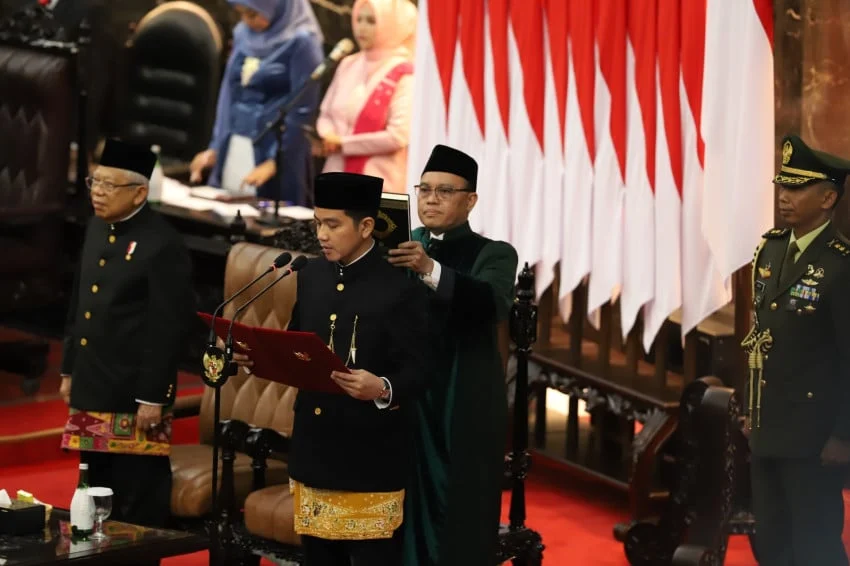
- Gibran Rakabuming Raka (2024–Present): The youngest Vice President in modern Indonesian history, representing a generational shift toward younger leadership within the national executive framework.
Contemporary Developments and Political Dynamics
The current discourse surrounding the vice presidency involves complex legal, political, and institutional considerations. Discussions regarding constitutional mechanisms, executive oversight, and legislative procedures highlight the dynamic nature of Indonesia’s young democracy. Legal scholars, political analysts, and representatives from various political factions continue to debate the parameters of constitutional accountability, separation of powers, and the specific processes outlined in the 1945 Constitution regarding executive evaluation and removal.
In democratic systems, the interaction between legislative oversight bodies and the executive branch is governed by strict legal frameworks. Procedures concerning potential constitutional challenges or evaluations require adherence to established legislative rules, review by constitutional tribunals, and substantial consensus among political parties represented in the People’s Representative Council (DPR).
Implications for Indonesian Governance and Stability
The ongoing discussions concerning the vice presidency underscore the robustness and maturity of Indonesia’s democratic institutions. As political stakeholders engage in rigorous debates over governance, policy direction, and institutional integrity, the stability of the state remains paramount.
Observers note that while political friction is a natural byproduct of a competitive democratic environment, maintaining adherence to constitutional procedures is vital for ensuring long-term national continuity. The historical evolution of the vice presidency—from Mohammad Hatta’s moral authority to contemporary leaders navigating a digital and globalized era—demonstrates that the office has consistently adapted to the changing needs of the Indonesian republic.
Ultimately, the future trajectory of the vice presidency will be shaped by the collective commitment of political leaders, civil society institutions, and the citizenry to uphold the rule of law, democratic principles, and national unity as enshrined in the state ideology of Pancasila.