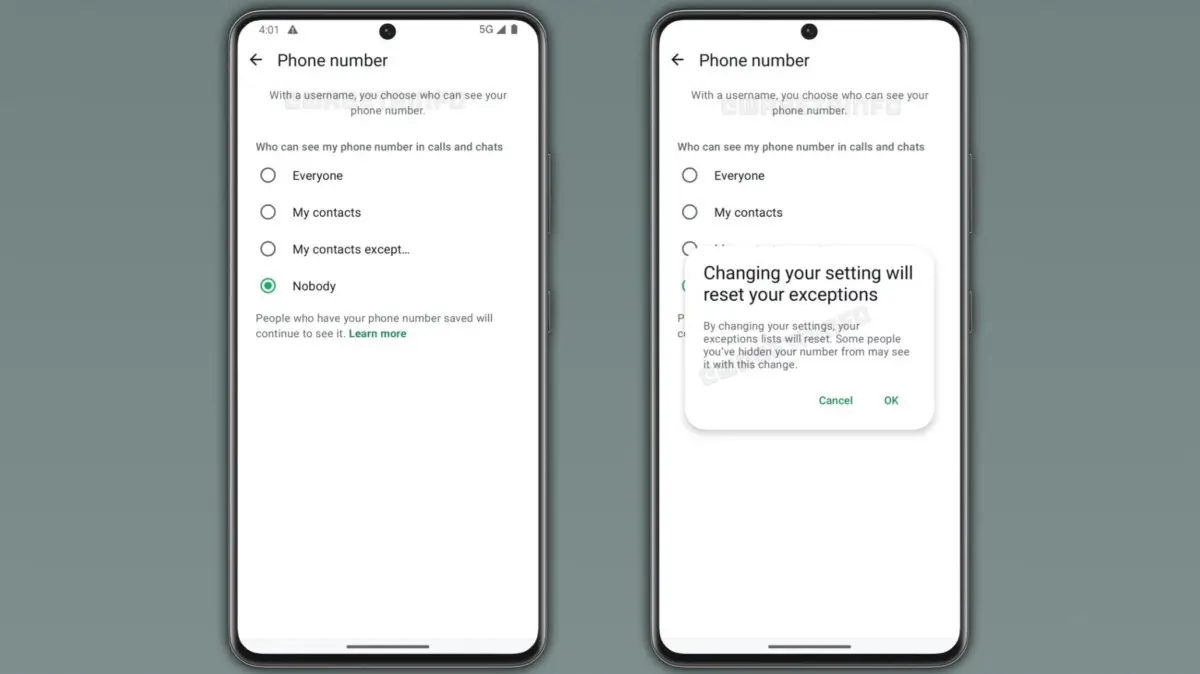
The global instant messaging platform WhatsApp, a subsidiary of Meta Platforms, is developing a sophisticated privacy feature designed to give users unprecedented control over the visibility of their personal phone numbers. Discovered in the recent Android beta ecosystem, this upcoming functionality expands significantly upon the platform’s previously introduced username system. By bridging the gap between digital anonymity and everyday communication, WhatsApp aims to mitigate privacy concerns associated with exchanging contact information in professional, public, or casual settings. As digital privacy regulations tighten globally and user demand for data protection surges, this development marks a crucial step in Meta’s broader strategy to position its messaging infrastructure as a secure, privacy-first communication tool.
Evolution of Digital Identity on WhatsApp: From Phone Numbers to Usernames
For the better part of two decades, WhatsApp operated on a strictly phone-number-centric model. Unlike rival platforms such as Telegram or Discord, which historically relied on unique usernames or handles to establish connections, WhatsApp required every user to expose their primary cellular number to initiate a conversation. While this architecture streamlined contact discovery—automatically populating chat lists based on the smartphone’s local address book—it presented notable privacy vulnerabilities. Users engaging in marketplace transactions, joining public community groups, or participating in professional forums were frequently forced to compromise their personal contact numbers, inviting unwanted solicitations, spam calls, and potential harassment.
The introduction of the username feature represented a paradigm shift for the platform, allowing individuals to converse with others without exposing their underlying telephone digits. However, as the username feature matured during internal testing phases, software engineers identified remaining loopholes where connections established via usernames could still inadvertently expose a user’s cellular identity under specific conditions. The newly discovered privacy configuration addresses these gaps, providing a granular layer of management that ensures a user’s digital footprint remains strictly compartmentalized.
Granular Visibility Options and Operational Mechanics
According to code analysis from the WhatsApp beta for Android version 2.26.45.1, the impending privacy suite introduces four distinct visibility tiers governing how phone numbers are displayed to individuals who connect via usernames. These options mirror the platform’s existing controls for profile pictures and "Last Seen" statuses, adapted specifically for cellular digits:
- Everyone: The phone number remains visible to any user who interacts with the account, regardless of prior relationship status or connection method.
- My Contacts: The phone number is restricted exclusively to individuals whose numbers are saved within the user’s local address book.
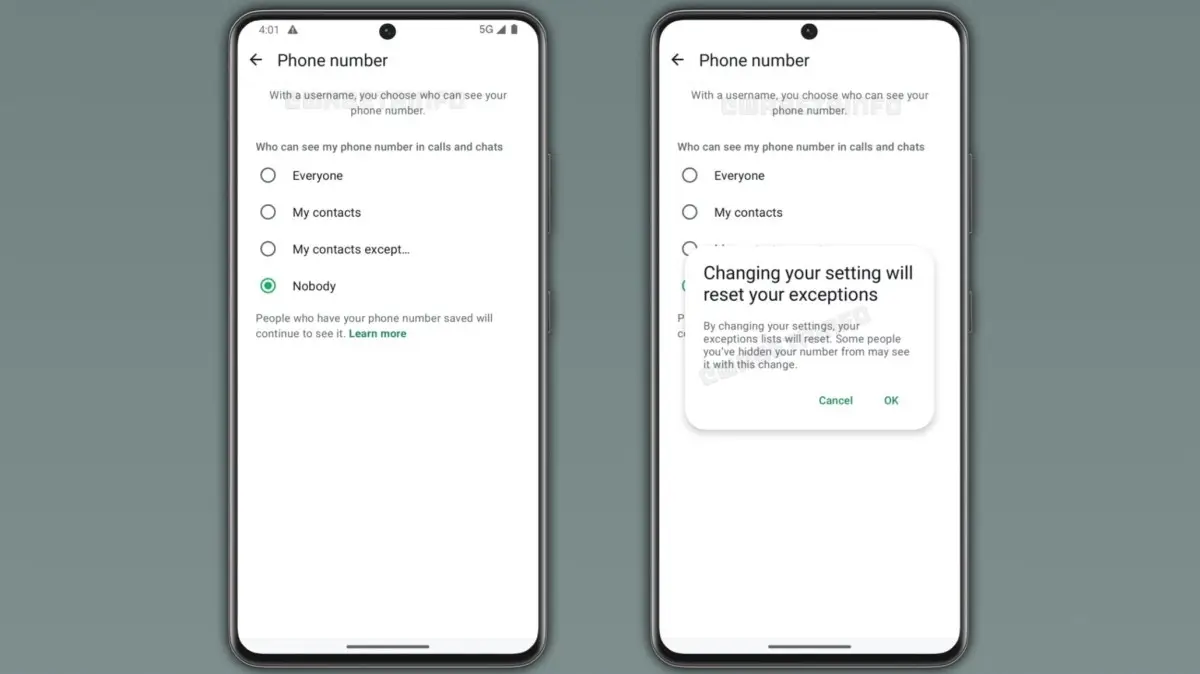
- My Contacts Except…: A customized exclusion filter that permits the user to display their phone number to their broader contact list while explicitly blocking specific individuals, even if those individuals are saved contacts or have interacted via chat.
- Nobody: The phone number is entirely concealed from all users who connect through the username channel.
Industry experts analyzing the beta build note that this architecture is intentionally tailored for interactions initiated through usernames. Consequently, the setting will not override traditional connections where a recipient has already manually saved or discovered the phone number through standard address book syncing prior to the implementation of the username system. Furthermore, the platform has built-in safeguard mechanisms, including systemic warnings that alert users whenever an alteration to these privacy parameters risks resetting previously established exclusion lists.
Chronology of the Feature’s Development and Beta Testing Phase
The trajectory of WhatsApp’s privacy enhancements follows a methodical deployment schedule typical of Meta’s software engineering lifecycle. The foundational groundwork for username integration began taking shape in late 2023 and early 2024, as reference strings were uncovered in iOS and Android test builds. By mid-2025, the conversation around digital handles gained traction as developers laid the infrastructure for secure, non-number-based communication.
By November 2026, references to the advanced phone number visibility controls surfaced in the Android beta channel, specifically spotted by platform trackers monitoring version 2.26.45.1. At this stage, the feature remains confined to internal development environments and has not yet been rolled out to public beta testers enrolled in the Google Play Beta Program. Because the code is still undergoing rigorous stress-testing and quality assurance evaluations, Meta has not yet published an official release roadmap or deployment date for the stable channel. Industry analysts project that a phased rollout to beta testers could commence before the end of the first quarter of 2027, followed by a general public release later in the year, pending successful stability benchmarks.
Comparative Analysis with Competing Messaging Ecosystems
WhatsApp’s strategic shift toward username-based privacy brings its feature set closer to competitors that have long prioritized handle-based communication. Telegram, for instance, has long allowed users to interact exclusively via public or private usernames (@handles), shielding phone numbers by default and restricting visibility to mutual contacts only if explicitly permitted. Similarly, Signal—widely regarded as the gold standard for encrypted messaging—requires a phone number for registration but recently introduced a username-sharing feature that allows individuals to connect without exchanging cellular digits.
By adopting a similarly robust framework, WhatsApp addresses one of the primary criticisms levied against its platform by privacy advocates: the unavoidable exposure of personal telephony data. However, because WhatsApp boasts over two billion active monthly users globally, the implementation of such features carries vastly different operational complexities. Scaling privacy parameters across a massive, highly diverse user base requires careful balancing to prevent user confusion, maintain app performance, and ensure backward compatibility with older client versions.
Broader Implications for Digital Security and Consumer Privacy
The introduction of granular phone number concealment tools carries profound implications for consumer digital security, particularly in regions where mobile phone numbers are tied directly to financial services, government identification, and national databases. In many developing markets across Asia, Latin America, and Africa, WhatsApp serves as the primary digital infrastructure for small businesses, e-commerce transactions, and community organization. In these environments, exposing a phone number often translates to heightened vulnerability to targeted phishing scams, financial fraud, and unauthorized data harvesting by malicious actors.
By enabling users to selectively hide their phone numbers even after establishing active communication channels, WhatsApp provides a vital shield for vulnerable populations, journalists, activists, and everyday consumers. Cybersecurity analysts emphasize that reducing the ubiquity of personal phone numbers in casual digital interactions directly diminishes the efficacy of social engineering attacks, SIM-swapping attempts, and unsolicited telemarketing rings.
Furthermore, this development aligns with tightening global data protection frameworks, such as the European Union’s General Data Protection Regulation (GDPR) and emerging privacy mandates across various international jurisdictions. By offering tools that enforce data minimization—limiting the exposure of personally identifiable information (PII) to only what is strictly necessary for communication—Meta reinforces its compliance posture and mitigates regulatory scrutiny regarding user data handling practices.
Anticipated User Experience and Implementation Challenges
As development continues within the internal testing environments, product designers face the challenge of ensuring that these advanced privacy configurations do not overly complicate the user interface. Messaging applications thrive on simplicity and low friction; introducing multi-tiered exclusion menus requires intuitive design to prevent user error. The inclusion of warning prompts—notifying users that modifying visibility settings may inadvertently clear custom exclusion lists—demonstrates an awareness of potential user friction points.
Moreover, support desk teams and community forums will likely experience an adjustment period as users adapt to the nuanced distinction between traditional phone-number-based chats and username-based interactions. Clear in-app documentation and tooltips will be essential in educating the user base on why certain numbers remain visible due to prior address book synchronization, versus those concealed through the new username privacy protocols.
Conclusion and Future Outlook
The forthcoming privacy controls for WhatsApp usernames represent a mature evolution in how the world’s most popular messaging application handles personal identity and data exposure. By granting users the autonomy to dictate exactly who can view their cellular numbers down to the individual contact level, WhatsApp is effectively neutralizing longstanding privacy vulnerabilities inherent to its phone-centric heritage. While the feature currently resides in early internal testing under Android beta version 2.26.45.1, its eventual rollout will mark a significant milestone in the platform’s ongoing transition toward comprehensive, user-centric data protection. As the digital landscape demands higher standards of privacy and security, such structural enhancements ensure that WhatsApp remains competitive in safeguarding the digital boundaries of its global user base.