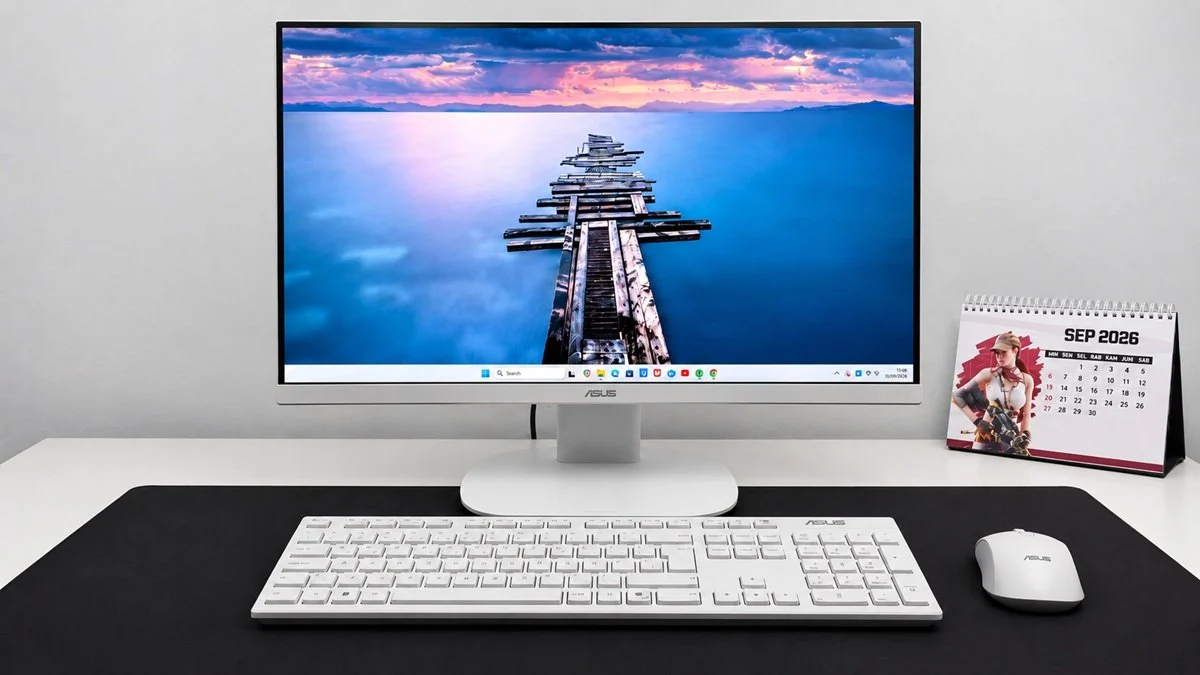
ASUS has officially expanded its desktop portfolio with the launch of the ASUS AiO V440 Series, a sophisticated all-in-one computing solution designed to harmonize aesthetics, functionality, and high-performance hardware. This launch marks a significant milestone in ASUS’s strategy to capture the growing hybrid work and home-office market in Indonesia. By consolidating the central processing unit, motherboard, and display into a singular, streamlined chassis, the V440 Series effectively addresses the modern demand for space-efficient, clutter-free workstations.
The Evolution of the All-in-One Concept
The all-in-one (AiO) desktop segment has undergone a transformative shift over the last decade. Historically, these devices were often viewed as secondary machines with limited performance, suitable only for basic clerical tasks. However, the paradigm shifted following the global transition toward remote and hybrid work environments. Consumers now prioritize clean desk setups—often referred to as "minimalist setups"—without compromising on the raw computational power required for multitasking, media consumption, and professional software suites.
The ASUS V440 Series is engineered to serve as a centerpiece for both home offices and professional corporate environments. By eliminating the traditional tower chassis, ASUS has reduced the physical footprint of the workstation, which is particularly beneficial for users operating in limited desk spaces. The integration of cables within the stand and the chassis creates an organized, professional aesthetic that aligns with contemporary interior design trends.
Technical Specifications and Display Excellence
At the heart of the V440 Series is a high-definition 23.8-inch display. ASUS has utilized its signature NanoEdge bezel technology, which achieves an impressive 93% screen-to-body ratio. This design choice minimizes distractions and maximizes the usable visual area, facilitating a more immersive experience. The panel boasts a Full HD resolution (1920 x 1080 pixels) with an aspect ratio of 16:9, providing a standard that is optimal for productivity software, video conferencing, and multimedia consumption.
Furthermore, the display features a brightness output of 250 nits and wide viewing angles of up to 178 degrees, ensuring color accuracy and visibility from various positions. ASUS has segmented the series to cater to diverse user needs, offering two primary variants: the V440VAK, which serves as the standard non-touch model, and the V440VAT, which incorporates a capacitive touchscreen interface. The latter is expected to appeal to educational sectors and interactive point-of-sale environments where tactile input enhances user engagement.
Performance Benchmarks and Hardware Capabilities
The performance metrics of the V440 Series suggest that ASUS has prioritized sustained computing power. The flagship configuration is powered by the Intel Core 7 240H processor, operating at a base clock speed of 2.5GHz. This processor is paired with integrated Intel Iris Xe graphics, which provides sufficient overhead for light video editing, high-definition streaming, and complex spreadsheet management.
In terms of memory and storage, the series is built for longevity and scalability. The standard configuration includes 16GB of DDR5 RAM. Notably, the architecture supports expansion up to 64GB, a feature that caters to power users who anticipate increased workload demands in the future. Storage is managed by a 1TB M.2 NVMe PCIe 4.0 SSD, which significantly reduces boot times and data transfer speeds compared to traditional mechanical hard drives.
To validate the efficiency of this hardware, ASUS has released internal benchmark data. The V440 Series achieved a score of 6,214 points in the PCMark 10 test, which assesses the system’s performance in common office tasks. Additionally, the device recorded 10,912 points in Cinebench multi-core testing and 1,869 points in single-core testing, demonstrating a balanced thermal and computational performance profile suitable for modern professional software. The system arrives pre-installed with Windows 11 Home, ensuring users have access to the latest security features and UI enhancements from Microsoft.
Versatility through Connectivity
A distinctive feature of the ASUS V440 Series is its dual HDMI functionality. In addition to the standard HDMI-out port, which allows for multi-monitor setups, the device includes an HDMI-in port. This inclusion allows the V440 to function as a standalone monitor for external devices such as gaming consoles, laptops, or secondary tablets. This utility transforms the device from a mere PC into a versatile visual hub, increasing its value proposition for users who may want to consolidate their entertainment and work hardware into a single screen.
Market Context and Strategic Positioning
The decision to price the series starting at approximately IDR 8 million reflects ASUS’s intent to dominate the mid-range segment. By positioning the V440 Series at this price point, the company is directly challenging competitors who often struggle to balance premium design with accessible pricing.
Industry analysts observe that the AiO market is currently experiencing a period of stabilization following the post-pandemic surge in hardware demand. As businesses look to refresh their aging hardware fleets, the demand for machines that are easy to deploy, simple to maintain, and aesthetically pleasing has increased. The ASUS V440 Series, with its modular upgrade paths—specifically the RAM accessibility—addresses the common corporate concern regarding the lifecycle of IT assets.
Impact on the Indonesian IT Ecosystem
The introduction of the V440 Series in Indonesia is a tactical move. The Indonesian market has shown a strong preference for brands that offer robust after-sales support and local availability. ASUS, having established a comprehensive service network throughout the archipelago, leverages this trust to promote the V440 Series as a reliable solution for SMEs (Small and Medium Enterprises) and individual professionals.
From a sustainability perspective, the AiO design also contributes to lower energy consumption and reduced material usage compared to traditional desktop-and-monitor configurations. As corporations in Indonesia increasingly adopt ESG (Environmental, Social, and Governance) criteria, the adoption of energy-efficient computing hardware like the V440 Series can be framed as a step toward meeting sustainability targets.
Future Outlook and Chronology of Development
The development of the V440 Series follows a series of incremental updates to the ASUS AiO range. Over the past twenty-four months, ASUS has been steadily transitioning its desktop lines from older memory standards to DDR5, and from slower SATA SSDs to high-speed NVMe PCIe 4.0 interfaces.
The launch event in Jakarta serves as the primary gateway for the product to enter the Southeast Asian market. Following this rollout, ASUS is expected to monitor feedback regarding the touchscreen variant (V440VAT) versus the standard model to refine its inventory management for the coming fiscal year. Industry observers expect that the V440 Series will likely remain a staple of the ASUS commercial portfolio through late 2026 and into early 2027, depending on the release cycles of subsequent Intel architecture iterations.
Conclusion: A Strategic Hardware Refresh
The ASUS AiO V440 Series represents a well-considered balance between form and function. By emphasizing a clean, minimalist design language, high-speed memory and storage, and the added utility of HDMI-in connectivity, ASUS has created a product that serves as an effective, modern workspace solution.
Whether for the home office enthusiast looking to eliminate cable clutter or the IT department manager tasked with equipping a modern office space, the V440 Series provides a compelling case for the relevance of the all-in-one desktop format. As performance benchmarks indicate, the hardware is more than capable of handling the rigors of modern productivity, and with the added flexibility of memory expansion, it is positioned to remain a viable tool for years to come. The series is currently available through authorized ASUS dealers and major retail partners across Indonesia, marking a significant update to the regional desktop landscape.