The funeral industry, an sector often characterized by centuries-old traditions and deeply rooted cultural customs, is currently undergoing a significant technological transformation. As societies across the globe grapple with the environmental consequences of traditional burial and flame-based cremation, a Dutch company, Crematech, has introduced a sophisticated innovation known as "resomation," or electric cremation. This process, which utilizes water, heat, and alkalinity to return a body to its natural elements, represents a paradigm shift in how modern societies handle the final stages of human life. By moving away from combustion-based methods, the industry is signaling a broader transition toward sustainability, efficiency, and carbon neutrality.
The Science Behind Resomation
Resomation, scientifically referred to as alkaline hydrolysis, operates on a fundamentally different principle than the traditional cremation process that has been the industry standard for decades. While conventional cremation relies on intense heat—often reaching temperatures between 1,400 and 1,800 degrees Fahrenheit—to reduce a human body to ash, resomation functions as an accelerated form of natural decomposition.
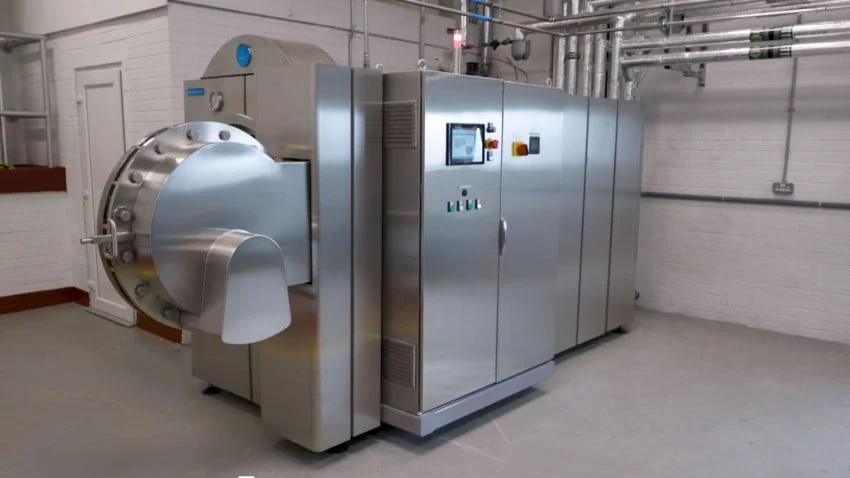
The process involves placing the deceased in a specialized, pressurized stainless-steel chamber. Once sealed, the chamber is filled with a mixture of water and potassium hydroxide, a potent alkaline solution. The environment is then pressurized and heated to approximately 300 degrees Fahrenheit. Over a period of several hours, this combination breaks down the body’s tissues into their fundamental chemical building blocks: amino acids, peptides, sugars, and salts.
Contrary to popular misconceptions, the process does not result in a liquid slurry that is disposed of as waste. Instead, the resulting liquid is a sterile, nutrient-rich solution composed of the body’s organic components, which can be safely returned to the water cycle. The remaining solid materials consist primarily of calcium phosphate, the mineral component of bones, which is then dried and processed into a fine, white powder. This residue is functionally identical to the cremated remains produced by fire, allowing families to retain, scatter, or inter the remains according to their personal or religious preferences.
A Chronological Evolution of Funeral Technology
To understand the significance of Crematech’s introduction, one must examine the evolution of funeral rites. For centuries, earth burial was the primary method of interment. However, as urbanization increased and cemetery space became a premium commodity, flame cremation gained popularity during the 19th and 20th centuries as a more space-efficient solution.
The origins of alkaline hydrolysis date back to the late 19th century, when the process was initially patented for the purpose of disposing of animal carcasses in the agricultural sector. It was not until the early 21st century that the technology was adapted for human remains.
- 1888: The first patent for alkaline hydrolysis is filed, primarily for agricultural waste management.
- 2007: The first commercial human resomation unit is installed at a funeral home in the United States, sparking initial regulatory and ethical debates.
- 2010s: Various states in the U.S. and provinces in Canada begin legalizing the process, establishing it as a legitimate alternative to traditional cremation.
- 2020s: European markets, led by innovators like the Dutch-based Crematech, begin integrating the technology as a response to stringent European Union climate directives.
This timeline reflects a slow but steady acceptance of technology as a viable partner in human bereavement, moving from an industrial application to a deeply personal, final service.
The Environmental Imperative
The primary driver behind the shift toward resomation is the urgent need to reduce the carbon footprint of the funeral industry. Traditional flame cremation is a carbon-intensive process. The burning of fossil fuels—typically natural gas—to power cremators releases significant quantities of carbon dioxide into the atmosphere. Furthermore, the process often releases mercury vapors, primarily from dental fillings, as well as dioxins and furans, which require complex filtration systems to mitigate.
Data from the Cremation Association of North America (CANA) and various European environmental agencies suggest that resomation is significantly more energy-efficient. According to life-cycle assessments, alkaline hydrolysis uses approximately one-eighth of the energy required for traditional flame cremation. Furthermore, because it does not involve combustion, it produces zero emissions of mercury or other hazardous gases.
For municipalities under pressure to meet "Net Zero" climate goals, the adoption of electric or water-based cremation represents a low-hanging fruit in the effort to decarbonize essential public services. As cities like Amsterdam and other European urban centers look to reduce their municipal carbon budgets, the adoption of Crematech’s technology aligns perfectly with broader sustainability mandates.
Regulatory and Ethical Landscape
The introduction of any new technology in the funeral industry is invariably met with intense scrutiny. Ethical concerns regarding the dignity of the deceased and the respectful handling of remains are at the forefront of every legislative discussion.
Opponents of alkaline hydrolysis have historically raised questions about the disposal of the byproduct liquid. However, regulatory bodies have found that the liquid produced during the process is completely sterile and free of DNA, as the high heat and alkalinity effectively break down the organic structure. In many jurisdictions, this byproduct is processed through municipal water treatment facilities, where it is treated similarly to other organic matter.
Furthermore, religious and cultural organizations have expressed varied opinions. While some groups view any form of cremation as a departure from traditional burial rites, others have embraced resomation as a respectful way to return the body to the earth in a process that mimics natural decay. The objectivity of the process—being chemical rather than thermal—has been cited by some advocates as a more "gentle" transition for the deceased.
Economic Implications for the Funeral Industry
The economic transition toward resomation is not merely a matter of environmental policy; it is also a business imperative. As the funeral industry faces rising energy costs and stricter environmental regulations, the efficiency of electric cremation becomes a competitive advantage.
For funeral home operators, the installation of resomation units requires a significant initial capital investment. However, the long-term operational costs are markedly lower than those of traditional gas-powered furnaces. Maintenance costs for resomation chambers are often lower, as they are not subject to the extreme thermal stress that causes wear and tear on traditional cremators.
Additionally, as younger generations—who are statistically more likely to prioritize sustainability—become the primary decision-makers for funeral arrangements, the demand for "green" funeral services is expected to surge. Funeral homes that offer resomation are positioning themselves as forward-thinking, eco-conscious providers, potentially capturing a growing market segment that is dissatisfied with the environmental legacy of traditional cremation.
Broader Impact on Public Health and Safety
Beyond the environmental benefits, there is an inherent safety advantage to the electric cremation process. Traditional cremators require the handling of high-temperature machinery, which carries inherent risks to operators. The closed-system nature of resomation, combined with automated controls, minimizes human interaction with the high-heat components.
Furthermore, the sterilization aspect of the process is a significant benefit in cases involving infectious diseases. Because the process occurs within a sealed, pressurized environment at sustained temperatures, it effectively neutralizes pathogens that might otherwise survive standard burial or traditional cremation. This makes resomation an increasingly attractive option for public health officials during times of high mortality rates or pandemic scenarios, where safe, efficient, and sanitary disposal methods are paramount.
Future Outlook and Conclusion
The introduction of Crematech’s electric cremation technology in the Netherlands serves as a bellwether for the global funeral industry. As the technology continues to mature and public awareness grows, the adoption of resomation is likely to accelerate across Europe and the rest of the world.
While tradition will always play a vital role in human mourning, the integration of science and technology into the funeral sector is not an erasure of that tradition; rather, it is an evolution. By providing an alternative that respects both the environment and the dignity of the deceased, the industry is demonstrating that even the most ancient of human experiences—the parting of ways—can be adapted to meet the challenges of a changing planet.
As stakeholders, ranging from government regulators to grieving families, continue to evaluate the implications of this shift, one thing remains clear: the path forward for the funeral industry lies in a delicate balance between honoring the past and securing a sustainable future. The transition to resomation is not merely about changing the method of final disposition; it is about redefining our relationship with the environment at the most critical moment of the human lifecycle. The success of this technology will ultimately depend on continued transparency, rigorous safety standards, and an ongoing dialogue between those who provide funeral services and the communities they serve.