• Home
  • About Us
  • Contact Us
  • Cookies Policy
  • Disclaimer
  • DMCA
  • Privacy Policy
  • Terms and Conditions
Dara News Media
keep your memories alive
Business & Economy

MNC University Strengthens Financial Literacy by Inaugurating IDX Investment Gallery and Opening 1,000 Securities Accounts

by Jia Lissa September 18, 2026
written by Jia Lissa

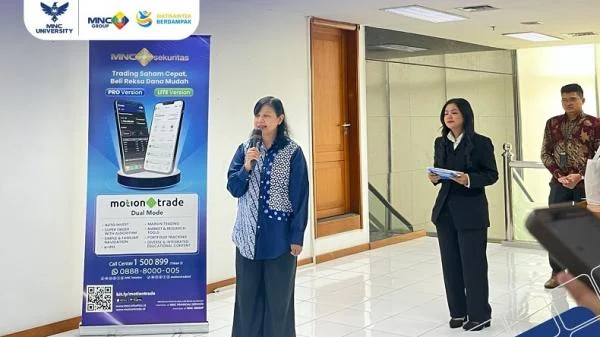
MNC University has formally reinforced its strategic commitment to advancing financial literacy and driving capital market inclusion among the younger demographic. On Thursday, September 17, 2026, the institution officially inaugurated the Indonesia Stock Exchange (IDX) Investment Gallery alongside a ceremonial milestone celebrating the opening of 1,000 securities accounts for its student body. This dual initiative bridges theoretical economic concepts and practical market engagement, aiming to cultivate a generation of financially astute graduates equipped for modern economic landscapes.

The high-profile inauguration event drew a distinguished delegation of regulatory figures, market operators, and academic leaders. Among the notable attendees were Andes Novytasary, Deputy Director of Business Behavior Supervision, Education, and Consumer Protection for the Financial Services Authority (OJK) in Jakarta and surrounding regions (Jabodebek); Nur Rachma Handayanie, Head of Regional Development 2 at the Indonesia Stock Exchange; Dendy Pratama, Rector of MNC University; and Andri Muharizal, Head of Education and Community Partnership at MNC Sekuritas. Their collective presence underscored the collaborative multi-stakeholder framework required to build a sustainable and resilient investor base in Indonesia.

Bridging Academia and Practical Finance

The establishment of the IDX Investment Gallery on the MNC University campus marks a transformative step in modern higher education curriculum integration. Designed to function as an experiential learning laboratory, the gallery provides students with direct access to real-time market data, analytical tools, and professional trading simulations. Rather than relying solely on textbook theories regarding portfolio management, equity valuation, and macroeconomic indicators, students can now observe market fluctuations firsthand and analyze corporate performance within a controlled educational environment.
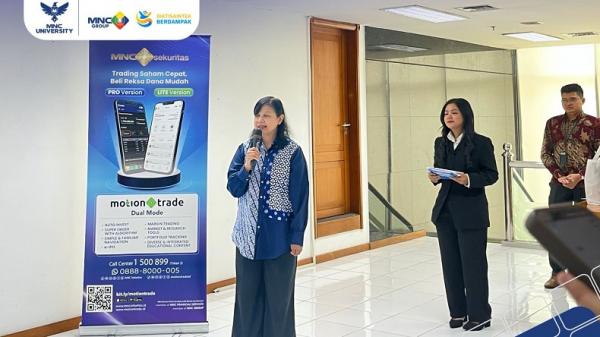
MNC University Resmikan Galeri Investasi BEI, Buka 1.000 Rekening Efek

University leaders emphasize that modern graduates across all disciplines—not merely those majoring in finance or economics—require a foundational understanding of wealth management. In an era defined by digital financial disruptions, complex investment instruments, and shifting global economic paradigms, financial literacy is increasingly viewed as an essential life skill. The newly launched gallery serves as a dynamic hub where students, faculty, and industry practitioners can converge for workshops, seminars, and hands-on trading clinics.

Fostering Responsible Financial Habits from Campus

During the formal proceedings, OJK representative Andes Novytasary delivered a keynote address urging students to transcend passing financial trends. Instead, she advocated for the cultivation of disciplined, long-term habits geared toward responsible financial planning and wealth accumulation. Novytasary stressed that understanding personal finance early in life lays the structural groundwork for future economic security.

“OJK, the IDX, MNC Sekuritas, and the academic institution will continually support students in deepening their understanding and practical experience within the capital market,” Novytasary stated during her address. She further encouraged students to comprehend broader economic cycles to proactively navigate future opportunities, emphasizing that the capital market should be viewed as a legitimate vehicle for long-term prosperity.

Addressing the milestone achievement of 1,000 newly opened securities accounts, Novytasary issued a pragmatic advisory to the student investors. She underscored that opening an account is merely the initial threshold rather than the destination. Students must proactively educate themselves regarding diverse asset classes, execute trades prudently, and maintain acute awareness of the inherent risks associated with capital market investments.

MNC University Resmikan Galeri Investasi BEI, Buka 1.000 Rekening Efek

Strategic Collaboration and Institutional Roles

The success of the initiative hinges on the synchronized synergy between regulatory bodies, stock exchanges, brokerage firms, and academic institutions. The Indonesia Stock Exchange, through its regional development divisions, continues to aggressively expand the footprint of IDX Investment Galleries across universities nationwide. These galleries act as the primary frontline for capital market education, democratizing access to financial tools that were historically restricted to institutional professionals.

MNC Sekuritas plays an operational and educational catalyst role in this partnership. By facilitating the seamless onboarding of 1,000 student accounts, the brokerage firm ensures that regulatory compliance, account security, and user-friendly digital trading platforms are accessible to novice investors. Educational programs led by MNC Sekuritas are slated to run concurrently with the gallery’s daily operations, offering structured mentoring sessions, risk-management workshops, and analytical training to safeguard retail market participants.

Broader Implications for Indonesia’s Capital Market

The integration of capital market education into university ecosystems holds profound macroeconomic implications for Indonesia. Historically, domestic retail participation in the IDX lagged behind regional peers, leaving the local market vulnerable to sudden capital outflows from foreign institutional investors. However, over recent years, coordinated national campaigns spearheaded by the OJK and IDX have catalyzed a massive influx of domestic retail investors, particularly among Gen Z and millennial cohorts.

MNC University Resmikan Galeri Investasi BEI, Buka 1.000 Rekening Efek

By embedding investment culture directly into higher education institutions like MNC University, stakeholders are accelerating the democratization of finance. A financially literate youth demographic not only strengthens individual household resilience against inflation and economic shocks but also deepens national capital market liquidity. When university students transition into the workforce equipped with practical investment experience, they contribute to a more stable, mature, and domestically driven financial ecosystem.

Looking Ahead: Sustainability and Continuous Education

Following the ribbon-cutting ceremony and the formal account-opening milestone, MNC University administration outlined a roadmap for the newly established IDX Investment Gallery. The facility will not remain a static exhibition space; rather, it will host structured credit-bearing modules, extracurricular investment clubs, and certified stock-trading competitions. Faculty members will collaborate with analysts from MNC Sekuritas to update course materials, ensuring that curriculum content remains aligned with contemporary market realities, such as sustainable investing (ESG criteria), digital asset integration, and evolving regulatory frameworks.

As the academic year progresses, the institutional partners plan to track the engagement metrics and portfolio performance trends of the participating student investors. This empirical feedback loop will allow educators and market regulators to refine educational modules, address knowledge gaps, and expand the program’s reach to an even broader segment of the student body. Ultimately, the inauguration at MNC University serves as a replicable blueprint for how higher education institutions can actively contribute to national financial inclusion objectives and shape a prosperous, financially resilient future generation.


September 18, 2026 0 comment
0 FacebookTwitterPinterestEmail
Technology

Apple Intelligence Features, Compatibility, and Privacy: A Comprehensive Guide for iPhone Users

by Dwi Wanna September 18, 2026
written by Dwi Wanna

The integration of artificial intelligence into consumer electronics has fundamentally shifted how users interact with their daily devices, and Apple’s proprietary entry into this space, known as Apple Intelligence, stands as a defining milestone in the evolution of the iPhone. First introduced to the public during Apple’s Worldwide Developers Conference (WWDC) in June 2024, Apple Intelligence was conceived not merely as an isolated software novelty, but as a deeply integrated personal intelligence system. Designed to operate natively across iOS, iPadOS, and macOS, this suite of AI tools aims to streamline productivity, enhance creativity, and simplify communication while maintaining strict adherence to user privacy. As the technology rolls out across global markets with successive software updates throughout 2024, 2025, and into 2026, understanding its capabilities, hardware dependencies, and operational mechanics has become essential for Apple ecosystem enthusiasts and tech industry analysts alike.

The journey toward Apple Intelligence began years prior to its official unveiling, rooted in Apple’s sustained acquisitions of boutique artificial intelligence startups and its aggressive hardware investments into custom silicon. For generations, Apple’s Neural Engine—first introduced in the A11 Bionic chip back in 2017—served as the quiet workhorse behind Face ID, computational photography, and on-device machine learning tasks. However, the explosive rise of generative artificial intelligence models, exemplified by OpenAI’s ChatGPT in late 2022, placed immense market pressure on hardware giants to deliver conversational, generative, and context-aware capabilities directly to the edge. Apple approached this challenge with a distinct philosophy: rather than relying entirely on massive, distant server farms, the company sought to maximize on-device processing power to safeguard user data. This strategy culminated in the rollout of Apple Intelligence, a dual-layer ecosystem that balances local, on-device neural processing with secure, cloud-based infrastructure when heavier computational loads are demanded.

Hardware Compatibility and System Requirements

One of the most critical aspects of Apple Intelligence is its strict hardware dependency. Unlike traditional software updates that are often extended to older device generations for several years, generative AI models require substantial processing overhead, high memory bandwidth, and immense neural compute capacity. Consequently, Apple Intelligence is not universally available across all active iPhone models.

Market availability is strictly limited to devices equipped with advanced neural architectures capable of executing billions of operations per second efficiently. Officially, the feature set is supported exclusively by the iPhone 15 Pro, the iPhone 15 Pro Max, and the entire lineup of iPhone 16 models, alongside newer iterations released subsequently. Furthermore, consumers must note that enabling these capabilities depends heavily on the device’s operating system version, the chosen system language, and the user’s geographic region. While initial rollouts prioritized US English, subsequent software updates have progressively expanded language support and regional compatibility, though regulatory hurdles in regions like the European Union have occasionally created fragmented deployment timelines.

Transforming Textual Productivity with Advanced Writing Tools

Among the most heavily utilized components of Apple Intelligence is the comprehensive suite of Writing Tools integrated directly into the operating system. Designed to assist users across native and third-party applications—ranging from Apple Mail and Notes to third-party messaging platforms and web browsers—these tools function as an omnipresent editorial assistant.

When drafting emails, preparing professional correspondence, or compiling academic notes, users can invoke the system to proofread text for grammatical errors, restructure sentences for clarity, or completely rewrite paragraphs to match a specific tone, such as professional, concise, or friendly. Furthermore, the summarization engine allows users to condense lengthy multi-paragraph essays or chaotic email threads into concise bullet points with a single tap. This capability significantly reduces cognitive fatigue for professionals and students who process hundreds of digital communications daily.

Streamlining Digital Noise: Notification Summarization and Smart Replies

In an era defined by digital hyper-connectivity, smartphone notifications often overwhelm users, fragmenting attention throughout the day. Apple Intelligence addresses this notification fatigue by deploying intelligent sorting and summarization algorithms. Instead of forcing users to read dozens of individual alerts from messaging apps, news outlets, and social media platforms, the system analyzes incoming traffic and surfaces a prioritized summary of what is most important on the Lock Screen.

Within the Messages application, this intelligence extends further by generating context-aware conversation summaries and proposing Smart Replies. By analyzing the flow of a chat, the system can draft appropriate responses, allowing users to acknowledge messages or answer questions rapidly without typing out full sentences. This seamless integration ensures that users remain responsive while minimizing the time spent interacting with repetitive digital clutter.

Unleashing Creativity: Genmoji and Image Playground

Beyond productivity and communication, Apple Intelligence introduces powerful creative dimensions to the iPhone experience through tools like Genmoji and Image Playground. Standard emojis, while globally ubiquitous, often fail to capture the precise emotional nuance or situational context of a conversation. Genmoji bridges this gap by enabling users to generate custom, expressive emojis dynamically based on text descriptions. Whether an user wants a dinosaur wearing a top hat or a smiling avocado wearing sunglasses, the system synthesizes a unique graphic that can be used just like a standard emoji or shared as a sticker.

Simultaneously, Image Playground serves as a dedicated platform for visual creation. Integrated into apps like Messages, Notes, and a standalone application, it allows users to generate whimsical, illustrative, or sketch-style images based on themes, costumes, and locations. While Apple deliberately avoided entering the hyper-realistic deepfake generation space—focusing instead on stylized, non-photorealistic artistic outputs—these creative features provide everyday users with accessible, lightweight graphic design capabilities directly on their mobile devices.

Advanced Computational Photography: Clean Up and Natural Language Search

The iPhone camera has long been a benchmark in mobile photography, and Apple Intelligence enhances this domain by introducing sophisticated post-processing capabilities. Chief among these is the Clean Up tool within the Photos app. Similar to magic eraser functions seen in competing ecosystems, Clean Up allows users to identify and eliminate distracting background elements—such as stray tourists, power lines, or unwanted clutter—from their captured images. The underlying generative model intelligently fills in the erased space, seamlessly blending the background textures to preserve visual integrity.

Additionally, Apple Intelligence revolutionizes how users navigate vast personal photo libraries. Traditional photo searches relied heavily on manual tagging, dates, or basic metadata like locations. With the new semantic search capabilities, users can employ natural, conversational language to find specific moments, such as "Maya wearing her red jacket at the beach" or "sunset over the mountains during the camping trip." The system parses the visual content and contextual metadata of images and videos to retrieve exact matches instantly.

Visual Intelligence and Contextual Camera Awareness

Transforming the camera viewfinder into an active information-retrieval tool, Visual Intelligence bridges the physical and digital worlds. By pointing the iPhone camera at objects in the immediate environment, users can leverage on-device AI to interpret their surroundings. The system can identify specific breeds of animals, recognize plant species, translate foreign text in real time, or pull opening hours and reviews when pointed at a restaurant storefront.

Furthermore, Visual Intelligence can interact with event posters or flyers, automatically parsing dates, times, and venue details to populate calendar entries with a single prompt. For complex queries, users can seamlessly bridge local visual data to external cloud models, such as querying ChatGPT for deeper contextual analysis of an observed landmark or scientific specimen.

Audio Transcription, Summarization, and Meeting Management

For professionals, journalists, and students who frequently record lectures, interviews, or conferences, Apple Intelligence introduces robust audio transcription and summarization capabilities. Integrated natively into applications like Notes and Voice Memos, the system can convert spoken dialogue into searchable, written text.

Once transcribed, Apple Intelligence processes the text to extract key action items, decision points, and comprehensive summaries. In supported jurisdictions and operating environments, this functionality extends to phone calls and FaceTime audio sessions, allowing users to review missed details without listening to lengthy recordings from beginning to end. This automation significantly reduces administrative overhead in corporate and academic workflows.

The Evolution of Siri: Contextual Awareness and Conversational Fluidity

Siri, Apple’s pioneering virtual assistant, receives its most substantial architectural overhaul since its inception through Apple Intelligence. Historically criticized for its rigid command structure and inability to maintain conversational context, Siri now possesses deep language understanding capabilities. Users can stumble over their words, correct themselves mid-sentence, or change requests dynamically without confusing the assistant.

Moreover, Siri’s enhanced personal context allows it to pull information across multiple apps—such as locating a flight number mentioned in an email, cross-referencing it with a flight status online, and calculating whether a friend’s incoming train will arrive on time to pick them up. While some of Siri’s more deeply personalized, cross-app execution capabilities continue to roll out across iterative software releases, the foundational shift marks a major leap toward truly proactive digital assistance.

Privacy Architecture: On-Device Processing and Private Cloud Compute

A defining pillar of Apple’s strategy regarding Apple Intelligence is its unwavering commitment to user privacy. In an industry where artificial intelligence models frequently rely on massive data harvesting and perpetual cloud logging, Apple has constructed a bifurcated architecture designed to keep user data confidential.

The vast majority of everyday AI tasks—such as rewriting text, summarizing notifications, and organizing photos—are processed entirely on-device, leveraging the neural processing power of the Apple Silicon chip without transmitting data externally. For more complex queries that exceed the computational limits of a smartphone, Apple introduced Private Cloud Compute (PCC). Operating on dedicated Apple Silicon servers, PCC extends the device’s security framework into the cloud, ensuring that user data is never stored, logged, or accessible to Apple or third parties. Requests are used exclusively to fulfill the user prompt and are immediately discarded. Furthermore, independent security researchers are granted regular access to inspect the virtualized code of PCC servers, establishing an unprecedented standard of verifiable transparency in cloud-based AI processing.

Industry Implications and Analytical Perspective

The introduction of Apple Intelligence marks a critical turning point for the consumer technology market. By marrying high-end generative AI capabilities with uncompromising privacy frameworks and strict hardware prerequisites, Apple has catalyzed a new upgrade cycle for the iPhone. Industry analysts note that while Android competitors have offered generative AI features for several years, Apple’s ecosystem lock-in, combined with its trusted brand reputation regarding data privacy, positions Apple Intelligence for rapid mainstream adoption among millions of conservative enterprise and consumer users.

Nevertheless, experts urge caution regarding the absolute reliability of generative artificial intelligence. Like all current large language models, Apple Intelligence remains susceptible to hallucinations, inaccuracies, and contextual misinterpretations. Consequently, users are advised to treat the system as a powerful assistant rather than an infallible authority, particularly when dealing with critical legal, financial, or medical information.

Ultimately, Apple Intelligence elevates the iPhone from a sophisticated communication and entertainment terminal into an active, cognitive partner. By seamlessly embedding artificial intelligence into the fabric of daily workflows—from drafting prose and cleaning photographs to managing notifications and interpreting the physical world—Apple has established a new baseline for what consumers can expect from personal computing devices in the modern era.

September 18, 2026 0 comment
0 FacebookTwitterPinterestEmail
Technology

Electric Cremation Innovations Redefine Post-Mortem Practices and Environmental Stewardship

by Suro Senen September 18, 2026
written by Suro Senen

The landscape of funeral services is undergoing a profound transformation as technological advancements intersect with the increasing global demand for sustainable end-of-life options. In the Netherlands, Crematech, a prominent manufacturer of cremation equipment, has recently garnered international attention for its introduction of electric cremation—a process scientifically known as alkaline hydrolysis or "resomation." This development marks a significant departure from traditional combustion-based cremation, which has been the industry standard for decades, by utilizing a water-based dissolution process to manage human remains in a manner that advocates describe as carbon-neutral and environmentally efficient.

The Mechanism of Alkaline Hydrolysis

At the core of this innovation is a sophisticated chemical process that replicates the natural decomposition of the human body at an accelerated rate. Unlike traditional cremation, which relies on gas-fueled furnaces reaching temperatures between 800 and 1,200 degrees Celsius to reduce remains to bone fragments, alkaline hydrolysis utilizes a specialized pressurized vessel.

Within this stainless-steel chamber, the deceased is immersed in a mixture of water and a potassium hydroxide solution. The chamber is then pressurized and heated to approximately 150 degrees Celsius. Through the application of this thermal and alkaline environment, the body’s soft tissues are hydrolyzed into their fundamental chemical building blocks—amino acids, sugars, and salts—within a cycle that typically lasts between three to four hours.

The output of this process is twofold: a sterile, nutrient-rich liquid effluent and the remaining calcium phosphate bone structure. The liquid, which is entirely free of DNA and pathogens, is typically processed through standard municipal wastewater treatment systems, acting as a nitrogen-rich fertilizer. The skeletal remains are then dried and pulverized into a fine, white mineral powder, which possesses a different texture and color compared to the gray, coarser ash produced by flame cremation.

Chronology and Development of the Technology

While the introduction of resomation by companies like Crematech is a contemporary headline, the underlying scientific principle is not entirely new. The process of alkaline hydrolysis was originally patented in the late 19th century as a method for disposing of animal carcasses, primarily for agricultural research and fertilizer production.

It was not until the early 21st century that the technology was adapted for human funeral rites. The journey to public acceptance began in the United States and the United Kingdom, where early adopters sought an alternative to the heavy carbon footprint associated with natural gas cremation. In 2011, the first funeral home in the United States began offering the service, though it faced significant legal and religious pushback in several jurisdictions.

In the Netherlands, Crematech’s entry into the market represents a strategic shift toward formalizing this practice within the European regulatory framework. Over the past decade, European authorities have been evaluating the safety, ethical implications, and environmental impact of water-based cremation. The current push by Crematech follows years of pilot studies and legislative lobbying aimed at aligning funeral technology with the European Union’s broader sustainability goals, specifically the reduction of greenhouse gas emissions.

Supporting Data: Environmental and Efficiency Metrics

The primary driver behind the adoption of electric cremation is its superior environmental profile. Traditional flame-based cremation is a carbon-intensive process. According to the Cremation Association of North America (CANA), a single traditional cremation produces roughly 240 kilograms of carbon dioxide, equivalent to the emissions of a 500-mile car trip. Furthermore, the combustion process releases mercury—often from dental fillings—into the atmosphere, necessitating expensive filtration systems to remain compliant with environmental air quality standards.

In contrast, data regarding alkaline hydrolysis indicates a significantly lower environmental impact:

  • Energy Consumption: Resomation consumes approximately one-seventh of the energy required for flame cremation.
  • Carbon Emissions: The process produces no direct carbon dioxide emissions, and when powered by renewable energy sources, it is considered carbon-neutral.
  • Mercury Capture: Because there is no combustion, mercury remains in a liquid state, allowing it to be filtered and disposed of safely rather than being vaporized into the atmosphere.

These metrics are increasingly attractive to municipal governments in densely populated areas like Amsterdam, where land for burial plots is at a premium and air quality regulations are becoming progressively more stringent.

Official Responses and Stakeholder Perspectives

The reception of this technology has been multifaceted. Industry experts and environmental scientists have largely praised the shift, citing it as an inevitable evolution in "green funeral" practices. Proponents argue that as the global population grows and urbanization continues, society must move toward more efficient methods of handling remains that do not rely on fossil fuels.

However, the transition has not been without opposition. Religious organizations, particularly those with long-standing traditions regarding the sanctity of the body and specific requirements for burial or cremation, have expressed concerns. In several regions, Catholic and Orthodox leaders have questioned whether the dissolution of the body in an alkaline solution respects the dignity of the deceased, arguing that the process may be perceived as "industrial" rather than "reverent."

Crematech and its supporters have responded by emphasizing that the process is a dignified, clean, and silent alternative. They argue that the focus should be on the finality and the return of the remains to the family, noting that the end result—the mineral remains—is functionally identical to the ashes provided by traditional cremation. Many families, particularly those with a preference for environmentally conscious living, have reportedly embraced the option as a way to minimize their final footprint on the planet.

Broader Impact and Global Implications

The introduction of electric cremation technology by companies like Crematech signifies a shift in the global funeral industry’s business model. As the "death-care" sector continues to modernize, the focus is moving toward automation, sustainability, and transparency.

1. Regulatory Evolution
The legal status of resomation remains a patchwork across the globe. While it is legal in several states in the U.S., Canada, and parts of the U.K., it is still undergoing legislative review in many European nations. The Dutch government’s willingness to entertain the technology sets a precedent that could influence broader EU legislation, potentially standardizing the practice across the continent within the next decade.

2. The "Green" Funeral Movement
Electric cremation is part of a larger ecosystem of sustainable end-of-life services, which includes natural organic reduction (human composting) and biodegradable burial options. This movement is driven by a demographic of aging baby boomers who are increasingly concerned about the environmental legacy they leave behind.

3. Economic Considerations
From a business standpoint, the initial capital expenditure for alkaline hydrolysis equipment is significantly higher than that of traditional gas furnaces. However, proponents argue that the long-term operational costs—specifically the lower fuel consumption and reduced need for sophisticated air filtration systems—make it a financially viable investment for crematoriums in the long run.

4. Public Health and Safety
The sterile nature of the process is an additional benefit. By utilizing high-pressure, alkaline-induced hydrolysis, the process eliminates the risk of airborne pathogens, making it a safe choice in the event of death caused by contagious diseases. This aspect of the technology gained particular relevance in the post-pandemic era, where health authorities have sought safer, more efficient methods for handling large numbers of remains.

Conclusion

The introduction of electric cremation by Crematech is more than just a technological curiosity; it is a signal of the changing priorities of modern society. By merging chemistry with compassion, the industry is providing an alternative that satisfies both the logistical needs of urban centers and the ethical demands of a climate-conscious public.

As the technology matures and becomes more widely available, the debate will likely shift from whether it is an acceptable practice to how it can be integrated into existing funeral home infrastructures globally. Whether it will replace traditional cremation remains to be seen, but the data suggests that the trajectory of the funeral industry is firmly pointed toward efficiency, sustainability, and innovation. As with any significant shift in social or religious custom, the adoption of resomation will require time and public discourse, but its arrival marks the beginning of a new era in the management of human mortality.

September 18, 2026 0 comment
0 FacebookTwitterPinterestEmail
Technology

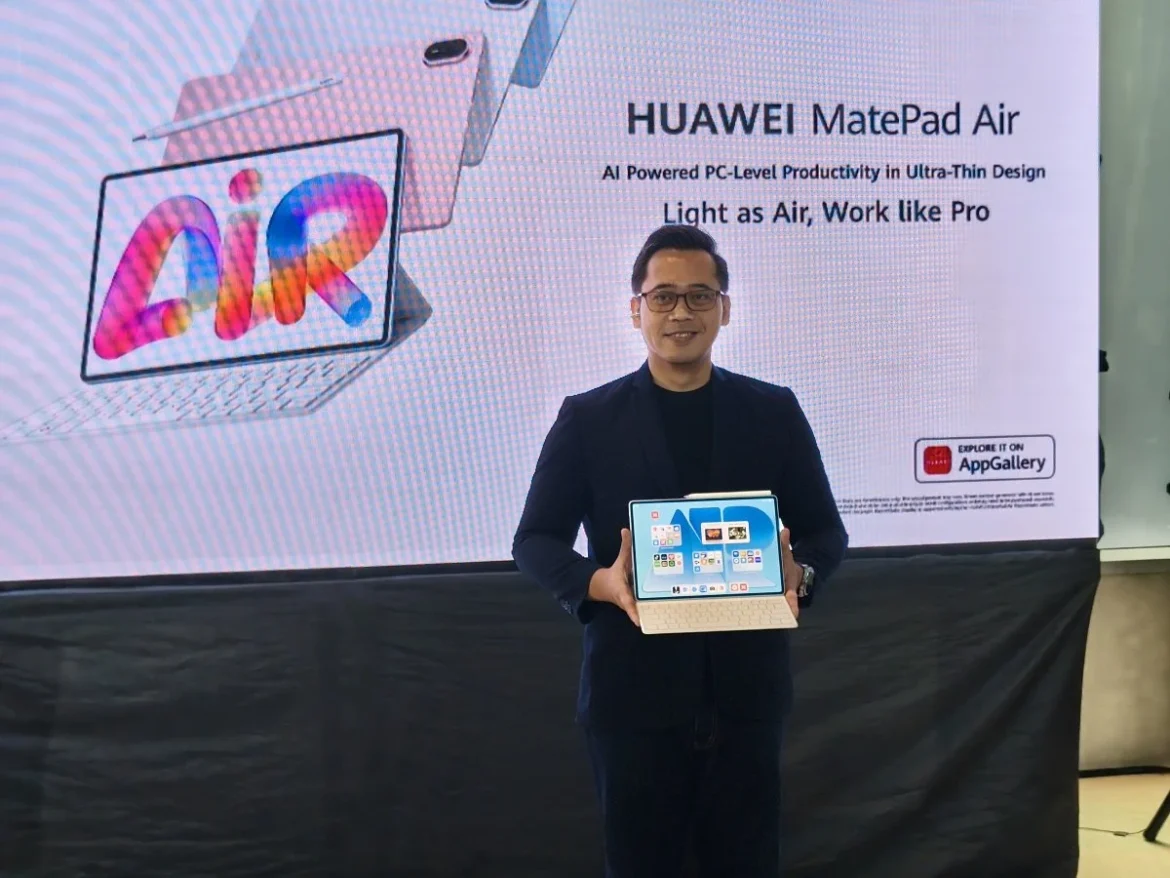
HUAWEI Resmi Rilis MatePad Air (2026) di Indonesia, Tablet Ringan Ultra-tipis dengan Layar PaperMatte

by Neng Nana September 18, 2026
written by Neng Nana

HUAWEI has officially expanded its premium tablet portfolio in the Indonesian market with the launch of the MatePad Air (2026), a device that seeks to redefine the intersection of extreme portability and high-performance computing. Unveiled in Jakarta on Friday, September 18, 2026, the new tablet is engineered to cater to the growing demographic of mobile professionals, students, and digital creators who require a device capable of handling intensive productivity tasks without the burden of traditional laptop hardware.

The launch marks a significant milestone for Huawei’s presence in the Southeast Asian tech landscape. As the industry shifts toward AI-integrated workflows and hybrid work environments, the MatePad Air (2026) arrives as a strategic response to the demand for lightweight, high-utility hardware.

Design Philosophy and Structural Innovation

The core appeal of the MatePad Air (2026) lies in its aggressive focus on ergonomics. With a chassis thickness of only 5.3 mm and a weight of 509 grams, the device is among the thinnest and lightest in its class. Huawei has utilized a sophisticated material science approach, employing the Pearlescent Sheen E-Coating Process 2.0. This finish serves a dual purpose: it provides a distinct, elegant aesthetic that shifts under different lighting conditions while simultaneously offering enhanced resistance against fingerprints, oils, and minor abrasions—a common pain point for users who frequently carry their devices in transit.

When configured with the proprietary Smart Magnetic Keyboard, the total weight remains an impressive 817 grams. This configuration is intentional, designed to fit comfortably within the constraints of modern commuters and travelers who prioritize weight reduction without sacrificing the tactile experience of a physical keyboard.

Advanced Display Technology: The PaperMatte Evolution

Perhaps the most significant hardware upgrade in this iteration is the 12-inch OLED Eye-Soothing PaperMatte Display. With a resolution of 2.8K and a high refresh rate of 144 Hz, the display aims to minimize the trade-offs often associated with tablets—namely, eye fatigue during prolonged use and visibility issues in bright environments.

The PaperMatte technology incorporates anti-glare properties that reduce light reflection by up to 20%. This is not merely a superficial coating; it is a structural adjustment to the screen surface that creates a tactile sensation akin to writing on physical paper when paired with a stylus. By achieving a 92% screen-to-body ratio, Huawei has maximized the viewing area, effectively bridging the gap between tablet portability and the expansive workspace typically provided by entry-level laptops.

HUAWEI Resmi Rilis MatePad Air  2026  di Indonesia, Tablet Ringan Ultra-tipis dengan Layar PaperMatte : Okezone Ototekno

Technical Specifications and Performance Metrics

Under the hood, the MatePad Air (2026) is powered by the Kirin T93C chipset. While specific benchmarks are often subject to internal testing, the chipset is optimized for thermal efficiency and multitasking. To support the high-performance display and processor, Huawei has integrated a 10,100 mAh battery.

Independent testing indicates that the device can sustain up to 10 hours of continuous video playback or 8 hours of intensive virtual conferencing. To mitigate downtime, the tablet supports 66 W HUAWEI SuperCharge technology, allowing for rapid replenishment of power during short breaks. Connectivity is future-proofed with the inclusion of Wi-Fi 7, ensuring that users can leverage the latest wireless standards for faster data transfers and more stable cloud-based collaboration—a prerequisite for the device’s heavy reliance on AI-driven software.

The Integration of Artificial Intelligence

The MatePad Air (2026) is marketed as an "AI-first" device. Recognizing that modern productivity is no longer just about raw processing power, Huawei has embedded intelligence directly into the operating system’s core.

Key features include:

  • PC-Level WPS Office AI: This suite allows users to perform complex document editing, data analysis, and presentation generation that would typically require a desktop environment. The AI assistance helps in summarizing long documents, formatting data, and providing predictive text suggestions.
  • AI-Powered HUAWEI Notes: This application leverages machine learning to improve handwriting recognition, offer smart organization of notes, and facilitate real-time voice-to-text transcription. The integration aims to reduce the time between idea conception and final execution.

These software features are designed to create a cohesive ecosystem where the tablet acts as an intelligent assistant rather than a passive screen. By offloading repetitive tasks to AI, Huawei aims to help users maintain focus on creative and strategic work.

Market Context and Strategic Implications

The timing of this release in Indonesia is strategic. As the Indonesian digital economy continues to mature, there is an increasing demand for "Prosumer" devices—gadgets that occupy the space between consumer electronics and professional workstations.

The launch follows a period of aggressive market research by Huawei regarding the changing habits of Indonesian professionals. Data suggests that the hybrid workforce in major urban centers like Jakarta and Surabaya is increasingly moving away from bulky 15-inch laptops in favor of modular setups. The MatePad Air (2026) directly addresses the "portability versus performance" dilemma that has hindered tablet adoption in corporate settings for years.

HUAWEI Resmi Rilis MatePad Air  2026  di Indonesia, Tablet Ringan Ultra-tipis dengan Layar PaperMatte : Okezone Ototekno

Industry Reception and Future Outlook

While it is too early to measure the long-term impact on market share, industry analysts have noted that Huawei’s commitment to the "PaperMatte" ecosystem provides a competitive edge. By focusing on eye health and the tactile experience of writing, Huawei is targeting a demographic that is increasingly aware of the health implications of excessive screen time.

Furthermore, the integration of 6 speakers with HUAWEI SOUND and the 50 MP rear camera suggests that the device is also being positioned as a media production hub. With dual microphones and high-fidelity audio, the tablet is well-suited for content creators who need to edit video or audio on the go.

Chronology of the 2026 Product Lifecycle

The development cycle for the MatePad Air (2026) began in late 2024, with a focus on refining the Kirin chipset’s thermal management. Throughout the first half of 2026, beta testing was conducted in select markets to ensure that the AI software features were localized for different languages and regional work styles. The Jakarta launch represents the final stage of the global rollout, signaling that the device is now entering the mass-market phase.

Broader Economic and Productivity Implications

The broader implication of this release is the potential shift in workplace standards. As AI becomes embedded in mobile hardware, the necessity for a traditional PC setup is slowly diminishing for specific roles, such as researchers, writers, and administrative staff. If the MatePad Air (2026) proves successful in providing a seamless "PC-like" experience, it may force competitors to accelerate their own AI-integrated hardware roadmaps.

For the Indonesian consumer, the availability of such advanced technology underscores the country’s status as a priority market for high-end consumer electronics. With the inclusion of Wi-Fi 7 and advanced cooling systems, Huawei is ensuring that the device remains relevant for several years, effectively mitigating the risk of premature hardware obsolescence.

Conclusion

The HUAWEI MatePad Air (2026) represents a balanced synthesis of industrial design and software intelligence. By prioritizing a lightweight form factor without compromising on battery longevity or display quality, Huawei has created a compelling proposition for the modern, mobile-first user. As the lines between work and leisure continue to blur, devices that offer high-level productivity tools wrapped in a consumer-friendly, portable package are poised to dominate the next era of personal computing. Whether this tablet will successfully replace the traditional laptop for the average professional remains to be seen, but it undoubtedly sets a high benchmark for the standards of tablets in the latter half of the decade.

September 18, 2026 0 comment
0 FacebookTwitterPinterestEmail
Technology

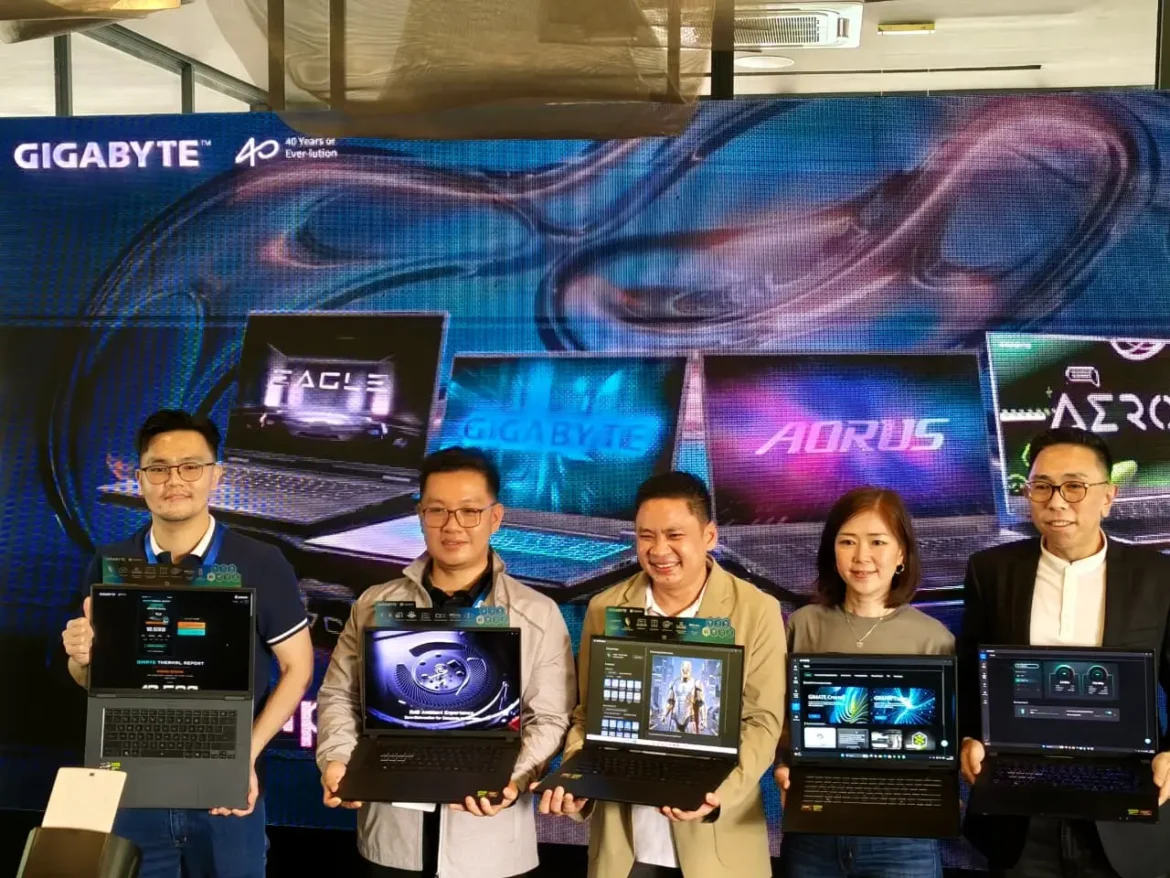
GIGABYTE Officially Enters the Indonesian Gaming Laptop Market with Four New Lineups Starting at Rp23 Million

by Pevita Pearce September 18, 2026
written by Pevita Pearce

Jakarta, September 18, 2026 – GIGABYTE has officially marked its aggressive expansion into the Indonesian high-performance computing market by launching four distinct laptop lineups tailored for gamers, creators, and everyday power users. Unveiled during a major product showcase in Jakarta, the comprehensive portfolio spans from ultra-premium gaming powerhouses to entry-level student-friendly configurations. By integrating cutting-edge AMD Ryzen processors, NVIDIA GeForce RTX graphics, and an advanced on-device artificial intelligence assistant known as GiMATE, the Taiwanese hardware giant aims to capture a significant share of the rapidly growing Southeast Asian gaming ecosystem.

The launch event underscored GIGABYTE’s strategic vision to bridge the gap between heavy mobile computing and localized AI efficiency. With local pricing stretching from approximately Rp23.38 million to nearly Rp72.89 million, the newly introduced series—comprising the flagship AORUS MASTER 16 Gen 2, the slim creator-focused AERO X16, the versatile GAMING A16, and the accessible EAGLE—is positioned to compete aggressively against established market leaders in the region.

Laptop Gaming GIGABYTE Resmi Hadir di Indonesia, Harga Mulai Rp23 Jutaan • Jagat Review

A Strategic Entry into the Indonesian Market

The introduction of GIGABYTE’s comprehensive laptop ecosystem arrives at a time when consumer demand for hybrid devices capable of handling both AAA gaming and complex content creation workflows is surging across Indonesia. Industry analysts note that Indonesian consumers are increasingly prioritizing thermal management, display fidelity, and built-in AI capabilities when investing in high-tier hardware. By deploying a multi-tiered strategy, GIGABYTE ensures that its hardware reaches diverse consumer segments, from professional esports competitors and digital artists to university students seeking reliable everyday machines.

Flagship Performance: AORUS MASTER 16 Gen 2

At the pinnacle of GIGABYTE’s new offerings sits the AORUS MASTER 16 Gen 2, engineered specifically for enthusiasts and professional gamers who demand uncompromised performance. The highest-tier configuration is spearheaded by the formidable AMD Ryzen 9 9955HX3D processor paired with an NVIDIA GeForce RTX 5080 Laptop GPU featuring 16GB of VRAM, supported by 32GB of high-speed system memory and a 1TB NVMe SSD. Alternative configurations featuring the AMD Ryzen 9 8940HX and NVIDIA GeForce RTX 5070 Ti 16GB are also slated for the local market, with retail prices set at Rp72.89 million and Rp52.73 million respectively.

To sustain peak performance under extreme workloads, the AORUS MASTER 16 Gen 2 incorporates GIGABYTE’s proprietary WINDFORCE INFINITY EX cooling architecture. This advanced thermal solution merges a large vapor chamber with asymmetric Frost Fan 2.0 technology, allowing the system to handle a sustained power delivery of up to 230W without thermal throttling. Visuals are anchored by a 16-inch 2.5K OLED panel featuring a 16:10 aspect ratio, a fluid 240Hz refresh rate, 100% DCI-P3 color gamut coverage, and a staggering 1,000,000:1 contrast ratio. Audio immersion is handled by a quad-speaker Dolby Atmos setup driven by Smart Amplifiers, all housed within a chassis distinguished by a 5-Degree Black finish, customizable RGB logos, and a per-key RGB backlit keyboard.

Laptop Gaming GIGABYTE Resmi Hadir di Indonesia, Harga Mulai Rp23 Jutaan • Jagat Review

Sleek Productivity: AERO X16

Targeting content creators, mobile professionals, and users who require high performance within a portable form factor, the GIGABYTE AERO X16 redefines thin-and-light computing. Measuring a mere 16.75 millimeters in thickness and tipping the scales at just 1.9 kilograms, the laptop houses a Ryzen AI 7 350 processor alongside graphics options scaling up to an NVIDIA GeForce RTX 5070 with 8GB of VRAM.

The AERO X16 features a 16-inch WQXGA display with a 16:10 aspect ratio and a 165Hz refresh rate, boasting an impressive 92 percent screen-to-body ratio. GIGABYTE claims the device can achieve up to 14 hours of battery life under optimal conditions, making it an ideal companion for field work. Aesthetically, the laptop sports a striking Moonlight White finish achieved through specialized anodizing and sandblasting processes, complemented by the ergonomic Golden Curve keyboard designed to reduce fatigue during prolonged typing sessions. In Indonesia, the AERO X16 is available in two variants: the RTX 5070 model with 16GB RAM and a 1TB SSD priced at Rp36.810.000, and the RTX 5060 configuration priced at Rp34.340.000.

Mainstream Versatility: GAMING A16

Positioned as a balanced all-rounder, the GIGABYTE GAMING A16 bridges the gap between high-end gaming capabilities and everyday multitasking utility. Driven by the AMD Ryzen 7 260 processor and equipped with graphics up to the NVIDIA GeForce RTX 5060 8GB, the laptop comes standard with 16GB of RAM and a 512GB SSD.

Laptop Gaming GIGABYTE Resmi Hadir di Indonesia, Harga Mulai Rp23 Jutaan • Jagat Review

The device features a 16-inch WUXGA display with a 16:10 aspect ratio and a 165Hz refresh rate. Its robust chassis measures 19.45 mm at its slimmest point and incorporates a 180-degree lay-flat hinge design. To optimize energy efficiency, GIGABYTE integrated its AI Power Gear III technology, which dynamically manages power distribution across gaming, creative applications, and daily administrative tasks. The GAMING A16 is retailed in Indonesia at Rp28.410.000 for the RTX 5060 variant, while the RTX 5050 version is priced at Rp26.910.000.

Accessible Entry: GIGABYTE EAGLE

For budget-conscious consumers entering the gaming laptop ecosystem for the first time, GIGABYTE introduces the EAGLE. Powered by an AMD Ryzen 5 7533HS processor and an NVIDIA GeForce RTX 4050 6GB GPU, alongside 16GB of RAM and 512GB of storage, the EAGLE delivers essential gaming and productivity performance at a competitive price point.

The laptop features a 16-inch WUXGA display with a 16:10 aspect ratio, a 165Hz refresh rate, and 100% sRGB color accuracy. Like its sibling models, it includes a 180-degree lay-flat hinge and a slim profile under 20 mm, ensuring high mobility for students and remote workers. The GIGABYTE EAGLE enters the Indonesian market with an official price tag of Rp23.380.000.

Laptop Gaming GIGABYTE Resmi Hadir di Indonesia, Harga Mulai Rp23 Jutaan • Jagat Review

GiMATE: On-Device AI Integration Across All Lineups

A defining characteristic of GIGABYTE’s 2026 laptop portfolio is the universal integration of GiMATE, a proprietary large language model (LLM) designed to function as an on-device AI assistant. Unlike cloud-dependent services, GiMATE processes commands locally, ensuring rapid response times and enhanced user privacy.

Through a convenient "Press and Speak" voice command interface, users can manage both hardware and software settings without navigating complex menus. GiMATE features dedicated modules such as AI Power for energy management, AI Performance for dynamic system tuning, and AI Cooling for thermal optimization. Furthermore, creative professionals can leverage GiMATE Creator for local AI image generation, while developers can utilize GiMATE Coder to generate, debug, and optimize programming code using natural language prompts.

Comprehensive Warranty and Launch Promotions

To reinforce consumer confidence in the Indonesian market, GIGABYTE is backing all laptop purchases with a standard two-year factory warranty operating concurrently with Accidental Damage Protection (ADP), safeguarding users against unexpected daily mishaps. Additionally, the company offers a global warranty service valid at authorized service centers worldwide, subject to product registration and valid proof of purchase.

Laptop Gaming GIGABYTE Resmi Hadir di Indonesia, Harga Mulai Rp23 Jutaan • Jagat Review

To celebrate the launch, GIGABYTE has announced targeted promotional campaigns. Customers who purchase the AORUS MASTER 16 Gen 2 and register their product before October 31, 2026, will receive a complimentary GIGABYTE OLED GO27Q24 monitor. Meanwhile, buyers of the AERO X16 will be granted a 12-month subscription to Adobe Express Premium. With these robust offerings, GIGABYTE’s new portfolio establishes a clear hierarchy designed to meet the evolving demands of the Indonesian digital landscape.

September 18, 2026 0 comment
0 FacebookTwitterPinterestEmail
Automotive

Geologist Discovers 10,000-Year-Old Giant Fossilized Tooth in California Riverbed

by Muslim September 18, 2026
written by Muslim

SAN MATEO, CALIFORNIA – A routine environmental survey in the rugged terrain of San Mateo County has resulted in a significant paleontological discovery. Brigid Lynch, a professional geomorphologist, unearthed a fossilized molar belonging to a Pacific mastodon, a massive prehistoric mammal that roamed North America during the Pleistocene epoch. The artifact, which initial estimates suggest is at least 10,000 years old, was found embedded in a riverbed, masquerading as an unremarkable rock until closer inspection revealed its biological origin.

The discovery occurred while Lynch was conducting field assessments for a habitat restoration project aimed at protecting the California red-legged frog, a species currently listed as threatened under the U.S. Endangered Species Act. The finding highlights the unexpected intersections between contemporary conservation efforts and the study of deep-time biological history.

The Chronology of Discovery

The sequence of events leading to the recovery of the fossil began during a standard site survey. As a geomorphologist tasked with restoring the riparian ecosystem, Lynch was navigating the creek bed when a peculiar shape caught her attention. In an environment dominated by sedimentary rocks and alluvial deposits, the object appeared at first glance to be a strangely weathered stone.

Upon closer physical examination, however, the texture, density, and distinct morphological features—specifically the complex ridges characteristic of proboscidean dentition—indicated that the object was organic in nature. Following the discovery, Lynch initiated standard reporting protocols, ensuring the site remained undisturbed while local experts were consulted. Subsequent analysis by paleontologists confirmed the object was indeed a molar from a Pacific mastodon (Mammut pacificus), an extinct relative of the modern elephant that inhabited the coastal regions of the Western United States.

Anatomical Significance of the Specimen

The fossilized molar is a remarkably well-preserved specimen, measuring approximately 23 centimeters (roughly 9 inches) in length. Paleontologists noted that both the crown and the root systems remain largely intact, a rarity for fossils found in high-energy stream environments where erosion and transport often degrade organic remains.

The Pacific mastodon is distinguished from the more widely known woolly mammoth by its dental morphology. While mammoths were primarily grazers with flat, ridged teeth adapted for grinding grasses, mastodons possessed cone-shaped, high-cusped molars designed for browsing on woody vegetation, leaves, and twigs. The presence of clear root canals and the preservation of the crown structure provide researchers with a high-fidelity window into the diet and health of the animal at the time of its death.

Data obtained from the tooth’s enamel could potentially yield isotopic signatures, allowing scientists to reconstruct the environmental conditions of San Mateo County during the terminal Pleistocene. By analyzing the carbon and oxygen isotopes trapped within the enamel, researchers can determine the types of vegetation the mastodon consumed and the climatic conditions of the region 10,000 years ago.

The Pleistocene Context in California

The Pacific mastodon was a staple of the Pleistocene megafauna that inhabited North America until roughly 10,000 to 11,000 years ago. During this period, the California landscape was characterized by a mosaic of grasslands and coniferous forests, providing an ideal habitat for these massive herbivores.

The extinction of the mastodon at the end of the last Ice Age remains a subject of intense scientific debate. Theories primarily center on a combination of climate change—specifically the rapid warming at the transition to the Holocene epoch—and the arrival of human hunters in the Americas. The discovery of this tooth in San Mateo County serves as a poignant reminder that the suburban landscapes of modern California were once dominated by colossal creatures that vanished in the blink of an evolutionary eye.

This find is not an isolated incident in the region. California’s geological history, particularly its alluvial fans and river systems, has frequently yielded remains of Pleistocene megafauna. However, the discovery of such a complete molar in a current, active stream bed is rare, as most fossils are typically recovered from asphalt seeps (like the La Brea Tar Pits) or deep sedimentary strata.

Expert Perspectives and Official Response

While local environmental agencies have yet to issue a formal press release regarding the future of the site, the paleontological community has expressed significant interest in the find. Experts in the field of quaternary science suggest that the discovery validates the importance of environmental impact surveys. Often viewed by developers as bureaucratic hurdles, these surveys have proven to be essential for the preservation of archaeological and paleontological heritage.

"Every time we step into the field to protect modern biodiversity, we are literally standing on top of the history of the planet," noted a regional researcher familiar with the site. "This discovery underscores why survey work is vital. Had this project not been initiated to protect the red-legged frog, this specimen might have remained buried, eventually eroding into dust or being washed away by seasonal flooding."

The specimen is expected to be transferred to a regional museum or university for permanent curation and further study. Its potential inclusion in a broader study of coastal mastodon populations could offer insights into how these populations moved along the Pacific coast during the fluctuating climate of the late Pleistocene.

Broader Implications and Scientific Value

The preservation of the molar has implications beyond mere curiosity. By identifying the exact strata in which the tooth was found, geologists can better date the surrounding sediments, which assists in mapping the geological evolution of the San Mateo creek systems.

Furthermore, the discovery provides a unique educational opportunity. The contrast between the fragile, threatened California red-legged frog and the massive, extinct mastodon serves as a powerful narrative for conservationists. It illustrates that ecosystems are fluid and that the species we protect today are merely the current inhabitants of a landscape that has undergone radical transformations.

For the scientific community, the primary focus now shifts to whether the site contains additional skeletal remains. While a single tooth is a significant find, it often suggests the presence of a larger deposit. Paleontologists may seek permits to conduct a controlled excavation of the surrounding riverbank to determine if a partial skeleton remains buried in the mud. Such a find would be a major event for California paleontology, potentially offering a more complete picture of the mastodon’s life and the specific ecological conditions of the region at the close of the last glacial period.

Future Preservation Efforts

As discussions continue regarding the future of the fossil, there is a consensus among local authorities that the site must be handled with sensitivity. The goal is to balance the ongoing habitat restoration for the red-legged frog with the need to extract potentially valuable paleontological data.

The project remains an example of how multidisciplinary teams—comprising biologists, geomorphologists, and paleontologists—can work in tandem. The integration of these fields is increasingly necessary as human development continues to encroach on previously undisturbed lands. By formalizing the reporting process for such discoveries, local government bodies in California have ensured that items of historical significance are not lost to private collection or accidental destruction.

In the coming months, the results of the initial isotope analysis and further stratigraphic testing will be published, providing the public and the scientific community with a clearer understanding of the mastodon that once roamed the hills of San Mateo. This artifact stands as a silent witness to a time when California was defined by the presence of giants, and its recovery ensures that this chapter of natural history will continue to inform our understanding of the earth’s past for generations to come.

As the scientific community awaits the detailed report on the molar, the discovery serves as a reminder of the hidden records preserved beneath our feet. Whether it is the restoration of a tiny frog’s habitat or the uncovering of a prehistoric titan, the efforts of field researchers continue to bridge the gap between our current world and the ancient history that shaped it. The San Mateo tooth is more than a fossil; it is a piece of a complex, long-standing puzzle that links the environmental stewardship of today with the natural legacy of the Pleistocene.

September 18, 2026 0 comment
0 FacebookTwitterPinterestEmail
Automotive

Essential Guide for First-Time Electric Motorcycle Buyers: Navigating the Transition to Sustainable Mobility

by Laily UPN September 18, 2026
written by Laily UPN

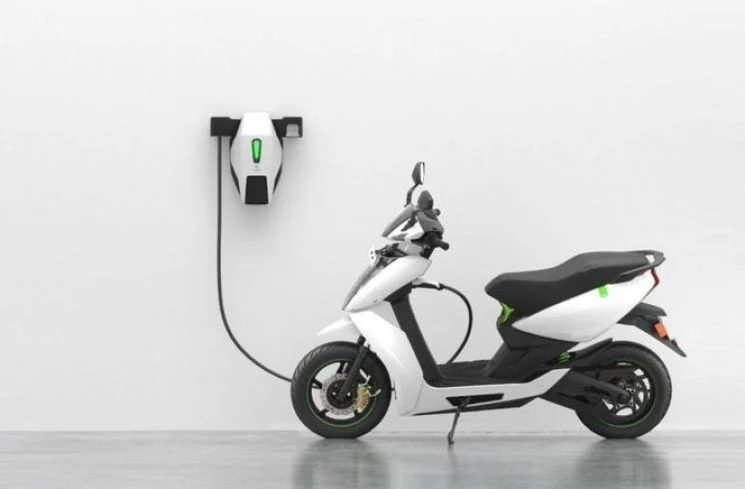
The rapid global transition toward sustainable transportation has firmly established the electric motorcycle as a cornerstone of modern urban mobility, yet for the first-time buyer, the shift from internal combustion engines (ICE) to electric powertrains necessitates a strategic approach to procurement. Choosing an electric vehicle (EV) is not merely a purchase of a mode of transport but an investment in a new ecosystem of energy consumption, maintenance standards, and driving dynamics. As market saturation increases and government incentives for electric vehicle adoption continue to evolve, potential owners must navigate a complex landscape of specifications, infrastructure readiness, and technological nuances to ensure their investment provides long-term value and operational reliability.

The Evolution of the Electric Two-Wheeler Market

The surge in electric motorcycle adoption is deeply rooted in global decarbonization targets and the rising cost of fossil fuels. Over the past decade, the industry has transitioned from experimental, low-range prototypes to sophisticated, high-performance machines that rival traditional 125cc and 150cc motorcycles. In Indonesia, for instance, the government’s commitment to achieving net-zero emissions by 2060 has catalyzed this growth, with the Ministry of Industry launching various subsidy programs and tax incentives to stimulate local production and consumer demand.

Chronologically, the market witnessed a significant shift between 2019 and 2023. Initially, the primary barrier was a lack of standardized battery technology and limited public charging infrastructure. However, the introduction of battery-swapping networks—a model pioneered by companies like Gogoro and rapidly adopted by local manufacturers—has fundamentally changed the landscape. Today, the focus has shifted from "range anxiety" to "operational integration," where the consumer’s primary concern is how the vehicle fits into their existing lifestyle and home electrical capacity.

Crucial Technical Considerations: Battery and Range

The battery pack is the singular most expensive and significant component of an electric motorcycle, often accounting for 30% to 50% of the total vehicle cost. For a first-time buyer, understanding the chemistry and management system of the battery is paramount. Lithium-ion (Li-ion) batteries are the industry standard, offering high energy density and longevity. However, buyers must distinguish between entry-level lead-acid batteries—which are cheaper but significantly heavier and shorter-lived—and modern Lithium Iron Phosphate (LiFePO4) or Nickel Manganese Cobalt (NMC) cells.

When evaluating range, it is essential to look beyond the manufacturer’s advertised figures. These estimates are often based on "ideal" conditions, such as constant low speeds on flat terrain. Real-world application, which involves stop-and-go traffic, varying rider weights, and ambient temperature fluctuations, can reduce effective range by 20% to 30%. Industry analysts suggest that buyers should calculate their maximum daily round-trip commute and add a 40% safety margin to account for traffic congestion, terrain elevation, and battery degradation over time.

Infrastructure Readiness and Charging Dynamics

The transition to an electric motorcycle requires a reevaluation of one’s home or workplace environment. Unlike the "refuel and go" nature of gasoline, electric vehicles require a deliberate approach to energy replenishment. Before finalizing a purchase, consumers must assess their electrical infrastructure. Charging at home requires a dedicated outlet that can handle sustained power draws without tripping circuit breakers.

For those residing in apartments or urban centers without dedicated parking, the availability of Battery Swapping Stations (BSS) becomes the deciding factor. The BSS model allows users to exchange a depleted battery for a fully charged one in under three minutes, effectively eliminating the wait time associated with plug-in charging. Data from major urban centers indicates that regions with dense BSS networks see a 60% higher adoption rate among commuters compared to regions relying solely on home-based plug-in infrastructure.

The Importance of Experiential Validation: The Test Ride

One of the most profound differences between an ICE vehicle and an electric motorcycle is the power delivery. Electric motors provide 100% of their torque from a standstill, resulting in instantaneous acceleration that can feel jarring to the uninitiated. This "linear" power delivery is a significant advantage in urban traffic but requires a period of adjustment for the rider.

During a test ride, potential buyers should focus on three specific metrics:

  1. Regenerative Braking Sensitivity: How the bike slows down when the throttle is released. A well-calibrated system can act as a secondary brake, extending the life of physical brake pads and increasing overall range.
  2. Ergonomic Geometry: Because electric motorcycles often house heavy battery packs in the center or bottom of the frame, the center of gravity differs from traditional bikes. Riders should test the maneuverability at low speeds.
  3. Control Interface: The digital dashboard should provide accurate, real-time data on state-of-charge (SoC) and remaining range. Misleading information in this area is a primary source of user dissatisfaction.

Safety, Technology, and Long-Term Value

Modern electric motorcycles are increasingly defined by their software as much as their hardware. High-end models now feature integrated GPS tracking, remote immobilization, and cloud-based diagnostics. These features are not merely convenience-oriented; they are essential for asset protection. Given the high value of the battery, these vehicles are attractive targets for theft. Features such as geofencing and anti-theft alarms, which alert the owner’s smartphone if the vehicle is moved without authorization, are becoming standard requirements for insurance eligibility.

Furthermore, the longevity of the vehicle is tied to the manufacturer’s software support. Buyers should prioritize brands that offer over-the-air (OTA) updates, which can optimize battery management and motor performance throughout the vehicle’s lifespan. This ensures that the motorcycle remains relevant and efficient, potentially increasing its resale value in the secondary market.

Economic and Environmental Implications: A Macro View

The shift toward electric motorcycles carries significant economic implications for the consumer. While the upfront cost of an electric motorcycle is often higher than a comparable gasoline-powered model, the total cost of ownership (TCO) is significantly lower over a five-year period. Maintenance costs are slashed by nearly 60% due to the absence of oil changes, spark plugs, air filters, and complex transmission systems.

From an environmental standpoint, the impact is measurable. Even when accounting for the carbon footprint of battery production and the electricity generation mix used for charging, electric motorcycles produce zero tailpipe emissions. In densely populated urban areas, this translates to a tangible improvement in localized air quality. Public health experts suggest that a mass transition to electric two-wheelers could reduce respiratory-related healthcare costs in major metropolitan hubs by a significant margin within the next decade.

Official Responses and Industry Outlook

Regulatory bodies and industry leaders remain optimistic about the growth trajectory of the electric motorcycle sector. In recent forums, representatives from the automotive industry have emphasized the need for standardized charging plugs and battery form factors. The lack of standardization remains a primary hurdle to universal adoption. "The industry is currently in its ‘VHS vs. Betamax’ phase," notes a senior policy analyst at an automotive research institute. "Once we reach a point where interoperability between different manufacturers becomes the norm, we expect to see a secondary surge in market penetration."

For the consumer, the guidance remains clear: research, test, and verify. Do not be swayed solely by the aesthetics of the motorcycle. Look at the warranty terms for the battery, the proximity of service centers, and the manufacturer’s commitment to long-term software support. As the technology matures, the electric motorcycle is poised to become the definitive standard for individual urban mobility, offering a cleaner, quieter, and more efficient way to navigate the modern city. By taking the time to understand these technical and logistical requirements today, the first-time buyer is not just purchasing a vehicle, but positioning themselves at the forefront of a necessary global transition.

September 18, 2026 0 comment
0 FacebookTwitterPinterestEmail
Sports

Timnas Voli Putri Indonesia ke Perempat Final Asian Games Aichi-Nagoya 2026

by Laily UPN September 18, 2026
written by Laily UPN

The Indonesian women’s national volleyball team has officially secured a berth in the quarterfinals of the 2026 Asian Games held in Aichi-Nagoya, Japan. Despite a hard-fought 1-3 defeat at the hands of the tournament hosts, Japan, in their second Pool A match at the Park Arena Komaki on Friday, September 18, 2026, the Srikandi Merah Putih successfully navigated the group stage to qualify as the runners-up. This achievement marks a significant milestone for Indonesian volleyball on the continental stage, underscoring the team’s progression against elite international competition.

Match Dynamics and Tactical Analysis

The encounter against Japan was characterized by high intensity and tactical maneuvering. Facing a formidable Japanese squad known for their disciplined defensive structure and rapid transition play, Indonesia entered the match with clear intent. The opening set saw the visitors maintain composure, briefly holding a 7-6 lead as they disrupted Japan’s rhythm with aggressive serving. However, the host nation—consistently ranked among the world’s top-tier teams—gradually adjusted their defensive formation, neutralizing Indonesia’s primary hitters. Japan ultimately claimed the first set 25-19.

The second set proved to be the most challenging for Indonesia, as the home crowd’s energy and Japan’s precise execution led to a 13-25 result. Despite the deficit, the Indonesian coaching staff maintained tactical discipline, urging the team to focus on block-defense rotations. This adjustment paid dividends in the third set. Indonesia staged a gritty comeback, showcasing improved coordination at the net and smarter shot placement to edge out Japan 25-23. The fourth set was a nail-biter, with both sides trading points until the final exchanges, where Japan narrowly escaped with a 25-23 win to close the match.

Group A Standings and Tournament Path

Following the completion of the preliminary round in Pool A, the final standings have set the stage for the knockout phase. Japan concludes the group stage as the undefeated leaders, having demonstrated superior consistency throughout their opening matches. Indonesia, having secured a vital win in their tournament opener prior to this match, finished in the runner-up position.

This qualification is particularly noteworthy given the depth of the field in Aichi-Nagoya 2026. The Asian Games volleyball tournament features a rigorous format that tests the endurance and tactical adaptability of competing nations. By advancing to the quarterfinals, Indonesia has effectively entered the elite top-eight of the continent, positioning themselves for a challenging road ahead in the elimination rounds.

Historical Context and Team Evolution

The progress of the Indonesian women’s national team in this year’s Asian Games reflects a multi-year development strategy implemented by the national federation. In previous editions of the Asian Games, Indonesia often struggled to bridge the gap between regional dominance and continental competitiveness. The current roster represents a blend of seasoned veterans and emerging talent who have benefited from increased exposure to international training camps and more frequent participation in Asian Volleyball Confederation (AVC) sanctioned tournaments.

The 2026 Aichi-Nagoya Asian Games serves as a critical benchmark for the team’s growth. Compared to their performance in the 2022 Hangzhou Asian Games, the team has shown marked improvement in serve-receive efficiency and defensive transition, areas that were historically identified as primary weaknesses. The ability to steal a set from a powerhouse like Japan in front of their home crowd is a testament to the mental fortitude and technical refinement instilled in the players over the last eighteen months.

Official Perspectives and Coaching Strategy

While official statements from the team management emphasized the need for immediate recovery following the grueling four-set match, the mood within the camp remains optimistic. Coaching staff noted that the objective for the group stage was achieved, and the focus has now shifted entirely to the quarterfinal preparation.

"The players executed the game plan with discipline during the third and fourth sets," a spokesperson for the Indonesian delegation stated following the match. "While the result did not go our way, the experience of competing against a team of Japan’s caliber provides invaluable data for our tactical review. Our goal was to reach the quarterfinals, and now that we are here, we are evaluating our options for the next opponent."

Analysts suggest that the team’s ability to keep the fourth set competitive—despite the physical toll of the match—highlights the effectiveness of their recent conditioning programs. The tactical flexibility shown in rotating middle blockers to counter Japan’s quick attacks indicates a sophisticated level of in-game coaching that was previously lacking in the national program.

Broader Implications for Indonesian Volleyball

The qualification for the quarterfinals holds significant implications for the future of the sport in Indonesia. Firstly, it ensures higher funding allocations and increased attention from the Indonesian Ministry of Youth and Sports. Success on a continental stage like the Asian Games acts as a catalyst for grassroots interest, potentially driving higher participation rates in the domestic league (Proliga).

Furthermore, the ranking points gained through this advancement will assist Indonesia in future international seedings. Maintaining a presence in the quarterfinals of major Asian events is essential for the nation to secure invitations to high-level invitational tournaments, which in turn provide the competitive environment necessary for sustained improvement.

The Road to the Podium

As the tournament moves into the single-elimination phase, the level of pressure will inevitably rise. The quarterfinal matchups are traditionally where the disparity in technical skill between the "Big Three" of Asian volleyball (Japan, China, and South Korea) and the rest of the field is most pronounced. However, the 2026 tournament has already seen unpredictable results, suggesting a closing gap between the traditional powers and the rising programs in Southeast Asia.

Indonesia will need to leverage the momentum from their group stage performance to remain competitive in the coming days. The focus will likely remain on maintaining consistency in side-out transitions and minimizing unforced errors, which proved to be the difference-maker in the narrow losses against Japan.

Analysis of Technical Metrics

A breakdown of the match statistics reveals several areas where Indonesia held its own. The team recorded a defensive dig efficiency of 42%, a significant improvement over their performance in the 2025 Asian Championship. Their ability to generate points from the service line remained a tactical weapon, forcing Japan’s libero to cover significant ground. Conversely, the team’s block-touch efficiency—while adequate—will need to be further optimized before the quarterfinals, as the upcoming opponents are expected to possess even greater attacking height and velocity.

The coaching staff is expected to review film from the match against Japan extensively to identify the specific rotations where points were leaked. Addressing these defensive lapses will be the primary objective during the closed training sessions ahead of the quarterfinal fixture.

Anticipation for the Knockout Stages

The atmosphere in Aichi-Nagoya remains electric as the tournament progresses. Fans and pundits alike have taken notice of the Indonesian team’s resilience. Whether or not Indonesia can progress beyond the quarterfinals depends on the upcoming draw, but the squad has already demonstrated that they are no longer merely participants in the continental scene—they are legitimate contenders capable of challenging established volleyball giants.

The journey to the 2026 Asian Games podium is far from over, but the progress made in Pool A has provided a sturdy foundation. With the support of the nation and a clear path forward, the Srikandi Merah Putih look toward the quarterfinals with a combination of focus, determination, and the hard-earned confidence of a team that has successfully stood its ground against the best in Asia. As the tournament enters its most critical phase, all eyes will be on how this squad adapts to the heightened stakes and physical demands of the final rounds.

September 18, 2026 0 comment
0 FacebookTwitterPinterestEmail
Sports

Bukan Marc Marquez, Valentino Rossi Doakan Jorge Martin Juara MotoGP 2026?

by Reynand Wu September 18, 2026
written by Reynand Wu

The high-stakes psychological and statistical warfare surrounding the premier class of motorcycle racing has taken a fascinating turn as the 2026 MotoGP season unfolds. Whispers, subtle gestures, and fierce historical rivalries continue to captivate the motorsport community, with recent paddock observations suggesting that Italian racing legend Valentino Rossi may be throwing his clandestine support behind Aprilia Racing’s Jorge Martin in the battle for the 2026 world championship. This intriguing narrative gained serious momentum following the dramatic events of the San Marino Grand Prix, where paddock cameras captured a telling reaction from the iconic nine-time world champion.

While official sportsmanship remains the public standard for all competitors and team personnel, the underlying history between Rossi and his historic rival, Marc Marquez, ensures that every micro-expression is heavily analyzed by fans, analysts, and media outlets alike. As the championship race tightens with every Grand Prix weekend, the prospect of history being rewritten at the summit of motorcycle racing adds an unprecedented layer of tension to an already thrilling season.

The Genesis of the Controversy at Misano

The speculation surrounding Valentino Rossi’s championship allegiances did not originate from a formal press conference or a candid interview, but rather from a fleeting moment of raw emotion captured on live television and subsequently amplified across official MotoGP social media channels. During the San Marino Grand Prix weekend, racing enthusiasts tuned in not only for the on-track action but also to observe the reactions of the sporting royalty present at the Misano World Circuit Marco Simoncelli.

In the early stages of the feature race, Jorge Martin executed a daring and decisive maneuver, successfully overtaking Ducati Lenovo’s Marc Marquez. Captured on video by the official MotoGP media team, Valentino Rossi—watching closely from the pit lane infrastructure—was visibly jubilant. The Italian icon’s reaction, marked by an unmistakable smile and an energetic nod of approval, spread like wildfire across digital platforms.

However, the race itself ultimately followed a different script. As the laps wound down, Marc Marquez demonstrated the tactical brilliance and relentless pace that have defined his illustrious career, managing his tires and machinery to claim the ultimate victory. Jorge Martin, despite a valiant effort, crossed the finish line in a respectable yet distant fifth place. Despite the race’s final outcome, the initial footage of Rossi celebrating Martin’s overtake had already ignited a massive debate across the global motorsport fandom.

The prominent Dutch motorsport publication GPBlog highlighted the intensity of the digital fallout, reporting that an online wave of discussion quickly engulfed social media columns. The publication noted that the visible enthusiasm shown by "The Doctor" toward a rider battling Marquez was interpreted by many as a clear indicator of his preferred outcome for the 2026 championship campaign.

The Historical Context: Chasing the Record Books

Bukan Marc Marquez, Valentino Rossi Doakan Jorge Martin Juara MotoGP 2026? : Okezone Sports

To fully understand why Valentino Rossi’s fleeting reaction at Misano generated such monumental intrigue, one must examine the delicate and historic mathematical equation governing the premier class. At the heart of this unspoken rivalry is the race for statistical supremacy in the motorcycle racing history books.

Currently, Valentino Rossi and Marc Marquez share a monumental statistical milestone in the premier class. Both riders have secured seven world championships in the premier 500cc/MotoGP category. This parity places them shoulder-to-shoulder as two of the most dominant forces the sport has ever witnessed. When expanding the scope to include all classes of Grand Prix motorcycle racing—spanning 125cc, 250cc, Moto3, Moto2, and the premier division—both Rossi and Marquez boast a stellar total of nine world championship titles.

This leaves both riders just one step away from touching the absolute pinnacle of Grand Prix history, currently occupied by legendary Italian rider Giacomo Agostini. Agostini stands alone as the most successful rider in the history of the sport, holding an extraordinary 15 total world titles across various displacements, with eight of those secured in the premier 500cc class.

For Valentino Rossi, who officially retired from full-time competition at the conclusion of the 2021 season, his legacy is firmly cemented. However, the prospect of Marc Marquez securing an eighth premier-class title—and a tenth world championship overall—carries profound implications for the sport’s historical hierarchy. Should Marquez eclipse Rossi’s premier-class tally, the Spaniard would stand alone as the most successful modern-era rider in the top tier of motorcycle racing, leaving Rossi behind in the annals of premier-class title counts.

Consequently, a championship victory by any competitive rider other than Marquez—such as Jorge Martin—would preserve Rossi’s prestigious statistical standing in the premier division for at least another year. While Rossi has consistently maintained a professional demeanor in public interactions, the tribal nature of racing loyalties suggests that the Italian legend would undoubtedly prefer his historic records remain untouched by his fiercest career rival.

The Evolution of Jorge Martin and Aprilia’s Title Campaign

Beyond the psychological warfare and historical implications, Jorge Martin’s position as a genuine title contender in the 2026 season represents a watershed moment in contemporary MotoGP. Following his high-profile switch to Aprilia Racing, Martin has demonstrated exceptional adaptability, proving that his championship-winning capabilities extend far beyond the Desmosedici machinery that defined the peak of his early career.

Aprilia’s engineering evolution has transformed the RS-GP into a ferocious competitor capable of challenging the dominant Ducati hegemony on diverse tracks across the global calendar. Martin’s aggressive riding style, combined with his relentless qualifying speed and racecraft maturity, has made him a fan favorite and a formidable adversary in the championship hunt.

Throughout the 2026 season, the championship battle has largely devolved into a high-speed chess match between the established dominance of Marc Marquez on factory Ducati machinery and the fierce, combative resurgence of Jorge Martin spearheading Aprilia’s championship ambitions. While Marquez brings unmatched race-day pragmatism and relentless grit, Martin offers explosive speed and an unpredictable tactical edge that keeps the factory Ducati garage on high alert.

Bukan Marc Marquez, Valentino Rossi Doakan Jorge Martin Juara MotoGP 2026? : Okezone Sports

Media Analysis and Paddock Repercussions

In the wake of the Misano Grand Prix, MotoGP analysts and journalists have dissected every frame of the viral video, attempting to gauge whether Rossi’s reaction was merely an expression of appreciation for a brilliant overtaking maneuver or a calculated psychological endorsement.

Independent paddock insiders suggest that while Rossi enjoys the spectacle of competitive racing, his long-standing, well-documented friction with Marc Marquez—dating back to the explosive controversies of the 2015 season—makes complete neutrality an impossibility. The historic animosity between Rossi and Marquez remains one of the most defining storylines of modern motorsport, casting a long shadow over every championship battle the Spaniard contests.

Even though Valentino Rossi now dedicates a significant portion of his professional energy to managing his VR46 Racing Team in the MotoGP paddock, his personal allegiances naturally gravitate toward riders who challenge the established hierarchy, particularly when those riders represent non-Ducati manufacturers or personal proteges trained within the VR46 Riders Academy ecosystem.

Broader Implications for the 2026 MotoGP Championship

As the 2026 season hurtles toward its grueling final stretch, the psychological dimensions of the championship fight are proving just as critical as raw horsepower and aerodynamic advancements. The psychological pressure on Marc Marquez to secure that historic eighth premier-class title is immense, with the global media constantly tracking every milestone, data point, and lap time.

Conversely, Jorge Martin operates with the liberating mindset of a challenger seeking to cement his legacy as a multi-factory champion. If Martin can successfully fend off the relentless charge of Marquez and navigate the remaining Grands Prix with tactical precision, he will not only secure a historic title for Aprilia Racing but also inadvertently preserve one of the most fiercely guarded statistical milestones in modern motorcycle racing history.

Ultimately, whether Valentino Rossi’s reaction in Misano was a deliberate endorsement or simply the spontaneous appreciation of a purist watching masterclass racing, it has successfully injected an extra dose of narrative drama into an already unforgettable 2026 MotoGP season. As the championship caravan packs up for the final international flyaway rounds, all eyes will remain fixed on the asphalt—and on the pit lane boxes—to see how this high-stakes historical drama ultimately resolves itself.

September 18, 2026 0 comment
0 FacebookTwitterPinterestEmail
Entertainment & Celebrity

Liburan Serba Praktis di Thailand: Merasakan Keindahan Phuket dan Krabi

by Ali Ikhwan September 18, 2026
written by Ali Ikhwan

Thailand telah lama mengukuhkan posisinya sebagai salah satu pusat pariwisata utama di Asia Tenggara, dengan kontribusi sektor pariwisata mencapai sekitar 12 hingga 18 persen dari Produk Domestik Bruto (PDB) nasional sebelum pandemi. Meskipun Bangkok tetap menjadi pintu gerbang utama bagi jutaan wisatawan internasional, tren perjalanan global pasca-pandemi menunjukkan pergeseran preferensi ke arah destinasi pesisir yang menawarkan ketenangan, koneksi dengan alam, dan pengalaman budaya yang lebih mendalam. Sebagai respons terhadap kebutuhan ini, Mister Aladin memperkenalkan paket tur Phuket Krabi Island Getaway 4 Hari 3 Malam, yang dirancang untuk menyederhanakan logistik perjalanan bagi wisatawan asal Indonesia.

Program ini, yang tersedia untuk periode keberangkatan mulai September 2026 hingga Juli 2027, ditawarkan dengan harga mulai dari Rp8.990.000. Paket ini dirancang untuk mencakup seluruh kebutuhan esensial wisatawan, mulai dari tiket pesawat pulang-pergi dari Jakarta, akomodasi hotel, transportasi lokal, konsumsi, tiket masuk destinasi wisata, hingga asuransi perjalanan dan layanan pemandu wisata profesional.

Evolusi Pariwisata Thailand dan Pergeseran ke Destinasi Pesisir

Selama satu dekade terakhir, otoritas pariwisata Thailand, Tourism Authority of Thailand (TAT), secara konsisten mempromosikan diversifikasi destinasi di luar Bangkok. Strategi ini bertujuan untuk mendistribusikan beban pariwisata lebih merata di seluruh wilayah, sekaligus meningkatkan masa tinggal wisatawan. Phuket, sebagai pulau terbesar di Thailand, dan Krabi, yang terkenal dengan formasi karst batugampingnya yang dramatis, telah menjadi pilar utama dalam strategi ini.

Phuket menawarkan perpaduan antara infrastruktur modern, kehidupan malam yang dinamis, dan situs warisan budaya seperti Kota Tua Phuket (Phuket Old Town) yang menampilkan arsitektur Sino-Portugis. Di sisi lain, Krabi menyajikan lanskap alam yang lebih tenang, dengan akses ke taman nasional laut, tebing-tebing tinggi yang populer di kalangan pemanjat tebing dunia, dan pantai-pantai tersembunyi yang aksesibel melalui perjalanan perahu tradisional.

Detail Logistik dan Efisiensi Perjalanan

Salah satu hambatan utama dalam perjalanan wisata ke Thailand bagi wisatawan mancanegara, khususnya dari Indonesia, adalah kerumitan dalam menyusun rencana perjalanan (itinerary) yang mencakup transportasi antar-kota dan logistik di lokasi. Paket tur yang ditawarkan oleh Mister Aladin mencoba mengatasi hambatan ini melalui pendekatan "all-inclusive".

Dalam dunia industri perjalanan, paket tur terpadu seperti ini memberikan kepastian biaya (cost certainty) bagi konsumen. Dengan mengintegrasikan biaya tiket pesawat, hotel, dan transportasi darat dalam satu paket, wisatawan terhindar dari fluktuasi harga tiket mendadak atau kendala bahasa saat melakukan pemesanan lokal. Penggunaan pemandu wisata profesional juga berfungsi sebagai jembatan kultural dan logistik, memastikan bahwa jadwal kunjungan ke berbagai titik wisata berjalan efisien sesuai dengan waktu yang dialokasikan selama empat hari perjalanan.

Analisis Destinasi: Phuket vs. Krabi

Phuket dan Krabi sering kali dibandingkan karena kedekatan geografisnya di pesisir Laut Andaman, namun keduanya menawarkan pengalaman yang kontras bagi wisatawan. Phuket adalah destinasi yang lebih "berorientasi pada fasilitas". Dengan bandara internasional yang sibuk, pusat perbelanjaan skala besar, dan jaringan hotel global yang luas, Phuket melayani wisatawan yang menginginkan kenyamanan maksimal.

Sebaliknya, Krabi cenderung lebih menarik bagi wisatawan yang mencari keindahan alam yang belum banyak tersentuh. Formasi karst di Railay Beach atau keheningan di Emerald Pool di distrik Khlong Thom memberikan kontras yang signifikan terhadap keramaian Phuket. Menggabungkan kedua lokasi dalam satu paket perjalanan selama 4 hari memberikan keseimbangan antara dinamika urban dan ketenangan alam, yang menjadi nilai jual utama bagi wisatawan yang memiliki keterbatasan waktu namun ingin mendapatkan pengalaman maksimal.

Proyeksi Pasar dan Dampak Ekonomi

Berdasarkan data dari Kementerian Pariwisata dan Ekonomi Kreatif Indonesia, Thailand tetap menjadi salah satu destinasi luar negeri favorit bagi wisatawan Indonesia. Kedekatan geografis, kemudahan visa, dan kesamaan preferensi kuliner menjadi faktor pendorong utama. Kehadiran paket tur yang terkurasi secara spesifik untuk periode 2026-2027 mencerminkan keyakinan pelaku industri bahwa permintaan terhadap perjalanan internasional akan terus tumbuh secara stabil.

Dari sisi ekonomi, inisiatif paket tur ini tidak hanya menguntungkan penyelenggara, tetapi juga berkontribusi pada rantai pasokan lokal di Thailand. Penggunaan pemandu wisata lokal, transportasi lokal, dan kemitraan dengan hotel-hotel di Phuket dan Krabi membantu mempertahankan ekosistem ekonomi pariwisata di kedua wilayah tersebut. Bagi wisatawan, efisiensi waktu yang didapat dari paket ini memungkinkan mereka untuk lebih fokus pada pengalaman destinasi daripada berurusan dengan detail administrasi perjalanan.

Aspek Keamanan dan Kenyamanan Wisatawan

Asuransi perjalanan yang disertakan dalam paket merupakan komponen krusial dalam lanskap pariwisata modern. Sejak pandemi COVID-19, kesadaran akan pentingnya perlindungan kesehatan dan ketidakpastian perjalanan meningkat tajam. Dengan menyertakan asuransi perjalanan sebagai standar, penyedia jasa wisata memberikan lapisan keamanan tambahan yang menjadi pertimbangan utama bagi wisatawan saat ini.

Selain itu, penyediaan bagasi yang sudah termasuk dalam paket merupakan keuntungan tersendiri bagi wisatawan yang sering kali terkendala oleh biaya tambahan bagasi (excess baggage) pada maskapai penerbangan bertarif rendah (low-cost carriers). Kepastian mengenai biaya tambahan ini memungkinkan wisatawan untuk merencanakan anggaran perjalanan dengan lebih akurat.

Perspektif Industri: Pentingnya Pemandu Wisata Profesional

Peran pemandu wisata dalam paket tur ini sering kali diremehkan, padahal mereka merupakan kunci utama dalam keberhasilan pengalaman wisata. Di wilayah seperti Phuket dan Krabi, pemandu wisata profesional tidak hanya bertugas sebagai penunjuk arah, tetapi juga sebagai edukator mengenai sejarah lokal, etika budaya, dan protokol lingkungan. Mengingat kedua destinasi tersebut sangat bergantung pada kelestarian ekosistem laut, edukasi mengenai pariwisata berkelanjutan yang disampaikan oleh pemandu wisata kepada para peserta tur menjadi langkah mitigasi penting terhadap dampak lingkungan dari pariwisata masal.

Kesimpulan dan Prospek Masa Depan

Paket tur Phuket Krabi Island Getaway 4 Hari 3 Malam yang ditawarkan oleh Mister Aladin merupakan representasi dari tren industri pariwisata saat ini: kemudahan, efisiensi, dan pengalaman yang terkurasi. Dengan memadukan dua destinasi ikonik Thailand dalam satu paket yang komprehensif, wisatawan diberikan akses yang lebih mudah untuk menikmati keindahan pesisir Laut Andaman tanpa harus mengorbankan kenyamanan.

Melihat rentang waktu penawaran hingga Juli 2027, terlihat adanya optimisme jangka panjang terhadap stabilitas sektor pariwisata di kawasan tersebut. Bagi calon wisatawan, perencanaan yang dilakukan jauh hari melalui paket terintegrasi ini dapat menjadi opsi strategis untuk mengamankan harga serta memastikan ketersediaan fasilitas di tengah meningkatnya minat kunjungan ke destinasi-destinasi unggulan Thailand. Seiring dengan terus berkembangnya kebutuhan wisatawan akan perjalanan yang praktis namun berkesan, model paket tur terpadu ini diperkirakan akan terus menjadi pilihan utama bagi pasar wisata Indonesia yang menginginkan efektivitas perjalanan ke luar negeri.

September 18, 2026 0 comment
0 FacebookTwitterPinterestEmail
Newer Posts
Older Posts

Recent Posts

  • Levi’s and ROSÉ Unveil Exclusive Denim Capsule Collection Celebrating Individuality and Personal Expression Across Asia-Pacific
  • Teman Lagi Sedih? Kalimat Ini Bikin Mereka Merasa Nyaman dan Didengar Menurut Psikolog
  • Silence Speaks Volumes: Coordinating Minister Rizal Ramli Dodges Inquiries on the Historic Dissolution of Pertamina Energy Trading Limited
  • Mau Gaspol Saat Hyrox? Ini 8 Asupan yang Bisa Jadi Bahan Bakar
  • Pemerintah Buy Back SUN Mencapai Rp100 M

Recent Comments

No comments to show.
  • Facebook
  • Twitter

@2021 - All Right Reserved. Designed and Developed by PenciDesign


Back To Top
Dara News Media
  • Home
  • About Us
  • Contact Us
  • Cookies Policy
  • Disclaimer
  • DMCA
  • Privacy Policy
  • Terms and Conditions

We are using cookies to give you the best experience on our website.

You can find out more about which cookies we are using or switch them off in .

Dara News Media
Powered by  GDPR Cookie Compliance
Privacy Overview

This website uses cookies so that we can provide you with the best user experience possible. Cookie information is stored in your browser and performs functions such as recognising you when you return to our website and helping our team to understand which sections of the website you find most interesting and useful.

Strictly Necessary Cookies

Strictly Necessary Cookie should be enabled at all times so that we can save your preferences for cookie settings.