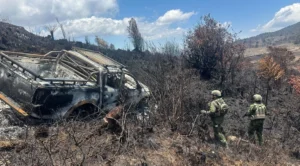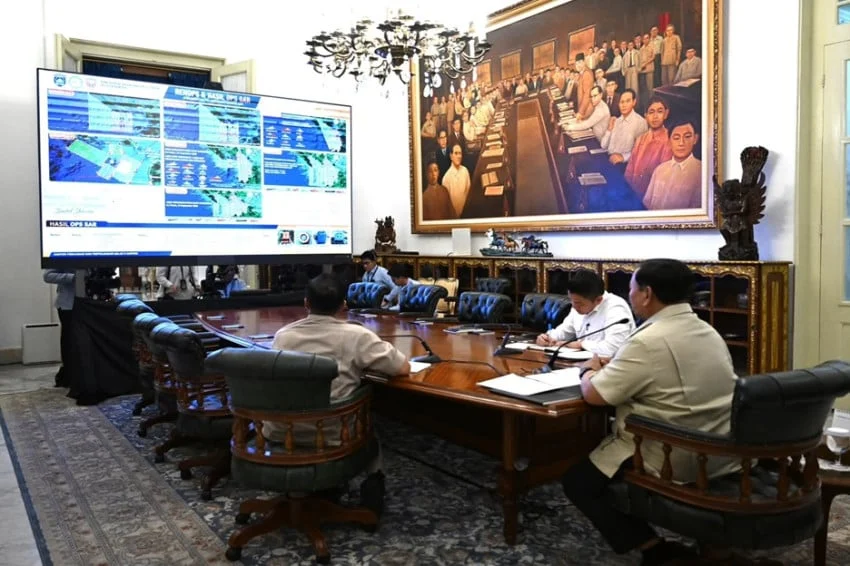
JAKARTA — In a decisive move signaling a zero-tolerance policy toward environmental crimes, Indonesian President Prabowo Subianto has issued a stern warning against corporations proven to have intentionally caused forest and land fires, commonly known in Indonesia as karhutla. Speaking during a high-stakes Cabinet Meeting at the State Palace in Jakarta, the head of state emphasized that his administration will not grant any leniency to entities that recklessly endanger public health, the environment, and the nation’s ecological security for short-term commercial gains.
The presidential directive underscores a growing shift in national policy toward absolute corporate accountability. President Prabowo explicitly stated that beyond criminal prosecution, the government will ruthlessly pursue administrative penalties, chief among them the immediate revocation of business licenses for implicated corporate entities. This hardline stance marks a pivotal escalation in Indonesia’s ongoing battle against seasonal environmental degradation, particularly in regions historically prone to deliberate land-clearing practices.
Cabinet Meeting Focuses on Multiple National Emergencies
The unequivocal statement was delivered during a comprehensive Limited Cabinet Meeting (Rapat Terbatas) chaired by President Prabowo at the State Palace. While the primary focus of the session centered on the escalating threats and management of forest and land fires, the high-level meeting also addressed several other critical national crises. These included disaster mitigation efforts following the recent earthquake in East Nusa Tenggara (NTT), the ongoing search and rescue operations concerning the Virgo ship accident, and the mysterious disappearance of a journalist whose contact was lost under active investigation.
However, the discourse surrounding environmental security dominated the agenda. President Prabowo underscored that forest and land fires are no longer viewed merely as recurring natural disasters exacerbated by weather anomalies, but rather as calculated criminal actions perpetrated in many instances by commercial actors seeking cheap land-clearing methods. By addressing the crisis at the highest executive level, the administration aims to synchronize central and regional law enforcement agencies, compelling them to bypass bureaucratic delays and implement immediate punitive measures.
The Imperative of Deterrence and Immediate License Revocation
A cornerstone of President Prabowo’s address was the absolute necessity of establishing robust legal and administrative deterrence. The President noted that lesser penalties, such as administrative fines that have historically been absorbed by large conglomerates as mere operational costs, are entirely insufficient. To break the cycle of recurring annual smoke haze and massive carbon emissions, the state must impose the ultimate economic and legal sanctions.
"There will be no compromise for those who deliberately destroy our environment," President Prabowo asserted during the session. He directed relevant ministries and law enforcement bodies to act swiftly, instructing that the revocation of operational permits and business licenses for guilty corporations must be executed without hesitation or procedural procrastination. By cutting off the legal right of errant corporations to operate, the administration hopes to send an unmistakable signal to the broader agribusiness and forestry sectors that ecological destruction carries an existential business risk.
Escalating Legal Action: 95 Corporations Under Investigation
The President’s uncompromising rhetoric aligns closely with escalating data from law enforcement and environmental protection agencies regarding corporate culpability in recent fire incidents. According to recent institutional updates, approximately 95 corporations are currently navigating various stages of rigorous legal scrutiny, including active investigation and formal judicial inquiries by the National Police and the Ministry of Environment and Forestry.
These investigations span several key provinces notorious for high concentrations of palm oil plantations and industrial timber estates, predominantly across Sumatra and Kalimantan. Investigators are utilizing advanced satellite mapping, thermal imaging, and forensic soil analysis to determine whether fires originated within corporate concessions and whether they were ignited intentionally to clear biomass. The transition of nearly a hundred corporate entities into active judicial pipelines highlights a structural shift from passive monitoring to aggressive prosecutorial action.
Historical Context and the Chronology of Karhutla in Indonesia
To fully understand the gravity of President Prabowo’s recent directive, it is essential to examine the historical trajectory of forest and land fires in Indonesia. For decades, the Southeast Asian archipelago has grappled with seasonal karhutla, which peaks during prolonged dry seasons, often intensified by El Niño weather patterns. The resulting transboundary haze has historically strained diplomatic relations with neighboring countries such as Malaysia and Singapore, while inflicting severe respiratory ailments on millions of citizens domestically.
Historically, slash-and-burn techniques have been deployed as a low-cost method for land preparation, primarily by smallholders but systematically utilized or contracted by rogue elements within larger commercial supply chains. The watershed moment for national policy reform occurred during the catastrophic fires of 2015, which burned an estimated 2.6 million hectares of land and peatlands, resulting in massive economic losses estimated in tens of billions of dollars and catastrophic greenhouse gas emissions.
In the years following the 2015 disaster, successive Indonesian administrations implemented tighter preventative measures, moratoriums on new palm oil permits, and enhanced satellite-based hotspot monitoring through the Meteorology, Climatology, and Geophysical Agency (BMKG) and the Ministry of Environment and Forestry (KLHK). Despite these measures, enforcement bottlenecks, jurisdictional overlaps between central and regional governments, and corporate evasion tactics continued to frustrate complete eradication efforts. President Prabowo’s administration has now inherited this complex landscape, choosing to pivot from preventative advisories to aggressive, direct judicial retribution.
Stakeholder Reactions and Environmental Advocacy Responses
The President’s hardline stance has drawn widespread reactions from civil society organizations, environmental watchdogs, and industry associations alike. Environmental NGOs, including Greenpeace Indonesia and WALHI (Indonesian Forum for the Environment), have cautiously welcomed the rhetoric while emphasizing that rigorous follow-through remains the true test of the administration’s resolve.
Civil society representatives argue that previous administrations have frequently announced sweeping threats against corporate burners, only to see cases stall or dissolve in protracted civil litigations and administrative appeals. Consequently, advocacy groups are urging the government to ensure absolute transparency in the publication of corporate names currently undergoing investigation, alongside public accountability for the judges and prosecutors handling the cases. Furthermore, environmental groups emphasize that license revocation must be accompanied by mandatory land restoration orders, forcing corporations to finance the ecological rehabilitation of damaged peatlands and forests rather than walking away scot-free.
Conversely, representatives from mainstream agricultural and forestry business associations, such as the Indonesian Palm Oil Association (GAPKI), have maintained a nuanced position. Industry stakeholders generally reiterate their commitment to zero-burning policies, asserting that major compliant members adhere strictly to international sustainability certifications such as the Roundtable on Sustainable Palm Oil (RSPO) and the Indonesian Sustainable Palm Oil (ISPO) standards. However, industry leaders acknowledge that rogue operators or independent third-party suppliers operating within complex supply chains often tarnish the broader reputation of the sector, signaling that compliant corporations may not necessarily oppose the penalization of bad actors who undercut legitimate market competition.
Socio-Economic and Ecological Implications of the Crackdown
The enforcement of President Prabowo’s directive carries profound socio-economic and ecological implications for Indonesia’s long-term development trajectory. From an environmental perspective, eliminating intentional forest fires is critical to Indonesia fulfilling its enhanced Nationally Determined Contributions (NDCs) under the Paris Agreement. Peatland restoration and the prevention of deforestation are paramount for curbing national carbon emissions, given that burning carbon-rich peat deposits releases immense quantities of greenhouse gases into the atmosphere.
Economically, a strict regulatory environment signals to international markets and global investors that Indonesian commodities are transitioning toward verified sustainability. As international trade regulations—most notably the European Union Deforestation Regulation (EUDR)—impose stringent compliance frameworks on imported agricultural goods, the Indonesian government’s aggressive stance against errant corporations helps safeguard the global market access of legitimate national exports. By systematically weeding out lawbreaking corporations, Indonesia positions itself as a credible, environmentally responsible producer on the global stage.
However, analysts also warn of potential operational challenges. Effective implementation will require seamless coordination between regional law enforcement, the judiciary, regional forestry offices, and anti-corruption watchdogs to prevent bribery and administrative corruption from subverting the execution of license revocations and criminal indictments. The legal apparatus must ensure that evidence gathered against corporate entities is watertight, withstanding aggressive challenges in commercial and administrative courts.
Outlook and Future Policy Trajectory
As the legal proceedings against the 95 investigated corporations progress, all eyes remain on the executive branch to ensure that President Prabowo’s directives translate into tangible courtroom victories and visible administrative sanctions. The administration’s willingness to bypass traditional bureaucratic leniency represents a defining test of state authority over corporate power in modern Indonesia.
Moving forward, the success of this campaign will be measured not merely by the number of investigations initiated, but by the final execution of license revocations, the successful prosecution of corporate executives under environmental laws, and the visible reduction of fire hotspots during upcoming dry seasons. President Prabowo’s unwavering stance has set a remarkably high benchmark for environmental governance, signaling that the era of impunity for corporate ecological destroyers in Indonesia has reached its definitive end.