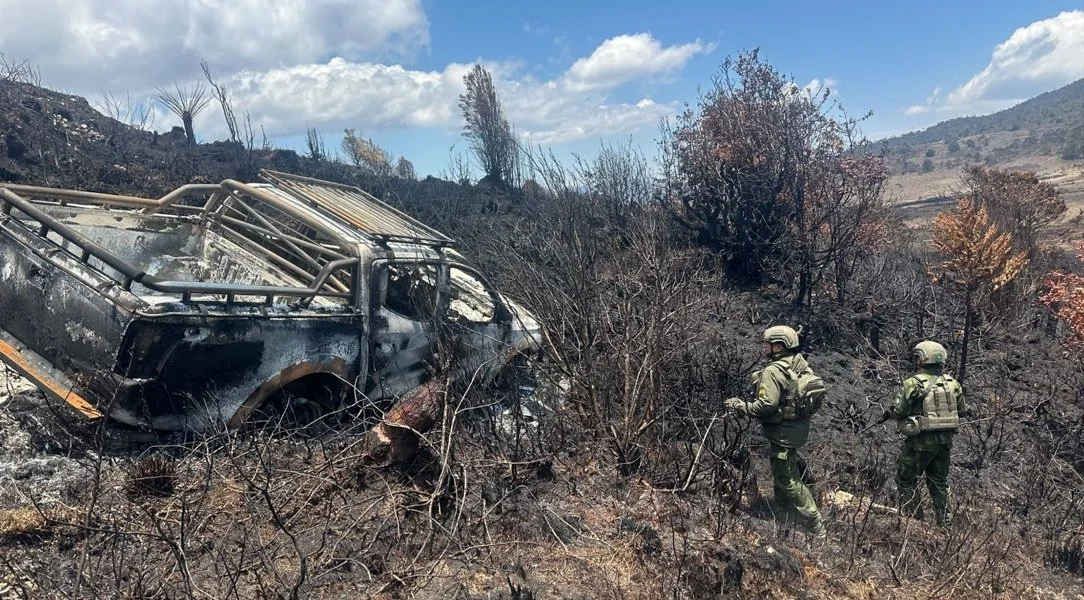
The security situation in the Papua region has once again come under intense scrutiny following the brutal killing of a travel driver, identified as 41-year-old Aris Sanda. The victim was reportedly shot and his vehicle subsequently incinerated in the Habema area, a region that has witnessed recurring tensions between local security forces and the Armed Criminal Group (KKB). This incident marks a grim escalation in the ongoing conflict, prompting a swift and rigorous response from the Satgas Operasi Damai Cartenz, the joint security task force responsible for maintaining stability in Papua.
During the recovery of the victim’s remains, investigators made a critical discovery that points toward the involvement of organized insurgent elements. According to the Head of Public Relations for the Operation, Senior Commissioner Yusuf Sutejo, the field team successfully recovered a 5.56-millimeter long-barrel firearm casing at the crime scene. This specific caliber is frequently associated with the military-grade weaponry utilized by various KKB factions operating within the rugged terrain of the highlands. Along with the casing, search teams located a bag containing the victim’s personal identification, confirming the identity of the deceased and establishing a foundational piece of evidence for the ongoing forensic inquiry.
Chronology of the Investigation
The incident was reported on September 17, 2026, triggering an immediate deployment of the Satgas Operasi Damai Cartenz to the Habema sector. Upon arrival, the security forces were tasked with two primary objectives: securing the area for forensic analysis and ensuring the safe recovery of the victim’s body. The operation involved a meticulous site survey, or Tindakan Pertama di Tempat Kejadian Perkara (TPTKP), which serves as the bedrock for the subsequent criminal investigation.
The recovery phase was conducted under high-security protocols, given the historically hostile nature of the region. By the afternoon of the discovery, Commissioner Yusuf Sutejo confirmed that investigators had shifted their focus toward identifying the specific perpetrators. The presence of the 5.56mm casing is particularly significant, as it suggests the attackers were equipped with rifles capable of long-range engagement, a hallmark of recent KKB operations in Ndugama and surrounding districts.
Intelligence Analysis and Potential Perpetrators
While the investigation remains in its nascent stages, intelligence reports are already focusing on the potential involvement of the KKB Kodap III Ndugama. This faction is known for its mobility and its tendency to target non-combatants and infrastructure to draw out security forces. Commissioner Yusuf Sutejo stated that while there are strong indicators pointing toward the Kodap III group’s presence in the immediate vicinity at the time of the shooting, the authorities are exercising caution.
"We have received information linking this act of violence to the Kodap III Ndugama group, but we are currently in the process of rigorous verification," Sutejo explained. "We cannot afford to make premature assumptions. Our goal is to synthesize the physical evidence, such as the ammunition casing, with ground intelligence to build an irrefutable case against the individuals responsible."
The methodology employed—shooting the driver before burning the vehicle—is a tactical signature that authorities have observed in previous incidents. These acts are often intended to disrupt transportation logistics and instill fear among civilian workers and travel operators who provide essential links between the isolated mountain communities and the coastal hubs.
Official Response and Security Policy
The Chief of the 2026 Damai Cartenz Operation, Inspector General Faizal Ramadhani, emphasized that the protection of civilian life remains the paramount mandate of the task force. In a formal statement, he underscored the necessity of a measured, professional response to ensure that the pursuit of justice does not inadvertently jeopardize local populations.
"The Satgas Operasi Damai Cartenz moved with urgency upon receiving reports of violence in the Habema area," Inspector General Ramadhani noted. "Our actions are governed by strict operational standards: search, scene processing, evidence preservation, and respectful recovery of the victim. We are fully committed to bringing the perpetrators to justice through a process that is both transparent and highly effective."
The Indonesian government’s strategy in Papua has increasingly leaned toward a "soft-approach" combined with targeted enforcement. This involves community engagement and humanitarian aid alongside the security operations led by the police and the military. However, incidents like the killing of Aris Sanda highlight the persistent challenges in implementing this strategy, particularly in regions where the KKB maintains a persistent, albeit fluid, presence.
Contextual Background: The Conflict in the Highlands
The conflict in Papua is deeply rooted in a complex interplay of political, historical, and socio-economic factors. The KKB, often referred to as the Free Papua Organization (OPM) armed wing, seeks independence for the region, citing grievances regarding central government policies, resource exploitation, and human rights. Over the past decade, the highlands—including the regencies of Nduga, Puncak, and Intan Jaya—have become the epicenter of frequent armed clashes.
The targeting of transport workers is not unprecedented. In recent years, civilian pilots, construction workers, and drivers have been repeatedly targeted in an effort to isolate these districts. By targeting the transit infrastructure, the KKB aims to complicate the movement of government personnel and supplies, effectively creating "no-go zones" for government-affiliated entities.
Supporting data from various security analysts suggests that the KKB’s tactical evolution toward more sophisticated weaponry, such as the rifles indicated by the 5.56mm casing found at the scene, has forced the police and military to reassess their own defensive and offensive postures. The use of standard-issue military caliber ammunition raises questions about the supply chains currently sustaining these insurgent groups, a matter that remains a top priority for intelligence agencies.
Implications for Regional Stability
The death of Aris Sanda carries significant implications for the safety of the civilian labor force in Papua. If the security environment deteriorates further, it may lead to the suspension of critical transport routes, causing shortages of food, medicine, and fuel for residents in the highlands. This, in turn, exacerbates the suffering of the local population and complicates the delivery of government services.
From an economic perspective, the targeting of travel services creates a "chilling effect" on the private sector. If drivers refuse to operate in these zones due to safety concerns, the socio-economic isolation of the interior will deepen, potentially creating a feedback loop of poverty and social unrest that the KKB can exploit for recruitment and propaganda purposes.
Furthermore, the incident places immense pressure on the Indonesian National Police to demonstrate control. As the investigation progresses, the success of the Satgas Operasi Damai Cartenz in apprehending the suspects will serve as a bellwether for the effectiveness of current security policies in the region. Failure to secure the area or to capture those responsible could lead to a loss of public confidence in the state’s ability to provide security.
Looking Ahead
The investigation into the death of Aris Sanda will likely proceed along three primary tracks: forensic analysis of the recovered evidence, the interrogation of potential witnesses or informants, and the deployment of specialized tactical units to track the movement of the suspected KKB cell.
As the authorities continue their work, the incident serves as a somber reminder of the human cost of the ongoing violence in Papua. For the family of Aris Sanda, the pursuit of justice is a matter of profound urgency. For the state, the challenge lies in balancing the need for security with the long-term goal of fostering peace and development in a region that has known far too much conflict.
The coming weeks will be critical. The coordination between local law enforcement, regional administrators, and the central government will determine whether this incident remains an isolated tragedy or serves as a catalyst for a more comprehensive security overhaul. For now, the people of the region wait for answers, hoping that the recovery of the evidence in Habema leads to a decisive conclusion in the search for the perpetrators. The dedication shown by the Damai Cartenz personnel in navigating the volatile landscape is a testament to the risks faced by those tasked with maintaining order in one of Indonesia’s most challenging environments.