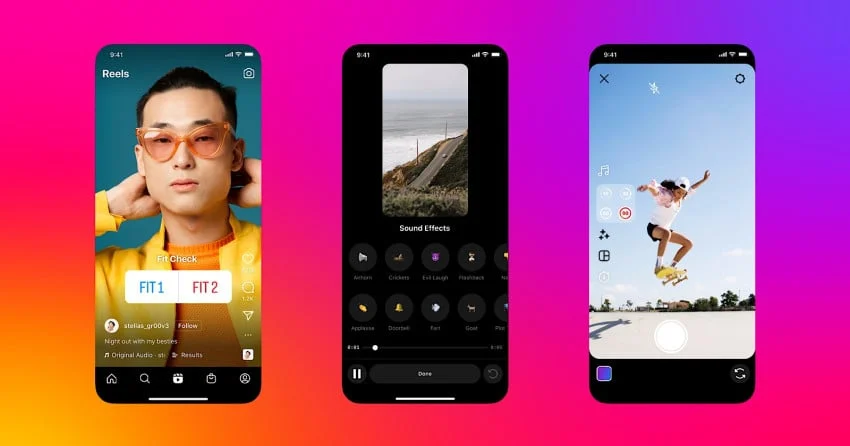
Instagram has officially embarked on a strategic pivot toward long-form content, launching a pilot program that allows select creators to upload videos lasting up to 90 minutes. This development, which commenced on Monday, October 26, 2026, marks a significant departure from the platform’s historical roots as a short-form photo and video-sharing application. By testing extended video capabilities, Meta-owned Instagram is directly positioning itself to capture a larger share of the "watch time" economy currently dominated by industry giants like YouTube, Netflix, and Disney+.
The Strategic Shift: A New Era for Instagram
For over a decade, Instagram’s value proposition centered on ephemeral stories, high-quality photography, and, more recently, the rapid-fire consumption of Reels. However, the internal testing of 90-minute uploads signals that Meta is ready to aggressively compete for the long-form audience. This move follows years of data suggesting that users are increasingly turning to mobile platforms not just for entertainment snippets, but for deep-dive content, documentaries, tutorials, and extended vlogs.
The pilot program, currently restricted to a cohort of creators in the United States, represents the most significant expansion of Instagram’s video infrastructure since the introduction of IGTV—an earlier, largely unsuccessful attempt at long-form video. Unlike IGTV, which operated as a standalone app, the new initiative integrates seamlessly into the core Instagram experience, suggesting a more cohesive product strategy.
Chronology of the Long-Form Pivot
To understand the weight of this decision, one must look at the timeline of Instagram’s evolution:
- 2010-2015: Instagram establishes itself as a photo-centric social network.
- 2018: The company launches IGTV, allowing for longer video uploads, but fails to gain widespread adoption due to user friction.
- 2020: The launch of Reels acts as a direct counter-offensive to the meteoric rise of TikTok.
- 2023-2025: Instagram observes a shift in user behavior where high-quality, long-form content creators find success on YouTube, often using Instagram only for "teasers."
- October 26, 2026: Instagram initiates testing of 90-minute video uploads with select U.S. creators to keep audiences within its ecosystem for longer durations.
The Monetization Dilemma: A Stark Contrast to YouTube
While the technological capability for longer videos is a major milestone, the financial framework remains a point of contention. YouTube has long operated on a robust revenue-sharing model, offering creators 55% of the advertising revenue generated from their content. This model has served as the bedrock of the creator economy, attracting millions of professionals who view YouTube as a primary income source.
In contrast, Instagram has not yet finalized a revenue-sharing model for this new long-form venture. According to official statements, the company is currently "funding" the initial pilot content directly. By paying creators a flat fee or providing developmental grants, Instagram is essentially subsidizing the transition while it calculates the feasibility of a long-term, scalable ad-share program.
This lack of a clear, permanent monetization structure places Instagram at a disadvantage. Creators who have spent years building infrastructure on YouTube—investing in editors, sound engineers, and production equipment based on the promise of recurring ad-share revenue—are naturally hesitant to migrate their content to a platform that currently offers only non-guaranteed, ad-hoc incentives.
Official Stances and Corporate Strategy
Tessa Lyons, Vice President of Product at Instagram, has sought to manage expectations regarding the platform’s approach to creator relationships. In a briefing regarding the pilot, Lyons clarified that the platform is pursuing a flexible strategy rather than an exclusive one.
"We are working through several different agreements with our initial group of creators," Lyons stated. "There is no exclusivity clause here, which differentiates our approach from the rigid contracts seen in the podcasting space or on platforms like Netflix."
Lyons emphasized that the platform is attempting to bridge the gap for creators who may not have existing brand deals. For those who already have established partnerships, Instagram allows them to bring their existing sponsor placements and branded content directly into the new long-form format. For those without such infrastructure, Instagram is stepping in as an intermediary to help facilitate brand deals.
When pressed on the lack of a formal revenue-sharing plan, a company spokesperson reiterated that while the platform is funding creators directly, it is "too early to share a long-term monetization model." The company is currently exploring "performance-based incentives" and pathways for creators to earn directly from their fan bases, rather than relying solely on traditional ad-revenue splits.
Broader Implications for the Creator Economy
The attempt to capture long-form traffic is a calculated risk. For years, social media platforms have been engaged in a "war for attention." Netflix and Disney+ have moved into ad-supported tiers to capture the casual viewer, while YouTube has doubled down on its Shorts format to compete with TikTok. Now, Instagram is attempting to occupy the middle ground.
1. The "Watch Time" Metric: Success for Instagram will not be measured by likes or shares, but by the "average view duration." If Instagram can successfully transition from a platform where users spend 15 seconds on a Reel to one where they spend 30 minutes on a video essay, it significantly increases the inventory available for advertisers.
2. Impact on YouTube: YouTube’s dominance is built on two pillars: its massive, searchable content library and its sophisticated creator payment system. If Instagram manages to solve the monetization hurdle, it could pose a credible threat to YouTube’s position as the primary home for long-form creators. However, without a transparent and high-payout revenue-sharing model, YouTube remains the safer financial bet for creators.
3. The Role of Advertisers: For brands, the introduction of 90-minute content offers a new, premium space for placement. Advertisers often prefer long-form content because it allows for more sophisticated storytelling and higher brand recall compared to the fleeting nature of short-form vertical video. If Instagram can prove that these long videos lead to higher conversion rates, it will attract larger advertising budgets.
Analysis: Can Instagram Succeed Where IGTV Failed?
The failure of IGTV in the late 2010s was largely attributed to a fragmented user experience and a lack of creator incentive. Instagram’s new approach appears to be learning from those mistakes. By keeping the long-form content within the main feed and focusing on the existing creator ecosystem, the company is reducing the friction that previously hindered growth.
However, the lack of a standardized monetization model remains the "Achilles’ heel" of this project. In the current creator economy, professional content production is expensive. Unless Instagram can provide a predictable, sustainable income stream that rivals the YouTube Partner Program, it may struggle to convince top-tier creators to produce high-quality, long-form content exclusively or primarily for its platform.
Furthermore, the shift in user intent is significant. Instagram users are conditioned to scroll and discover; they are not inherently conditioned to "settle in" for an hour-long documentary. The platform must now prove that its algorithmic recommendations can effectively serve long-form content to users who may be looking for quick entertainment.
Future Outlook
As the pilot program continues, the industry will be watching to see how the user interface evolves to handle long-form interaction. Features such as "picture-in-picture" mode, improved video scrubbing (the ability to skip forward and backward), and enhanced subtitle support will be critical to the success of this initiative.
For now, the project remains in its infancy. The decision to fund creators directly suggests that Meta is willing to absorb the initial costs to build a library of content that will eventually attract both viewers and advertisers. Whether this becomes a permanent pillar of the Instagram experience or another experimental chapter in the platform’s history will likely be determined by the engagement metrics observed over the next several months.
Ultimately, the move to 90-minute videos is an admission by Meta that the boundaries between social media and streaming entertainment have blurred beyond recognition. In the race to become the "all-in-one" platform for digital media, Instagram is betting that if it can provide the reach, the tools, and eventually the revenue, the creators will follow. For the time being, however, the creator community remains in a state of cautious observation, waiting for the platform to provide the financial certainty required to make the jump.