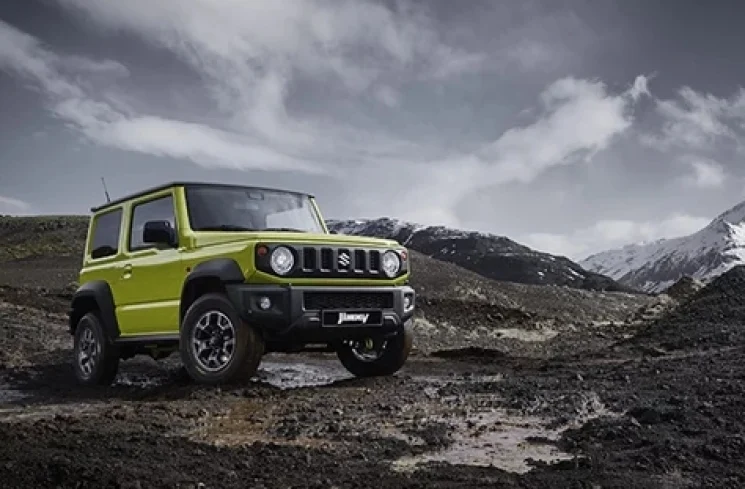
In a strategic decision that defies the prevailing industry trend toward widespread electrification, Suzuki has officially confirmed that it will not pursue the development of a battery-electric version of its iconic Jimny off-road vehicle. This stance, articulated by the company’s top leadership, underscores a commitment to preserving the mechanical integrity and authentic off-road heritage of a model that has become synonymous with rugged, simplistic utility. While global automotive manufacturers are rushing to align their portfolios with stringent carbon emission regulations, Suzuki has chosen to protect the Jimny’s identity, viewing the integration of electric powertrains as a fundamental compromise of the vehicle’s core engineering philosophy.
The decision arrives at a pivotal moment in the global automotive landscape, where the transition to zero-emission vehicles is being mandated by governments across Europe, Asia, and Australia. Despite these regulatory pressures, Suzuki remains steadfast, opting instead to offset the Jimny’s carbon footprint by accelerating the development of electrified variants in other segments of its product lineup.
The Philosophical Stand Against Electrification
The rejection of a Jimny EV is not merely a technical limitation but a deliberate brand-protection strategy. Toshihiro Suzuki, the president of Suzuki Motor Corporation, has been vocal regarding the incompatibility of current battery technology with the Jimny’s purpose. In a statement reflecting the company’s internal discourse as of September 2026, he noted that introducing an electric powertrain would likely dilute the very essence that makes the Jimny a premier off-road tool.
The "Jimny experience" is defined by its lightweight chassis, mechanical simplicity, and the tactile feedback provided by its naturally aspirated internal combustion engine. From the perspective of Suzuki’s engineering team, the weight penalty associated with large-capacity batteries would necessitate a complete redesign of the suspension and frame, potentially sacrificing the agility and off-road capability that enthusiasts have lauded since the model’s 2018 redesign. For Suzuki, the Jimny represents a "mahakarya" (masterpiece) of mechanical design that requires preservation rather than modernization.
Chronology and Evolution: A Legacy of Simplicity
The Jimny’s history is rooted in the "Kei-car" philosophy of Japan—a focus on compact dimensions, low weight, and maximum efficiency. Since its inception, the Jimny has evolved through various generations, yet it has maintained a consistent trajectory that avoids over-engineering.
- 1970: The first-generation Jimny (LJ10) launches, establishing the blueprint for a small-displacement, four-wheel-drive vehicle.
- 1998: The third-generation model introduces more comfort-oriented features while retaining its ladder-frame chassis.
- 2018: The fourth generation debuts, featuring a retro-inspired aesthetic that catapults the Jimny to unprecedented global popularity.
- 2023-2025: As global markets implement tighter emission standards, speculation regarding an electric Jimny intensifies.
- 2026: Suzuki formally closes the door on an EV Jimny, confirming its intention to keep the 1.5-liter internal combustion engine as the sole power plant for the foreseeable future.
Throughout these decades, the Jimny has remained an outlier. While competitors in the compact SUV segment have shifted to hybrid and mild-hybrid configurations, the Jimny stands as one of the last holdouts in the Suzuki global catalog that remains entirely untouched by electrification, save for its traditional internal combustion architecture.
Technical Specifications and Market Performance
The current iteration of the Suzuki Jimny, including the elongated Jimny XL variant, relies on the K15B 1.5-liter naturally aspirated engine. This unit produces approximately 75 kW of power and 130 Nm of torque. While these figures may appear modest compared to the high-torque output of modern electric motors, the Jimny’s performance is optimized for low-range crawling and off-road maneuvering.
The power delivery is managed through either a five-speed manual or a four-speed automatic transmission. This mechanical configuration is intentionally straightforward, facilitating easier field maintenance—a critical feature for off-roaders and professionals operating in remote regions. Despite the engine architecture dating back several years, consumer demand remains robust. Global waiting lists for the Jimny continue to stretch for months, proving that the market prioritizes the vehicle’s off-road capabilities and aesthetic over the latest technological gadgetry.
Navigating Regulatory Hurdles: The Australian Case Study
The decision to maintain the status quo is particularly significant in the context of Australia’s New Vehicle Efficiency Standard (NVES) 2027. This regulation sets ambitious targets for manufacturers to reduce the average carbon intensity of their new vehicle fleets.
Michael Pachota, General Manager of Suzuki Australia, has echoed the sentiments of the parent company, confirming that Suzuki’s management holds firm to the belief that the Jimny’s DNA must be protected. The challenge, therefore, is how to reconcile this with the NVES requirements. Suzuki’s strategy is a "fleet-balancing" approach. By introducing high-efficiency hybrid and electric vehicles in other segments—such as the Swift or upcoming crossovers—the company can balance out the emissions profile of the Jimny. In this model, the Jimny serves as a specialized, low-volume "niche" vehicle that the company can justify maintaining under the umbrella of its overall carbon-neutral transition plan.
Implications for the Automotive Industry
The Suzuki Jimny situation highlights a broader, emerging trend in the automotive industry: the "heritage-first" approach. As the industry moves toward a homogenous electric future, vehicles that offer a distinct, traditional driving experience are becoming increasingly valuable.
- Brand Identity: By keeping the Jimny traditional, Suzuki is effectively reinforcing the brand’s image as a manufacturer that listens to its core enthusiast base.
- Market Segmentation: Suzuki is demonstrating that not every vehicle in a manufacturer’s portfolio needs to be electrified to meet global goals. Fleet-wide compliance is a math problem that can be solved through product mix, not just across-the-board electrification.
- Future-Proofing through Parts and Support: By committing to the 1.5-liter ICE, Suzuki ensures long-term parts availability and serviceability, which is a significant selling point for buyers in developing markets and off-road communities.
Conclusion: A Masterpiece Uncompromised
For Suzuki, the decision to reject an electric Jimny is a triumph of character over convenience. In an era where the automotive industry is undergoing its most significant transition since the invention of the combustion engine, Suzuki is betting that the demand for pure, mechanical, and authentic off-road vehicles will only grow.
By shielding the Jimny from the weight and complexity of a battery-electric powertrain, Suzuki is not only preserving a legend but also maintaining a vital link to the history of automotive engineering. As the world moves toward the 2030s, the Jimny is poised to remain a rare example of a vehicle that chooses to stay true to its roots, serving as a reminder that sometimes, the most "advanced" thing a manufacturer can do is to leave a perfect design exactly as it is. The Jimny will continue to traverse the world’s most challenging terrains, fueled by gasoline, powered by mechanical gears, and cherished for the very simplicity that others seek to eliminate.