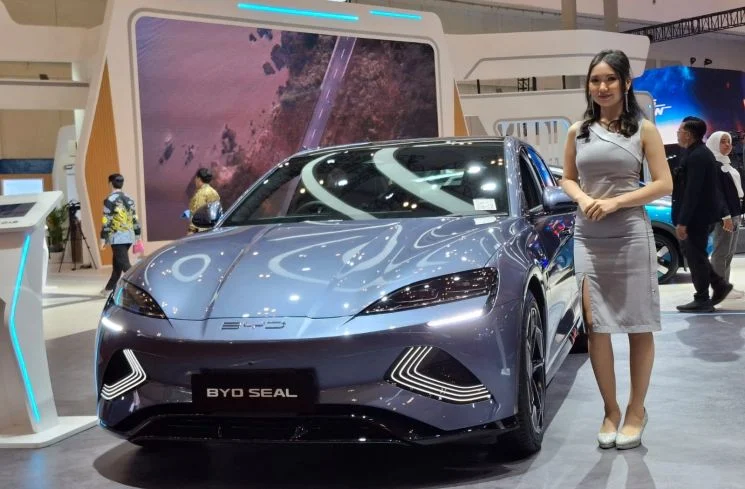
The Indonesian government has officially set an ambitious, long-term roadmap for the domestic electric vehicle (EV) industry, mandating that all battery-based electric vehicles produced within the country must achieve a minimum of 80 percent Local Component Level (TKDN – Tingkat Komponen Dalam Negeri) by 2030. This strategic initiative, spearheaded by the Ministry of Industry, is designed to shift the nation’s role from a mere assembly hub to a comprehensive manufacturing powerhouse, ensuring that the transition to green energy creates deep-rooted industrial value chains.
The Strategic Imperative: Beyond Mere Assembly
Minister of Industry Agus Gumiwang Kartasasmita, speaking during the recent inauguration of the BYD manufacturing facility in Subang, West Java, emphasized that the government’s "affirmative policy" is a direct response to the global shift toward sustainable mobility. The government is concerned that without strict localization requirements, Indonesia could remain dependent on imported components, effectively limiting the economic multiplier effect of the growing EV sector.
"Our goal is to ensure that investment is not merely directed toward assembly lines," Minister Gumiwang stated. "We are fostering an ecosystem where every critical component—from the chassis and power electronics to the battery management systems—is produced, researched, and assembled domestically. This is about building industrial resilience and ensuring that the Indonesian manufacturing sector captures the full value of the EV transition."
Chronology of the Localization Roadmap
The Ministry of Industry has structured the transition into a phased, measurable roadmap designed to provide manufacturers with enough lead time to source local suppliers and invest in localized research and development. The mandatory TKDN thresholds are as follows:
- Phase 1 (Present through 2026): Manufacturers are required to meet a minimum TKDN value of 40 percent. This baseline serves to encourage the initial transition of supply chains from overseas to domestic manufacturers.
- Phase 2 (2027–2029): The threshold increases to 60 percent. This period is expected to witness a significant surge in local partnerships, particularly in the production of battery packs and specialized automotive software.
- Phase 3 (2030 and beyond): The mandate reaches 80 percent, cementing Indonesia’s status as a top-tier automotive manufacturing nation capable of producing sophisticated, high-tech vehicles with minimal reliance on foreign components.
This staged approach is intended to mitigate the risks of supply chain disruption while providing local small and medium-sized enterprises (SMEs) the opportunity to integrate into the global automotive supply chain.
Current Investment Landscape and Production Capacity
The push for localization has already yielded tangible results in terms of capital inflow and infrastructure development. Currently, 14 major automotive manufacturers have committed to production facilities in Indonesia specifically for four-wheeled electric vehicles. The cumulative investment in this sector has reached IDR 24.131 trillion, a figure that is expected to grow as the market matures.
The current production capacity stands at 409,860 units per year. By incentivizing higher TKDN levels, the government aims to utilize this capacity to supply not only the domestic market but also to position Indonesia as an export hub for the ASEAN region and beyond. This industrial growth is serving as a critical pillar for the national economy, acting as a buffer against the volatility of global markets.
Economic Impact: Manufacturing as the Growth Engine
The manufacturing sector remains the cornerstone of Indonesia’s economic performance. In the second quarter of 2026, the non-oil and gas processing industry grew by 5.32 percent year-on-year, outpacing the national economic growth rate of 5.29 percent. This robust performance underscores the importance of the government’s industrial policies.
Manufacturing contributes significantly to the national Gross Domestic Product (GDP), accounting for 16.83 percent of the total, which translates to approximately IDR 1,102.88 trillion. Furthermore, the sector is a massive employer, supporting 19.99 million jobs as of early 2026. By transitioning to high-tech EV manufacturing, the government expects to upskill the workforce, creating high-value jobs that require expertise in battery technology, electrical engineering, and advanced robotics.
Investment in the broader manufacturing sector remains highly attractive, with real estate and capital expenditures reaching IDR 199.48 trillion in the second quarter of 2026 alone. This represents nearly 39 percent of all national investment, signaling strong investor confidence in Indonesia’s industrial policy stability.
Trade and Global Competitiveness
Indonesia’s focus on manufacturing has significantly bolstered its trade position. Between January and June 2026, non-oil and gas industrial products accounted for 115.50 billion USD in exports—representing 82.03 percent of the country’s total export value. This data confirms that Indonesia is successfully moving up the value chain, shifting away from a reliance on raw material exports toward the export of finished, high-tech industrial goods.
On the global stage, Indonesia is gaining recognition as a manufacturing giant. According to World Bank data, Indonesia’s Manufacturing Value Added (MVA) reached 275.61 billion USD in 2025. This performance has propelled the nation to the 12th position globally, climbing one spot from the previous year. Most importantly, Indonesia has solidified its standing as the largest manufacturing power in Southeast Asia.
To put this in perspective, Indonesia’s MVA is more than double that of Thailand, its closest regional competitor, which has historically dominated the ASEAN automotive landscape. Within the broader Asian continent, Indonesia now ranks fifth, trailing only the established industrial titans of China, Japan, India, and South Korea.
Analysis of Implications
The mandate for 80 percent TKDN by 2030 is a bold move that carries significant implications for the automotive market. Analysts suggest that while the transition will be challenging, it is necessary to secure the long-term sustainability of the sector.
- Supply Chain Integration: The policy will force global manufacturers (OEMs) to localize their R&D and supply chains. This will likely lead to the establishment of more battery cathode and anode plants in Indonesia, leveraging the country’s vast nickel reserves.
- Market Price Dynamics: Initially, the costs of meeting high TKDN requirements may be reflected in vehicle pricing. However, as economies of scale are achieved through local production, prices for consumers are expected to stabilize or decrease, potentially accelerating EV adoption among the Indonesian public.
- Technological Sovereignty: By mandating local content, Indonesia is not just assembling cars; it is importing technology and fostering domestic engineering talent. This knowledge transfer is vital for the nation to maintain its status as an industrial leader in the long term.
Challenges Ahead
Despite the positive outlook, stakeholders acknowledge the hurdles. Transitioning to 80 percent localization requires a highly skilled workforce, consistent energy supply, and a mature infrastructure for electric vehicle charging. The government must continue to provide tax incentives, R&D grants, and regulatory clarity to ensure that private sector players remain committed to these targets.
Additionally, global competition is fierce. Neighboring nations are also vying for a piece of the EV pie. Indonesia’s advantage lies in its unique combination of raw material availability, a large domestic market, and a clear, legally mandated roadmap that provides certainty to investors.
Conclusion
The trajectory of the Indonesian electric vehicle industry is clear: the nation is moving rapidly to secure its position in the global green economy. Through the phased implementation of TKDN requirements, Indonesia is not only pursuing environmental sustainability but is also systematically restructuring its economy to be more productive, innovative, and self-reliant. With a solid foundation of 14 manufacturers and a clear vision for 2030, the archipelago is well-positioned to become a premier global player in the future of mobility.