The landscape of Business Process Outsourcing (BPO) in Indonesia is undergoing a seismic shift as companies increasingly adopt agentic AI to drive operational efficiency and customer experience. PT Infomedia Nusantara, a subsidiary of the state-owned Telkom Indonesia Group, has emerged as the vanguard of this transition, recently earning the prestigious "Company of the Year 2026" award from the global research and consulting firm Frost & Sullivan. This recognition highlights the firm’s strategic integration of intelligent automation and agentic AI across its vast operational network, which now spans 14 locations across nine major cities in the archipelago.
The Rise of Agentic AI in Business Operations
Unlike traditional generative AI, which primarily focuses on content creation or information retrieval, agentic AI refers to systems capable of autonomous decision-making, executing multi-step workflows, and interacting with various software environments to achieve specific business goals. In the context of BPO, this technology acts as a force multiplier for human agents, automating repetitive tasks while providing real-time intelligence for complex customer interactions.
Frost & Sullivan’s decision to crown Infomedia as the digital BPO leader in Indonesia was not based on mere technical adoption but on the depth of the integration. Krishna Baidya, Vice President of ICT Practice at Frost & Sullivan, noted that Infomedia’s strategy stands out because it moves beyond the "pilot project" phase that characterizes much of the industry. Instead, the company has embedded these advanced tools directly into the core workflows of its client operations. By combining intelligent automation, advanced analytics, and operational consulting, the firm has created a robust ecosystem that delivers measurable business outcomes, such as reduced cost-to-serve and enhanced corporate governance.
Chronology of Digital Transformation
The journey toward this achievement has been a multi-year effort aligned with the broader digital transformation roadmap of Telkom Indonesia.
- 2023-2024: Infomedia initiated a massive infrastructure upgrade, moving away from legacy call-center models toward a "Customer Experience (CX) Orchestration" approach. During this period, the company invested heavily in cloud-based AI infrastructure and internal training programs to upskill its workforce.
- 2025: The company began testing agentic AI agents in select finance and telecommunications accounts. The success of these trials—measured by a significant reduction in Average Handle Time (AHT) and improved First Call Resolution (FCR) rates—set the stage for a nationwide rollout.
- Early 2026: The full-scale deployment of AI-managed workflows across 14 sites solidified the company’s market dominance. The integration of AI not only streamlined internal processes but also provided clients with granular data insights that were previously obscured by fragmented manual reporting.
Supporting Data and Industry Context
The Indonesian BPO market has been growing at a compound annual growth rate (CAGR) estimated at 8-10% annually, driven by the country’s massive digital-native population and the increasing demand for high-quality customer service in the fintech and e-commerce sectors. According to industry analysts, companies that fail to adopt AI-driven automation risk becoming obsolete as labor costs rise and customer expectations for 24/7, instantaneous service become the standard.
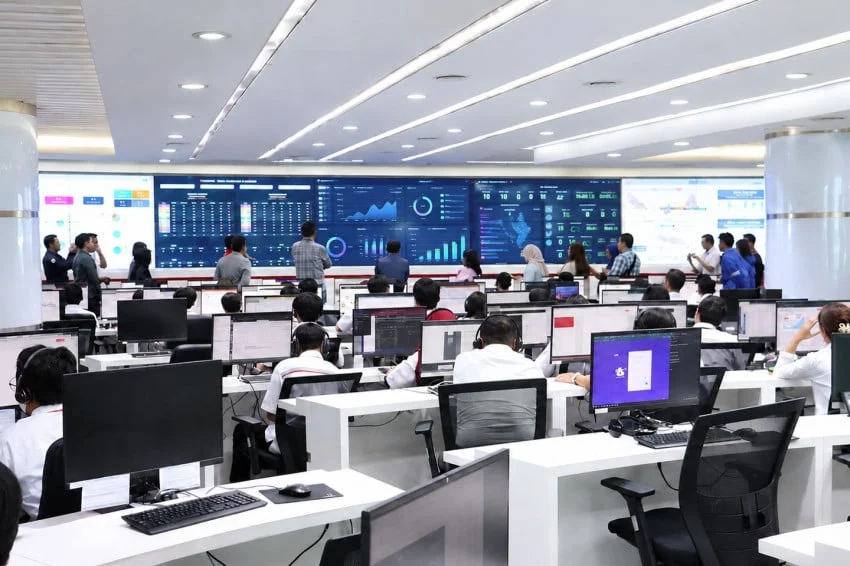
Infomedia’s operational scale serves as a benchmark for the industry. By managing complex workflows across 14 locations, the company has effectively navigated the logistical challenges of remote and hybrid work environments. The utilization of agentic AI allows these disparate sites to operate with a unified standard of service, ensuring that data privacy and compliance—critical concerns in the Indonesian banking and telecommunications sectors—are maintained at the highest level through automated audit trails.
Official Perspectives and Strategic Vision
The leadership at Infomedia has consistently emphasized that AI is not a replacement for human talent but a catalyst for higher-value contributions. By offloading mundane, repetitive tasks to autonomous agents, human employees are freed to handle high-empathy scenarios and complex problem-solving.
Industry observers suggest that the "Company of the Year" award signifies a maturation of the Indonesian tech service market. "What we are seeing is a move from ‘labor arbitrage’—where companies outsource to save on costs—to ‘value-add outsourcing,’ where the provider is expected to improve the client’s bottom line through technology," says an independent analyst tracking the regional BPO sector.
The partnership with Frost & Sullivan underscores the global competitiveness of Indonesian firms. By adhering to international benchmarks for digital BPO, Infomedia is positioning Indonesia as a viable alternative to traditional BPO hubs like India or the Philippines, particularly for companies seeking to tap into the growing Southeast Asian market.
Broader Impact on the Indonesian Digital Economy
The implications of this shift extend far beyond the BPO industry. As businesses across retail, logistics, and government services observe the success of Infomedia’s model, a domino effect is expected across the private sector.
1. Economic Efficiency
By reducing the cost-to-serve, companies can reinvest savings into product development and innovation. The multiplier effect of improved operational efficiency is a critical component of Indonesia’s "Golden Indonesia 2045" vision, which relies on the rapid digitization of the national economy.
2. Workforce Evolution
The adoption of agentic AI mandates a massive shift in the labor market. The demand for traditional data-entry roles is declining, while the need for "AI supervisors," prompt engineers, and business analysts is surging. This requires a coordinated effort between the private sector and educational institutions to ensure the workforce remains relevant.
3. Data Governance and Ethics
As AI takes on more autonomous roles, the importance of robust governance becomes paramount. Infomedia’s focus on integrating AI within a framework of strong corporate governance serves as a template for other firms. Ensuring that AI agents operate within ethical guidelines, remain unbiased, and secure sensitive user data is the next great challenge for the industry.
Future Outlook: The Next Phase of AI Integration
As Infomedia and its peers look toward 2027 and beyond, the focus is expected to shift toward "Hyper-Personalization." With agentic AI, companies can move beyond standardized scripts to offer bespoke customer experiences at scale. This means AI agents that can remember personal preferences, predict customer needs based on behavioral data, and execute transactions across multiple platforms in real-time.
Furthermore, the expansion of these technologies into the government sector (GovTech) could revolutionize public service delivery in Indonesia. If BPO firms can successfully manage the complexities of commercial business, there is a clear path toward applying similar frameworks to tax administration, public health management, and national identification systems.
The recognition by Frost & Sullivan is more than just a corporate accolade; it is a signal that Indonesia’s digital infrastructure is entering a new era of sophistication. As the industry continues to integrate agentic AI, the gap between traditional service providers and tech-forward BPO leaders will only widen. For companies operating in Indonesia, the message is clear: the integration of autonomous, intelligent systems is no longer a competitive advantage—it is a baseline requirement for survival in an increasingly automated global economy.
In conclusion, the success of PT Infomedia Nusantara reflects a broader trend of technological maturity in Indonesia. By effectively bridging the gap between cutting-edge AI research and practical, large-scale application, the company has set a high bar for the region. As the adoption of agentic AI continues to accelerate, the ripple effects will likely foster a more efficient, data-driven, and competitive business environment across the entire Indonesian archipelago.