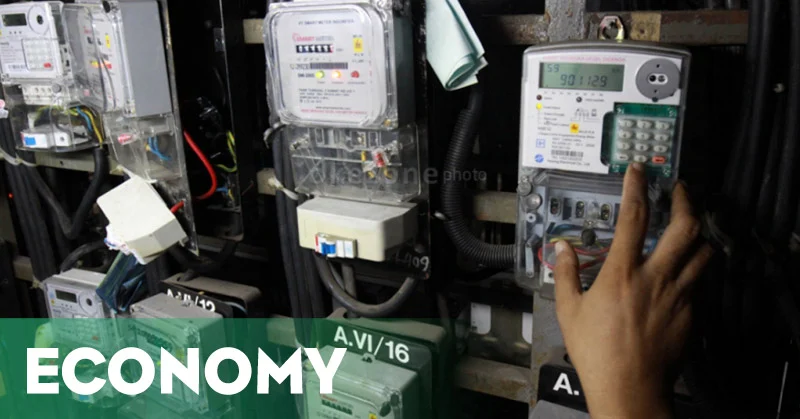
The Indonesian government’s strategic initiative to restructure energy subsidies has triggered intense nationwide debate regarding the delicate balance between fiscal responsibility and social welfare. As state budget allocations face mounting pressure from global economic uncertainties and domestic infrastructure demands, policymakers have increasingly turned their attention toward reforming the country’s electricity subsidy framework. Specifically, discussions surrounding the potential removal or targeted readjustment of electricity tariff subsidies for 450 VA and 900 VA household subscribers have brought structural inequities in the national power grid into sharp focus.
While fiscal analysts argue that blanket subsidies often misallocate valuable state resources to households that may no longer require government intervention, development economists and public policy institutions stress that any policy shift must prioritize universal energy access. Among the prominent voices responding to these policy discussions is the Indonesian Institute of Sciences (LIPI), which has emphasized that the redirection of state funds must fundamentally address the stark divide between electrified urban centers and remote, underserved regions across the archipelago.
Fiscal Realities and the Case for Subsidy Reform
The debate over electricity subsidies in Indonesia is rooted in the broader challenge of maintaining macroeconomic stability while fulfilling constitutional mandates to provide basic services to all citizens. For decades, state-owned electricity enterprise PT PLN (Persero) has relied heavily on government compensation funds and subsidies to keep tariffs artificially low for lower-income brackets. However, critics and fiscal authorities have long contended that broad-based subsidies are inherently inefficient. A significant portion of the financial support frequently benefits segments of the population capable of paying market rates, thereby straining the state budget—officially known as the Anggaran Pendapatan dan Belanja Negara (APBN)—and diverting capital away from critical public investments.
Government planners have argued that reforming subsidies for the 450 VA and 900 VA tiers could generate substantial fiscal savings. These funds could subsequently be channeled into high-priority national development goals, such as building physical infrastructure, enhancing educational facilities, and improving healthcare services. Nevertheless, any proposal to adjust tariffs for vulnerable consumer segments naturally provokes widespread concern over potential inflationary pressures and the immediate impact on household purchasing power.
LIPI’s Perspective: Balancing Fiscal Efficiency with Energy Equity
Weighing in on the policy discourse, Maxensius Tri Sambodo, a senior researcher at the Economic Research Center of the Indonesian Institute of Sciences (LIPI), offered a nuanced assessment of the government’s subsidy reform plans. Speaking in Jakarta, Sambodo acknowledged that restructuring the electricity subsidy mechanism is fundamentally a step in the right direction, provided that the government establishes clear safeguards for disadvantaged populations.
"I think it is a positive move, and naturally, the consequence is that prices will rise for some consumers," Sambodo told journalists at the LIPI building. "However, what we expect is that once the subsidies are removed, the saved funds are directed toward helping communities that have not yet gained access to electricity."
Sambodo’s remarks underscore a critical paradox within Indonesia’s energy landscape: while millions of urban and semi-urban households enjoy subsidized electricity tariffs, tens of millions of citizens living in remote, outermost, and interior regions remain entirely disconnected from the national electrical grid. According to LIPI’s assessments, an estimated 60 million Indonesians at the time lacked reliable access to electricity due to persistent gaps in infrastructure development, particularly outside the major islands of Java and Bali.
The Challenge of Last-Mile Infrastructure and Connection Costs
The root cause of this persistent electrification gap extends far beyond mere power generation capacity. While Indonesia’s aggregate generation capacity has expanded significantly over the years, the transmission and distribution networks required to deliver power to remote islands and dense interior jungles remain severely underdeveloped. Extending high-voltage transmission lines across rugged terrain involves massive capital expenditures, often rendering rural electrification projects commercially unviable for traditional utility calculations without substantial state backing.

Furthermore, even when medium- or low-voltage distribution lines pass near remote villages, individual households frequently face insurmountable financial barriers to connecting their homes to the grid. Sambodo highlighted that connection fees—ranging between IDR 2 million and IDR 3 million—represent an exorbitant expense for impoverished rural families whose daily livelihoods depend on subsistence agriculture or informal labor.
"In the interior regions, there are still many people who do not have electricity simply because they do not have the money to connect," Sambodo explained. "It takes IDR 2 million to IDR 3 million just to link a household to the PLN grid. On top of that, you might have a power plant, but the transmission lines are missing, and building those requires substantial funding."
Because of these compounding financial and logistical hurdles, the structural mismatch within the energy sector becomes starkly apparent. Subsidies are frequently consumed by households that already enjoy grid connectivity, while the most impoverished communities—who bear the brunt of energy poverty—receive zero state support because they lack the physical infrastructure to consume electricity in the first place.
Toward a Fair and Equitable Energy Paradigm
In light of these structural disparities, policy analysts and researchers have called for a complete recalibration of how the state views energy entitlements. The core principle guiding national energy policy, experts argue, must be equity and universal accessibility.
If the central government proceeds with the phased reduction or elimination of electricity subsidies for low-capacity tiers, the primary justification—and the ultimate measure of the policy’s success—must be the tangible reallocation of those fiscal savings toward bridging the electrification gap. Rather than viewing subsidy removal purely as a deficit-reduction exercise, policymakers are urged to frame it as a reallocation strategy designed to fulfill the constitutional right to energy for every Indonesian citizen, regardless of geography.
"The principle of energy is that it must be fair and equitable," Sambodo concluded. "That objective can only be achieved if all members of society have access to electricity. Right now, a portion of the population receives subsidies, while another portion has no access to electricity whatsoever."
Broader Implications and Future Outlook
The policy discussions surrounding electricity subsidy reform in Indonesia carry profound implications for the nation’s long-term socio-economic development. Energy access is universally recognized as a foundational catalyst for economic productivity, educational advancement, healthcare delivery, and modern communication. Without a reliable power supply, rural communities remain locked in cycles of underdevelopment, unable to engage in value-added agricultural processing, small-scale manufacturing, or digital commerce.
As the government navigates the complex political economy of energy reform, policymakers face the ongoing challenge of designing targeted social protection mechanisms. Ensuring that subsidy savings are transparently reinvested into micro-grid development, renewable energy initiatives for remote areas, and subsidized connection programs for low-income families will be vital. Only through a deliberate, equity-driven approach can Indonesia successfully modernize its fiscal architecture while fulfilling the promise of light and power for every corner of the nation.