The fate of Pertamina Energy Trading Limited, widely known as Petral, has long stood as one of the most contentious subjects within Indonesia’s energy sector. For years, the Singapore-based trading arm of the state-owned oil and gas giant PT Pertamina (Persero) was dogged by allegations of systematic inefficiencies, cartel-like behaviors, and opaque procurement practices that allegedly cost the state billions of dollars. When the Ministry of Energy and Mineral Resources (ESDM) officially announced the dissolution of Petral alongside its subsidiary Pertamina Energy Service Pte Ltd (PES), it marked a watershed moment for transparency in Indonesia’s resource management. Yet, despite holding the vital portfolio of Coordinating Minister for Maritime Affairs and Resources—a strategic oversight position encompassing the energy sector—Rizal Ramli chose a path of deliberate silence when pressed by journalists for his reaction to the historic disbandment.
The reluctance of a normally outspoken critic and reformist official to comment on the matter immediately after the announcement sent ripples through political and economic circles. This article examines the background of Petral’s dissolution, the sequence of events leading up to the policy shift, the implications of dismantling the notorious trading entity, and the broader context surrounding Rizal Ramli’s guarded response during a critical period of national governance.
Background and Context of the Petral Controversy
To understand the weight of the decision to liquidate Petral and PES, one must examine the operational history of the trading arm. Established decades ago to secure crude oil and refined petroleum products for Indonesia’s domestic energy consumption, Petral gradually evolved into a opaque entity functioning outside the direct, rigorous oversight of domestic regulatory bodies. Operating primarily out of Singapore, Petral was tasked with procuring millions of barrels of crude oil and fuel to bridge the gap between Indonesia’s domestic production and its soaring consumption demands.
However, over the years, mounting criticisms emerged regarding how Petral conducted its tenders. Industry watchdogs, anti-corruption activists, and government auditors repeatedly highlighted that Petral relied heavily on third-party intermediaries and brokers rather than dealing directly with National Oil Companies (NOCs) or reputable international producers. This intermediary-heavy structure inevitably inflated acquisition costs, creating a persistent pricing discrepancy known colloquially in Indonesian energy discourse as the "Petral mafia" or "oil mafia" premium.
Independent audits, including a high-profile forensic audit commissioned by the Ministry of Energy and Mineral Resources and conducted by external auditors, later substantiated these long-standing suspicions. The audit revealed systemic vulnerabilities, conflicts of interest, and undue influence by third parties in the crude oil and fuel procurement processes managed by PES. The findings provided the definitive policy justification needed by the administration of President Joko Widodo to dismantle the subsidiary entirely, shifting all import and procurement operations back to Pertamina’s domestic Integrated Supply Chain (ISC) division in Jakarta to foster greater transparency and accountability.
Chronology of the Dissolution and the Jakarta Press Encounter
The dismantling of Petral did not happen overnight; it was the culmination of a phased restructuring plan initiated under the leadership of then-Energy and Mineral Resources Minister Sudirman Said, with strong backing from President Joko Widodo’s anti-corruption agenda.
In the months leading up to November 2015, the government systematically dismantled PES’s trading licenses, audited its past transactions, and transitioned its operational portfolio back to Pertamina headquarters. By late 2015, the final administrative steps to dissolve the entity were publicly confirmed, following concrete evidence proving the systemic involvement of third-party brokers in manipulating procurement processes.
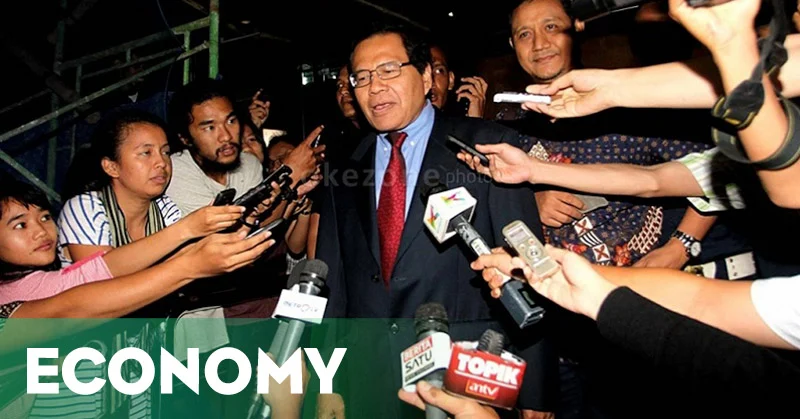
Against this backdrop of high-stakes bureaucratic reform, Coordinating Minister Rizal Ramli maintained a surprisingly low profile regarding the specific policy announcement. On Monday, November 9, 2015, Ramli chaired a high-level meeting focusing on energy diversification and decentralization at his ministerial office in Jakarta. Media representatives, keenly aware that the Ministry of Energy and Mineral Resources fell under his broader economic and maritime coordination purview, waited outside the meeting room to secure his official stance on the Petral liquidation.
Upon concluding the session, Ramli stepped out to face a barrage of questions from reporters eager to obtain his perspective on the historic dissolution. Rather than offering the colorful, hard-hitting commentary that had long defined his public persona, Ramli opted for silence. He merely raised both of his hands with a polite smile, wordlessly brushing past the press corps as he walked toward his private vehicle.
Prompted by the sudden departure, staff members accompanying the minister explained to the press that Ramli was operating under a strict schedule and needed to rush immediately to the State Palace to welcome a visiting foreign dignitary. True to the explanation, President Joko Widodo was slated to host an official state welcoming ceremony that very afternoon for Italian President Sergio Mattarella at the Presidential Palace complex.
Implications of the Petral Liquidation on Indonesia’s Energy Governance
The liquidation of Petral carried profound structural and psychological implications for Indonesia’s energy sector. For decades, the entity was viewed as an untouchable fortress of vested interests, shielded by powerful political and corporate patrons. Its successful disbandment signaled a paradigm shift in how the Indonesian government approached state-owned enterprise (SOE) reform, demonstrating a willingness to dismantle legacy structures that compromised national fiscal health.
Financially, the elimination of Petral and the centralization of procurement through Pertamina’s Integrated Supply Chain were projected to yield substantial cost efficiencies. By cutting out unnecessary brokers and negotiating directly with major global oil producers and national oil companies, Pertamina aimed to secure more competitive pricing for imported crude and refined fuels. Initial government estimates suggested that streamlining the procurement process could save the state hundreds of millions of dollars annually—a critical fiscal relief for a nation grappling with energy subsidies and fluctuating global oil prices.
Furthermore, the move carried significant anti-corruption implications. Shifting trading operations back to Jakarta subjected them to closer scrutiny by domestic regulatory bodies, the Corruption Eradication Commission (KPK), and the Supreme Audit Agency (BPK). While challenges regarding transparency and internal efficiency within Pertamina did not vanish overnight, the removal of the Singapore-based intermediary layer eliminated one of the most prominent structural vulnerabilities in the national supply chain.
Analyzing Rizal Ramli’s Calculated Silence
The decision by Rizal Ramli—a vocal economist known for his fiery rhetoric against monopolies and inefficient state practices—to withhold commentary on Petral sparked considerable speculation among political analysts.
Some observers noted that while Ramli championed broad structural economic reforms, turf dynamics within the cabinet and the specific division of labor among coordinating ministries meant that direct execution of the Petral audit and dissolution fell primarily under the purview of Minister Sudirman Said and the Ministry of Energy and Mineral Resources. Although ESDM technically fell under Ramli’s coordination umbrella as Coordinating Minister for Maritime Affairs and Resources, policy execution and public communication were heavily fronted by Said and Pertamina’s executive board.
Other analysts suggested that Ramli’s silence was a strategic exercise in cabinet discipline. Given the sensitivity of the Petral case—which involved entrenched political networks, high-profile corporate figures, and complex international legal considerations—cabinet members were often advised to maintain a unified and measured stance to prevent legal complications or political backlash. By deferring to the scheduled diplomatic duties at the State Palace and avoiding ad-hoc commentary, Ramli successfully sidestepped potential controversies that could distract from the government’s broader diplomatic agenda that afternoon.
Broader Economic Impact and Legacy
Years after the disbandment of Petral and the enigmatic press encounter of November 2015, the legacy of this policy shift remains a cornerstone of Indonesia’s modern energy governance. The integration of procurement functions into Pertamina’s domestic framework laid the groundwork for subsequent efforts to modernize the nation’s downstream and upstream oil and gas sectors.
While Indonesia continues to face structural challenges related to declining domestic crude production and a heavy reliance on fuel imports, the elimination of the Petral bottleneck stands as a testament to the feasibility of challenging entrenched corporate practices when backed by strong political will.
Ultimately, whether Rizal Ramli’s silence on that November afternoon stemmed from diplomatic scheduling constraints, cabinet coordination protocols, or a calculated desire to let the executing ministers take the spotlight, the event remains a fascinating footnote in the turbulent history of Indonesia’s energy reforms. The dissolution of Petral fundamentally redrew the landscape of state-backed resource procurement, ensuring that transparency, accountability, and direct engagement with global energy markets would henceforth form the baseline of the nation’s energy security strategy.