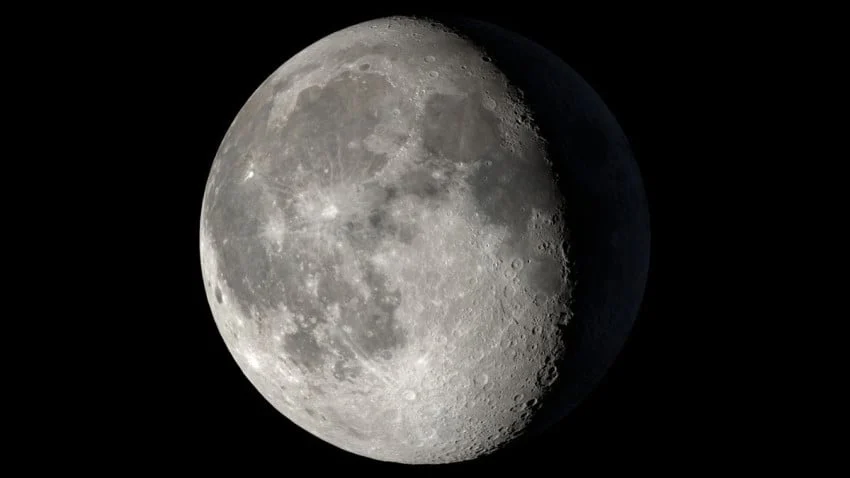
The pursuit of extraterrestrial resources has entered a critical new phase as the Japan Aerospace Exploration Agency (JAXA) accelerates its preparations for the Lunar Polar Exploration (LUPEX) mission. This ambitious undertaking, conducted in strategic partnership with the Indian Space Research Organisation (ISRO), aims to unlock the secrets of the lunar south pole—a region long considered the most promising site for discovering water ice. By deploying an advanced robotic rover, the mission seeks to transform how humanity approaches long-term space exploration, potentially turning the Moon into a sustainable refueling station for deeper missions into the solar system.
The Strategic Significance of Lunar Water
For decades, the Moon was perceived as a desolate, bone-dry celestial body. However, modern scientific consensus, bolstered by data from missions like India’s Chandrayaan-1 and NASA’s Lunar Reconnaissance Orbiter, has shifted significantly. Scientists now believe that the permanently shadowed regions (PSRs) at the lunar south pole contain substantial deposits of water ice. These areas, shielded from sunlight for billions of years, function as "cold traps" where volatile compounds can persist.
The importance of this discovery cannot be overstated. Water is not merely a life-sustaining resource; it is a critical component of the future space economy. Through the process of electrolysis, water can be broken down into hydrogen and oxygen. Hydrogen serves as a potent rocket propellant, while oxygen is vital for life support systems and combustion. Establishing an "in-situ resource utilization" (ISRU) capability on the Moon would drastically reduce the cost and logistical complexity of launching missions from Earth, as spacecraft could potentially refuel in lunar orbit.
Chronology of the LUPEX Collaboration
The LUPEX project represents a high-level convergence of space-faring expertise. The collaboration between Tokyo and New Delhi follows a trajectory of growing mutual interest in lunar science.
- 2017-2018: Preliminary discussions began between JAXA and ISRO regarding a joint lunar mission. Both agencies recognized the synergy: India’s proven prowess in landing systems and soft-landing technology, and Japan’s advanced robotics and heavy-lift launch capabilities.
- 2019: The formalization of the LUPEX mission concept. India’s Chandrayaan-2 mission provided critical insights into the challenges of navigating the lunar south pole, informing the design requirements for the subsequent LUPEX rover.
- 2023: Following the historic success of India’s Chandrayaan-3 mission, which achieved a soft landing near the south pole, the LUPEX project gained significant political and scientific momentum.
- November 25, 2024: JAXA successfully showcased a prototype of the lunar rover at its facility in Chofu, Tokyo. This event marked a milestone in testing the rover’s mobility in simulated lunar terrain.
- 2028 (Fiscal Year): The projected launch window for the mission, utilizing Japan’s next-generation H3 launch vehicle from the Tanegashima Space Center.
Engineering the Lunar Explorer
The LUPEX rover is a marvel of modern engineering, designed to traverse one of the most hostile environments in the solar system. During the recent demonstration in Chofu, the prototype exhibited remarkable versatility. Equipped with a specialized four-legged, chain-driven wheel system, the robot is designed to negotiate the jagged, regolith-heavy lunar surface at a steady pace of 3 centimeters per second.
The challenges of the lunar south pole are extreme. Temperatures in the permanently shadowed regions can plummet to below -200 degrees Celsius, requiring advanced thermal management systems. Furthermore, the rover must be capable of navigating steep, unpredictable crater walls. Engineers have been rigorously testing the rover’s ability to handle steep inclines and operate effectively in a vacuum environment, ensuring that the electromechanical joints and sensors do not seize up under the harsh lunar conditions.
According to JAXA project leads, the rover will be equipped with sophisticated observational instruments, including a drill capable of penetrating the lunar surface to collect soil and rock samples. These samples will be analyzed on-site to determine the distribution, quality, and purity of the water ice, providing the first ground-truth data on the accessibility of lunar water.
The Division of Labor
The success of LUPEX hinges on the synergy between the two space agencies. Under the current agreement:
- ISRO (India): Responsible for the lander module. Building on the success of the Vikram lander, India is tasked with ensuring a precise, safe touchdown in a challenging, high-latitude lunar region.
- JAXA (Japan): Responsible for the rover and the launch vehicle. The H3 rocket, Japan’s flagship heavy-lift launch vehicle, is being optimized to deliver the heavy, sophisticated payload into a precise lunar trajectory.
This division of labor not only lowers the financial burden for both nations but also fosters an international standard for collaborative space exploration.
Scientific and Economic Implications
The LUPEX mission is far more than an exploratory exercise; it is a prerequisite for the "Moon-to-Mars" architecture currently being pursued by global space powers. If the mission confirms the presence of easily extractable water, the lunar south pole could become the site of the first permanent lunar base.
Fact-based analysis suggests that the economic impact could be transformative. A lunar refueling depot would effectively turn the Moon into a "gas station" for deep-space travel. Currently, sending fuel from Earth is the primary cost driver for space exploration. By shifting the supply chain to the Moon, the cost of interplanetary transport could drop by orders of magnitude, enabling a new era of commercial space activity, including mining, lunar tourism, and industrial manufacturing in microgravity.
Official Perspectives and Global Context
While JAXA and ISRO have kept the focus on technical cooperation, the mission occurs against a backdrop of intensified global competition. Nations including the United States, through the Artemis program, and China, through its Chang’e series, are also prioritizing the lunar south pole.
"The LUPEX mission is a test of our capability to operate in the most extreme conditions," noted an aerospace analyst familiar with the project. "By proving we can extract and process lunar water, Japan and India are not just conducting science; they are securing a stake in the future infrastructure of the solar system."
JAXA officials have emphasized that the data gathered by LUPEX will be invaluable for the broader international scientific community. By understanding the geology and volatility of the south pole, researchers can better map the history of the solar system, as the ice there acts as a "time capsule" containing records of water delivery by comets and asteroids billions of years ago.
Challenges Ahead: The "Last Mile" Problem
Despite the excitement, the mission faces daunting technical hurdles. The lunar south pole is characterized by long, erratic shadows that make solar power generation difficult. The LUPEX rover must be able to operate during the long lunar night or utilize advanced battery technologies that can withstand extreme cold.
Furthermore, the regolith—the fine, sharp, and abrasive dust that covers the Moon—poses a significant risk to the rover’s moving parts. Historical data from the Apollo missions showed that lunar dust could clog mechanical joints and degrade sensitive optics. The testing phase currently underway in Chofu is specifically designed to simulate these abrasive conditions, ensuring that the rover’s seals and drive systems are robust enough to survive the mission’s duration.
Conclusion: A New Frontier
As the 2028 launch date approaches, the eyes of the global scientific community will remain fixed on the development of the LUPEX mission. The project exemplifies a shift toward multilateral cooperation in space, moving away from the "space race" mentality of the 20th century toward a model of collaborative sustainability.
If successful, the LUPEX mission will confirm that the Moon is not merely a destination, but a springboard. By identifying the water resources necessary to support human presence and facilitate deeper exploration, Japan and India are taking a foundational step toward ensuring that the next century of space travel is not only possible but sustainable. As the rover undergoes its final iterations, the promise of the lunar south pole remains a tantalizing target, waiting to be unlocked by the next generation of robotic pioneers.