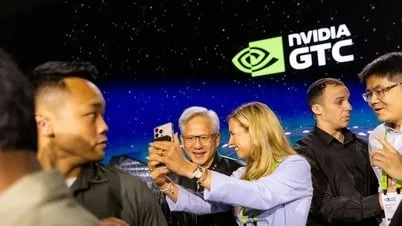
The global technology sector witnessed an extraordinary development on November 23 as Nvidia Corporation officially announced the immediate reinstatement of its founder, Jensen Huang, as Chief Executive Officer. The decision, which came less than two weeks after his forced resignation, sent shockwaves through the financial markets. Nvidia’s stock price surged by more than 27% during the trading session, briefly touching 30% gains, as investors reacted to the return of the visionary leader who has been instrumental in the company’s dominance in the artificial intelligence and graphics processing unit (GPU) markets.
This abrupt reversal of leadership followed intense behind-the-scenes negotiations involving the Nvidia board of directors and senior officials within the United States government. The return of Huang, which initially seemed improbable given the nature of the allegations that led to his departure on November 13, marks a significant chapter in corporate governance and geopolitical influence within the semiconductor industry.
A Timeline of Crisis and Reinstatement
The sequence of events leading to this announcement began in early November, creating a period of intense volatility for one of the world’s most valuable companies.
- November 13: Following a series of investigative reports by American media outlets alleging personal misconduct, including an affair with a subordinate and a relationship with Alice Huang—a former executive at a Singaporean data infrastructure firm suspected by US intelligence of espionage—Jensen Huang resigned as CEO of Nvidia.
- November 14–21: The company entered a period of leadership uncertainty. Investor confidence wavered, and internal morale reportedly plummeted as employees and shareholders grappled with the implications of the espionage allegations.
- November 22: The New York Times published further evidence indicating that Alice Huang had maintained active contact with an operative from China’s Ministry of State Security during the period she was involved with Jensen Huang. This report intensified the scrutiny from US national security agencies.
- November 23: Nvidia’s Board of Directors announced the unanimous decision to reinstate Jensen Huang, citing "extensive consultations" with high-level US government officials who reportedly cleared him of posing a direct national security risk.
The Role of National Security and Government Oversight
The crux of the controversy lay in the intersection of personal conduct and corporate security. In the modern era, Nvidia’s technology—specifically its H100 and Blackwell series chips—is classified as critical national infrastructure. These components are the backbone of the global AI arms race, making the company a focal point for US export controls and security oversight.
The board’s reliance on feedback from the US government suggests that the Biden administration or relevant intelligence agencies conducted an expedited review of the security implications of Huang’s tenure. By publicly confirming that the government does not view Huang’s return as a threat to national security, the board sought to decouple the personal allegations from the company’s strategic operational stability.
Analysts suggest that the government’s acquiescence may stem from the realization that, amidst the escalating US-China tech rivalry, Nvidia requires the specific leadership style and technical vision of its founder to maintain its competitive edge. Replacing a founder of Huang’s stature during a pivotal moment in the "AI revolution" was viewed by some stakeholders as a risk greater than the potential reputational fallout of the scandal.
Market Reaction and Financial Implications
The 27% surge in Nvidia’s share price represents a massive recovery in market capitalization, reflecting the "Jensen Premium"—the added value the market assigns to Nvidia specifically because of Huang’s unique ability to navigate the complex AI supply chain.
Prior to the reinstatement, analysts at major financial institutions had warned of a potential "leadership vacuum" that could derail the company’s roadmap for its next-generation architecture. The market’s positive reaction indicates a clear preference from institutional investors for the continuity of the original management team. However, the volatility experienced over the last ten days has sparked a broader conversation regarding corporate governance. Institutional investors are likely to demand more robust oversight mechanisms and stricter codes of conduct for executives, even those considered "indispensable" to their companies.
Internal Dynamics and Stakeholder Pressure
The decision to rehire Huang was not made in isolation. According to reports from within the company, there was immense pressure from the workforce, particularly among the core engineering teams who credit Huang’s culture of "first principles" engineering for Nvidia’s success.
"I am honored to return to Nvidia and lead one of the world’s most influential technology companies at the start of a new industrial revolution," Huang stated in his return announcement. "I accept this responsibility with the utmost humility and a firm commitment to innovation. I am grateful to the Nvidia Board of Directors for their trust and their careful consideration."
Despite the official statements of gratitude, the company now faces the challenge of rehabilitating its public image. The allegations regarding Alice Huang and the reported ties to the Chinese Ministry of State Security remain a sensitive point of public record. For Nvidia to maintain its status as a trusted government partner and a prime contractor for defense-related AI projects, it will likely need to implement new transparency protocols that separate the CEO’s personal life from the company’s strategic security apparatus.
Broader Implications for the Semiconductor Industry
The Nvidia case serves as a high-stakes case study in the vulnerability of global technology giants. As semiconductors become as vital as oil in the 21st century, the CEOs of companies like Nvidia, TSMC, and ASML are increasingly viewed as political figures rather than mere business executives.
The fact that the US government intervened—or at least provided the necessary clearance—to ensure the stability of Nvidia’s leadership highlights how deeply entrenched the company is in the national interest. This creates a complex precedent: if a CEO is deemed "too important to fail" for national security reasons, it may complicate the enforcement of corporate ethical standards in the future.
Furthermore, the industry is closely watching how Nvidia will handle the ongoing investigation into the allegations of espionage. While the government has cleared Huang regarding national security, the potential for further revelations remains a lingering risk. If additional ties to foreign intelligence services were to surface, the current "all-clear" from Washington might be revoked, leading to further instability.
Looking Ahead: Challenges for the Huang Era 2.0
As Jensen Huang resumes his duties, his immediate priorities will be to stabilize internal operations and assure international partners that Nvidia’s security protocols remain impregnable. The company is currently in the middle of a massive global rollout of its Blackwell AI processors, a product cycle that is expected to define the company’s trajectory for the next several years.
The board’s challenge will be to ensure that this focus on innovation does not come at the expense of oversight. Nvidia will likely face increased scrutiny from the Securities and Exchange Commission (SEC) and other regulatory bodies, who will be looking for any signs of undisclosed risks that could impact shareholder value.
In conclusion, the reinstatement of Jensen Huang is a testament to the immense influence of visionary founders in the tech sector. However, the path forward is fraught with challenges. By betting on the return of their founder, the board has prioritized technical continuity and market stability over the optics of a clean break. The coming quarters will determine whether this gamble pays off, or if the lingering questions regarding the circumstances of his departure continue to haunt the firm’s reputation on the global stage.
The volatility of the last two weeks has fundamentally changed the narrative around Nvidia. It is no longer just a hardware company; it is a geopolitical entity. As such, every future move by its leadership will be scrutinized not just by Wall Street, but by national security agencies worldwide. The "re-founder" era of Jensen Huang begins now, under the watchful eye of a global community that is both dependent on his company’s innovations and wary of the risks that accompany such immense concentration of power.