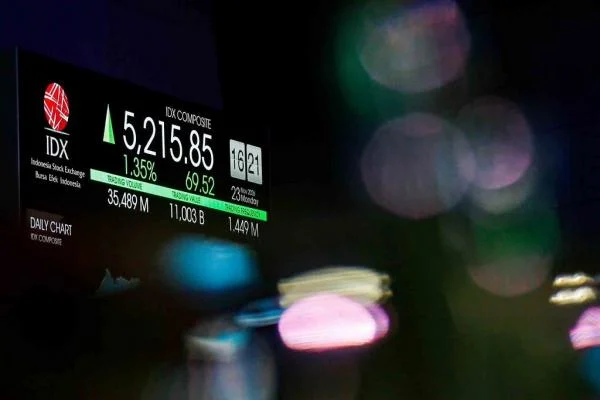
Jakarta, Indonesia — The Jakarta Composite Index (Indeks Harga Saham Gabungan or IHSG) managed to close in positive territory during the final trading session on Tuesday, November 24, 2026. Demonstrating resilience amid broader macroeconomic shifts, the benchmark index advanced by 25.74 points, or 0.49 percent, ultimately settling at the 5,241 level. This positive momentum offered a welcome relief to market participants following a volatile trading period earlier in the month, signaling cautious optimism among domestic and institutional investors navigating the Indonesian capital market.
Market breadth during Tuesday’s trading session leaned marginally toward the buyers, reflecting a balanced yet optimistic sentiment on the floor of the Indonesia Stock Exchange (IDX). Out of the total equities traded, 326 stocks recorded gains, while 321 stocks faced downward pressure, and 298 stocks remained unchanged from their previous closes. Trading activity was robust, marked by a total transaction value reaching Rp11.7 trillion. This volume was supported by the active exchange of 29.8 billion shares throughout the morning and afternoon sessions, indicating active portfolio adjustments by market players.
Broad-Based Gains Across Major Indexes and Sectors
The upward trajectory of the IHSG on Tuesday was supported by widespread gains across major indexes. The LQ45 index, which tracks the 45 most liquid and highly capitalized stocks on the exchange, climbed 1.10 percent to reach 546. Similarly, the Jakarta Islamic Index (JII) inched upward by 0.16 percent to close at 291, reflecting modest gains within the sharia-compliant segment of the market.
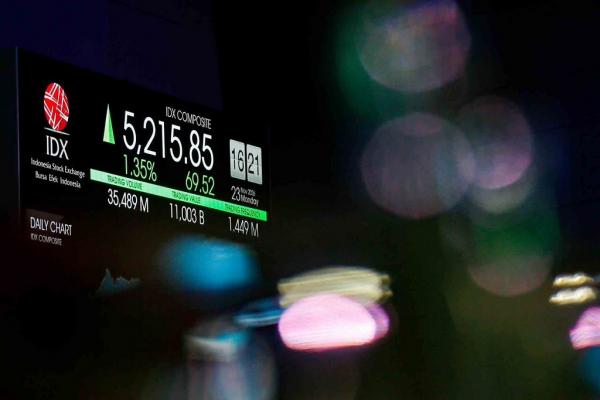
Furthermore, the IDX30 index advanced by 1.08 percent to 309, while the MNC36 index recorded the most significant surge among major groups, jumping 1.30 percent to finish at 241. These figures demonstrate that large-cap and blue-chip stocks played a pivotal role in anchoring the headline index in positive territory.
An analysis of sectoral performance revealed a favorable distribution of capital. The majority of sectoral indexes closed in the green. Leading the charge were the energy, non-cyclical consumer goods, financials, infrastructure, property, industrials, technology, and healthcare sectors. The robust performance in the financial and infrastructure sectors particularly underpinned the index’s stability, given their heavy weightings within the composite.
Conversely, not all sectors shared in the rally. Selling pressure weighed down three specific sectors: cyclical consumer goods, basic materials, and transportation, which closed in negative territory. Analysts noted that sector-specific profit-taking and shifting commodity expectations heavily influenced the divergence between gaining and lagging industries.
Top Gainers and Losers of the Day
Individual stock movements highlighted stark contrasts in investor appetite during the session. Among the standout performers in the top gainers category was PT Dunia Virtual Online Tbk (AREA), which skyrocketed 24.51 percent to close at Rp254 per share. It was closely followed by poultry issuer PT Widodo Makmur Unggas Tbk (WMUU), which surged 21.95 percent to hit Rp50 per share. Heavyweight coal and energy giant PT Bayan Resources Tbk (BYAN) also posted impressive gains, climbing 14.70 percent to finish at Rp9,950 per share, significantly contributing to the energy sector’s rally.

On the flip side, the top losers list featured equities that experienced notable corrections due to localized selling pressure. PT Prima Globalindo Logistik Tbk (PPGL) dropped 10 percent to close at Rp252 per share. Transportation company PT Express Transindo Utama Tbk (TAXI) similarly plummeted 10 percent to land at Rp9 per share, while PT Falmaco Nonwoven Industri Tbk (FLMC) fell 9.86 percent to end the day at Rp128 per share.
Background and Context: Navigating Market Volatility
Tuesday’s recovery comes on the heels of a challenging trading week. Earlier market reports highlighted that the IHSG had previously suffered a weekly decline of 3.71 percent, which pulled total market capitalization down to Rp8,725 trillion. This prior contraction was largely attributed to external headwinds, including shifting global monetary policy expectations, fluctuating commodity prices, and cautious foreign capital flows entering emerging markets.
The ability of the IHSG to claw back ground and secure a green close on November 24 suggests that bargain-hunting strategies are actively deployed by investors looking to accumulate fundamentally sound equities at discounted valuations. Market observers have noted that while macroeconomic uncertainties persist—particularly concerning global inflation trends and currency fluctuations—domestic liquidity remains a key cushion for the Indonesian stock exchange.
Market Implications and Future Outlook
The performance of the IHSG sets an encouraging tone for the remainder of the trading week. Financial analysts emphasize that sustained market recovery will heavily depend on upcoming corporate earnings reports, domestic economic data releases, and Bank Indonesia’s monetary policy stances regarding
interest rates.
For retail and institutional investors alike, the session underscores the importance of a selective investment approach. Sectors exhibiting strong fundamental growth, such as financials, energy, and digital infrastructure, continue to offer attractive entry points despite short-term volatility. As the year progresses toward its final month, market participants will closely monitor macroeconomic indicators to gauge whether the green close on Tuesday marks the beginning of a sustained year-end rally or merely a temporary respite within a consolidating market cycle.