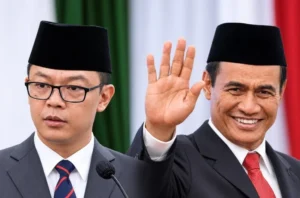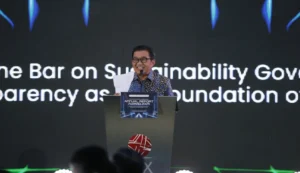
The landscape of Indonesia’s coal mining industry underwent a seismic shift this week as PT Bayan Resources Tbk (BYAN) officially announced a change in its executive leadership. Following an Extraordinary General Meeting of Shareholders (RUPSLB) convened on Monday, November 23, 2026, the company confirmed that Ary Bastari has been appointed as the new President Director, succeeding the legendary coal tycoon Low Tuck Kwong. This leadership transition marks a definitive end to an era for one of the nation’s largest coal producers, coinciding with a significant change in the company’s ownership structure following its acquisition by entities affiliated with prominent businessman Andi Syamsuddin Arsyad, widely known as Haji Isam.
The Dynamics of the Leadership Transition
The appointment of Ary Bastari comes at a critical juncture for Bayan Resources. As the industry faces increasing pressure regarding energy transition and environmental, social, and governance (ESG) standards, the choice of a seasoned energy veteran signals a strategic pivot for the firm. Low Tuck Kwong, who transformed Bayan Resources into a powerhouse of Indonesian coal production, leaves behind a legacy of operational efficiency and massive expansion. However, the acquisition of the company by Haji Isam’s business group necessitated a fresh mandate, leading to the broader overhaul of the board of directors and board of commissioners that was formalized during the RUPSLB.
Market analysts have observed that this transition is not merely a change in personnel but a shift in corporate governance philosophy. By bringing in a former executive from the state-owned electricity utility sector, the new ownership group is positioning Bayan Resources to navigate the complex regulatory environment of domestic coal supply obligations (DMO) and international trade dynamics more effectively.
Profile and Professional Trajectory: Who is Ary Bastari?
Ary Bastari’s rise to the helm of one of Indonesia’s most valuable companies is rooted in decades of specialized experience within the energy sector. Born in Jakarta on August 4, 1965, Bastari’s academic background in law and management provided a robust foundation for his career in the corporate energy sphere.
Before his elevation to the top spot at Bayan Resources, Bastari was a key figure at PT PLN Energi Primer Indonesia (PLN EPI), the fuel-procurement arm of the state-owned electricity company. In his capacity as the Director of Coal at PLN EPI, he was responsible for managing the complex supply chains required to power Indonesia’s massive grid, a role that required deep negotiation skills and a comprehensive understanding of the interplay between mining output and national energy security.
His tenure at PLN EPI was characterized by a period of significant reform in how the state utility procured coal, ensuring that domestic needs were met despite fluctuations in global commodity prices. This background makes him uniquely qualified to lead Bayan Resources, as he understands the perspective of the company’s most vital domestic customer—the Indonesian state power utility—from the inside.
Financial Transparency: The LHKPN Disclosure
In the interest of corporate and public transparency, details regarding Bastari’s personal wealth have entered the public domain via the Laporan Harta Kekayaan Penyelenggara Negara (LHKPN). Based on the periodic report filed in 2025, Bastari’s declared net worth stood at approximately Rp44.08 billion.
While this figure is substantial, it is noteworthy for its composition. The report indicates a diversified portfolio of assets, including real estate holdings in the Greater Jakarta area, liquid assets, and investments in various financial instruments. For the shareholders of Bayan Resources, the disclosure serves as a point of reference for the financial integrity of their new leader. It reflects a professional who has built a stable financial foundation throughout a long career in the public and private energy sectors, aligning with the expectations of fiscal responsibility required for managing a publicly traded giant like BYAN.

The Acquisition Context: The Era of Haji Isam
The backdrop to this leadership change is the acquisition of Bayan Resources by business entities connected to Haji Isam. The acquisition represents one of the largest corporate actions in the Indonesian mining sector in recent years. Haji Isam, whose business interests span logistics, plantations, and mining in South Kalimantan, has long been a dominant force in the industry.
The integration of Bayan Resources into this wider business ecosystem suggests a strategy focused on vertical integration. By controlling both the production assets—now under the leadership of Bastari—and the logistics and downstream capabilities of his other ventures, Haji Isam is creating a highly efficient coal supply chain. The change in leadership is a critical component of this consolidation, ensuring that the management team is fully aligned with the long-term vision of the new majority shareholders.
Strategic Implications for Bayan Resources
The appointment of a director with direct experience in the state electricity procurement sector carries significant strategic weight. For Bayan Resources, which remains heavily involved in the export market while adhering to domestic obligations, Bastari’s presence may facilitate smoother interactions with government stakeholders.
1. Navigating Regulatory Shifts
The Indonesian government has increasingly prioritized domestic energy security, often imposing strict DMO requirements on coal companies. Bastari’s deep-rooted understanding of PLN’s operational needs is expected to help Bayan optimize its production schedules to comply with these requirements without compromising profitability.
2. Operational Continuity and Stability
The departure of Low Tuck Kwong, while momentous, does not necessarily signal a radical departure from the operational excellence that defined the company. Bastari is expected to focus on maintaining the company’s strong balance sheet while seeking efficiencies in the current inflationary environment. The transition has been managed in a way that minimizes market volatility, as the company sought to signal stability to both institutional and retail investors.
3. Future-Proofing the Business
As the global energy market grapples with the transition to renewables, coal companies are under immense pressure to diversify. While Bayan Resources remains fundamentally a coal-centric business, the new management team will likely be tasked with exploring how to maximize the value of existing coal assets while potentially navigating the transition toward more sustainable energy practices, a challenge that Bastari is familiar with given his tenure at the state utility level.
Chronology of the Transition
- Mid-2026: Speculation regarding the potential change in ownership and leadership begins to circulate in financial circles following major capital movements.
- October 2026: Formal acquisition processes are finalized, bringing Bayan Resources under the control of interests aligned with Haji Isam.
- November 23, 2026: The Extraordinary General Meeting of Shareholders (RUPSLB) is held in Jakarta. The board formally accepts the resignation of Low Tuck Kwong and approves the appointment of Ary Bastari as the new President Director.
- November 24, 2026: Official announcements are disseminated, confirming the executive leadership change and the broader restructuring of the board.
- Late 2026 and Beyond: The new management team begins the implementation of its strategic roadmap, focusing on operational synergy and market expansion.
Market Reactions and Stakeholder Sentiment
The market’s reaction to the change in leadership has been characterized by cautious optimism. Investors are generally looking for clarity on dividend policies and long-term production targets under the new ownership. Institutional shareholders, in particular, are expected to engage with the new leadership to ensure that the transition preserves the value that made Bayan Resources a blue-chip stock in the Indonesia Stock Exchange (IDX).
Industry observers noted that the appointment of a professional manager like Bastari—rather than a member of the new owner’s inner circle—suggests a desire to maintain institutional credibility. By appointing someone with a proven track record in the energy sector, the new ownership has effectively reassured the market that technical competence remains a priority.
Conclusion
The appointment of Ary Bastari as the new President Director of PT Bayan Resources Tbk represents a watershed moment for the Indonesian mining industry. By bridging the worlds of private enterprise and state-managed energy infrastructure, Bastari is uniquely positioned to steer the company through the complexities of a changing energy landscape. As he steps into the role previously held by a titan of the industry, the eyes of the financial world will be on his ability to sustain growth, manage complex stakeholder relationships, and navigate the regulatory challenges that define the modern coal sector in Indonesia. With a firm grasp on the intricacies of energy procurement and the backing of a major new ownership group, Bastari’s leadership marks the beginning of a new chapter for Bayan Resources, one that will be defined by its ability to adapt to a rapidly evolving global energy economy.