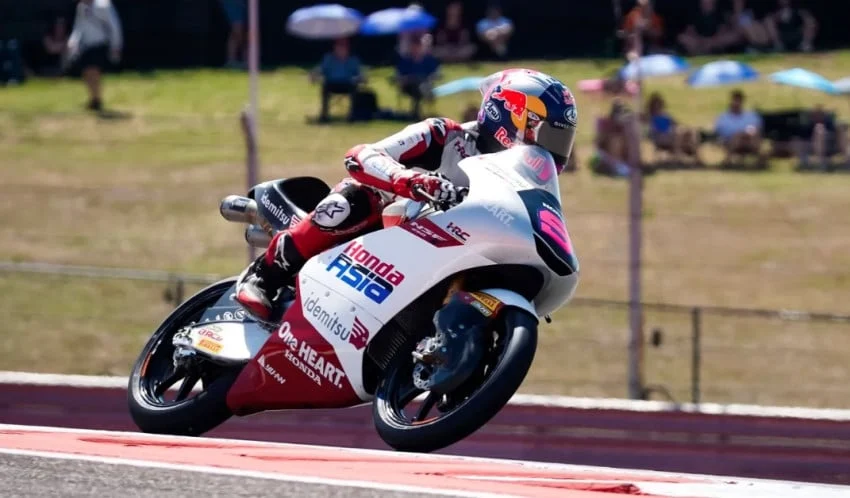
The final round of the 2026 Moto3 World Championship at the Circuit Ricardo Tormo in Valencia, Spain, has proven to be a grueling trial for Indonesian rising star Veda Ega Pratama. Representing Honda Team Asia, the young talent faces a significant hurdle in his bid to conclude his season on a high note after a series of technical setbacks during the practice sessions on Saturday, November 28, 2026. Two separate crashes have relegated the rider to the first qualifying session (Q1), forcing him into a high-pressure scenario where only the fastest riders will advance to the Q2 pole-position shootout.
A Turbulent Saturday in Valencia
The challenges for Veda Ega began early in the day as teams scrambled to find the ideal setup for the technical and tight layout of the Valencia circuit. Known for its demanding transitions and tricky braking zones, the Ricardo Tormo track is notoriously unforgiving for riders pushing the limits of their machinery.
Veda’s first incident occurred early in the practice rotation, disrupting his rhythm and forcing the Honda Team Asia crew to perform rapid repairs on his machine. While he managed to return to the track, the confidence required to navigate the high-speed corners was tested. The situation worsened during Free Practice 2 (FP2), where a second crash halted his progress once again. Official footage from the session captured the intensity of the incident, showing the bike sliding out from under him, though the rider was able to stand up immediately, confirming he was physically unharmed.
The interruption in FP2 was particularly costly. With only about ten minutes remaining in the session when he finally rejoined the action, Veda had very little time to compensate for the lost data and track time. His final classification at 21st place solidified the reality of his situation: the path to a strong grid position must now be carved out through the gauntlet of Q1.
Understanding the Qualifying Format
In the current Moto3 World Championship regulations, the qualifying procedure is divided into two segments to manage the large field of riders. Riders are ranked based on their combined times from the three Free Practice sessions (FP1, FP2, and FP3). The top 14 riders receive an automatic entry into Q2, where the pole position and the first four rows of the grid are determined.
Those who fall outside the top 14, including Veda Ega in his current position, are relegated to Q1. In this session, riders compete for the final four spots available for the Q2 session. This creates an extremely competitive environment where margins are measured in mere thousandths of a second. For a young rider like Veda, who is still adapting to the nuances of the global stage, the pressure of Q1 is a baptism by fire that requires absolute precision and mental fortitude.
Analyzing the Circuit Ricardo Tormo
The Ricardo Tormo circuit is a stadium-style track, measuring 4.005 kilometers in length, characterized by a series of tight corners that place immense strain on the front end of the motorcycle. For a Moto3 bike, which relies heavily on corner speed and precise lines, the grip levels at this track can be fickle, especially during the morning sessions when temperatures are lower.
Data from previous seasons indicates that Valencia is a track where "traffic" during qualifying is a major factor. Because the circuit is compact, riders often struggle to find clear air to set a competitive lap time. For Veda, the challenge of Q1 will not only be about his own performance but also about navigating the tactical games often played by other riders, who frequently wait for a "tow" or a faster rider to follow to improve their own times.

Honda Team Asia: A Development Ground
Veda Ega Pratama’s tenure with Honda Team Asia is part of a broader strategic effort to cultivate Asian talent for the Grand Prix paddock. The team, managed by racing legend Hiroshi Aoyama, has a long history of providing a platform for riders from the Idemitsu Asia Talent Cup to graduate to the world stage.
From an analytical standpoint, the 2026 season has been a year of learning for Veda. While the crashes in Valencia are a setback, they are also part of the steep learning curve inherent in professional motorcycle racing. The team’s priority remains the collection of data and the steady improvement of the rider’s pace. While the qualifying result is disappointing, the race pace—the speed maintained over a long run—is often more indicative of a rider’s potential on Sunday. If the team can stabilize the bike’s setup for the race, Veda still possesses the capability to move through the pack.
The Road Ahead: Challenges and Implications
The immediate focus for Veda and his crew is the analysis of the telemetry data gathered before the crashes. Identifying exactly what caused the loss of front-end grip will be critical. If the issue is related to mechanical setup, adjustments can be made ahead of the qualifying session. If the issue is related to rider input or tire temperature management, the focus will shift toward adapting his riding style to the specific demands of the track surface.
Missing the Q2 cut creates a ripple effect. Starting from the back of the grid—or even from the middle—increases the risk of being caught in first-lap incidents, which are common in the highly congested Moto3 category. However, Veda has previously shown flashes of brilliance in his ability to overtake and maintain composure under fire.
Broader Context of the 2026 Moto3 Season
The 2026 Moto3 season has been marked by extreme competitiveness. The field is tighter than ever, with gaps between the top 20 riders often separated by less than a second. This density makes every session, every lap, and every corner of the practice sessions vital. For a rider in his development phase, failing to maximize FP1 and FP2 is a significant handicap, as it leaves less room for error during the qualifying sessions.
The Indonesian racing community, which has been closely following Veda’s progress, remains optimistic despite the hurdles. The support for Indonesian riders in the international paddock has grown exponentially in recent years, reflecting the nation’s rising interest in global motorsport. Veda’s participation in the Valencia finale is not just a personal milestone but a significant event for his supporters back home.
Conclusion: A Test of Resilience
As the sun sets over the Valencia circuit, the focus shifts to the overnight preparations. The mechanics will work late into the night to ensure the bike is fully restored and optimized for the next day’s qualifying. For Veda Ega Pratama, the objective for the remainder of the weekend is clear: recover the confidence lost in the crashes, execute a clean and tactical Q1 session, and prepare for the long-distance demands of the Sunday race.
Success in motorsport is rarely a linear progression. It is defined by how a rider responds to moments of adversity. Whether Veda succeeds in advancing from Q1 or is forced to start further back, the experience gained in the intense atmosphere of the Valencia season finale will be invaluable for his future career. The eyes of the motorsport world will be on him during the Saturday qualifying, waiting to see if he can channel the frustration of his crashes into the focus required to deliver a stellar performance under pressure.